This work has been selected by scholars as being culturally important and is part of the knowledge base of civilization as we know it.This work is in the public domain in the United States of America, and possibly other nations. Within the United States, you may freely copy and distribute this work, as no entity (individual or corporate) has a copyright on the body of the work.Scholars believe, and we concur, that this work is important enough to be preserved, reproduced, and made generally available to the public. To ensure a quality reading experience, this work has been proofread and republished using a format that seamlessly blends the original graphical elements with text in an easy-to-read typeface.We appreciate your support of the preservation process, and thank you for being an important part of keeping this knowledge alive and relevant.
This work has been selected by scholars as being culturally important and is part of the knowledge base of civilization as we know it.This work is in the public domain in the United States of America, and possibly other nations. Within the United States, you may freely copy and distribute this work, as no entity (individual or corporate) has a copyright on the body of the work.Scholars believe, and we concur, that this work is important enough to be preserved, reproduced, and made generally available to the public. To ensure a quality reading experience, this work has been proofread and republished using a format that seamlessly blends the original graphical elements with text in an easy-to-read typeface.We appreciate your support of the preservation process, and thank you for being an important part of keeping this knowledge alive and relevant.
This work has been selected by scholars as being culturally important and is part of the knowledge base of civilization as we know it.This work is in the public domain in the United States of America, and possibly other nations. Within the United States, you may freely copy and distribute this work, as no entity (individual or corporate) has a copyright on the body of the work.Scholars believe, and we concur, that this work is important enough to be preserved, reproduced, and made generally available to the public. To ensure a quality reading experience, this work has been proofread and republished using a format that seamlessly blends the original graphical elements with text in an easy-to-read typeface.We appreciate your support of the preservation process, and thank you for being an important part of keeping this knowledge alive and relevant.
From 1901 to 1937, the lone engine of the Delaware Valley Railway chugged up and down its solitary track, from the Stroudsburgs to Bushkill. It was a time of heady prospects as the resorts of the Delaware Water Gap pushed north up the valley. Modest farmhouses became vacation boardinghouses, and some then blossomed into grand hotels. The railway brought in vacationers by the carload, but it was not just about tourism. The dinkey hauled in coal for winter heat and hauled out lumber, dairy, and farm produce that kept the farmers in cash. Farm children commuted to town to earn their high school degrees. For more than a generation, the dinkey's whistle blowing over the valley linked its people and places.
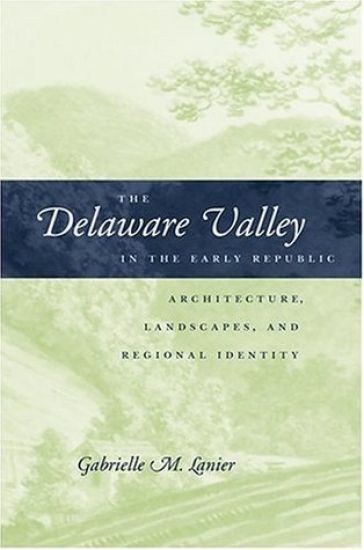
"History, after all, has a corporeal aspect-every event occupies a physical dimension, and all actions are ultimately grounded, one way or another, in the landscape. Places, which possess their own geography, natural history, and embedded perceptions, not only ground the physicality of historical events-they also can constitute both actor and stage."-from The Delaware Valley in the Early Republic. The Delaware Valley's role in shaping national identity during the formative years of the early American republic has long been overshadowed by New England and the South, both more readily identified as distinct and coherent regions than the broad geographic swath that includes Delaware, southwestern New Jersey, and southeastern Pennsylvania. For architectural historians, geographers, and folklorists, the Delaware River valley offers a fascinating example of a true cultural crossroads. Comprising several distinctive and intensely local subregions-each with its own building traditions, populations, land use patterns, and material cultures-this "region of regions" provides rich insights into late eighteenth- and early nineteenth-century America. Gabrielle Lanier challenges prevailing characterizations of the region as culturally monolithic and reassesses its role in the formation of a distinctly American identity through the history, geography, and architecture of three of the valley's diverse cultural landscapes: Pennsylvania's predominantly Germanic Warwick Township; New Jersey's Mannington Township, settled by English Quakers; and Delaware's North West Fork Hundred, an area strongly influenced by its proximity to the Chesapeake region and its position between the slave South and the free North. Through narratives of individual lives, aggregate data from tax rolls and censuses, archival research, and close analysis of the built vernacular environment, she examines the unique ethnic, class, and religious constitution of each subregion, as well as its racial diversity, political orientation, economic organization, and cultural imprint on the landscape. The Delaware Valley emerges from this boldly interdisciplinary study as a mosaic of localities that reflects underlying tensions in the American experience.
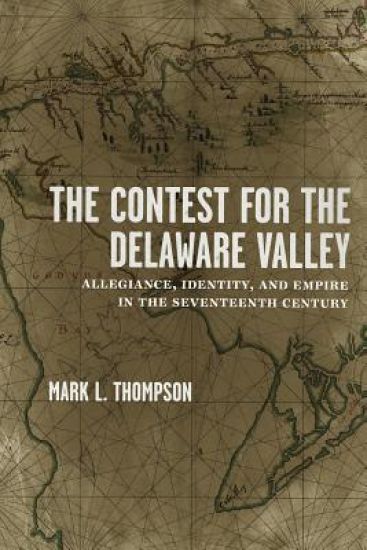
In the first major examination of the diverse European efforts to colonize the Delaware Valley, Mark L. Thompson offers a bold new interpretation of ethnic and national identities in colonial America. For most of the seventeenth century, the lower Delaware Valley remained a marginal area under no state's complete control. English, Dutch, and Swedish colonizers all staked claims to the territory, but none could exclude their rivals for long- in part because Native Americans in the region encouraged the competition. Officials and settlers alike struggled to determine which European nation would possess the territory and what liberties settlers would keep after their own colonies had surrendered.The resulting struggle for power resonated on both sides of the Atlantic Ocean. While the rivalry promoted patriots who trumpeted loyalties to their sovereigns and nations, it also rewarded cosmopolitans who struck deals across imperial, colonial, and ethnic boundaries. Just as often it produced men- such as Henry Hudson, Willem Usselincx, Peter Minuit, and William Penn- who did both.Ultimately, The Contest for the Delaware Valley shows how colonists, officials, and Native Americans acted and reacted in inventive, surprising ways. Thompson demonstrates that even as colonial spokesmen debated claims and asserted fixed national identities, their allegiances- along with the settlers'- often shifted and changed. Yet colonial competition imposed limits on this fluidity, forcing officials and settlers to choose a side. Offering their allegiances in return for security and freedom, colonial subjects turned loyalty into liberty.
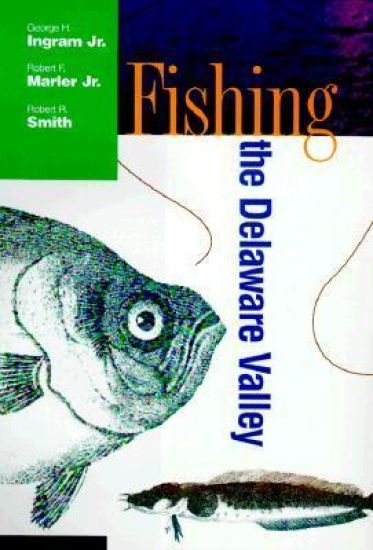
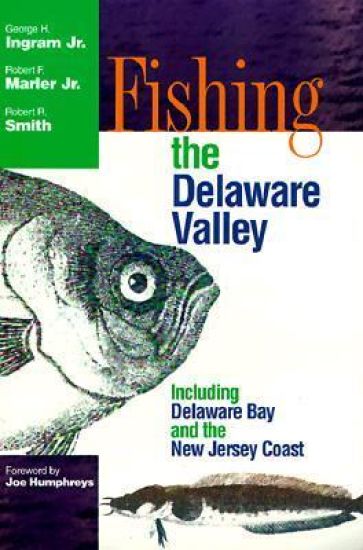
\u0022Despite the plethora of piscine literature,\u0022 say the authors of Fishing the Delaware Valley, \u0022we have tried to create a book unlike anything else on the market. With our approach that fishing is a major entertainment endeavor and that it is a family activity that can be pursued within fascinating historical and culinary settings, we have tried to demonstrate that, most important, fishing is serious fun.\u0022 The Delaware River is the last major free-flowing river in the eastern United States Drawing on their cumulative century of angling experience, the authors range through the 14,000 square miles of the Delaware River watershed, with offshore visits for saltwater fishing along the New Jersey coast. All the places they talk about are within three-and-a-half hours of Philadelphia by car. Besides giving directions to their favorite spots, the authors regale the reader with comments about what to expect of each place and how to make the most of your visit. Along the way they mention and frequently evaluate nearby tackle shops, restaurants, taverns, historical and scenic attractions, and even shopping opportunities. Throughout, they share their own experiences with the reader -- both the pride of spectacular catches and the embarrassment of spectacular follies. One of the authors admits to breaking a new rod in a restroom door. Another tells about having to be rescued from a midriver rock by the very anglers to whom he had just bragged about his accomplishments. They spice their descriptions with apt quotations adn finish it off, like a truly successful fishing day, with their favorite recipes. This is a book with something for everyone from the novice to the expert. Even non-fishing friends and family members will welcome the authors' suggestions for things to do while waiting for their loved one to land the perfect trout or will be entertained by the stories about those incomprehensible people who flock year-round to the Delaware Valley's lakes, ponds, streams, and coastal waters.
\u0022Despite the plethora of piscine literature,\u0022 say the authors of Fishing the Delaware Valley, \u0022we have tried to create a book unlike anything else on the market. With our approach that fishing is a major entertainment endeavor and that it is a family activity that can be pursued within fascinating historical and culinary settings, we have tried to demonstrate that, most important, fishing is serious fun.\u0022 The Delaware River is the last major free-flowing river in the eastern United States Drawing on their cumulative century of angling experience, the authors range through the 14,000 square miles of the Delaware River watershed, with offshore visits for saltwater fishing along the New Jersey coast. All the places they talk about are within three-and-a-half hours of Philadelphia by car. Besides giving directions to their favorite spots, the authors regale the reader with comments about what to expect of each place and how to make the most of your visit. Along the way they mention and frequently evaluate nearby tackle shops, restaurants, taverns, historical and scenic attractions, and even shopping opportunities. Throughout, they share their own experiences with the reader -- both the pride of spectacular catches and the embarrassment of spectacular follies. One of the authors admits to breaking a new rod in a restroom door. Another tells about having to be rescued from a midriver rock by the very anglers to whom he had just bragged about his accomplishments. They spice their descriptions with apt quotations adn finish it off, like a truly successful fishing day, with their favorite recipes. This is a book with something for everyone from the novice to the expert. Even non-fishing friends and family members will welcome the authors' suggestions for things to do while waiting for their loved one to land the perfect trout or will be entertained by the stories about those incomprehensible people who flock year-round to the Delaware Valley's lakes, ponds, streams, and coastal waters.
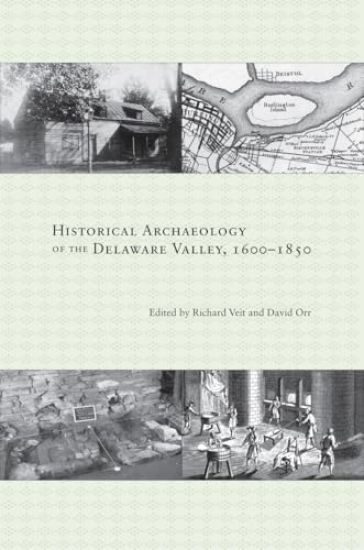
The Delaware Valley is a distinct region situated within the Middle Atlantic states, encompassing portions of Delaware, Pennsylvania, New Jersey, and Maryland. With its cultural epicenter of Philadelphia, its surrounding bays and ports within Maryland and Delaware, and its conglomerate population of European settlers, Native Americans, and enslaved Africans, the Delaware Valley was one of the great cultural hearths of early America. The region felt the full brunt of the American Revolution, briefly served as the national capital in the post-Revolutionary period, and sheltered burgeoning industries amidst the growing pains of a young nation. Yet, despite these distinctions, the Delaware Valley has received less scholarly treatment than its colonial equals in New England and the Chesapeake region.In Historical Archaeology of the Delaware Valley, 1600–1850, Richard Veit and David Orr bring together fifteen essays that represent the wide range of cultures, experiences, and industries that make this region distinctly American in its diversity. From historic-period American Indians living in a rapidly changing world to an archaeological portrait of Benjamin Franklin, from an eighteenth-century shipwreck to the archaeology of Quakerism, this volume highlights the vast array of research being conducted throughout the region. Many of these sites discussed are the locations of ongoing excavations, and archaeologists and historians alike continue to debate the region’s multifaceted identity.The archaeological stories found within Historical Archeology of the Delaware Valley, 1600–1850 reflect the amalgamated heritage that many American regions experienced, though the Delaware Valley certainly exemplifies a richer experience than most: it even boasts the palatial home of a king (Joseph Bonaparte, elder brother of Napoleon and former King of Naples and Spain). This work, thoroughly based on careful archaeological examination, tells the stories of earlier generations in the Delaware Valley and makes the case that New England and the Chesapeake are not the only cultural centers of colonial America.
The Legend of Delaware Valley - and other poems is an unchanged, high-quality reprint of the original edition of 1877. Hansebooks is editor of the literature on different topic areas such as research and science, travel and expeditions, cooking and nutrition, medicine, and other genres. As a publisher we focus on the preservation of historical literature. Many works of historical writers and scientists are available today as antiques only. Hansebooks newly publishes these books and contributes to the preservation of literature which has become rare and historical knowledge for the future.
Early Historical Events in the Delaware Valley is an engaging and informative history of one of America's most important regions. With a keen eye for detail and a deep understanding of the forces that shaped the region, the author offers a rich portrait of life in the Delaware Valley from the earliest days of European settlement to the present. Perfect for history buffs and anyone interested in the New World, Early Historical Events in the Delaware Valley is a fascinating and insightful read.This work has been selected by scholars as being culturally important, and is part of the knowledge base of civilization as we know it.This work is in the "public domain in the United States of America, and possibly other nations. Within the United States, you may freely copy and distribute this work, as no entity (individual or corporate) has a copyright on the body of the work.Scholars believe, and we concur, that this work is important enough to be preserved, reproduced, and made generally available to the public. We appreciate your support of the preservation process, and thank you for being an important part of keeping this knowledge alive and relevant.