Kirjojen hintavertailu. Mukana 11 244 527 kirjaa ja 12 kauppaa.

Kirjahaku

Etsi kirjoja tekijän nimen, kirjan nimen tai ISBN:n perusteella.

1000 tulosta hakusanalla Delores James

A Survey of Genetic Counseling Professionals in the Southeastern United States
Abstract: This study was part of an Ethical, Legal, and Social Implications of the Human Genome Project (ELSI) grant funded by the Department of Energy (DOE) and the National Institutes of Health (NIH) . It was conducted under the aegis of the Morehouse School of Medicine in Atlanta, Georgia, and the University of Florida College of Medicine in Gainesville, Florida. As part of the project, the current study sought to answer the following questions: 1) What are the qualifications and training of professionals in the southeastern United States who provide genetic counseling? 2) Who routinely does and who should do genetic counseling? and 3) What are the educational methods used by the different health professionals in genetic counseling? A self-administered mail survey was sent to 325 potential genetic counseling professionals in the southeastern United States (Alabama, Florida, Georgia, Kentucky, Louisiana, Mississippi, North Carolina, South Carolina, and Tennessee) . Two hundred four persons volunteered for the study. Genetic associates (31%), physicians (30%), and nurses represent the three largest groups of health professionals involved in the genetic counseling process. Genetic counseling is usually a team activity. The majority of respondents reported that social workers are not and should not routinely be involved in genetic counseling. Genetic associates are well trained in human genetics and counseling techniques, but like physicians and nurses have much room for improvement in the educative aspect of counseling. Physicians have more years of experience (13 years) doing genetic counseling than genetic associates (6 years) and nurses (6 years) but the bulk of their training apparently comes from supervised clinical training rather than formal courses in human genetics, counseling techniques, and educational methods and principles. Nurses and genetic associates have comprable years of experience but nurses lack the formal courses in human genetics and counseling techniques. The majority of all respondents had no formal training in educational methods and principles. Educational techniques such as assessing clients' educational level and asking patients to repeat information in their own words were not always utilized. Recognizing professional limitations and formal training in human genetics are the only two factors perceived to increase counseling effectiveness. Policy recommendations are given. Dissertation Discovery Company and University of Florida are dedicated to making scholarly works more discoverable and accessible throughout the world. This dissertation, "A Survey of Genetic Counseling Professionals in the Southeastern United States: Actual Versus Perceived Roles" by Delores Corinne Suzette. James, was obtained from University of Florida and is being sold with permission from the author. A digital copy of this work may also be found in the university's institutional repository, IR@UF. The content of this dissertation has not been altered in any way. We have altered the formatting in order to facilitate the ease of printing and reading of the dissertation.
A Survey of Genetic Counseling Professionals in the Southeastern United States
Abstract: This study was part of an Ethical, Legal, and Social Implications of the Human Genome Project (ELSI) grant funded by the Department of Energy (DOE) and the National Institutes of Health (NIH) . It was conducted under the aegis of the Morehouse School of Medicine in Atlanta, Georgia, and the University of Florida College of Medicine in Gainesville, Florida. As part of the project, the current study sought to answer the following questions: 1) What are the qualifications and training of professionals in the southeastern United States who provide genetic counseling? 2) Who routinely does and who should do genetic counseling? and 3) What are the educational methods used by the different health professionals in genetic counseling? A self-administered mail survey was sent to 325 potential genetic counseling professionals in the southeastern United States (Alabama, Florida, Georgia, Kentucky, Louisiana, Mississippi, North Carolina, South Carolina, and Tennessee) . Two hundred four persons volunteered for the study. Genetic associates (31%), physicians (30%), and nurses represent the three largest groups of health professionals involved in the genetic counseling process. Genetic counseling is usually a team activity. The majority of respondents reported that social workers are not and should not routinely be involved in genetic counseling. Genetic associates are well trained in human genetics and counseling techniques, but like physicians and nurses have much room for improvement in the educative aspect of counseling. Physicians have more years of experience (13 years) doing genetic counseling than genetic associates (6 years) and nurses (6 years) but the bulk of their training apparently comes from supervised clinical training rather than formal courses in human genetics, counseling techniques, and educational methods and principles. Nurses and genetic associates have comprable years of experience but nurses lack the formal courses in human genetics and counseling techniques. The majority of all respondents had no formal training in educational methods and principles. Educational techniques such as assessing clients' educational level and asking patients to repeat information in their own words were not always utilized. Recognizing professional limitations and formal training in human genetics are the only two factors perceived to increase counseling effectiveness. Policy recommendations are given. Dissertation Discovery Company and University of Florida are dedicated to making scholarly works more discoverable and accessible throughout the world. This dissertation, "A Survey of Genetic Counseling Professionals in the Southeastern United States: Actual Versus Perceived Roles" by Delores Corinne Suzette. James, was obtained from University of Florida and is being sold with permission from the author. A digital copy of this work may also be found in the university's institutional repository, IR@UF. The content of this dissertation has not been altered in any way. We have altered the formatting in order to facilitate the ease of printing and reading of the dissertation.

A Journey: From the Garden of Eden to the Promised Land: The King James Version of the Bible Volume I.The Pentateuch
This book, and the volumes that will follow, is a personal interpretation of the author's studying of the King James version of the Holy Bible. I decided to share my thoughts with the belief that others may gain even more clarity as they compare and contrast the contents of my books. The Bible admonishes Christians and believers to "Study to shew thyself approved unto God, a workman that needeth not to be ashamed, rightly dividing the word of truth" (2 Timothy 2:15), this time through...I am focusing more on "study." I believe there is a blessing in doing so and with knowledge has to come understanding. Because God has chosen me to carry and share His word, I must have a deep understanding of what I am sharing. It is my belief that in writing this book (in volumes), I may share with others a deeper understanding of the Word, as well. If nothing more, it can serve as a supplementary guidebook to building wisdom and knowledge to those who will read. I am choosing to do this writing in volumes. This is Volume 1 on the Pentateuch.
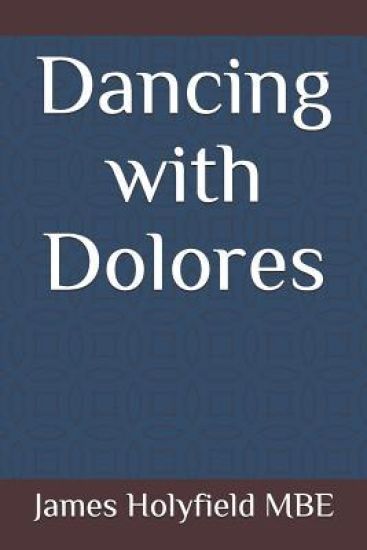
Dancing with Dolores

Dancing with Dolores

James Holyfield Mbe

Independently Published
2019
nidottu
How do you cope with bad news when you've never had bad news? If you've led a life with no fractures, what is the best way to deal with brutal surgery, a tough recovery and invasive doses of radiotherapy? I had to find answers to these questions to face my rare and complicated cancer head on. Set in rural Ireland, England and America, Dancing with Dolores explores how all the things I learned at school and experienced at work only really happened to get me ready for what was ahead of me. Of course no one wants to be told they have a cancer; having cancer is not nice, but it is possible to turn bad news into a positive, valuable, learning experience that wakes up the brain to create vivid memories that last forever. This is the memoir of an adrenaline junkie.
Horace and Morris But Mostly Dolores

Horace and Morris But Mostly Dolores

James Howe

Simon Schuster Books for Young Readers
2003
pokkari
Will their friendship ever be the same? Horace, Morris, and Dolores have been best friends forever. They do everything together -- from sailing the seven sewers to climbing Mount Ever-Rust. But one day Horace and Morris join the Mega-Mice (no girls allowed), and Dolores joins the Cheese Puffs (no boys allowed). Is this the end? Or will Horace and Morris but mostly Dolores find a way to save the day -- and their friendship?
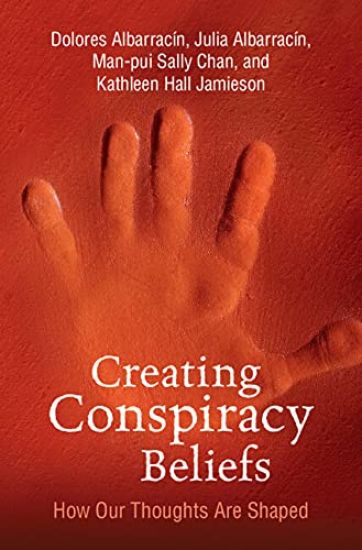
Creating Conspiracy Beliefs

Creating Conspiracy Beliefs

Dolores Albarracin; Julia Albarracin; Man-pui Sally Chan; Kathleen Hall Jamieson

Cambridge University Press
2021
sidottu
Conspiracy theories spread more widely and faster than ever before. Fear and uncertainty prompt people to believe false narratives of danger and hidden plots, but are not sufficient without considering the role and ideological bias of the media. This timely book focuses on making sense of how and why some people respond to their fear of a threat by creating or believing conspiracy stories. It integrates insights from psychology, political science, communication, and information sciences to provide a complete overview and theory of how conspiracy beliefs manifest. Through this multi-disciplinary perspective, rigoros research develops and tests a practical, simple way to frame and understand conspiracy theories. The book supplies unprecedented amounts of new data from six empirical studies and unpicks the complexity of the process that leads to the empowerment of conspiracy beliefs.
Creating Conspiracy Beliefs

Creating Conspiracy Beliefs

Dolores Albarracin; Julia Albarracin; Man-pui Sally Chan; Kathleen Hall Jamieson

Cambridge University Press
2021
pokkari
Conspiracy theories spread more widely and faster than ever before. Fear and uncertainty prompt people to believe false narratives of danger and hidden plots, but are not sufficient without considering the role and ideological bias of the media. This timely book focuses on making sense of how and why some people respond to their fear of a threat by creating or believing conspiracy stories. It integrates insights from psychology, political science, communication, and information sciences to provide a complete overview and theory of how conspiracy beliefs manifest. Through this multi-disciplinary perspective, rigoros research develops and tests a practical, simple way to frame and understand conspiracy theories. The book supplies unprecedented amounts of new data from six empirical studies and unpicks the complexity of the process that leads to the empowerment of conspiracy beliefs.