

Kirjahaku
Etsi kirjoja tekijän nimen, kirjan nimen tai ISBN:n perusteella.
1000 tulosta hakusanalla Denis R Paris D C


ZAPPIK Method book is designed to be a support for understanding ZAPPIK Method Beyond a technical presentation to apply the method, it focuses above all on the "why".This is why it takes you step by step through the discovery of ZAPPIK Method through its genesis, its insertion in today's context and its stakes. You will understand that in itself each method makes sense according to the objectives sought and its context of application.Initially created as an assembly of practices to improve the internal processes of my company, the method has been structured over time thanks to our clients' feedback. Actually, we note as much as 80% of management time saved by project owners using ZAPPIK Method. These amazing statistics are explained by transferring the time spent by a project holder on management to the digital platform holding the production processes. This is the main motivation of a project owner to adopt the method. As time becomes rarer, saving it has become the major challenge of today's working life.

This book is the first unified and comprehensive attempt in the post-Cold War period to give an account of world Christianity's encounter with Marxism. After exploring the intellectual foundations of the antagonism on both sides, Janz examines the particular contexts of the USSR, the United States, Poland, Nicaragua, Albania, Cuba, and China, and suggests that the "Marxist project" is not as dead as one might imagine.

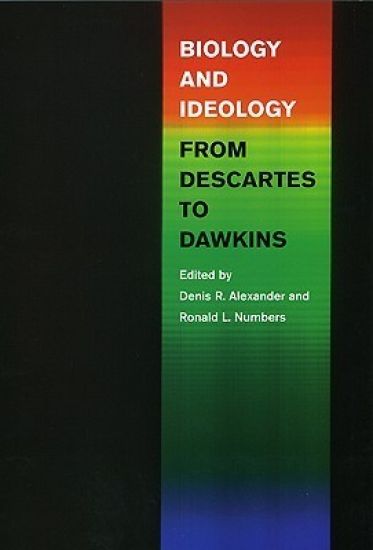
Biology and Ideology from Descartes to Dawkins
Denis R. Alexander; Ronald L Numbers; Ronald L. Numbers
University of Chicago Press
2010
sidottu
Over the course of human history, the sciences, and biology in particular, have often been manipulated to cause immense human suffering. For example, biology has been used to justify eugenic programs, forced sterilization, human experimentation, and death camps, all in an attempt to support notions of racial superiority. By investigating the past, the contributors to "Biology and Ideology from Descartes to Dawkins" hope to better prepare us to discern ideological abuse of science when it occurs in the future. Denis R. Alexander and Ronald L. Numbers bring together fourteen experts to examine the varied ways science has been used and abused for nonscientific purposes from the fifteenth century to the present day. Featuring an essay on eugenics from Edward J. Larson and an examination of the progress of evolution by Michael Ruse, "Biology and Ideology" examines uses both benign and sinister, ultimately reminding us that ideological extrapolation continues today. An accessible survey, this collection will enlighten historians of science, their students, practicing scientists, and anyone interested in the relationship between science and culture.
Biology and Ideology from Descartes to Dawkins
Denis R. Alexander; Ronald L Numbers; Ronald L. Numbers
University of Chicago Press
2010
nidottu
Over the course of human history, the sciences, and biology in particular, have often been manipulated to cause immense human suffering. For example, biology has been used to justify eugenic programs, forced sterilization, human experimentation, and death camps, all in an attempt to support notions of racial superiority. By investigating the past, the contributors to "Biology and Ideology from Descartes to Dawkins" hope to better prepare us to discern ideological abuse of science when it occurs in the future. Denis R. Alexander and Ronald L. Numbers bring together fourteen experts to examine the varied ways science has been used and abused for nonscientific purposes from the fifteenth century to the present day. Featuring an essay on eugenics from Edward J. Larson and an examination of the progress of evolution by Michael Ruse, "Biology and Ideology" examines uses both benign and sinister, ultimately reminding us that ideological extrapolation continues today. An accessible survey, this collection will enlighten historians of science, their students, practicing scientists, and anyone interested in the relationship between science and culture.



The Westminster Handbook to Martin Luther
Denis R. Janz
Westminster/John Knox Press,U.S.
2010
pokkari
This volume in the Westminster Handbooks to Christian Theology series provides a compact and lucid treatment of the main elements of the theology of Martin Luther (1483-1546). Janz, a top Luther expert, discusses the theological understandings that made Luther a leading figure in the sixteenth century Protestant Reformation. This splendid guide will serve as a welcome reference for careful and accurate descriptions of the key components of Luther's theology.The Westminster Handbook to Christian Theology series provides a set of resources for the study of historic and contemporary theological movements and Christian theologians. These books are intended to help students and scholars find concise and accurate treatments of important theological terms./p>

Small enough to fit in a pocket yet serious enough to provide real answers, this primer is a must-have for architecture and history buffs, tourists, and churchgoers interested in decoding the styles and symbols of religious buildings. Every building contains clues embedded in its design that identify not only its architectural style but also who designed it, what kind of congregation it was built for, and why. This practical yet charming handbook is the key to decoding the style, history, evolution, and social significance of religious buildings. Not strictly limited to churches, it also covers abbeys, chapels, and monasteries, among other structures. Organized according to architectural element (windows, domes, arches, etc.), each element is presented in chronological order. Additional chapters explore the architectural influence of geography, history, and various creeds, along with an illustrated timeline showing how, where, and in many cases why certain church features evolved through the centuries. There is also a useful introduction to naming each component of a church, from vaults to buttresses and transepts to apses. All entries are illustrated with period engravings and line drawings. This book will be invaluable for architecture buffs and anyone who has ever wondered why classic New England churches are white with little ornament, why Quaker meetinghouses have no altars, or why Episcopalians traditionally favored the Gothic style.
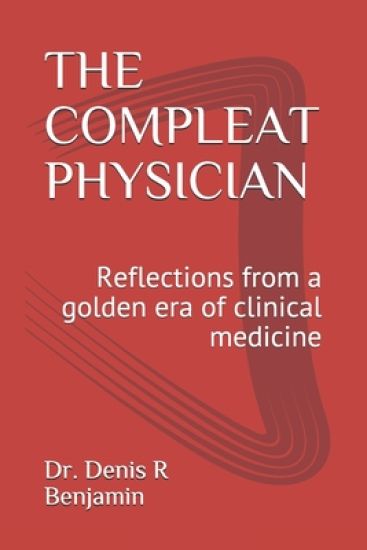
The Compleat Physician: Reflections from a golden era of clinical medicine
Denis R. Benjamin
978-0-9829359-2-7
2019
nidottu
Denis R Benjamin, a pediatric pathologist, details the wonder and challenges of medical education in apartheid South Africa. The 1960s was the golden era for training physicians in the high art of clinical diagnosis, before technology became dominant, displacing the use of our senses. We accompany him through medical school, the remarkable teachers and the lessons learned from fascinating patients and their maladies. This is followed by the adaptation of an immigrant physician to medical practice, living and training in the USA, concluding with observations of the current state of medical care - what has been lost and what has been gained. It is a journey of dedication and serendipity, linked by unexpected and surprising incidents and intriguing experiences.

In 1975, Sam Candage, a fatherless twelve-year-old boy with learning challenges, strains to learn to read and write. Alone, he finds solace in nature, fishing and exploring his favorite creek. Sam finds himself falling behind in school until he meets a wise and kind man who, through the sport of fly fishing, teaches him about biology, stewardship, conservation, and the true meaning of friendship. When the mentor teaches Sam how to read, the boy's life is changed forever. The Sage of Dibbin Creek is an engrossing account of Sam's coming of age.


There is a common misconception that our genomes - all unique, except for those in identical twins - have the upper hand in controlling our destiny. The latest genetic discoveries, however, do not support that view. Although genetic variation does influence differences in various human behaviours to a greater or lesser degree, most of the time this does not undermine our genuine free will. Genetic determinism comes into play only in various medical conditions, notably some psychiatric syndromes. Denis Alexander here demonstrates that we are not slaves to our genes. He shows how a predisposition to behave in certain ways is influenced at a molecular level by particular genes. Yet a far greater influence on our behaviours is our world-views that lie beyond science - and that have an impact on how we think the latest genetic discoveries should, or should not, be applied. Written in an engaging style, Alexander's book offers tools for understanding and assessing the latest genetic discoveries critically.

There is a common misconception that our genomes - all unique, except for those in identical twins - have the upper hand in controlling our destiny. The latest genetic discoveries, however, do not support that view. Although genetic variation does influence differences in various human behaviours to a greater or lesser degree, most of the time this does not undermine our genuine free will. Genetic determinism comes into play only in various medical conditions, notably some psychiatric syndromes. Denis Alexander here demonstrates that we are not slaves to our genes. He shows how a predisposition to behave in certain ways is influenced at a molecular level by particular genes. Yet a far greater influence on our behaviours is our world-views that lie beyond science - and that have an impact on how we think the latest genetic discoveries should, or should not, be applied. Written in an engaging style, Alexander's book offers tools for understanding and assessing the latest genetic discoveries critically.
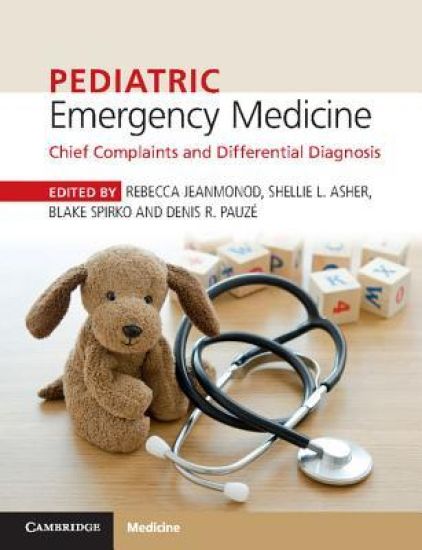
Pediatric patients are a unique subset of emergency patients, making up about one-quarter of all emergency department visits. Textbooks regarding the care of pediatric patients are almost universally organized by organ system, which does not facilitate an efficient diagnosis. Taking a case-based approach, Pediatric Emergency Medicine: Chief Complaints and Differential Diagnosis is arranged by chief complaint, using real patient scenarios to help the reader work through the inductive and deductive reasoning needed to assess, evaluate, treat, and disposition pediatric patients with urgent complaints. Cases are structured in the way in which they are presented during medical care, allowing practitioners to become comfortable with the general structure of case presentations: chief complaint, HPI, PMH, ROS, exam, and ancillary studies. This volume also discusses disease processes and their differentiations, providing in-depth knowledge regarding current standards of diagnosis and care.

This handy, easy-to-carry book provides the reader with a strictly visual approach to reading the architecture of churches. Covering all the ecclesiastical building types of Western Christianity, readers are taken on a journey tracing the development of the church building from the simple stone halls of the Anglo-Saxon period right through to the eclectic designs of the nineteenth century. Another addition to the bestselling 'How to Read...' series, How to Read Churches is a practical guide, showing readers how to search for architectural clues that tell hidden stories expressing the liturgical function and spiritual symbolism of a church building. The perfect companion to How to Read Buildings.

On its release, the seven volume A People's History of Christianity was lauded for its commitment to raising awareness of the ways in which ordinary Christians have lived throughout more than twenty centuries of Christian History. Now, the essential material from that important project is available for classroom use.Each volume contains careful selections and abridgements of the original content organized to fit ideally into a two semester course in Christian history. It provides a valuable overview on such topics as birth and death, baptism rites, food, power, heresy, and more. Students are both informed and inspired by seeing the importance of ordinary Christians in shaping Christianity across time.
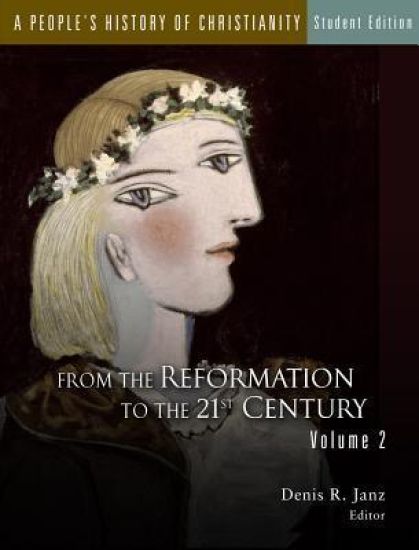
On its release, the seven volume A People's History of Christianity was lauded for its commitment to raising awareness of the ways in which ordinary Christians have lived throughout more than twenty centuries of Christian History. Now, the essential material from that important project is available for classroom use.Each volume contains careful selections and abridgements of the original content organized to fit ideally into a two semester course in Christian history. It provides a valuable overview on such topics as birth and death, baptism rites, food, power, heresy, and more. Students are both informed and inspired by seeing the importance of ordinary Christians in shaping Christianity across time.