Kirjahaku
Etsi kirjoja tekijän nimen, kirjan nimen tai ISBN:n perusteella.
1000 tulosta hakusanalla Denise E Williams
Christmas bells, joy, fun and magic. Joster is the Chief Bell Elf of the North Pole. He is the center of everything that happens there. Without Joster there would be a lot less joy and niceness. Joster's kindness and good thoughts towards others are what keeps the Christmas spirit rolling That's why the Great Bell Run is so important. The children need their bells to shake to start the Christmas season. Once there is jingling in the air, it all starts to happen-believe And that's nice. HO HO HO
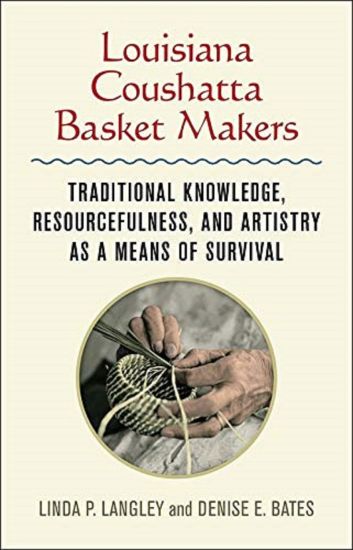
Louisiana Coushatta Basket Makers
Linda Langley; Denise E. Bates; Heather Williams; Raynelle Thompson Fontenot
Louisiana State University Press
2021
sidottu
Louisiana Coushatta Basket Makers brings together oral histories, tribal records, archival materials, and archaeological evidence to explore the fascinating history of the Coushatta Tribe's famed basket weavers. After settling at their present location near the town of Elton, Louisiana, in the 1880s, the Coushatta (Koasati) tribe developed a basket industry that bolstered the local tribal economy and became the basis for generating tourism and political mobilization. The baskets represented a material culture that distinguished the Coushattas as Indigenous people within an ethnically and racially diverse region. Tribal leaders serving as diplomats also used baskets as strategic gifts as they built political and economic allegiances throughout the twentieth century, thereby securing the Coushattas' future.Behind all these efforts were the basket makers themselves. Although a few Coushatta men assisted in the production of baskets, it was mostly women who put in the long hours to gather and process the materials, then skillfully stitch them together to produce treasures of all shapes and sizes. The art of basket making exists within a broader framework of Coushatta traditional teachings and educational practices that have persisted to the present.As they tell the story of Coushatta basket makers, Linda P. Langley and Denise E. Batesprovide a better understanding of the tribe's culture and values. The weavers' own ""language of baskets"" shapes this narrative, which depicts how the tribe survived repeated hardships as weavers responded on their own terms to market demands. The work of Coushatta basket makers represents the perseverance of traditional knowledge in the form of unique and carefully crafted fine art that continues to garner greater recognition and appreciation with every successive generation.
The Empathy Advantage
Heather E. McGowan; Chris Shipley; Denise Williams
JOHN WILEY SONS INC
2023
nidottu
Empower and Inspire Human Potential In the decade before the Covid-19 pandemic, change was coming so quickly and across so many vectors that most business leaders – so busy tackling one new challenge after another - missed the trendlines that would collide in the early months of 2020 and forever change their workforce and how they lead it for generations to come. In The Empathy Advantage: Leading the Empowered Workforce, Heather E. McGowan and Chris Shipley team up again to deliver a guidebook for leaders navigating the uncertainty of a post pandemic world in a sequel to their successful book The Adaptation Advantage. Leaders today must acknowledge and respond to the fundamental shifts that lay the foundation for effective leadership: From managing people to enabling success, from viewing peers as competitors to seeing them as collaborators, from applying extrinsic pressure on workers to unlocking intrinsic motivation, and from driving productivity with unquestioned authority to inspiring value creation by leading with empathy. In this book, you will learn about the five interlocking trends that brought us the empowered workforce: The Great Resignation, the Great Refusal, the Great Reshuffle, the Great Retirement, and the Great Relocation collectively delivered the Great Reset. These trends, building for a decade prior to the pandemic, saw employees leading jobs; restructuring where and how they work, accelerating retirement, and reordering the role of work in their lives. The Empathy Advantage offers advice on how to lead a complex, diverse, and multi-generational workforce to out-perform your competition. This book will inspire you to: Rethink Your Workforce: You'll gain new insights into today's empowered workforce and how best to tap their intrinsic motivations.Rethink Your Organization: You'll learn how to reorganize work to become resilient in continuous change.Rethink Your Leadership: You'll discover superpowers and unleash your Empath Advantage. Whether you are a seasoned executive or an emerging leader, The Empathy Advantage: Leading the Empowered Workforce speaks to those who are ready to embrace a more influential and engaging form of leadership, and will earn a place in the libraries of anyone with responsibility for recruiting, engaging, leading and retaining the next generation of workers.
Macrofungi Associated with Oaks of Eastern North America
Denise E. Binion; Steven L. Stephenson; William C. Roody; Harold H. Burdsall Jr
West Virginia University Press
2008
nidottu
Macrofungi Associated with Oaks of Eastern North America, which was written as a companion to Field Guide to Oak Species of Eastern North America, represents the first major publication devoted exclusively to the macrofungi that occur in association with oak trees in the forests of eastern North America. The macrofungi covered in this volume include many of the more common examples of the three groups - mycorrhizal fungi, decomposers, and pathogens - that are ecologically important to the forest ecosystems in which oaks occur. More than 200 species of macrofungi are described and illustrated via vibrantly colored photographs. Information is given on edibility, medicinal properties, and other novel uses as well. This publication reflects the combined expertise of six mycologists on the macrofungi anyone would be likely to encounter in an oak forest.
Finding and Evaluating Evidence
Denise E. Bronson; Tamara S. Davis
Oxford University Press Inc
2011
nidottu
Evidence-based practice (EBP) promises to have a profound impact on social work practice, education, and scholarship, but adopting EBP depends on the availability and accessibility of evidence and on strategies to synthesize this information. Systematic reviews provide a comprehensive, unbiased method for retrieving and synthesizing relevant research. This pocket guide is a concise introduction that describes the steps required to complete a systematic review and the criteria that can be used to assess the quality of existing reviews. The authors provide straightforward information on how to define a search question that captures the problem's parameters, develop a search strategy that is transparent and comprehensive, assess the quality and credibility of existing research, and summarize the available research to support EBP in social work. Providing coverage for both quantitative and qualitative synthesis methods, examples illustrate the steps and decisions associated with each approach to research synthesis. Key points and suggested readings and websites provide avenues for further study. This pocket guide is an excellent introduction to EBP and systematic reviews that will be valued by social work students, practitioners, and scholars.
What English Language Teachers Need to Know Volume II
Denise E. Murray; MaryAnn Christison
Routledge
2020
sidottu
Designed for pre-service and novice teachers in ELT, What English Language Teachers Need to Know Volumes I, II, and III are companion textbooks organized around the key question: What do teachers need to know and be able to do in order to help their students to learn English? In the Second Edition of Volume II, Murray and Christison return to this essential question and cover the three main facets of teaching: planning, instructing, and assessing L2 English instruction. Addressing new skills and strategies that ESL and EFL teachers require to meet the needs of their shifting student populations who are impacted by changing demographics, different learning contexts, and digital environments, this book offers a strong emphasis on practical applications for classroom teaching that is grounded in current research. This updated and expanded Second Edition features:a new section on teacher learning, including a chapter on exploring digital technologies in ELTnew and updated classroom examples throughoutdiscussions of how teachers can prepare for contemporary challenges, such as population mobility and globalization.The comprehensive texts work for teachers across different contexts—where English is the dominant language, an official language, or a foreign language; for different levels—elementary/primary, secondary, university, or adult education; and for different learning purposes—general English, workplace English, English for academic purposes, or English for specific purposes.
What English Language Teachers Need to Know Volume II
Denise E. Murray; MaryAnn Christison
Routledge
2020
nidottu
Designed for pre-service and novice teachers in ELT, What English Language Teachers Need to Know Volumes I, II, and III are companion textbooks organized around the key question: What do teachers need to know and be able to do in order to help their students to learn English? In the Second Edition of Volume II, Murray and Christison return to this essential question and cover the three main facets of teaching: planning, instructing, and assessing L2 English instruction. Addressing new skills and strategies that ESL and EFL teachers require to meet the needs of their shifting student populations who are impacted by changing demographics, different learning contexts, and digital environments, this book offers a strong emphasis on practical applications for classroom teaching that is grounded in current research. This updated and expanded Second Edition features:a new section on teacher learning, including a chapter on exploring digital technologies in ELTnew and updated classroom examples throughoutdiscussions of how teachers can prepare for contemporary challenges, such as population mobility and globalization.The comprehensive texts work for teachers across different contexts—where English is the dominant language, an official language, or a foreign language; for different levels—elementary/primary, secondary, university, or adult education; and for different learning purposes—general English, workplace English, English for academic purposes, or English for specific purposes.
Saved By His Grace is a gripping story of several lives intertwined. The plot thickens as you turn the pages to reveal more about each character. Witness how each of their lives is affected by choices they have made and discover how they are truly, "Saved by His Grace" Witness how each of their lives is affected by choices they have made and discover how they are truly, "Saved by His Grace."
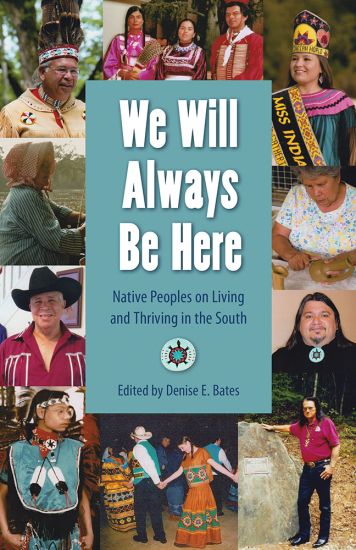
The history of Native Americans in the U.S. South is a turbulent one, rife with conflict and inequality. Since the arrival of Spanish conquistadors in the fifteenth century, Native peoples have struggled to maintain their land, cultures, and ways of life. In We Will Always Be Here, contemporary tribal leaders, educators, and activists share their struggles for Indian identity, self-determination, and community development.Reflecting on such issues as poverty, education, racism, cultural preservation, and tribal sovereignty, the contributors to this volume offer a glimpse into the historical struggles of southern Native peoples, examine their present day efforts, and share their hopes for the future. They also share examples of cultural practices that have either endured or been revitalized. In a country that still faces challenges to civil rights and misconceptions about Indian identity and tribal sovereignty, this timely book builds a deeper understanding of modern Native peoples within a region where they are often overlooked.
What English Language Teachers Need to Know Volume I
Denise E. Murray; MaryAnn Christison
CRC Press Inc
2019
sidottu
Designed for pre-service teachers and teachers new to the field of ELT, What English Teachers Need to Know Volumes I, II, and III are companion textbooks organized around the key question: What do teachers need to know and be able to do in order for their students to learn English? In the Second Edition of Volume I, Murray and Christison return to this essential question and call attention to emerging trends and challenges affecting the contemporary classroom. Addressing new skills and strategies that EFL teachers require to meet the needs of their shifting student populations who are impacted by changing demographics, digital environments, and globalization, this book, which is grounded in current research, offers a strong emphasis on practical applications for classroom teaching. This updated and expanded Second Edition features: a new chapter on technology in TESOL new and updated classroom examples throughout discussions of how teachers can prepare for contemporary challenges, such as population mobility and globalizationThe comprehensive texts work for teachers across different contexts—where English is the dominant language, an official language, or a foreign language; for different levels—elementary/primary, secondary, university, or adult education; and for different learning purposes—general English, workplace English, English for academic purposes, or English for specific purposes.
What English Language Teachers Need to Know Volume I
Denise E. Murray; MaryAnn Christison
CRC Press Inc
2019
nidottu
Designed for pre-service teachers and teachers new to the field of ELT, What English Teachers Need to Know Volumes I, II, and III are companion textbooks organized around the key question: What do teachers need to know and be able to do in order for their students to learn English? In the Second Edition of Volume I, Murray and Christison return to this essential question and call attention to emerging trends and challenges affecting the contemporary classroom. Addressing new skills and strategies that EFL teachers require to meet the needs of their shifting student populations who are impacted by changing demographics, digital environments, and globalization, this book, which is grounded in current research, offers a strong emphasis on practical applications for classroom teaching. This updated and expanded Second Edition features: a new chapter on technology in TESOL new and updated classroom examples throughout discussions of how teachers can prepare for contemporary challenges, such as population mobility and globalizationThe comprehensive texts work for teachers across different contexts—where English is the dominant language, an official language, or a foreign language; for different levels—elementary/primary, secondary, university, or adult education; and for different learning purposes—general English, workplace English, English for academic purposes, or English for specific purposes.
Examines the most visible outcome of the Southern Indian Rights Movement: state Indian affairs commissions In recalling political activism in the post-World War II South, rarely does one consider the political activities of American Indians as they responded to desegregation, the passing of the Civil Rights Acts, and the restructuring of the American political party system. Native leaders and activists across the South created a social and political movement all their own, which drew public attention to the problems of discrimination, poverty, unemployment, low educational attainment, and poor living conditions in tribal communities. While tribal-state relationships have historically been characterized as tense, most southern tribes—particularly non-federally recognized ones—found that Indian affairs commissions offered them a unique position in which to negotiate power. Although individual tribal leaders experienced isolated victories and generated some support through the 1950s and 1960s, the creation of the inter-tribal state commissions in the 1970s and 1980s elevated the movement to a more prominent political level. Through the formalization of tribal-state relationships, Indian communities forged strong networks with local, state, and national agencies while advocating for cultural preservation and revitalization, economic development, and the implementation of community services. This book looks specifically at Alabama and Louisiana, places of intensive political activity during the civil rights era and increasing Indian visibility and tribal reorganization in the decades that followed. Between 1960 and 1990, U.S. census records show that Alabama’s Indian population swelled by a factor of twelve and Louisiana’s by a factor of five. Thus, in addition to serving as excellent examples of the national trend of a rising Indian population, the two states make interesting case studies because their Indian commissions brought formerly disconnected groups, each with different goals and needs, together for the first time, creating an assortment of alliances and divisions.
This handbook was developed to help small and medium-sized organizations better understand ISO 9001:2015. It is intended to facilitate implementation and improvement. The establishment, implementation, and maintenance of an ISO 9001-compliant quality management system (QMS) should allow the organization to experience multiple benefits beyond the achievement of certification. Organizations should also see improvements in the quality of products, customer satisfaction, and process effectiveness-all of which ultimately have a positive impact on the bottom line. It is expected that some readers will have already established a QMS. This handbook will serve to reinforce good practices and will help you better understand the intent and value of some of the requirements of ISO 9001. Since the handbook is especially focused on small and medium-sized organizations, the examples that are provided will have greater applicability and will enhance comprehension, again resulting in increased value. Implementing a QMS in a small organization is not easier or harder than it is in a large one. Resources are different; each organization has its own unique challenges, constraints, and advantages. The thing to always bear in mind is that this is your organization and these are your processes. ISO 9001:2015 defines the requirements, but it does not dictate the method of application. Utilizing this handbook should allow you to develop or rejuvenate your QMS so that it is a benefit to both you and your customer.
Tables from the Rubble: How the Restaurants That Arose After the Great Quake of 1906 Still Feed San Francisco Today
Denise E. Clifton
Tandemvines Publishing LLC
2017
nidottu
TABLES FROM THE RUBBLE transports readers to San Francisco in the years just after the Great Earthquake of 1906. Amid the ruins, restaurants rose to feed the hungry and lead the recovery. Today, a handful of the restaurants that opened in those boom years remain - some still serving customers in the same spaces where they first opened, offering food and drinks with a direct link to a century-old past. TABLES FROM THE RUBBLE tells the stories of restaurants like Swan Oyster Depot, Liguria Bakery, Comstock Saloon, the Palace Hotel, the House of Shields, John's Grill and Schroeder's. And it follows the journey of Chinatown's Sam Wo, which was saved by the hard work of one family and an entire community committed to the historic restaurant's legacy.
Provides a wide-ranging survey of the sociolinguistic issues raised by the impact of information technology. The author demonstrates how and in which ways the new technologies both affect human communication and are in turn affected by the way people communicate using the technologies.