Kirjojen hintavertailu. Mukana 11 717 486 kirjaa ja 12 kauppaa.

Kirjahaku

Etsi kirjoja tekijän nimen, kirjan nimen tai ISBN:n perusteella.

1000 tulosta hakusanalla Denise E. Marshall

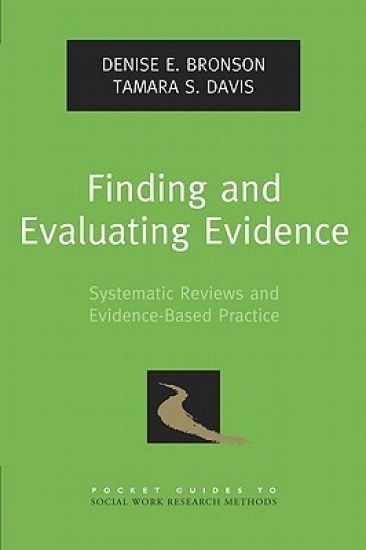
Finding and Evaluating Evidence

Finding and Evaluating Evidence

Denise E. Bronson; Tamara S. Davis

Oxford University Press Inc
2011
nidottu
Evidence-based practice (EBP) promises to have a profound impact on social work practice, education, and scholarship, but adopting EBP depends on the availability and accessibility of evidence and on strategies to synthesize this information. Systematic reviews provide a comprehensive, unbiased method for retrieving and synthesizing relevant research. This pocket guide is a concise introduction that describes the steps required to complete a systematic review and the criteria that can be used to assess the quality of existing reviews. The authors provide straightforward information on how to define a search question that captures the problem's parameters, develop a search strategy that is transparent and comprehensive, assess the quality and credibility of existing research, and summarize the available research to support EBP in social work. Providing coverage for both quantitative and qualitative synthesis methods, examples illustrate the steps and decisions associated with each approach to research synthesis. Key points and suggested readings and websites provide avenues for further study. This pocket guide is an excellent introduction to EBP and systematic reviews that will be valued by social work students, practitioners, and scholars.
What English Language Teachers Need to Know Volume II

What English Language Teachers Need to Know Volume II

Denise E. Murray; MaryAnn Christison

Routledge
2020
sidottu
Designed for pre-service and novice teachers in ELT, What English Language Teachers Need to Know Volumes I, II, and III are companion textbooks organized around the key question: What do teachers need to know and be able to do in order to help their students to learn English? In the Second Edition of Volume II, Murray and Christison return to this essential question and cover the three main facets of teaching: planning, instructing, and assessing L2 English instruction. Addressing new skills and strategies that ESL and EFL teachers require to meet the needs of their shifting student populations who are impacted by changing demographics, different learning contexts, and digital environments, this book offers a strong emphasis on practical applications for classroom teaching that is grounded in current research. This updated and expanded Second Edition features:a new section on teacher learning, including a chapter on exploring digital technologies in ELTnew and updated classroom examples throughoutdiscussions of how teachers can prepare for contemporary challenges, such as population mobility and globalization.The comprehensive texts work for teachers across different contexts—where English is the dominant language, an official language, or a foreign language; for different levels—elementary/primary, secondary, university, or adult education; and for different learning purposes—general English, workplace English, English for academic purposes, or English for specific purposes.
What English Language Teachers Need to Know Volume II

What English Language Teachers Need to Know Volume II

Denise E. Murray; MaryAnn Christison

Routledge
2020
nidottu
Designed for pre-service and novice teachers in ELT, What English Language Teachers Need to Know Volumes I, II, and III are companion textbooks organized around the key question: What do teachers need to know and be able to do in order to help their students to learn English? In the Second Edition of Volume II, Murray and Christison return to this essential question and cover the three main facets of teaching: planning, instructing, and assessing L2 English instruction. Addressing new skills and strategies that ESL and EFL teachers require to meet the needs of their shifting student populations who are impacted by changing demographics, different learning contexts, and digital environments, this book offers a strong emphasis on practical applications for classroom teaching that is grounded in current research. This updated and expanded Second Edition features:a new section on teacher learning, including a chapter on exploring digital technologies in ELTnew and updated classroom examples throughoutdiscussions of how teachers can prepare for contemporary challenges, such as population mobility and globalization.The comprehensive texts work for teachers across different contexts—where English is the dominant language, an official language, or a foreign language; for different levels—elementary/primary, secondary, university, or adult education; and for different learning purposes—general English, workplace English, English for academic purposes, or English for specific purposes.
Saved By His Grace

Saved By His Grace

Denise E. Waters

Lulu.com
2014
nidottu
Saved By His Grace is a gripping story of several lives intertwined. The plot thickens as you turn the pages to reveal more about each character. Witness how each of their lives is affected by choices they have made and discover how they are truly, "Saved by His Grace" Witness how each of their lives is affected by choices they have made and discover how they are truly, "Saved by His Grace."
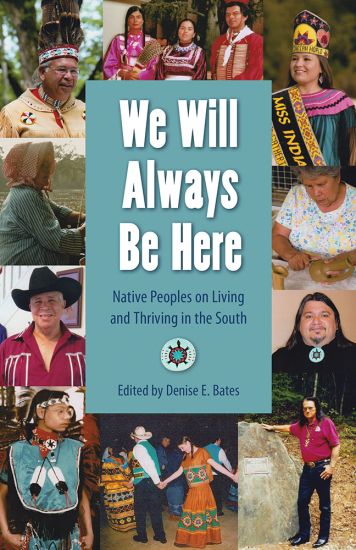
We Will Always Be Here

We Will Always Be Here

Denise E. Bates

University Press of Florida
2016
sidottu
The history of Native Americans in the U.S. South is a turbulent one, rife with conflict and inequality. Since the arrival of Spanish conquistadors in the fifteenth century, Native peoples have struggled to maintain their land, cultures, and ways of life. In We Will Always Be Here, contemporary tribal leaders, educators, and activists share their struggles for Indian identity, self-determination, and community development.Reflecting on such issues as poverty, education, racism, cultural preservation, and tribal sovereignty, the contributors to this volume offer a glimpse into the historical struggles of southern Native peoples, examine their present day efforts, and share their hopes for the future. They also share examples of cultural practices that have either endured or been revitalized. In a country that still faces challenges to civil rights and misconceptions about Indian identity and tribal sovereignty, this timely book builds a deeper understanding of modern Native peoples within a region where they are often overlooked.
What English Language Teachers Need to Know Volume I

What English Language Teachers Need to Know Volume I

Denise E. Murray; MaryAnn Christison

CRC Press Inc
2019
sidottu
Designed for pre-service teachers and teachers new to the field of ELT, What English Teachers Need to Know Volumes I, II, and III are companion textbooks organized around the key question: What do teachers need to know and be able to do in order for their students to learn English? In the Second Edition of Volume I, Murray and Christison return to this essential question and call attention to emerging trends and challenges affecting the contemporary classroom. Addressing new skills and strategies that EFL teachers require to meet the needs of their shifting student populations who are impacted by changing demographics, digital environments, and globalization, this book, which is grounded in current research, offers a strong emphasis on practical applications for classroom teaching. This updated and expanded Second Edition features: a new chapter on technology in TESOL new and updated classroom examples throughout discussions of how teachers can prepare for contemporary challenges, such as population mobility and globalizationThe comprehensive texts work for teachers across different contexts—where English is the dominant language, an official language, or a foreign language; for different levels—elementary/primary, secondary, university, or adult education; and for different learning purposes—general English, workplace English, English for academic purposes, or English for specific purposes.
What English Language Teachers Need to Know Volume I

What English Language Teachers Need to Know Volume I

Denise E. Murray; MaryAnn Christison

CRC Press Inc
2019
nidottu
Designed for pre-service teachers and teachers new to the field of ELT, What English Teachers Need to Know Volumes I, II, and III are companion textbooks organized around the key question: What do teachers need to know and be able to do in order for their students to learn English? In the Second Edition of Volume I, Murray and Christison return to this essential question and call attention to emerging trends and challenges affecting the contemporary classroom. Addressing new skills and strategies that EFL teachers require to meet the needs of their shifting student populations who are impacted by changing demographics, digital environments, and globalization, this book, which is grounded in current research, offers a strong emphasis on practical applications for classroom teaching. This updated and expanded Second Edition features: a new chapter on technology in TESOL new and updated classroom examples throughout discussions of how teachers can prepare for contemporary challenges, such as population mobility and globalizationThe comprehensive texts work for teachers across different contexts—where English is the dominant language, an official language, or a foreign language; for different levels—elementary/primary, secondary, university, or adult education; and for different learning purposes—general English, workplace English, English for academic purposes, or English for specific purposes.
The Other Movement

The Other Movement

Denise E. Bates

THE UNIVERSITY OF ALABAMA PRESS
2022
nidottu
Examines the most visible outcome of the Southern Indian Rights Movement: state Indian affairs commissions In recalling political activism in the post-World War II South, rarely does one consider the political activities of American Indians as they responded to desegregation, the passing of the Civil Rights Acts, and the restructuring of the American political party system. Native leaders and activists across the South created a social and political movement all their own, which drew public attention to the problems of discrimination, poverty, unemployment, low educational attainment, and poor living conditions in tribal communities. While tribal-state relationships have historically been characterized as tense, most southern tribes—particularly non-federally recognized ones—found that Indian affairs commissions offered them a unique position in which to negotiate power. Although individual tribal leaders experienced isolated victories and generated some support through the 1950s and 1960s, the creation of the inter-tribal state commissions in the 1970s and 1980s elevated the movement to a more prominent political level. Through the formalization of tribal-state relationships, Indian communities forged strong networks with local, state, and national agencies while advocating for cultural preservation and revitalization, economic development, and the implementation of community services. This book looks specifically at Alabama and Louisiana, places of intensive political activity during the civil rights era and increasing Indian visibility and tribal reorganization in the decades that followed. Between 1960 and 1990, U.S. census records show that Alabama’s Indian population swelled by a factor of twelve and Louisiana’s by a factor of five. Thus, in addition to serving as excellent examples of the national trend of a rising Indian population, the two states make interesting case studies because their Indian commissions brought formerly disconnected groups, each with different goals and needs, together for the first time, creating an assortment of alliances and divisions.
ISO 9001

ISO 9001

Denise E Robitaille

ASQ Quality Press
2015
sidottu
This handbook was developed to help small and medium-sized organizations better understand ISO 9001:2015. It is intended to facilitate implementation and improvement. The establishment, implementation, and maintenance of an ISO 9001-compliant quality management system (QMS) should allow the organization to experience multiple benefits beyond the achievement of certification. Organizations should also see improvements in the quality of products, customer satisfaction, and process effectiveness-all of which ultimately have a positive impact on the bottom line. It is expected that some readers will have already established a QMS. This handbook will serve to reinforce good practices and will help you better understand the intent and value of some of the requirements of ISO 9001. Since the handbook is especially focused on small and medium-sized organizations, the examples that are provided will have greater applicability and will enhance comprehension, again resulting in increased value. Implementing a QMS in a small organization is not easier or harder than it is in a large one. Resources are different; each organization has its own unique challenges, constraints, and advantages. The thing to always bear in mind is that this is your organization and these are your processes. ISO 9001:2015 defines the requirements, but it does not dictate the method of application. Utilizing this handbook should allow you to develop or rejuvenate your QMS so that it is a benefit to both you and your customer.
Tables from the Rubble: How the Restaurants That Arose After the Great Quake of 1906 Still Feed San Francisco Today
TABLES FROM THE RUBBLE transports readers to San Francisco in the years just after the Great Earthquake of 1906. Amid the ruins, restaurants rose to feed the hungry and lead the recovery. Today, a handful of the restaurants that opened in those boom years remain - some still serving customers in the same spaces where they first opened, offering food and drinks with a direct link to a century-old past. TABLES FROM THE RUBBLE tells the stories of restaurants like Swan Oyster Depot, Liguria Bakery, Comstock Saloon, the Palace Hotel, the House of Shields, John's Grill and Schroeder's. And it follows the journey of Chinatown's Sam Wo, which was saved by the hard work of one family and an entire community committed to the historic restaurant's legacy.
Knowledge Machines

Knowledge Machines

Denise E. Murray

Routledge
2017
sidottu
Provides a wide-ranging survey of the sociolinguistic issues raised by the impact of information technology. The author demonstrates how and in which ways the new technologies both affect human communication and are in turn affected by the way people communicate using the technologies.
Basket Diplomacy

Basket Diplomacy

Denise E. Bates

University of Nebraska Press
2020
sidottu
Before the Coushatta Tribe of Louisiana became one of the state’s top private employers-with its vast landholdings and economic enterprises-they lived well below the poverty line and lacked any clear legal status. After settling near Bayou Blue in 1884, they forged friendships with their neighbors, sparked local tourism, and struck strategic alliances with civic and business leaders, aid groups, legislators, and other tribes. The Coushattas also engaged the public with stories about the tribe’s culture, history, and economic interests that intersected with the larger community, all while battling legal marginalization exacerbated by inconsistent government reports regarding their citizenship, treaty status, and eligibility for federal Indian services. Well into the twentieth century, the tribe had to overcome several major hurdles, including lobbying the Louisiana legislature to pass the state’s first tribal recognition resolution (1972), convincing the Department of the Interior to formally acknowledge the Coushatta Tribe through administrative channels (1973), and engaging in an effort to acquire land and build infrastructure.Basket Diplomacy demonstrates how the Coushatta community worked together-each generation laying a foundation for the next-and how they leveraged opportunities so that existing and newly acquired knowledge, timing, and skill worked in tandem.