Kirjojen hintavertailu. Mukana 11 244 527 kirjaa ja 12 kauppaa.

Kirjahaku

Etsi kirjoja tekijän nimen, kirjan nimen tai ISBN:n perusteella.

1000 tulosta hakusanalla Denise R. Collins

Vampirella: Feary Tales

Vampirella: Feary Tales

Nancy A. Collins; Gail Simone; Devin Grayson; John Shirley; Steve Bissette; Elaine Lee; Denis St. John; Joe R. Lansdale; Eric Trautmann; Stuart Moore

Dynamic Forces Inc
2015
nidottu
Nancy A. Collins (Swamp Thing, Sunglasses After Dark) has called upon some of today's finest creative talents — including Gail Simone, Steve Niles, Joe R. Lansdale, Devin Grayson, Stephen R. Bissette, and many more — to celebrate Vampirella's 45th Anniversary by crafting an anthology of twisted tales, bizarre bedtime stories, and fearsome fables in the tradition of the original Warren magazines, each featuring everyone's favorite sexy, kick-ass vampire-turned-monster hunter. And, boy, have they delivered! While exploring the Transylvanian castle she's recently inherited, Vampirella discovers a strange old book of "Feary Tales" that seems oddly familiar. Upon opening it, she is sucked inside its pages and lands in a weird alternate reality, where she is compelled by a disembodied voice calling itself 'The Storyteller' to live out each of the 'feary tales' if she ever hopes to return to reality.Collects the five-issue Vampirella: Feary Tales comic book series, with a complete cover gallery.
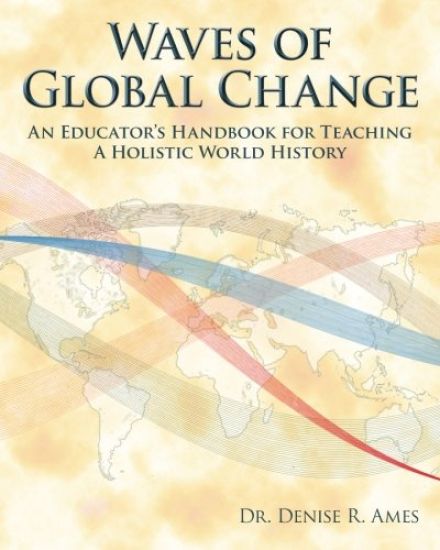
Waves of Global Change: An Educator's Handbook for Teaching a Holistic World History
Veteran educator Dr. Denise R. Ames has written this handbook especially for educators, K through University, and pre-service teachers in order to differentiate how this holistic world history is taught compared to a traditional world history. The book lays out the principles of the holistic world history model for educators to use directly in the classroom. The purpose of this handbook is to help educators conceptualize and teach about world history in a more holistic way using a systems approach, a global perspective, and a close examination of historical patterns. Laying out the principles of the holistic world history model for educators to use directly in the classroom, Waves of Global Change: An Educator's Handbook explores how all the facets of world history can be successfully pulled together into a thought-provoking and challenging course. This book is for educators and education students. Each chapter includes "Questions to Consider," spurring critical thinking and encouraging readers to "see" the information from perspectives beyond their own. Pictures, activities, suggestions, images, diagrams, graphs, and free on-line resources all heighten understanding. Table of Contents Chapter 1. An Introduction to a Holistic Teaching Model for Educators Chapter 2. Systems Thinking: An Approach to Understanding a Holistic World History Chapter 3. Worldviews: The Way We Look at the World Chapter 4. Waves of Global Change: A Holistic World History Model Chapter 5. 20 Advantages of a Holistic World History Model Chapter 6. Circle of Learning Chapter 7. World History Teaching Tools and Strategies Chapter 8. Strengths and Weaknesses of the Holistic World History Model 1. An Introduction to a Holistic Teaching Model for Educators - After an introductory story about an imaginary woman who lives through the five waves of global change, this chapter introduces the holistic approach used in this world history. Key questions to consider in developing your world history course are posed. 2. Systems Thinking: An Approach to Understanding a Holistic World History - This chapter describes system thinking and makes suggestions on how it can be applied to a holistic world history course. Comparisons between a holistic world history and traditional world history are given and analyzed. 3. Worldviews: The Way We Look at the World - After giving a definition of worldview, the five worldviews-indigenous, modern, fundamentalist, globalized, and transformative-are explained with ideas for integrating this information into your world history course. 4. Waves of Global Change: A Holistic World History Model - This chapter gives an overview of the five waves-communal, agricultural, urban, modern, and global. Also, introduced are the five flows that flow through the universe, our solar system, life on earth, human evolution, and life today. The five comparative currents and twenty-five sub-currents are explained. 5. 20 Advantages of a Holistic World History Model - The 20 advantages of a holistic world history course are listed and explained, with examples given as well. 6. Circle of Learning - A circle of learning illustrates a way in which world history can be taught that utilizes six different skills: remember, understand, apply, analyze, evaluate, and create. Examples of the skills and prompts to use in the classroom are included. 7. World History Teaching Tools and Strategies - This chapter highlights fourteen suggestions and concrete examples for helping to make this holistic world history come to life for students. 8. Strengths and Weaknesses of the Holistic World History Model - This final chapter gives a wrap-up for this holistic teaching approach by considering the strengths and weaknesses of the model.
The Global Economy: Connecting the Roots of a Holistic System

The Global Economy: Connecting the Roots of a Holistic System

Denise R. Ames

Global Awareness Publishing
2013
nidottu
The global economy is complex, confusing, and crucial to understand if we are to have a stable economic future. This book helps sort out the often overwhelming financial events that are directly affecting us all, in ways we don't always realize. Applying a holistic, "big picture" approach to the economy, educator Dr. Denise Ames explores the interconnectedness of the various facets of the global economy, including free market capitalism, economic globalization, and financialization. This book is for adult learners, educators, and students from grade nine through university. Each chapter includes "Questions to Consider," spurring critical thinking and encouraging readers to "see" the information from perspectives beyond their own. Pictures, activities, suggestions, images, diagrams, graphs, and free on-line resources all heighten understanding. Chapter 1. An Overview of the Global Economy - Definitions and an overview of the global economy comprise this chapter. A holistic, systems approach is used to describe and critique the global economy. Five contemporary worldviews-indigenous, modern, fundamentalist, globalized, and transformative-shed light on how the global economy is interpreted today. Chapter 2. Historical Roots of the Global Economy - This chapter traces the historical roots of the global economy beginning with the Western European economy around 1500. Events are explained through four historical eras: Commercial Capitalism, (1500-1750), Industrial Capitalism (1750-1914), Early Twentieth Century (1914-1945), and the Post World War II Economy (1945-the 1970s). The chapter concludes with the economic crisis of the 1970s and the shift to the political and economic right. Chapter 3. The Neoliberal Stew: A Dozen Essential Ingredients - The chapter starts with an explanation of the philosophy of neoliberalism and its displacement of managed capitalism. The dozen ingredients include free trade, privatization, deregulation, smaller government, supply side economics, lower taxes, deficit reduction, "markets know best," government support of corporations, labor, rugged individualism, and spreading neoliberalism. Chapter 4. The Impact of Neoliberalism in the United States: Ten Consequences - The ten consequences of neoliberalism and their impact in the United States: reduction of self-reliance and the local economy, unbridled economic growth, rampant consumerism, increased commodification, concentration of corporate power, rise of externalized costs, build-up of debt, emasculation of labor, widening social inequality, and the ascension of dollar democracy. Chapter 5. The Economic Globalization Puzzle: Ten Pieces - The ten pieces of the economic globalization puzzle consist of a reduction of local communities and self-reliance, economic growth, a promoting network, making the rules, free trade, privatization and commodification, concentration of corporate power, specialization, the "squeeze" of labor, and military hegemony. Chapter 6. The Impact of Economic Globalization - In this chapter, the impact of economic globalization around the world is evaluated. The direst economic impact, as explained, is on the environment, contributes to greater inequality, and depresses general well-being. Chapter 7. The Financial Sector: Ten Fatal Flaws - After an overview of the financial sector, ten of its fatal flaws are described and evaluated: large banks, deregulation, the Federal Reserve, a real estate bubble, mountains of debt, dicey financial products, speculation, moral hazard and lack of transparency, deceptive rating agencies, and bloated compensation schemes. Chapter 8. The Financial Sector: Crisis and its Aftermath - The patterns of the financial crises are analyzed and several examples are given, including the "tulip mania." The 2008 financial crisis is explained in some depth and its aftermath evaluated. What is the "new normal?"
Financial Literacy: Wall Street and How it Works

Financial Literacy: Wall Street and How it Works

Denise R. Ames

Global Awareness Publishing
2014
nidottu
The financial sector is a mysterious part of the global economy, shrouded in ambiguity for those who aren't in it. Yet it is a behemoth that has grown to overshadow other economic sectors, such as manufacturing and agriculture, and it therefore demands our careful attention. Financial Literacy looks closely at the roots and effects of the financial sector. Many books concentrate on what is wrong with the system, but they fail to give us a firm grasp of why its turmoil started in the first place. Nor is it all that helpful to blame everything on the bankers. Author, educator Dr. Denise Ames, feels we need to dig deeper. Financial Literacy presents a clear, holistic examination of the inner workings of the financial sector, laying the groundwork for understanding the crises it has played a role in. With this clearer understanding, we will be better equipped to critique the financial sector, see its fault lines, and propose workable solutions. This book is for adult learners, educators, and students from grade nine through university. Each chapter includes "Questions to Consider," spurring critical thinking and encouraging readers to "see" the information from perspectives beyond their own. Pictures, activities, suggestions, images, diagrams, graphs, and free on-line resources all heighten understanding. Chapter Summaries Chapter 1. The Financial Sector: An Overview After a short overview of the financial sector, a description of the five sectors of the economy is given. Definitions of different forms of capitalism help explain the financial sector. Addressed in the chapter is why the financial sector has become such a dominant segment of the economy. Recklessness, as a master national narrative, helps explain the philosophy surrounding the rise of the financial sector. Chapter 2. Financial Crises Patterns of financial crises are laid out in this chapter. Descriptions of different financial crises are presented beginning with "Tulip Mania" in the Netherlands in the 1770s, highlighting the Stock Market Crash of 1929, and discussing several post-1970s bubbles including the dot com bubble, Japan's asset price bubble in the 1980s, the East Asian bubble in the 1990s, and the bubble in Argentina in 1999-2001. Chapter 3. Ten Fatal Flaws in the Financial Sector: Part I Ten flaws, as seen by the author, are presented and analyzed in chapters three and four. Five of the ten flaws in this chapter include too big to fail banks (TBTF), unchecked deregulation, a "market knows best" Federal Reserve, a real estate bubble and out-of-control lending, and mountains of debt. Chapter 4. Ten Fatal Flaws in the Financial Sector: Part II The final five flaws are presented and analyzed in this chapter. They include dicey financial products, financial speculative mania, moral hazard and lack of transparency, deceptive rating agencies, and bloated compensation schemes. Chapter 5. The Financial Crisis of 2007-2008 The financial crisis is explained in some depth, beginning with the fall of the Lehman Brothers Investments in the fall of 2008. The events and actions taken to alleviate a complete economic meltdown are narrated and analyzed. Chapter 6. The Aftermath of the 2008 Financial Crisis This chapter explains the "New Normal" that came about after 2008, including the 5 Rs--revolt, restore, react, reform, and rebuild. Each of the 5 Rs is explained using examples, and special emphasis is placed on the fifth R, rebuild. The components of the rebuild agenda include emphasizing a small and local economy, challenging the consumer growth model, renewing public ownership, healing our planet, and changing our values.
America Apart: How Multiculturalism is Destroying American Race Relations
In America Apart: The Inconvenient Truth about Multiculturalism and Racism Today, James R. Long exposes the myths that are leading America toward a reckoning from which it may not be able to recover. Long contends that a nation comprised of different races - sans identity politics - could work, but that a nation comprised of different cultures will not. The evidence for his sweeping argument incorporates psychology, history, economics and Long's own personal experiences in what he calls the dungeon of diversity, the Texas Department of Criminal Justice.America Apart begins with a frank discussion on the merits/demerits of the two competing models and philosophies seen within American society: the salad bowl and melting pot. Chapters 2 - 5 dissect what Long calls 'the narrative' - that disparities between racial group's outcomes in health care, education, employment and the justice system are solely caused by racism and discrimination. Chapter five, Crime, Race, and the Justice System is broken into two parts. In part one, Long dismantles, claim by claim, Michelle Alexander's award-winning, best-selling book, The New Jim Crow. Part two focuses on interracial crime and in particular how the intelligentsia misrepresents the facts when the perpetrator is white and the victim black.The origins for this false narrative are given their own chapter (7) in which Long takes the reader back in time to early twentieth century Germany and the Institute for Social Research. Here, he details where much of the modern Left's ideology comes from and how its vision is propagated. Economic Marxism gave way to cultural Marxism. The proletariat got replaced with non-whites, gays and women.In the final chapter, Long explains what the proponents of the narrative want (massive white guilt) and what the consequences will be if they achieve their goals. Along the way, Long dispels the falsehoods surrounding bi-lingualism, grievance politics and reparations. Using his own legal case as evidence, Long also takes on the results-oriented, judicial activist approach to law and several of its advocates including renowned historian John Hope Franklin.America Apart ends with an ominous warning: that Americans must shed their hyphenated ethnicities/identities and become Americans only. If not, they risk turning their civil society into an ethno-police state - like the one in which the author himself resides.
Leaning on a Shovel, Hoping for a Hole: Supernatural

Leaning on a Shovel, Hoping for a Hole: Supernatural

Denise R. Holt

Independently Published
2019
nidottu
DO YOU LOVE SUPERNATURAL? DO YOU LIKE BIG BROTHER DEAN, LITTLE BROTHER SAM STORIES. BUT CAN'T FIND THEM EXCEPT ON FANFICTION SITES WITH ADD ON'S TO THE TELEVISION EPISODES. WELL, NOW YOU HAVE FINALLY FOUND THEM ON AMAZON I have always looked for stories about Big Brother Dean and Little Brother Sam. If you're like me, it's a big disappointment. Since I couldn't find them, I decided to write them myself. I currently have over 52 stories written and will be posting a story a month on Amazon. I hope you find me, like my stories, and read them. I know there are more Supernatural Fans out there like me Spread the word, the stories you want to read are finally coming to Amazon John Winchester said, "It's like leaning on a shovel, hoping for a hole."Sam's first crush happens to be right in the middle of a hunt, what ensues is confusion, mistakes, and repercussions. Will Sam come out of this hunt in one piece?A Big Brother Dean, Little Brother Sam Series
Sophisticated

Sophisticated

Denise R. Smith

Lulu.com
2013
nidottu
Sophisticated is about five woman telling the truth through their own eyes on how they have over come their challenges while holding on to their dignity. Kathleen is recently single after being married for thirty years and losing her husband to cancer. As she steps back out into the world of the singles she finds out that things don't always appear as they seem and having the wrong preception of someone could could cost you your life. Sophisticated will spark a nerve in every woman and forced them to take a closer look at themselves!
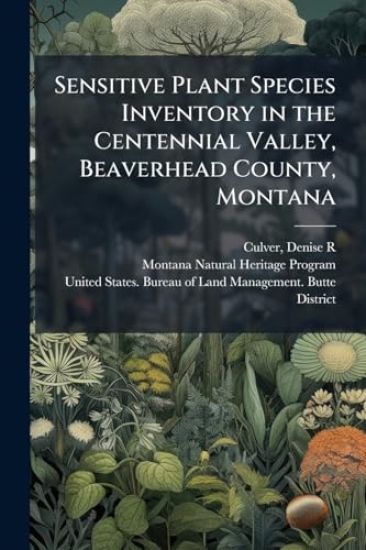
Sensitive Plant Species Inventory in the Centennial Valley, Beaverhead County, Montana

Sensitive Plant Species Inventory in the Centennial Valley, Beaverhead County, Montana

Denise R Culver; Montana Natural Heritage Program

Palala Press
2018
pokkari
This work has been selected by scholars as being culturally important, and is part of the knowledge base of civilization as we know it. This work was reproduced from the original artifact, and remains as true to the original work as possible. Therefore, you will see the original copyright references, library stamps (as most of these works have been housed in our most important libraries around the world), and other notations in the work.This work is in the public domain in the United States of America, and possibly other nations. Within the United States, you may freely copy and distribute this work, as no entity (individual or corporate) has a copyright on the body of the work.As a reproduction of a historical artifact, this work may contain missing or blurred pages, poor pictures, errant marks, etc. Scholars believe, and we concur, that this work is important enough to be preserved, reproduced, and made generally available to the public. We appreciate your support of the preservation process, and thank you for being an important part of keeping this knowledge alive and relevant.
A Glimpse of My Soul

A Glimpse of My Soul

Denise R. Ervin

Createspace Independent Publishing Platform
2014
nidottu
This collection of poems contains two decades of inspiration. While it references many Christian ideas and themes, the pieces are largely spiritual and meant to inspire people of all faiths.