Kirjojen hintavertailu. Mukana 11 239 951 kirjaa ja 12 kauppaa.

Kirjahaku

Etsi kirjoja tekijän nimen, kirjan nimen tai ISBN:n perusteella.

1000 tulosta hakusanalla Denisse Riley

Dash Diet Cookbook: Quick and Delicious Recipes

Dash Diet Cookbook: Quick and Delicious Recipes

Denisse Riley

Createspace Independent Publishing Platform
2015
nidottu
The Dietary Approaches to Stop Hypertension or DASH diet is designed to help lower one's blood pressure wherein it specifically follows a low-sodium prerequisite. However, the DASH diet does not only limit salt but it also involves on lowering the intake of cholesterol and saturated fat. By doing so, this type of diet will definitely help create a balanced food intake for hypertensive patients as well as those who want to adopt a healthy diet. Furthermore, the DASH Diet was created by medical practitioners to address problems regarding diet as a whole including sodium diet intake. In this eBook, you get to learn in a very concise way what DASH Diet is all about. You also learn what you need to know about the foods you will eat and what you must eliminate from your diet. Here, is a quick list of what you will benefit from with this book: -The book includes a graphic representation of the food that you can incorporate in your diet that follows the DASH Diet guidelines. This graph will also help you to lose weight if that's one of your goals. -There are approximately 25 recipes inside this book. The recipes includes dishes perfect for breakfast, lunch, dinner and even as a snack. -Each of the recipes included in this book has specific sodium content, which is quite helpful for people who are on a DASH-sodium restricted diet. So, to ensure that you are within your sodium limit in a day, just add the sodium content of each of the recipe you have chosen for the day-that's how easy it is to use this book With this book, you will have a good background on DASH Diet and how it works-basically. Then you have 25 different DASH Diet recipes to choose from that's not only DASH Diet approved but gastronomically delicious.

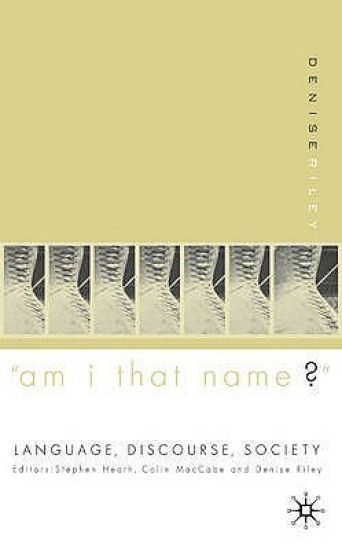
‘Am I That Name?’

‘Am I That Name?’

Denise Riley

Palgrave Macmillan
1988
sidottu
Writing about changes in the notion of womanhood, Denise Riley examines, in the manner of Foucault, shifting historical constructions of the category of "women" in relation to other categories central to concepts of personhood: the soul, the mind, the body, nature, the social. Feminist movements, Riley argues, have had no choice but to play out this indeterminacy of women. This is made plain in their oscillations, since the 1790s, between concepts of equality and of difference. To fully recognize the ambiguity of the category of "women" is, she contends, a necessary condition for an effective feminist political philosophy.
‘Am I That Name?’

‘Am I That Name?’

Denise Riley

Palgrave Macmillan
1988
nidottu
Writing about changes in the notion of womanhood, Denise Riley examines, in the manner of Foucault, shifting historical constructions of the category of "women" in relation to other categories central to concepts of personhood: the soul, the mind, the body, nature, the social. Feminist movements, Riley argues, have had no choice but to play out this indeterminacy of women. This is made plain in their oscillations, since the 1790s, between concepts of equality and of difference. To fully recognize the ambiguity of the category of "women" is, she contends, a necessary condition for an effective feminist political philosophy.
The Language, Discourse, Society Reader

The Language, Discourse, Society Reader

Denise Riley

Palgrave Macmillan
2004
sidottu
For the last twenty-five years, Language, Discourse, Society has been the most intellectually challenging series in English. Its titles range across the disciplines from linguistics to biology, from literary criticism to law, combining vigorous scholarship and theoretical analysis at the service of a broad political engagement. This anniversary reader brings together a fascinating group of thinkers from both sides of the Atlantic with an introductory overview from the editors which considers the development of theory and scholarship over the past two decades.
The Language, Discourse, Society Reader

The Language, Discourse, Society Reader

Denise Riley

Palgrave Macmillan
2004
nidottu
For the last twenty-five years, Language, Discourse, Society has been the most intellectually challenging series in English. Its titles range across the disciplines from linguistics to biology, from literary criticism to law, combining vigorous scholarship and theoretical analysis at the service of a broad political engagement. This anniversary reader brings together a fascinating group of thinkers from both sides of the Atlantic with an introductory overview from the editors which considers the development of theory and scholarship over the past two decades.
The Words of Selves

The Words of Selves

Denise Riley

Stanford University Press
2000
sidottu
Marlene Dietrich had the last line in Orson Welles's A Touch of Evil: "What does it matter what you say about other people?" The author ponders the question: What does it matter what you say about yourself? She wonders why the requirement to be a something-or-other should be so hard to satisfy in a manner that rings true in the ears of its own subject. She decides that some hesitations and awkwardness in inhabiting many categories of the person—including those celebrated by what is sometimes termed identity politics—need not evidence either psychological weakness or political lack of nerve. Neither an "identity" nor a "nonidentity" can quite convince. But if this discomfort inhering in self-characterization needs to be fully admitted and registered—as something that is simultaneously linguistic and affective—it can also be cheerfully tolerated. Here language is not treated as a guileful thing that leads its speakers astray. Though the business of being called something, and of being positioned by that calling, is often an unhappy affair, irony can offer effective therapy. Even if uncertain and volatile categorizations do trouble the politics that they also shape, they hardly weaken the empathetic solidarity that is distinct from identification. The verbal irony of self-presentation can be politically helpful. Questioning the received diction of the self cannot be dismissed merely as a luxury of those in secure positions, but instead can move toward a conception of a constructive nonidentity. This extended meditation on the language of the self within contemporary social politics also considers the lyrical "I" and linguistic emotionality, the historical status of irony, and the possibilities of a nonidentitarian solidarity that is unapologetically alert to the affect of language.
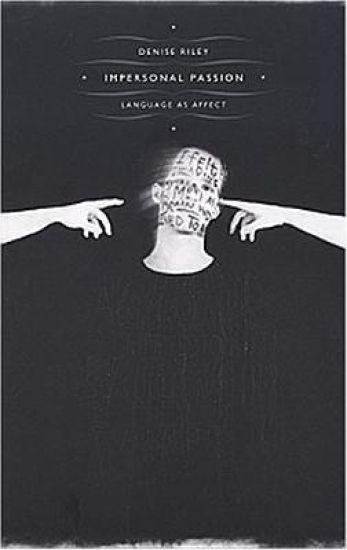
Impersonal Passion

Impersonal Passion

Denise Riley

Duke University Press
2005
sidottu
Denise Riley is renowned as a feminist theorist and a poet and for her remarkable refiguring of familiar but intransigent problems of identity, expression, language, and politics. In Impersonal Passion, she turns to everyday complex emotional and philosophical problems of speaking and listening. Her provocative meditations suggest that while the emotional power of language is impersonal, this impersonality paradoxically constitutes the personal. In nine linked essays, Riley deftly unravels the rhetoric of life’s absurdities and urgencies, its comforts and embarrassments, to insist on the forcible affect of language itself. She teases out the emotional complexities of such quotidian matters as what she ironically terms the right to be lonely in the face of the imperative to be social or the guilt associated with feeling as if you’re lying when you aren’t. Impersonal Passion reinvents questions from linguistics, the philosophy of language, and cultural theory in an illuminating new idiom: the compelling emotion of the language of the everyday.
Impersonal Passion

Impersonal Passion

Denise Riley

Duke University Press
2005
pokkari
Denise Riley is renowned as a feminist theorist and a poet and for her remarkable refiguring of familiar but intransigent problems of identity, expression, language, and politics. In Impersonal Passion, she turns to everyday complex emotional and philosophical problems of speaking and listening. Her provocative meditations suggest that while the emotional power of language is impersonal, this impersonality paradoxically constitutes the personal. In nine linked essays, Riley deftly unravels the rhetoric of life’s absurdities and urgencies, its comforts and embarrassments, to insist on the forcible affect of language itself. She teases out the emotional complexities of such quotidian matters as what she ironically terms the right to be lonely in the face of the imperative to be social or the guilt associated with feeling as if you’re lying when you aren’t. Impersonal Passion reinvents questions from linguistics, the philosophy of language, and cultural theory in an illuminating new idiom: the compelling emotion of the language of the everyday.
Say Something Back and Time Lived, Without Its Flow
‘She’s one of the best poets around’ – Andrew Motion, former Poet Laureate of the United KingdomPart poetry collection, part consolation, Say Something Back and Time Lived, Without Its Flow collects Denise Riley’s moving documents of loss and grief together for the first time.Rocked by the horrific experience of maternal grief, Denise Riley wrote the much-celebrated Say Something Back, in which the poet-philosopher contemplates the natural world and physical law, and considers what it means to invoke those who are absent. These are poems which expand our sense of human speech and what it can mean, of what is drawn forth from us when we address our dead.These lyric poems and elegies are accompanied by the beautiful, unflinching Time Lived, Without Its Flow. Diary entries written after receiving news of her adult son’s death are woven into a life portrait of loss. A ruminative post-script to these diaries follows, in which Riley examines the experience with a philosopher’s precision, mapping through it a literature of consolation.Published in a single volume for the first time, Say Something Back and Time Lived, Without Its Flow offers with remarkable grace and insight kind counsel to all those living in the wake of grief.
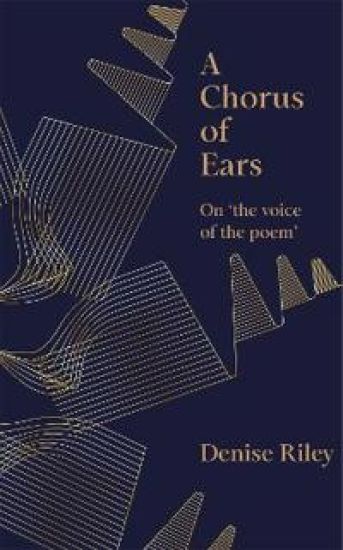
A Chorus of Ears

A Chorus of Ears

Denise Riley

PAN MACMILLAN
2026
sidottu
Originally delivered as a series of lectures at Trinity College, Cambridge, in A Chorus of Ears Denise Riley meditates upon the emphasis we place upon the persona of the poet, relegating their actual poetry to a second-order importance. Prize culture and the primacy of the poet – as opposed to the poem – transform criticism into a beauty contest, constraining our ability to meet the lyric on its own terms. What, Riley asks, might be discovered about the purpose of poetry, its originary point within our language and more yet besides, when we liberate it from the persona of the author? In allowing the poem to speak, what might we hear? ‘One of the most eloquent thinkers about our life in language’ – The Sunday Times
Time Lived, Without Its Flow

Time Lived, Without Its Flow

Denise Riley

Picador
2019
sidottu
'One of the most eloquent thinkers about our life in language' The Sunday TimesTime Lived, Without Its Flow is a beautiful, unflinching essay on the nature of grief from critically acclaimed poet Denise Riley. From the horrific experience of maternal grief Riley wrote her celebrated collection Say Something Back, a modern classic of British poetry. This essay is a companion piece to that work, looking at the way time stops when we lose someone suddenly from our lives. The first half is formed of diary-like entries written by Riley after the news of her son’s death, the entries building to paint a live portrait of loss. The second half is a ruminative post script written some years later with Riley looking back at the experience philosophically and attempting to map through it a literature of consolation. Written in precise and exacting prose, with remarkable insight and grace this book will form kind counsel to all those living on in the wake of grief. A modern-day counterpart to C. S. Lewis’s A Grief Observed.Published widely for the first time since its original limited release, this revised edition features a special introduction by Max Porter, author of Grief is A Thing With Feathers.'Her writing is perfectly weighted, justifies its existence' - Guardian
Selected Poems

Selected Poems

Denise Riley

Picador
2019
pokkari
Denise Riley has pursued her singular path with a determined disregard for poetic fashion: a poet of immense musical gifts and formal skill, as happy in traditional forms as experimental, her non-alignment with any ‘tribe’ has led to a rich and various poetry that, while densely allusive and intellectually uncompromising, remains emotionally open towards the reader at the most profound level. Say Something Back, her lyric meditation on bereavement, won Riley universal acclaim – and a wide and long-deserved readership. Her Selected Poems offers a generous overview of a working life which has taken in philosophy, feminism, literary history, song and aphorism – and within which the old certainties are interrogated and shaken at every turn. Hers is a voice through which we come to better understand one another, the meaning of our time here, and the nature of human communication itself.‘Wide-ranging, sometimes anguished, her poems are fascinating and often beautiful, and certainly more than usually thought-provoking.’ - Guardian
My Name is Pickle

My Name is Pickle

Denise Riley

Xulon Press
2023
nidottu
My name is Pickle is about a little girl and the things she loves. As she goes through life she encounters a bundle of firsts, with imagination, excitement, and giggles. She is filled with love, laughter, and surprises. She will snuggle right into your heart. She has magic in her smile and the things she loves are things I bet you love, too. My name is Denise or Nina to some. I am a retired educator, wife, mother to four adult children, grandmother, and great-grandmother. I am an only child and I grew up in Oklahoma City, Oklahoma. I graduated from John Marshall High School and then went to Oklahoma State University where I earned an elementary education degree and a master's degree in Curriculum and Instruction as well as an administrator's certificate. I taught school for 14 years in Oklahoma, California, and Virginia. My next 30 years in education were at the Oklahoma Technical Assistance Center where I later became the Assistant Director. The center provided technical assistance and evaluation services to all schools in Oklahoma. I was inspired to write this story by my daughter who was nicknamed Pickle. She loved everything, especially pickles. This story brings back so many happy memories of childhood innocence, joy, imagination, and the unconditional love that children give so willingly as they meet each day with anticipation and excitement.
Say Something Back & Time Lived, Without Its Flow

Say Something Back & Time Lived, Without Its Flow

Denise Riley

New York Review of Books
2020
nidottu
A moving meditation on grief and motherhood by one of Britain's most celebrated poets. The British poet Denise Riley is one of the finest and most individual writers at work in English today. With her striking musical gifts, she is as happy in traditional forms as experimental, and though her poetry has a kinship to that of the New York School, at heart she is unaligned with any tribe. A distinguished philosopher and feminist theorist as well as a poet, Riley has produced a body of work that is both intellectually uncompromising and emotionally open. This book, her first collection of poems to appear with an American press, includes Riley's widely acclaimed recent volume Say Something Back, a lyric meditation on bereavement composed, as she has written, "in imagined solidarity with the endless others whose adult children have died, often in far worse circumstances." Riley's new prose work, Time Lived, Without Its Flow, returns to the subject of grief, just as grief returns in memory to be continually relived.
The Words of Selves

The Words of Selves

Riley Denise

Stanford University Press
2000
pokkari
Marlene Dietrich had the last line in Orson Welles's A Touch of Evil: "What does it matter what you say about other people?" The author ponders the question: What does it matter what you say about yourself? She wonders why the requirement to be a something-or-other should be so hard to satisfy in a manner that rings true in the ears of its own subject. She decides that some hesitations and awkwardness in inhabiting many categories of the person—including those celebrated by what is sometimes termed identity politics—need not evidence either psychological weakness or political lack of nerve.Neither an "identity" nor a "nonidentity" can quite convince. But if this discomfort inhering in self-characterization needs to be fully admitted and registered—as something that is simultaneously linguistic and affective—it can also be cheerfully tolerated. Here language is not treated as a guileful thing that leads its speakers astray. Though the business of being called something, and of being positioned by that calling, is often an unhappy affair, irony can offer effective therapy. Even if uncertain and volatile categorizations do trouble the politics that they also shape, they hardly weaken the empathetic solidarity that is distinct from identification. The verbal irony of self-presentation can be politically helpful. Questioning the received diction of the self cannot be dismissed merely as a luxury of those in secure positions, but instead can move toward a conception of a constructive nonidentity.This extended meditation on the language of the self within contemporary social politics also considers the lyrical "I" and linguistic emotionality, the historical status of irony, and the possibilities of a nonidentitarian solidarity that is unapologetically alert to the affect of language.
Gift Basket Making in 10 Simple Steps: I'm Densie Riley "The GIft Basket Lady" in my book "Gift Basket Making in 10 Simple Steps". I share with you st
http: //www.LearnToMakeAGiftBasket.com Hello, I'm Denise Riley. "The Gift Basket Lady" Thank you for your interest in gift basket making. I will share with you how to make incredible gifts that will be remembered and treasured long after they are received. Making a personalized gift basket for someone that you care about is very thoughtful. When you put your heart and soul into making a gift, it means so much more than a store bought one. Once you get started, you won't be able to stop making incredible gifts for your friends and family. Gift baskets can be made for any occasion and with any budget. I created a 10 step easy to follow guideline to help you understand the process to get you started on making beautiful personalized gift baskets. Go to: http: //www.LearnToMakeAGiftBasket.com I also have video online training for Custom Gift Baskets, Gift Bags & Gift Cards