

Kirjahaku
Etsi kirjoja tekijän nimen, kirjan nimen tai ISBN:n perusteella.
1000 tulosta hakusanalla Dennis D. Patterson

Chantry Island was motivated by the 1975 movie Jaws, directed by Stephen Spielberg. The seeds that were planted in my mind over forty years ago burst into life in July 2019 under the most unlikely of circumstances. There are three parts to the story, all of which are linked by the great white shark. The setting is the Atlantic Seaboard of the United States. All the characters are American, and the spelling reflects this fact.In Part One, Jeff Robinson, who has just completed his last year at Roslin University, is driving to his summer lifeguard job at Carleton Place, which is close to the town of Brighton. He offers a ride to Stacey Murray, a beautiful young woman and the receptionist at the Clarendon Resort, which is also near Brighton. They bond very quickly, and on a quiet Sunday morning while swimming to Chantry Island, Stacey is attacked and killed by a great white shark. Sam Miller (the part-time lighthouse keeper) is the only witness to her horrific death.In Part Two, Doctor Paul Reynolds marries Maureen Stapleton, an English secondary teacher. During an ill-fated sailing venture along the coast, their sailboat, called the Windhover, becomes stranded just outside Brighton's harbor due to a lack of wind. Because they need gasoline for their small engine, Paul decides to row the dinghy to the pier and walk the short distance to Smitty's Garage. When he stops to rest near the Brighton lighthouse, the same great white shark that killed Stacey Murray explodes into the dinghy. Paul's body was never found. In the inquest that follows, the reader will learn more about sharks than most people do in their lifetime.In Part Three, the manuscript focuses upon the fishing trawler Southern Cross and its new owner Charlie Roach. Catching fewer fish compels him and his close friend Chase Givens to fish much farther from shore. The massive shark becomes tangled in their net. Charlie is unsuccessful in his attempt to kill it. As the years pass, he becomes stricken with pancreatic cancer and asks his son Jacob to push him in his wheelchair to the baseball outfield. They talk about the afterlife and reconciliation. Jacob gives the eulogy for his father. The town of Brighton experiences rapid development and is never the same.The Prologue assumes great importance, because it reunites the reader with Jeff Robinson. It will leave a significant impression. The story takes place along the Carolina coastline of the Atlantic Seaboard.

Chantry Island was motivated by the 1975 movie Jaws, directed by Stephen Spielberg. The seeds that were planted in my mind over forty years ago burst into life in July 2019 under the most unlikely of circumstances. There are three parts to the story, all of which are linked by the great white shark. The setting is the Atlantic Seaboard of the United States. All the characters are American, and the spelling reflects this fact.In Part One, Jeff Robinson, who has just completed his last year at Roslin University, is driving to his summer lifeguard job at Carleton Place, which is close to the town of Brighton. He offers a ride to Stacey Murray, a beautiful young woman and the receptionist at the Clarendon Resort, which is also near Brighton. They bond very quickly, and on a quiet Sunday morning while swimming to Chantry Island, Stacey is attacked and killed by a great white shark. Sam Miller (the part-time lighthouse keeper) is the only witness to her horrific death.In Part Two, Doctor Paul Reynolds marries Maureen Stapleton, an English secondary teacher. During an ill-fated sailing venture along the coast, their sailboat, called the Windhover, becomes stranded just outside Brighton's harbor due to a lack of wind. Because they need gasoline for their small engine, Paul decides to row the dinghy to the pier and walk the short distance to Smitty's Garage. When he stops to rest near the Brighton lighthouse, the same great white shark that killed Stacey Murray explodes into the dinghy. Paul's body was never found. In the inquest that follows, the reader will learn more about sharks than most people do in their lifetime.In Part Three, the manuscript focuses upon the fishing trawler Southern Cross and its new owner Charlie Roach. Catching fewer fish compels him and his close friend Chase Givens to fish much farther from shore. The massive shark becomes tangled in their net. Charlie is unsuccessful in his attempt to kill it. As the years pass, he becomes stricken with pancreatic cancer and asks his son Jacob to push him in his wheelchair to the baseball outfield. They talk about the afterlife and reconciliation. Jacob gives the eulogy for his father. The town of Brighton experiences rapid development and is never the same.The Prologue assumes great importance, because it reunites the reader with Jeff Robinson. It will leave a significant impression. The story takes place along the Carolina coastline of the Atlantic Seaboard.

This book is a balanced account of the political, diplomatic, and military currents that influenced Japan's attempts to surrender and the United States's decision to drop the atomic bombs. Based on extensive research in both the United States and Japan, this book allows the reader to follow the parallel decision-making in Tokyo and Washington that contributed to lost opportunities that might have allowed a less brutal conclusion to the war. Topics discussed and analyzed include Japan's desperate military situation; its decision to look to the Soviet Union to mediate the conflict; the Manhattan Project; the debates within Truman's Administration and the armed forces as to whether to modify unconditional surrender terms to include retention of Emperor Hirohito and whether to plan for the invasion of Japan's home islands or to rely instead on blockade and bombing to force the surrender.

A general history of the critical first year of the Korean War, this study deals primarily with relations between General Douglas MacArthur and President Harry S. Truman from June 1950 to April 1951, a period that defined the war's direction until General Mark Clark, the final U.N. Commander, signed the Armistice two years later. Although the ever-changing military situation is outlined, the main focus is on policymaking and the developing friction between Truman and MacArthur. Wainstock contradicts the common view that MacArthur and Truman were constantly at odds on the basic aims of the war. In the matter of carrying the fight to Communist China, MacArthur and the Joint Chiefs differed only on timing, not on the need for such action.The end of the Cold War has provided historians with a better opportunity to study the forces that shaped the thinking of America's leaders at the time of the Korean War. The sheer quantity of material now available, while daunting, is filled with colorful and outstanding personalities, dramatic action, and momentous actions that have had an impact on world events even to the present day. Wainstock ultimately concludes that Washington placed too much emphasis on anti-Communist ideology, rather than long-term national interest, in the decision first to intervene in the war and later to cross the crucial 38th Parallel. He also emphasizes the important contributions of General Matthew B. Ridgway in stopping the Chinese offensive and in influencing Washington's decision not to carry the war to Communist China.

Based on an unusual source a retrospective survey of migration from 1900 to 1975 this book traces the history of internal and international labor migration in colonial and contemporary Burkina Faso, the West African coast, and other parts of Africa. Interviews with returned migrants elicited information about age, matrimonial status, motives for migrating, employment, destinations, residence, and motives for returning. The survey, which includes data on nearly one hundred thousand migrants and on 1.5 million instances of migration, offers a uniquely African perspective on migration in the region
African Population And Capitalism
Dennis D. Cordell; Joel W. Gregory
TAYLOR FRANCIS LTD
2021
sidottu
This is a synthesis of case studies and theory which takes issue with established African demographic theory, emphasising that demography is an historical process, a permanent and varied adaptation to social and economic change. The book covers 20 African societies in the sub-Saharan region, examining not the effects of slavery, colonialism and capitalism on each, but also the resistance and resilience of indigenous African institutions and individuals.
Based on an unusual source a retrospective survey of migration from 1900 to 1975 this book traces the history of internal and international labor migration in colonial and contemporary Burkina Faso, the West African coast, and other parts of Africa. Interviews with returned migrants elicited information about age, matrimonial status, motives for migrating, employment, destinations, residence, and motives for returning. The survey, which includes data on nearly one hundred thousand migrants and on 1.5 million instances of migration, offers a uniquely African perspective on migration in the region
African Population And Capitalism
Dennis D. Cordell; Joel W. Gregory
TAYLOR FRANCIS LTD
2023
nidottu
This is a synthesis of case studies and theory which takes issue with established African demographic theory, emphasising that demography is an historical process, a permanent and varied adaptation to social and economic change. The book covers 20 African societies in the sub-Saharan region, examining not the effects of slavery, colonialism and capitalism on each, but also the resistance and resilience of indigenous African institutions and individuals.

This book is about maintaining computer software. Its aim is to improve a pro gram's capacity for altering code to fit changing requirements and for detecting and correcting errors. The book is written primarily for systems analysts and programmers. But others will also find it interesting. Managers will find ways to decrease costs, improve the organization's performance, and lessen its liability exposure. Re searchers will be given principles to expand upon, and will be able to develop techniques for solving new problems that arise in the world of maintenance. Another group to benefit is students. They will be given a foundation from which to write clear unambiguous programs. Software maintenance is an important and timely area of investigation. It is the component that gives an information system its flexibility. It is also the source of many of its problems. Software is costly to maintain. It is the usual cause of system failures and is the frequently cited reason why systems operate in unintended ways. Most software problems are not serious and require only minor repairs. But some have resulted in the loss of significant physical and financial resources. Others have cost lives. The book argues for a new way of thinking about maintaining software. Tra ditional approaches, using software engineering and management disciplines, do not adequately address maintenance issues. What is proposed to solve problems utilizes a set of human factors principles that govern the programmer-software event world interactions and form the core of the maintenance process.

Numerous ancient texts describe human sacrifices and other forms of ritual killing: in 480 BC Themistocles sacrifices three Persian captives to Dionysus; human scapegoats called pharmakoi are expelled yearly from Greek cities, and according to some authors they are killed; Locrin girls are hunted down and slain by the Trojans; on Mt Lykaion children are sacrificed and consumed by the worshippers; and many other texts report human sacrifices performed regularly in the cult of the gods or during emergencies such as war and plague. Archaeologists have frequently proposed human sacrifice as an explanation for their discoveries: from Minoan Crete children's bones with knife-cut marks, the skeleton of a youth lying on a platform with a bronze blade resting on his chest, skeletons, sometimes bound, in the dromoi of Mycenaean and Cypriot chamber tombs; and dual man-woman burials, where it is suggested that the woman was slain or took her own life at the man's funeral. If the archaeologists' interpretations and the claims in the ancient sources are accepted, they present a bloody and violent picture of the religious life of the ancient Greeks, from the Bronze Age well into historical times. But the author expresses caution. In many cases alternative, if less sensational, explanations of the archaeological are possible; and it can often be shown that human sacrifices in the literary texts are mythical or that late authors confused mythical details with actual practices.Whether the evidence is accepted or not, this study offers a fascinating glimpse into the religious thought of the ancient Greeks and into changing modern conceptions of their religious behaviour.

Numerous ancient texts describe human sacrifices and other forms of ritual killing: in 480 BC Themistocles sacrifices three Persian captives to Dionysus; human scapegoats called pharmakoi are expelled yearly from Greek cities, and according to some authors they are killed; Locrin girls are hunted down and slain by the Trojans; on Mt Lykaion children are sacrificed and consumed by the worshippers; and many other texts report human sacrifices performed regularly in the cult of the gods or during emergencies such as war and plague. Archaeologists have frequently proposed human sacrifice as an explanation for their discoveries: from Minoan Crete children's bones with knife-cut marks, the skeleton of a youth lying on a platform with a bronze blade resting on his chest, skeletons, sometimes bound, in the dromoi of Mycenaean and Cypriot chamber tombs; and dual man-woman burials, where it is suggested that the woman was slain or took her own life at the man's funeral. If the archaeologists' interpretations and the claims in the ancient sources are accepted, they present a bloody and violent picture of the religious life of the ancient Greeks, from the Bronze Age well into historical times. But the author expresses caution. In many cases alternative, if less sensational, explanations of the archaeological are possible; and it can often be shown that human sacrifices in the literary texts are mythical or that late authors confused mythical details with actual practices.Whether the evidence is accepted or not, this study offers a fascinating glimpse into the religious thought of the ancient Greeks and into changing modern conceptions of their religious behaviour.

FOOD CHEMISTRY A manual designed for Food Chemistry Laboratory courses that meet Institute of Food Technologists undergraduate education standards for degrees in Food Science In the newly revised second edition of Food Chemistry: A Laboratory Manual, two professors with a combined 50 years of experience teaching food chemistry and dairy chemistry laboratory courses deliver an in-depth exploration of the fundamental chemical principles that govern the relationships between the composition of foods and food ingredients and their functional, nutritional, and sensory properties. Readers will discover practical laboratory exercises, methods, and techniques that are commonly employed in food chemistry research and food product development. Every chapter offers introductory summaries of key methodological concepts and interpretations of the results obtained from food experiments. The book provides a supplementary online Instructor’s Guide useful for adopting professors that includes a Solutions Manual and Preparation Manual for laboratory sessions. The latest edition presents additional experiments, updated background material and references, expanded end-of-chapter problem sets, expanded use of chemical structures, and: A thorough emphasis on practical food chemistry problems encountered in food processing, storage, transportation, and preparationComprehensive explorations of complex interactions between food components beyond simply measuring concentrationsAdditional experiments, references, and chemical structuresNumerous laboratory exercises sufficient for a one-semester course Perfect for students of food science and technology, Food Chemistry: A Laboratory Manual will also earn a place in the libraries of food chemists, food product developers, analytical chemists, lab technicians, food safety and processing professionals, and food engineers.

Wiley Pathways Introduction to U.S. Health Care
Dennis D. Pointer; Steve Williams; Stephen L. Isaacs; James R. Knickman
John Wiley Sons Inc
2006
nidottu
You can get there Where do you want to go? You might already be working in a health care or business setting. You may be looking to expand your skills. Or, you might be setting out on a new career path. Wherever you want to go, Introduction to U.S. Health Care will help you get there. Easy-to-read, practical, and up-to-date, this text not only helps you learn fundamental concepts of the American health care system; it also helps you master the core competencies and skills you need to succeed in the classroom and beyond. The book's brief, modular format and variety of built-in learning resources enable you to learn at your own pace and focus your studies. With this book, you will be able to: * Understand the role of governing boards and the challenges they face. * Compare and contrast the primary-care and specialty-care models. * Explore recent health care reforms that affect the primary-care model. * Examine how we pay for health care. * Learn about the many different roles played by the health care workforce. * Discover how medical miracles are financed. * Trace the evolution of hospitals throughout the nation's history and through their current state. * Assess the reasons behind the growing reliance on ambulatory care. * Understand who needs long-term care, why, and what the choices are. * Explore the challenges of providing health services for society's most vulnerable groups. * Identify obstacles in caring for the uninsured. * Examine the types of managed care organizations, such as HMOs, PPOs, and POS plans. * Explore current and future challenges for the health care industry. * Understand the impact of new and emerging laws, regulations, and initiatives. Wiley Pathways helps you achieve your goals When it comes to learning about health care, not everyone is on the same path. But everyone wants to succeed. The new Wiley Pathways series in Health Care Management helps you achieve your goals with its brief, inviting format, clear language, and focus on core competencies and skills. The books in this series--Introduction to U.S. Health Care, Health Care Economics, Health Care Management, and Health Care Law and Ethics--offer a coordinated curriculum for learning health care management. Learn more at www.wiley.com/go/pathways.


With a demonstrable lack of practical knowledge and understanding, the Trump cancer has shown its lack of respect for the importance of executive branch oversight and rejects the intent of the framers of the Constitution through checks and balances to guard against oppressive power by any branch of the government. Trump attempted to shift focus away from his mishandling of the Covid-19 pandemic, and by doing so misled Americans, many to their deaths. He did not provide a coordinated federal response plan but instead repeatedly called Covid-19 the China virus, but mistakenly this was not a cloak behind which Trump could hide. It is now very much the Trump virus. Own it Mr. President, it's yours. The economy suffered greatly from steps encouraged by the president. Later Trump attempted to create an image of a concerned and empathetic president, but blatantly out of character for him. He used fearmongering in the face of protests across the country and ignored the negativity of systemic racism as the cancer continued to spread. Every deflection fostered on the country was a means of disguising the latest Trump failure. In advance of the 2020 election he has claimed widespread voter fraud with no substantiation upon which to build any supportive case for such a claim. Donald J. Trump was given a level of power at his election that exceeded anything he had ever known or perhaps had even conceived possible. He may well have thought, or even aspired, to be viewed as a martyr outside of his own mind, but most assuredly ignored the wisdom of Mahatma Gandhi who said, "let no one lust for martyrdom."
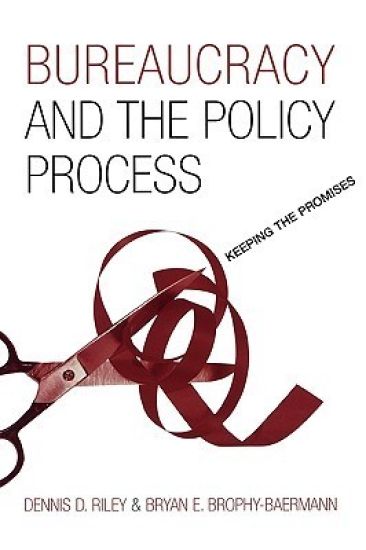
Bureaucracy and the Policy Process
Dennis D. Riley; Bryan E. Brophy-Baermann
Rowman Littlefield Publishers
2005
sidottu
The central role that bureaucracy plays in the policy process is played by individuals, namely, by subject matter experts and managers we call political executives. These executives do not play their role in a vacuum, of course, but in a context defined by three key forces—the organizational environment of bureaucracy itself; our governing philosophy stressing responsiveness, respect for individual rights, and accountability; and the demands of the people and the institutions those people have created to govern themselves. This book explores how these three forces collide and how the resulting collision shapes the way in which bureaucracy makes policy, as well as the final product of that policy making process. It provides an in-depth look at each of these forces, with chapters specifically devoted to how bureaucrats interpret their role in the policy process, how the organizational environment influences their ability to play that role, and, most of all, to the interactions between bureaucrats and the institutions of what we call the Constitutional government: the President, the Congress, and the courts. It does this, all the while reminding us that fitting bureaucracy into a society that views itself as self-governing is no easy task.
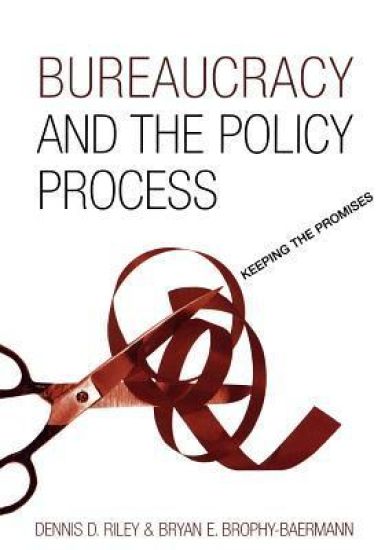
Bureaucracy and the Policy Process
Dennis D. Riley; Bryan E. Brophy-Baermann
Rowman Littlefield Publishers
2005
nidottu
The central role that bureaucracy plays in the policy process is played by individuals, namely, by subject matter experts and managers we call political executives. These executives do not play their role in a vacuum, of course, but in a context defined by three key forces—the organizational environment of bureaucracy itself; our governing philosophy stressing responsiveness, respect for individual rights, and accountability; and the demands of the people and the institutions those people have created to govern themselves. This book explores how these three forces collide and how the resulting collision shapes the way in which bureaucracy makes policy, as well as the final product of that policy making process. It provides an in-depth look at each of these forces, with chapters specifically devoted to how bureaucrats interpret their role in the policy process, how the organizational environment influences their ability to play that role, and, most of all, to the interactions between bureaucrats and the institutions of what we call the Constitutional government: the President, the Congress, and the courts. It does this, all the while reminding us that fitting bureaucracy into a society that views itself as self-governing is no easy task.

