
Kirjahaku
Etsi kirjoja tekijän nimen, kirjan nimen tai ISBN:n perusteella.
1000 tulosta hakusanalla Dennis J Perkins

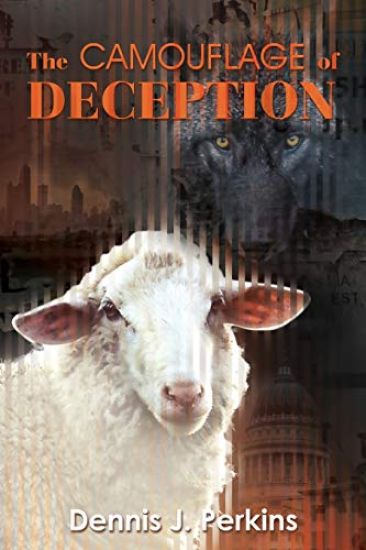
THE CAMOUGLAGE OF DECEPTION Have you ever been deceived by someone that you trusted? How did it make you feel? Did it take a while before you were able to fully trust anyone again? What did you learn about yourself from the experience? Did the experience leave you ashamed, confused, feeling somewhat isolated or disconnected from others. What would you do to prevent the likelihood of being deceived that way again? The questions asked may not generate immediate answers but will hopefully inspire you to think on one thing that was not mentioned: Truth God's living word is Truth. Jesus said in John 17:17 as He prayed to His Father in Heaven: Sanctify them through Thy truth: Thy word is truth. This book will help you to: Clearly discern the world that we live in through the eyes of God's truth. Gain freedom from the side effects of fear and torment brought on by deception. The "Camouflage of Deception" will help you to identify your true enemy. It will clarify ways that deception subtly enters our lives through gateways we fail to protect (through what we see, hear, think or feel). This book will help you attain the proper insight and spiritual discernment necessary for the times. May we no longer conduct ourselves as children, being tossed to and fro, carried about with every wind of doctrine, by the sleight of men, and cunning craftiness, whereby they lie in wait to deceive (Ephesians 4:14): I pray through proper teaching, we will grow in the knowledge of God the Father, Jesus Christ (the Word), and the Holy Spirit (1 John 5:7).

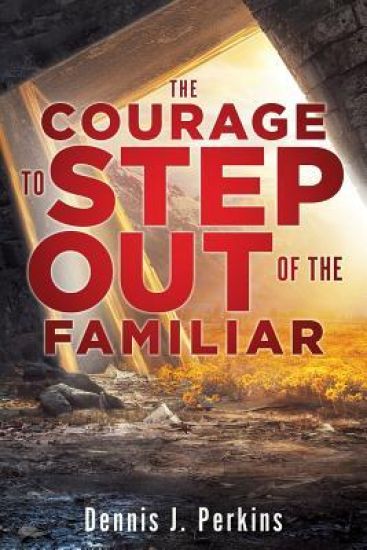
- Do you sometimes experience excessive frustration, weariness from pressures that oppose you? - Is it difficult to tell someone the truth, even when you know it will hurt their feelings? - How do you manage when what you say, think or do is unjustly criticized by others? - How do you respond to the lies that are being spoken about you? There is a war that is going on This war is not with flesh and blood human beings, but is spiritual. How do you fight spiritual battles? We must use God's spiritual weaponry to be victorious. The Holy Spirit is our Helper. Standing Upright In An Upside-Down World is a book that will encourage you to look to God and Him alone for your sustenance and supply. It will challenge you to let go of systematic thinking and reliance on things such as government, wealth, status. Escape what renders a false sense of security. Trusting in God with all our heart mind soul and strength will give us the courage to stand for what is right regardless of race, religion, culture, economic or social status. God created you to be free Therefore, stand in your liberty (Galatians 5:1) Dennis James Perkins is a native of Yazoo City, Mississippi. Upon graduating from Yazoo City High School, he attended Jackson State University, where he where he received an undergraduate degree in business administration, and a master's degree in Guidance and Counseling. While in the process of obtaining his undergraduate degree, he was a member of the Sonic Boom of the South Marching Band. Upon marrying Deborah N. Perkins (2018), his wife of twenty-eight years, they served the Body of Christ faithfully in various capacities. He is currently a member and elder at Freedom Ministries, Int'l Church, Jackson, MS.
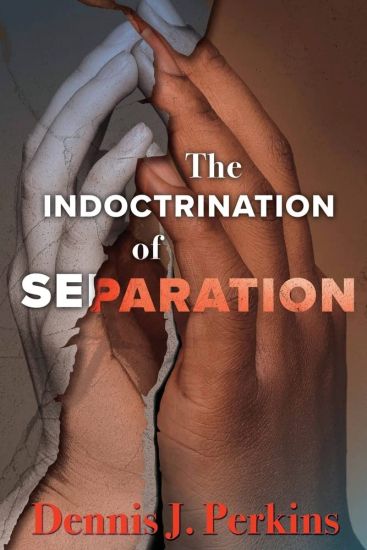
Do you feel that racial tensions are high, and if so, why have they lingered for so long? Are you sensing a great deal more stress and uncertainty in your immediate environment today than a year ago? Would you like to experience more peace of mind in these challenging times? This book will build you up, equip and encourage you in moving forward in these turbulent and uncertain times. It will assist you in: -How to navigate through the maze of media propaganda, and the various forms of misinformation that are so prevalent today. -How to filter out the disingenuous voices and practices found in media, religion, education and other mainstream institutions. -Clearly identifying the roots of indoctrination and its use in keeping us divided and fighting those whom we should not be against. -Acquiring practical spiritual truths that will help maintain your inner peace in chaotic times. God's design and purpose is for us to love one another, which can only be accomplished by the governance of the Holy Spirit indwelling in us. (Romans 5:5) thus giving us the ability to live in harmony building up the Kingdom of God in brotherly love. Dennis James Perkins is a native of Yazoo City, Mississippi. He attended Jackson State University, where he received an undergraduate degree in business administration and master's degree in Guidance and Counseling. He was a member of the Sonic Boom of the South Marching Band. He has faithfully served the Body of Christ in various capacities for many years. Dennis is currently a member, elder and board member at Freedom Ministries Int'l Church, Jackson, Mississippi.

"Dennis Reardon is a passionate and always interesting playwright." Richard Nelson "One of the leading playwrights who engendered the early years of the Joseph Papp Public Theater--a signal contribution to getting us on the national cultural map." Bernard Gersten, Executive Producer, Lincoln Center Theater "Reardon tackles some very pertinent and hair-raising issues with great flair and humor. I'm glad to see that he continues to write provocative plays." Gordon Davidson, Artistic Director/Producer, Mark Taper ForumThis collection includes three full-length plays: STEEPLE JACK, THE PEER PANEL and THE MISADVENTURES OF CYNTHIA M.About STEEPLE JACK: "Like a well-cut diamond with many shining facets, playwright Dennis J Reardon has given theater audiences a quality gem in STEEPLE JACK. Set in rural Kansas, STEEPLE JACK is about bare bones existence: life and death, youth and maturity, males and females, good and evil, the relationships that hold life together and the need for love in the face of grief...a richly textured work, peopled with equally textured characters and dialogue...the mystic Steeple Jack conveys a sympathetic personality that is, despite his tramp-like appearance, otherworldly and eerily distant without seeming like something born of monster movies." Kathleen Mills, The Bloomington Herald-TelephoneAbout THE PEER PANEL: "Funny and incisive, THE PEER PANEL shapes a meditation on the future of the American theater into an absorbing, funny, and gracefully structured play...THE PEER PANEL evades its potential for caricature, thanks largely to Reardon's uncanny command of each character's voice... But THE PEER PANEL, while rooted in its characters' preoccupations, isn't just about theater. It's also about the foundations of personal aesthetic preferences, about the ways in which culture and ideology and prejudice influence what we like--and how differences in taste can obstruct interpersonal connections. Sort of like Yasmina Reza's ART, only without the tedium." Eric Pfeffinger, The Bloomington Herald-Times

This collection explores the expansion of Japanese multinational firms into Asia, a process which parallelled the region's growth as a major economic region. The contributors discuss a wide range of topics, including the reasons for moving manufacturing to other countries, the flow of trade between Japan and these countries, technology transfer within firms, the impact of Japanese management practices in other Asian countries, and competition between Japanese and American firms in Asia.
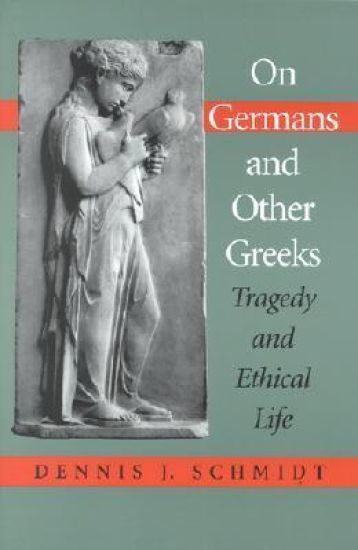
On Germans and Other Greeks Tragedy and Ethical Life Dennis J. Schmidt What Greek tragedy and German philosophy reveal about the meaning of art for ethical life. "Schmidt's investigation of tragedy is a highly significant, powerful work, one with far-reaching consequences. It bears on our understanding of the role of the arts and of philosophical thinking in our culture." —Rodolphe Gasché In this illuminating work, Dennis J. Schmidt examines tragedy as one of the highest forms of human expression for both the ancients and the moderns. While uncovering the specifically Greek nature of tragedy as an exploration of how to live an ethical life, Schmidt's elegant and penetrating readings of Greek texts show that it was the beauty of Greek tragic art that led Kant and other German thinkers to appreciate the relationship between tragedy and ethics. The Germans, however, gave this relationship a distinctly German interpretation. Through the Greeks, the Germans reflected on the enigmas of ethical life and asked innovative questions about how to live an ethical life outside of the typical assumptions and restrictions of traditional Western metaphysics. Schmidt's engagements with Schelling, Hegel, Hölderlin, Nietzsche, and Heidegger show how German philosophical appropriations of Greek tragedy conceived of ethics as moving beyond the struggle between good and evil toward the discovery of community truths. Enlisting a wide range of literary and philosophical texts, some translated into English for the first time, Schmidt reveals that contemporary notions of tragedy, art, ethics, and truth are intimately linked to the Greeks. Dennis J. Schmidt is Professor of Philosophy at Villanova University. He is author of The Ubiquity of the Finite and translator of Ernst Bloch's Natural Law and Human Dignity. Studies in Continental Thought—John Sallis, general editorMay 2001 432 pages, 6 1/8 x 9 1/4, bibl., index cloth0-253-33868-9$49.95 L / £38.00 paper0-253-21443-2$24.95 s / £18.95
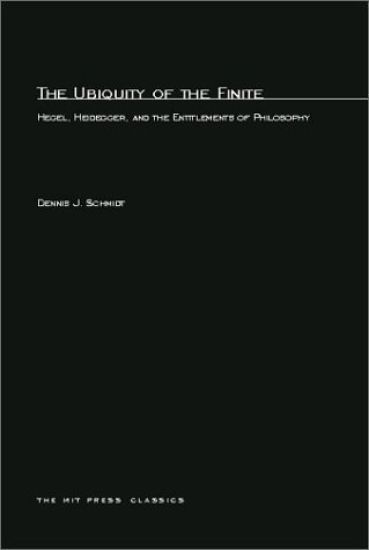
What are the assumptions and tasks hidden in contemporary calls to "overcome" the metaphysical tradition? Reflecting upon the internal contradictions of the notions of "tradition" and "finiteness," Dennis J. Schmidt offers novel insights into how philosophy must relate to its traditions if it is to retain a vital sense of the plurality of "edges" that constitute its finiteness. He does this through a close examination of issues found in the work of Hegel and Heidegger, two philosophers who made the ideas of both tradition and finiteness the center of their concern. Schmidt begins by asking how Heidegger can claim to have destroyed metaphysics despite Hegel's claim to have perfected its possibilities. Systematically following the development of Heidegger's critique of Hegel, Schmidt generates a dialogue between them. The topic of that dialogue is the nature of finiteness as it is articulated in time, nothing, the dialectical and hermeneutical circles, and in the notions of experience, work, technology, history, and preSocratic thought.Beginning with Heidegger's critique of Hegel in Being and Time, Schmidt's strategy is to disclose the complexities of philosophical discourse about the finite by drawing out the proximities between Hegel and Heidegger. The dialogue that results presents novel portraits of both philosophers. It also reveals that Heidegger's early, unacknowledged failure to separate himself from the Hegelian dialectic is the motive behind many of the turns and decisions of his later career. In concluding, Schmidt offers an interpretation of the wider significance of the results of that dialogue, and connects his study to other contemporary discussions of postmodernism. He expands upon the idea of the plurality of edges opened by finiteness, arguing that philosophy only understands its own past and future once it recognizes the meaning of its own finiteness.The Ubiquity of the Finite is included in the series Studies in Contemporary German Social Thought, edited by Thomas McCarthy.

The Catholic Church and the various communist governments of Europe have been vitally involved in the process of detente, moving from the silence of the Cold War to the stage of dialogue despite the persistence of religious persecution in the communist world. In this detailed study of recent developments, Professor Dunn discusses the motivating factors in papal-communist relations and chronicles the major events in détente policy in the Soviet Union and those countries of Eastern Europe—Poland, Hungary, Czechoslovakia, and Yugo-slavia--Where the Catholic Church is at least nominally the religion of 30% or more of the population.
This book discusses the motivating factors in papal-communist relations and chronicles the major events in detente policy in the Soviet Union and those countries of Eastern Europe where the Catholic Church is at least nominally the religion of 30" or more of the population.
This new set of original case studies is designed to offer an empirical counterpart to Cultural Theory (Westview, 1990 ), the landmark statement of political culture theory authored by Michael Thompson, Richard Ellis, and Aaron Wildavsky, and to extend and challenge the analysis developed there.

To the surprise of many students of the Soviet Union, religion has shown itself to be a force still powerful in Soviet society. In contrast, the impact of religion in developed Western societies has declined. Dr. Dunn points out that the study of this antinomy can shed light on the entire concept of "modernization" in the U.S.S.R. The study of the
This new set of original case studies is designed to offer an empirical counterpart to Cultural Theory (Westview, 1990 ), the landmark statement of political culture theory authored by Michael Thompson, Richard Ellis, and Aaron Wildavsky, and to extend and challenge the analysis developed there. Here, the theoretical concepts laid out in that book
To the surprise of many students of the Soviet Union, religion has shown itself to be a force still powerful in Soviet society. In contrast, the impact of religion in developed Western societies has declined. Dr. Dunn points out that the study of this antinomy can shed light on the entire concept of "modernization" in the U.S.S.R. The study of the


Preface Acknowledgements Glossary Foreword Alice Ackermann, OSCE Conflict Prevention Centre 1. Violent Postmodern Conflict: A Need to Go Beyond Symptoms 2. A Framework for Analyzing Violent Postmodern Conflict 3. A Model for Responding to Violent Postmodern Conflict 4. Eliciting the Wisdom of CSCE/OSCE Negotiators: Research Design 5. CSCE/OSCE Negotiators' Perceptions of Select Peace and Security Issues 6. CSCE/OSCE Negotiators' Perceptions of Causes of the Balkan Wars of the 1990s 7. CSCE/OSCE Negotiators' Perceptions of Lessons Learned from the Balkan Wars of the 1990s 8. CSCE/OSCE Negotiators’ Visions of Ideal Peace and Security in Postmodern Europe 9. After 9/11: Peace and Security Issues Revisited 10. Implications for Research, Theory, and Policy Appendix A Appendix B Bibliography Index

Handbook of Conflict Analysis and Resolution
Dennis J.D. Sandole; Sean Byrne; Ingrid Sandole-Staroste; Jessica Senehi
Routledge
2008
sidottu
This major Handbook comprises cutting-edge essays from leading scholars in the field of Conflict Analysis and Resolution (CAR). The volume provides a comprehensive overview of the core concepts, theories, approaches, processes, and intervention designs in the field. The central theme is the value of multidisciplinary approaches to the analysis and resolution of conflicts. This consists of moving from the study of analytical approaches to understanding the deep-rooted causes of conflict, to third-party intervention approaches to preventing or ending violence, and to resolving and transforming conflict.The book is divided into four main parts:Part I: Core Concepts and TheoriesPart II: Core ApproachesPart III: Core PracticesPart IV: Alternative Voices and Complex Intervention DesignsThe Handbook of Conflict Analysis and Resolution is a benchmark publication with major importance both for current research and for the future of the field. It will be essential reading for all students of conflict resolution, peace and conflict studies, and International Relations in general, as well as to practitioners in the field.
Preface Acknowledgements Glossary Foreword Alice Ackermann, OSCE Conflict Prevention Centre 1. Violent Postmodern Conflict: A Need to Go Beyond Symptoms 2. A Framework for Analyzing Violent Postmodern Conflict 3. A Model for Responding to Violent Postmodern Conflict 4. Eliciting the Wisdom of CSCE/OSCE Negotiators: Research Design 5. CSCE/OSCE Negotiators' Perceptions of Select Peace and Security Issues 6. CSCE/OSCE Negotiators' Perceptions of Causes of the Balkan Wars of the 1990s 7. CSCE/OSCE Negotiators' Perceptions of Lessons Learned from the Balkan Wars of the 1990s 8. CSCE/OSCE Negotiators’ Visions of Ideal Peace and Security in Postmodern Europe 9. After 9/11: Peace and Security Issues Revisited 10. Implications for Research, Theory, and Policy Appendix A Appendix B Bibliography Index

Handbook of Conflict Analysis and Resolution
Dennis J.D. Sandole; Sean Byrne; Ingrid Sandole-Staroste; Jessica Senehi
Routledge
2010
nidottu
This major Handbook comprises cutting-edge essays from leading scholars in the field of Conflict Analysis and Resolution (CAR). The volume provides a comprehensive overview of the core concepts, theories, approaches, processes, and intervention designs in the field. The central theme is the value of multidisciplinary approaches to the analysis and resolution of conflicts. This consists of moving from the study of analytical approaches to understanding the deep-rooted causes of conflict, to third-party intervention approaches to preventing or ending violence, and to resolving and transforming conflict.The book is divided into four main parts:Part I: Core Concepts and TheoriesPart II: Core ApproachesPart III: Core PracticesPart IV: Alternative Voices and Complex Intervention DesignsThe Handbook of Conflict Analysis and Resolution is a benchmark publication with major importance both for current research and for the future of the field. It will be essential reading for all students of conflict resolution, peace and conflict studies, and International Relations in general, as well as to practitioners in the field.