Kirjojen hintavertailu. Mukana 11 228 534 kirjaa ja 12 kauppaa.

Kirjahaku

Etsi kirjoja tekijän nimen, kirjan nimen tai ISBN:n perusteella.

1000 tulosta hakusanalla Dieter Karstropp

Gedichtinterpretation mit Fokus auf Stilmittel & Expressionismus. Exemplarisch an "Die Nächte explodieren in den Städten" von Ernst Wilhelm Lotz
Facharbeit (Schule) aus dem Jahr 2013 im Fachbereich Deutsch - Literatur, Werke, Sprache: Deutsch, Abstract: Bei der Gedichtinterpretation haben mich seit dem Deutschunterricht immer die ungeheure F lle an Stilmitteln interessiert, die man speziell zur Analyse von literarischen Texten zuziehen kann, leider werden diese, auch nach eigener Erfahrung, in vielen Unterrichten immer wieder vernachl ssigt. Da Gedichte hermetische, also innerlich verschl sselte Texte sind, ist es besonders wichtig das jedes einzelne Wort, in diesen recht kurzen Texten, interpretiert werden muss, ohne nat rlich das Thema, also den Inhalt zu vernachl ssigen. Ich m chte also hier den Sch lern, speziell denen der gymnasialen Oberstufe, aber nat rlich auch denen anderer Jahrgangstufen, eine umfangreiche Liste an Stilmitteln pr sentieren, viele die ich im Deutschunterricht kennen lernen musste, aber auch einige die ich mir selbst zu Klausurvorbereitungen erarbeitet habe und die wohl recht umfassend f r Gedichtinterpretationen an Gymnasien ausreichen werden. Zu den aufgelisteten Stilmitteln werde ich Erkl rungen, vereinzelt auch Beispiele liefern. Den zweiten Teil der Arbeit stellt die praktische Anwendung in der Gedichtinterpretation/analyse, am Beispiel des expressionistischen Gedichts "Die N chte explodieren in den St dten" von Ernst Wilhelm Lotz, das ich in einer Deutschklausur bearbeitet habe, und dabei eine gute Note erzielte. Nach entsprechenden Verbesserungsvorschl ge meiner Deutschlehrerin habe ich diese Interpretation bearbeitet. Zus tzlich m chte ich noch einen Einblick in die Hintergr nde der Kulturepoche Expressionismus liefern, falls man die Epochen/Zeitumst nden in eine Interpretation mit einflie en lassen will, Informationen zur Biographie des Autors werde ich aber bewusst auslassen. Mit diesem Werk m chte ich das oft abgelehnte Thema Gedichte den Lesern n her bringen, wobei dieser Aufsatz von einem Sch ler f r Sch ler geschrieben wurde.
Dieter Grimm

Dieter Grimm

Dieter Grimm

Oxford University Press
2020
sidottu
Dieter Grimm is one of the foremost scholars of constitutional law, constitutional theory, and European law in Germany and worldwide. His jurisprudential writings have found a large English-language audience in works such as Constitutionalism: Past, Present, and Future and The Constitution of European Democracy. This book is a conversation between Grimm and three scholars of constitutional law - Oliver Lepsius, Christian Waldhoff, and Matthias Rossbach - on his background, his childhood under the Nazi regime and the ruins of post-war Germany, his education in Germany, France, and the United States, his academic achievements, the main subjects of his research, his experience as a judge on a leading constitutional court (especially in the time of pivotal changes in the world after the fall of the Berlin Wall), and his views on actual challenges for law and society. Grimm also speaks about his attitude toward European integration where he is best known for his thesis that one of the biggest but least noticed causes for the lack of democratic legitimacy of the EU is its 'over-constitutionalization'. The book is an invaluable source of information on an outstanding career and the functioning of constitutional adjudication that the reader would not find in legal textbooks or treatises. The Times Literary Supplement, reviewing the German edition, stated: "For anyone wishing to understand the respect for the rule of law in modern Germany, this book is highly recommended."
Dieter Roth,  Björn Roth

Dieter Roth, Björn Roth

Yale University Press
2010
sidottu
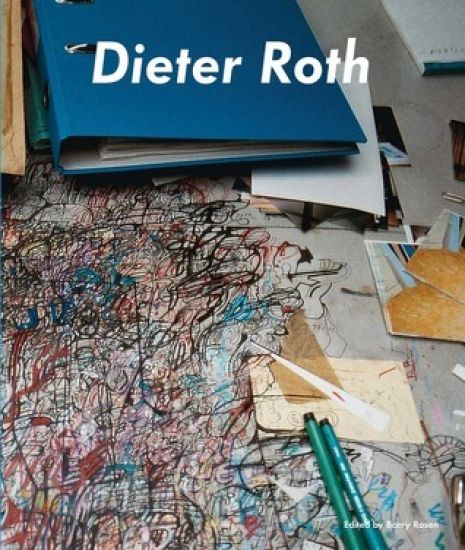
Dieter Roth's unique and eclectic Tischmatten ("Table Mats") incorporate drawings, paintings, photographs, and ephemeral materials. Roth placed these gray cardboard mats on tables in his apartment, studios, and houses, collecting what he referred to as the "traces of my domestic activities." Along with spontaneous doodles and drips and stains from the kitchen, Roth affixed leftover food, notes, and photos to the mats, creating still lifes that he would supplement with painting and collage and that had an emphasis on symmetry and mirror images. Dieter Roth, Björn Roth: Work Tables and Tischmatten offers a new interpretation of these significant yet often misunderstood works, which Roth himself considered to have influenced the development of his painting in the late 1980s. The book includes the artist's writings about the Tischmatten, and an insightful essay by Andrea Büttner resituates them within the greater body of the artist's output.
Dieter Roth Collected Interviews
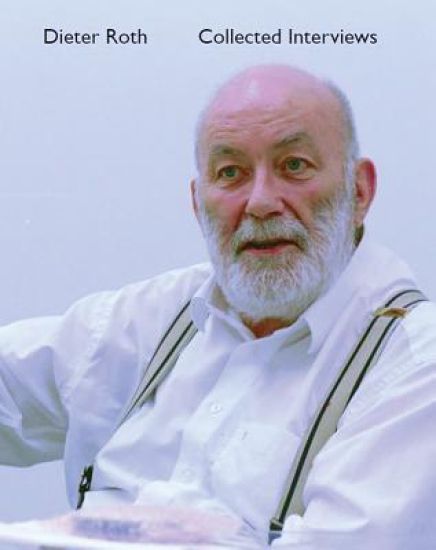
The first publication in English of Dieter Roth’s complete interviews The oeuvre of Dieter Roth (1930–1998) encompasses painting, sculpture, drawing, printmaking, film, video, music, typography, design, architecture and, last but not least, literature. ‘His books alone would give him a place of honour in 20th-century art,’ wrote Richard Hamilton, who championed Roth very early on. But is there a philosophy that ties it all together? What intellectual design, what personality stands behind this immense body of work? In his interviews, Roth offered many surprising and fascinating clues to his life and thought. Yet the majority of the interviews were in German, some even in Swiss German. With this book, all thirty-eight interviews are available in English, in full, for the first time. Included are the essential conversations with Irmelin Lebeer-Hossmann in 1976 and 1979, the Hamilton interviews, and also the very intimate interview Roth conducted with Patrick Frey just a few days before his death. For Roth, whose expectation of art was that it not be harmless, but show what is, the interviews were an attempt to depict what happens when speaking – one makes slips of the tongue and loses one’s train of thought, different languages get spoken and misunderstandings arise. He always expressed himself frankly and unguardedly. For anyone who wants to become acquainted with Dieter Roth – the artist and thinker-about-art as well as the human being – there is no better, more amusing and authentic introduction to be found than the richly illustrated collection at hand, which also presents many of his poems and prose texts in English for the first time.
Dieter Roth

Dieter Roth

Thames Hudson Ltd
2004
sidottu
Dieter Roth was a multi-faceted artist. This volume shows his work in many media and includes over 200 artist's books, 40 multiples, jewellery, films, videos, tapes, records and posters produced over a 50-year period.
Dieter Roth in America
Contains interviews with and photographs of the 25 people who knew or worked with Roth during his time spent in Chicago, Providence, New York, Philadelphia and Los Angeles. Many of the works Roth created during that period are illustrated here in full colour.
Dieter Henrich and Contemporary Philosophy
Dieter Henrich is one of the most respected and frequently cited philosophers in Germany today. His extensive and highly innovative studies of German Idealism and his systematic analyses of subjectivity have significantly impacted on advanced German philosophical and theological debates. Dieter Henrich and Contemporary Philosophy presents a comprehensive analysis of Henrich's work on subjectivity, evaluating it in the context of contemporary debates in both continental and analytic traditions. Familiarising the non-German reader with an important development in contemporary German philosophy, this book explains the significance of subjectivity for any philosophy that attempts to offer existential orientation and contrasts competing conceptions in analytic philosophy and in the social philosophy of Juergen Habermas. Presenting Henrich's philosophy of subjectivity as a credible alternative to analytic philosophy of mind and a radical challenge to Heideggerian, Habermasian, neo-pragmatist, and postmodern positions, Freundlieb argues that a philosophy of the kind developed by Henrich can regain the cultural significance philosophical thinking once possessed. Dieter Freundlieb is Senior Lecturer in the School of Humanities, Griffith University, Australia
Dieter's Dilemma

Dieter's Dilemma

Jacqueline Leigh

Lulu.com
2023
pokkari
Welcome to "A Dieter's Dilemma," a heartfelt collection of poetry and encouraging quotations based on the experiences of a holistic therapist working with dieters. This book offers a unique perspective on the challenges of weight loss, and is filled with light-hearted, warm, and relatable content that will inspire and motivate you on your journey to health and wellness. Through beautiful verse and uplifting quotes, "A Dieter's Dilemma" encourages readers to approach weight loss as a holistic journey, focusing on both the physical and emotional aspects of wellness. With a gentle, supportive tone, this book reminds us that the path to a healthier life is not always easy, but it is always worth it. Whether you're a seasoned dieter or just starting out, "A Dieter's Dilemma" is the perfect companion for anyone looking to find joy and inspiration in their weight loss journey. So come along and discover the power of words to uplift and inspire you on your path to a healthier, happier you.
Platon: Nach dem Urtext und der Übersetzung von Friedrich Schleiermacher bearbeitet von Dieter Hattrup

Platon: Nach dem Urtext und der Übersetzung von Friedrich Schleiermacher bearbeitet von Dieter Hattrup

Dieter Hattrup; Friedrich Schleiermacher

Createspace Independent Publishing Platform
2015
nidottu
Der Euthyphron ist der erste von vier Dialogen aus der Passionsgeschichte des Sokrates. Ihm l t Platon die Dialoge Apologie, Kriton, Phaidon folgen, die den Proze gegen Sokrates und seine letzten Tage im Gef ngnis von Athen im Licht seiner Philosophie beleuchten. Das Quadrivium der Dialoge stellt den einzigartig revolution ren Grundzug menschlichen Denkens dar, den Sokrates entdeckt hat, den bergang vom blo en Wissen der Welt zur Verantwortung f r das in der Welt gef hrte Leben. "Nicht einfach nur zu leben, ist entscheidend, sondern gut zu leben." (Kriton 48b)
DAS LEBEN DES MOSE oder DAS VOLLKOMMENE LEBEN: in neuer Übersetzung mit neuer Einleitung von Dieter Hattrup

DAS LEBEN DES MOSE oder DAS VOLLKOMMENE LEBEN: in neuer Übersetzung mit neuer Einleitung von Dieter Hattrup

Dieter Hattrup; Gregor Von Nyssa

Createspace Independent Publishing Platform
2016
nidottu
Gregor von Nyssa wurde wahrscheinlich in Neokaisareia um 335 geboren und starb 394. Basilius der Gro e war sein lterer Bruder, aber auch sein Erzieher und Lehrer. Nachdem er einige Zeit als Rhetor t tig gewesen war, vor allem aber nach dem Tode seiner Frau Theosebeia gab Gregor sich der Askese hin und wurde M nch. Ungern folgte er 371 dem Ruf seines Bruders auf den Bischofsstuhl von Nyssa, einem kleinen St dtchen in Kappadokien. Auf dem 2. kumenischen Konzil 381 in Konstantinopel spielte Gregor eine wichtige Rolle. Er z hlt mit Basilius dem Gro en und Gregor von Nazianz zu den Kappadokiern, die an dem Aufbau der christlichen Lehre im 4. Jahrhundert wesentlichen Anteil haben. Gregor war ein guter Kenner der griechischen Philosophie, besonders bewunderte er Platon. Auf dem Gebiet des spekulativen Denkens ist er mit Ausnahme von Origenes allen anderen Kirchenschriftstellern berlegen. Die hl. Schrift ist f r ihn die unersch pfliche Quelle der unendlichen Weisheit Gottes. Die Apostel, allen voran Paulus und Johannes, nennt er seine wahren Lehrer, wie Brief 13 berichtet. Allerdings wird er wegen seiner Allvers hnungslehre, nach der am Ende aller Ewigkeiten die H lle leer stehen soll, nicht zu den Kirchenv tern gez hlt. Die Schrift ber das Leben des Mose ist um 390 entstanden. Der Hauptsatz der Schrift lautet: 'Wir sind auf gewisse Weise unsere eigenen V ter, weil wir uns selbst zeugen nach unserem Willen. Aus eigenem Entschlu bilden wir uns nach dem Bild unseres Wollens.' (II, 3) Mit den fett gedruckten Stellen hat der Leser gleich eine Bl tenlese der sch nsten Stellen zur Hand.
Der Zauberberg 1924: Gekürzt 2016 von Dieter Hattrup

Der Zauberberg 1924: Gekürzt 2016 von Dieter Hattrup

Dieter Hattrup; Thomas Mann

Createspace Independent Publishing Platform
2016
nidottu
In der K rzeliegt die W rze.Shakespeare: Hamlet Die Einteilung des gro en Romans von 1924, dem Thomas Mann sieben Kapitel gegeben hat, habe ich nat rlich unangetastet gelassen. Allerdings, der besseren bersicht halber, habe ich eine innere Unterteilung der Kapitel geschaffen, die mit einem Buch¬staben beginnen, zum Beispiel 1a oder 1b, aber mit Doppelbuchstaben enden wie 6o oder 6oo, da die gigantischen Massen nicht anders zu bew ltigen sind, wenn man jedem dieser Buchstaben im Kapitel etwa 10 Seiten des Originals zuweist. Von diesen Unterkapiteln habe ich jeweils eine K rzung auf eine oder zwei Seiten vorgenommen. Deshalb ist der Roman hier auf etwa 25 Prozent seiner Originalgr e eingedampft worden. Dennoch sollte der Leser des 'Zauberbergs' die zauberische Atmosph re der Erz hlung unverk rzt versp ren k nnen.
Dieter Haus

Dieter Haus

Jc Norton

Createspace Independent Publishing Platform
2017
pokkari
Dieter Haus is a boutique hotel in Munich, designed by Dieter and his best friend, Klaus. Dieter has an unnaturally sensitive, sense of smell which he and Klaus have found ways to use to advantage but, when Dieter meets by chance a handsome traveler with a great deal of money and no memory of where he got it, he, Klaus and their closest friends become embroiled in a web of sex, violence and international crime. Originally published in 2017, the book has was revised in 2023.
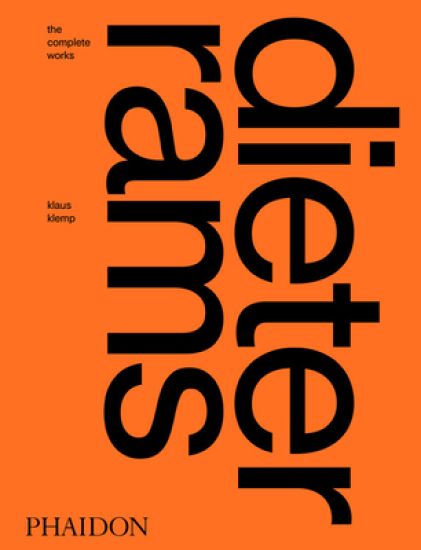
Dieter Rams

Dieter Rams

Klaus Klemp

Phaidon Press Ltd
2020
sidottu
‘Chances are if you've shaved with an electric razor, blow-dried your hair, or sparked up a cigarette in the past 60 years, you owe a debt of gratitude to Dieter Rams.’ – New York Times Made in close collaboration with Rams himself, this catalogue raisonné is the ultimate reference on one of the most influential product designers of all time Dieter Rams is one of the most influential product designers of the twentieth century, who, for more than sixty years, has been defining the look, feel, and function of some of the world's best-loved consumer items. Using his 'ten principles for good design' as a philosophy and practice for improving the industry in a more holistic, responsible way, Rams has a stellar reputation with global resonance. This extraordinary book forms a catalogue raisonné of every product that Rams has designed in his lifetime – a true celebration of his seminal contribution to the field of industrial and product design. Including 300 color illustrations, the book is organized chronologically, each product is accompanied by a detailed description and specification breakdown, making this the ultimate reference guide for Rams fans and an ideal complement to Phaidon's global bestseller – Dieter Rams: As Little Design as Possible.