*** Please note: This book was previously published as Abducted. Only the title and cover have been changed. All other content remains the same. ***The mafia never lets you go.I thought I was safe, free, but I never expected to find myself locked in a cage.I'm in his territory. His prison.The beast.A fate worse than death awaits me if I can't get away, so when the opportunity of salvation presents itself I grab it, even if I'm not sure I can trust the hand I'm holding.The only way out is through, exposing secrets and spilling blood.Things aren't how they appear. Nobody is what they seem.Not even me.
Dragonetti devoted his life to the double bass. His career in England (1794-1846) is one of the most remarkable success stories in the annals of musical history. His unprecedented virtuosity elevated the double bass to a new status. In combination with his charismatic personality his musical talent dominated the English cultural world for more than fifty years. As performer, composer, collector, and friend, he exposed the unforeseen potential of the double bass. His formidable talent as a musician and businessman provides an unusual insight into nineteenth-century entrepreneurship. This first substantial biography and assessment of Dragonetti's career allows us to understand his importance in the history of music in general and of double-bass performance in particular.
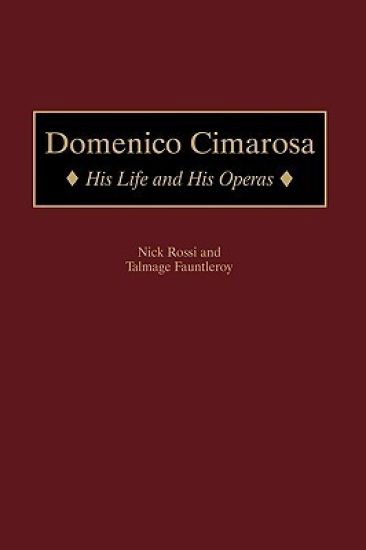
This is the first book in English about Domenico Cimarosa, his more than 65 operas and his sacred and secular vocal music, his keyboard music, and his various works for solo instruments and ensembles. This is also the first authoritative book on Cimarosa since an Italian biography published in 1939. Since that earlier tome was published, many important discoveries have come to light. The authors completed most of their research work at the library of the Conservatorio di musica S Pietro a Majella in Naples. Their efforts have uncovered new information on the composer's marriages, wives, children, actual performance locations, dates of first performances of his operas, and his professional appointments and contacts. The first half of the book is devoted to a chronological description of Cimarosa's life and provides background material on the customs of the times and contemporary descriptions of the music conservatories in Naples where Cimarosa studied, as well as those in Venice where he was appointed Maestro. The second part presents an alphabetical listing of Cimarosa's more than 65 operas, including alternate names for those that were produced on different stages under different names. Included with each opera is a simple outline of the plot, the cast of characters and their voice ranges, and basic information about the structure of the music itself.
Here are 27 compositions by Domenico Bianchini from the 16th Century transcribed for the baritone ukulele, Renaissance guitar, low G ukelele, and many other four course instruments. Of course, they may all be played on the guitar.
Again available in paperback, this definitive work on the genius of Domenico Scarlatti (1685-1757) is the result of twelve years of devoted effort by America's foremost harpsichordist and one of the principal authorities on eighteenth-century harpsichord music. Mr. Kirkpatrick traveled extensively to collect material that has tripled the known facts about Scarlatti's life, providing the first adequate biography of one of the greatest harpsichord composers of the eighteenth century and one of the most original composers of all time. The second half of his book is an illuminating study of Scarlatti's 555 sonatas, concluding with a chapter on their performance. The book contains extensive appendixes, including discussions of ornamentation and Scarlatti's vocal music, and an updated section of addenda and corrigenda.
This title is not entirely consistant with the content of the work as it is not just a topographical description of the city but also an account of its inhabitants and the regulations governing their lives, of how the Sultan spent his time, of the principles and practice of Islam, and more.
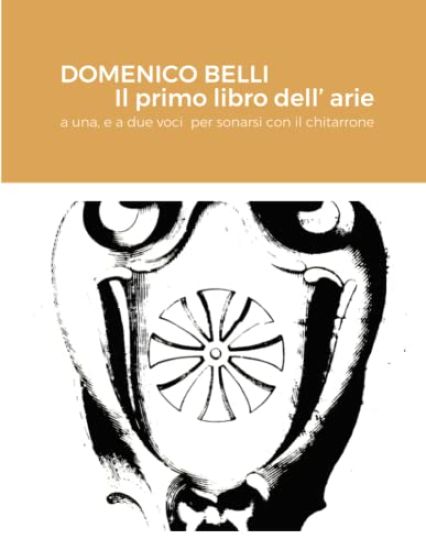
Domenico Belli, who died in 1627 in Florence, published in 1616 two works in the new monodic style, an operatic scene (Orfeo dolente) and this collection of songs and duets. His tyle is fairly radical and difficult both in execution and harmony.