

Kirjahaku
Etsi kirjoja tekijän nimen, kirjan nimen tai ISBN:n perusteella.
1000 tulosta hakusanalla Donald D Thompson

"Armageddon" is book four of "The Sol Chronicles." It is the story of Kent. Kent is a young ship's Captain who is sucked into the politics of his home world, Armageddon. The Willites and the Robbites have long provided a balance of power on their world in a system that has always worked--until now. Political intrigue, deceit, and murder become a way of life.The colony on Earth is destroyed and his enemies imprison Kent. As all of this is going on, the time bomb called Armageddon is set to explode, and no one knows it. Mankind could well be destined for extinction on a world they consider safe and secure.A plot to free Kent and Aurora is developed and executed before the surprise of the galaxy can occur. Will there be anyone left to represent mankind in the future?
"Suze" is book five of "The Sol Chronicles." It is the story of a young girl taken at birth and raised on Ganymede in a government -run education system. War breaks out between the moons of Jupiter and Suze eventually is returned to Jupiter as one of the Ganymede troops in the war against the Callistans. Soon after her arrival Suze is wounded and left for dead. She is found by the Jovians and nursed back to health only to discover that the sauruses of the world believe her to be the one who can save mankind from a final extinction. Through the education given to her by the sauruses, Suze comes to realize her full potential and her fate. She only wishes that she would be the Savior of the human race. Only time will reveal the truth of the ancient saurus' prophecy. Is mankind again doomed or can it be saved by the young girl chosen by the sauruses? Will the human race finally be turned from a path of destruction? Or will the blight on the Universe be allowed to continue?

"Twin Resolutions" is book six of "The Sol Chronicles." It is the story of Solomon and Sabrina-two mindless twin Satans whom stumble upon a world of reality in the depths of their Saturn world. As they grow up, the scientists of their Subterranean home devise a method for one of the twins to return to the surface and bring them back real information of what is out there. Sabrina is all for the idea but her brother Solomon has his reservations. Torn between the love he has for his sister, and the love he has for his adopted world, Solomon takes his sister's place and then disaster strikes. Sabrina and two of her adopted siblings, Rachel and Jeffrey, are determined to go to the surface of their world, find Solomon, and then bring him back. During their search, they make an amazing discovery that could well bring about changes to their very existence.


"Suze" is book five of "The Sol Chronicles." It is the story of a young girl taken at birth and raised on Ganymede in a government -run education system. War breaks out between the moons of Jupiter and Suze eventually is returned to Jupiter as one of the Ganymede troops in the war against the Callistans. Soon after her arrival Suze is wounded and left for dead. She is found by the Jovians and nursed back to health only to discover that the sauruses of the world believe her to be the one who can save mankind from a final extinction. Through the education given to her by the sauruses, Suze comes to realize her full potential and her fate. She only wishes that she would be the Savior of the human race. Only time will reveal the truth of the ancient saurus' prophecy. Is mankind again doomed or can it be saved by the young girl chosen by the sauruses? Will the human race finally be turned from a path of destruction? Or will the blight on the Universe be allowed to continue?

"Twin Resolutions" is book six of "The Sol Chronicles." It is the story of Solomon and Sabrina-two mindless twin Satans whom stumble upon a world of reality in the depths of their Saturn world. As they grow up, the scientists of their Subterranean home devise a method for one of the twins to return to the surface and bring them back real information of what is out there. Sabrina is all for the idea but her brother Solomon has his reservations. Torn between the love he has for his sister, and the love he has for his adopted world, Solomon takes his sister's place and then disaster strikes. Sabrina and two of her adopted siblings, Rachel and Jeffrey, are determined to go to the surface of their world, find Solomon, and then bring him back. During their search, they make an amazing discovery that could well bring about changes to their very existence.


"Armageddon" is book four of "The Sol Chronicles." It is the story of Kent. Kent is a young ship's Captain who is sucked into the politics of his home world, Armageddon. The Willites and the Robbites have long provided a balance of power on their world in a system that has always worked--until now. Political intrigue, deceit, and murder become a way of life.The colony on Earth is destroyed and his enemies imprison Kent. As all of this is going on, the time bomb called Armageddon is set to explode, and no one knows it. Mankind could well be destined for extinction on a world they consider safe and secure.A plot to free Kent and Aurora is developed and executed before the surprise of the galaxy can occur. Will there be anyone left to represent mankind in the future?

Wawa
Maria M Thompson; Donald H Price; Foreword Richard D Wood
Arcadia Publishing Library Editions
2004
sidottu

Communication
Donald H. Owings; Michael D. Beecher; Nicholas S. Thompson
Kluwer Academic/Plenum Publishers
1998
sidottu
ON THE FUTURE OF PERSPECTIVES When Patrick Bateson and Peter Klopfer offered me the editorship of Perspectives in 1992, the world of academic publishing was in one of its periodic upheavals. Subscriptions to series-even distinguished series such as Perspec tives-had been declining and individual volume prices had been rising, a trend that if continued could only result in the series pricing itself out of the market. In the course of the negotiations around the change of editors, the publishers offered a cost-cutting solution: change the production pattern to "camera ready" and elimi nate the costs of indexing and proofreading. While I could see the sense in this proposal, I was reluctant to accept it. Part of what I had always liked about the volumes in this series was that they were real books, intelligently proofread, nicely laid out, and provided with proper indexes. Thus, I in return offered a "Devil's bargain": the publisher should maintain the present quality of the series for two more volumes and make a renewed effort to advertise the series to our ethological and sociobiological colleagues, while I as the new series editor committed myself to a renewed effort to make Perspectives the publication of choice for writers who are trying to get their message out to the world intact and readers who are seeking clear, coherent, comprehensive and untrammeled presentations of authors' ideas and research programs.

Communication
Donald H. Owings; Michael D. Beecher; Nicholas S. Thompson
Springer-Verlag New York Inc.
2013
nidottu
ON THE FUTURE OF PERSPECTIVES When Patrick Bateson and Peter Klopfer offered me the editorship of Perspectives in 1992, the world of academic publishing was in one of its periodic upheavals. Subscriptions to series-even distinguished series such as Perspec tives-had been declining and individual volume prices had been rising, a trend that if continued could only result in the series pricing itself out of the market. In the course of the negotiations around the change of editors, the publishers offered a cost-cutting solution: change the production pattern to "camera ready" and elimi nate the costs of indexing and proofreading. While I could see the sense in this proposal, I was reluctant to accept it. Part of what I had always liked about the volumes in this series was that they were real books, intelligently proofread, nicely laid out, and provided with proper indexes. Thus, I in return offered a "Devil's bargain": the publisher should maintain the present quality of the series for two more volumes and make a renewed effort to advertise the series to our ethological and sociobiological colleagues, while I as the new series editor committed myself to a renewed effort to make Perspectives the publication of choice for writers who are trying to get their message out to the world intact and readers who are seeking clear, coherent, comprehensive and untrammeled presentations of authors' ideas and research programs.
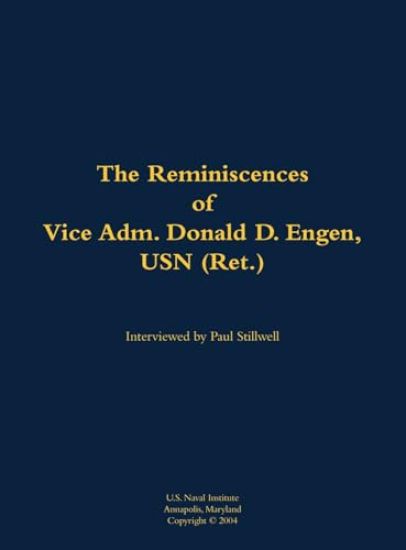
The Reminiscences of Vice Adm. Donald D. Engen, USN (Ret.)
Naval Institute Press
2004
sidottu
After growing up in California in the 1920s and 1930s, Engen entered the Navy through the V-5 aviation cadet program and was designated a naval aviator in June 1942. In 1943–44 he flew an SB2C Helldiver in Bombing 19 (VB-19) and took part in the Battle of Leyte Gulf. In 1944–45 he flew in Bombing-Fighting 19 (VBF-19). Shortly after World War II he worked briefly as a civilian test pilot for Consolidated Vultee and was a student at the University of California at Los Angeles. In the next few years, as a fighter pilot, he was in Fighting 212 (VF-212), Fighter Squadron 52 (VF-52), and Fighter Squadron 51 (VF-51). In the summer of 1950, during the Korean War, he was part of the U.S. Navy’s first-ever jet sortie in combat. Other tours in the 1950s included General Line School at Monterey, California; Bureau of Aeronautics representative in Dallas; the Empire Test Pilots’ School in Britain; and Air Development Squadron Three (VX-3). He served 1955–57 as executive officer of Fighter Squadron 21 (VF-21) and in 1957–59 at the Naval Air Test Center, Patuxent River. In 1959–61 he was PCO and skipper of Fighter Squadron 21 (VF-21). Early 1960s duties included command of Carrier Air Group 11 and as operations officer in the attack aircraft carrier Coral Sea (CVA-43). In 1964–65 Engen commanded the ammunition ship Mount Katmai (AE-16), was a student at the Naval War College in 1965–66, and in 1966–67 commanded the attack aircraft carrier America (CVA-66). In the late 1960s he completed his bachelor’s degree at George Washington University, headed the Aviation Plans Branch of OpNav, and was selected for flag rank. He served 1969-71 in the Strategic Plans Division of OpNav, then commanded Carrier Division Four, 1971-73. From 1973 to 1976 he was Deputy Commander in Chief U.S. Naval Forces Europe (CinCUSNavEur) in London. During the latter part of 1976 he was Assistant DCNO (Plans and Policy) and from 1976 to 1978 was Deputy Commander in Chief Atlantic Fleet. After Engen retired from active naval service in 1978, he was general manager of Piper Aircraft, Lakeland, Florida, and later worked with Ketron, Inc. On reentering government service in 1982 he was on the National Transportation Safety Board, and later served 1984-87 as Federal Aviation Administration Administrator. His post-retirement activities included flying and work at the Smithsonian’s Air and Space Museum.
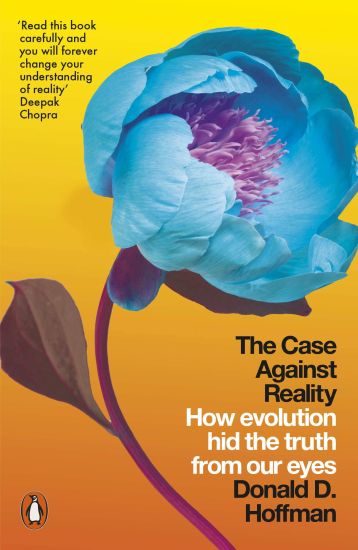
SHORTLISTED FOR THE PHYSICS WORLD BOOK OF THE YEAR 2019'One of the deepest and most original thinkers of his generation of cognitive scientists. His startling argument has implications for philosophy, science, and how we understand the world around us' Steven Pinker 'Is reality virtual? It's a question made even more interesting by this book' Barbara Kiser, Nature Do we see the world as it truly is? In The Case Against Reality, pioneering cognitive scientist Donald Hoffman says no? we see what we need in order to survive. Our visual perceptions are not a window onto reality, Hoffman shows us, but instead are interfaces constructed by natural selection. The objects we see around us are not unlike the file icons on our computer desktops: while shaped like a small folder on our screens, the files themselves are made of a series of ones and zeros - too complex for most of us to understand. In a similar way, Hoffman argues, evolution has shaped our perceptions into simplistic illusions to help us navigate the world around us. Yet now these illusions can be manipulated by advertising and design.Drawing on thirty years of Hoffman's own influential research, as well as evolutionary biology, game theory, neuroscience, and philosophy, The Case Against Reality makes the mind-bending yet utterly convincing case that the world is nothing like what we see through our eyes.
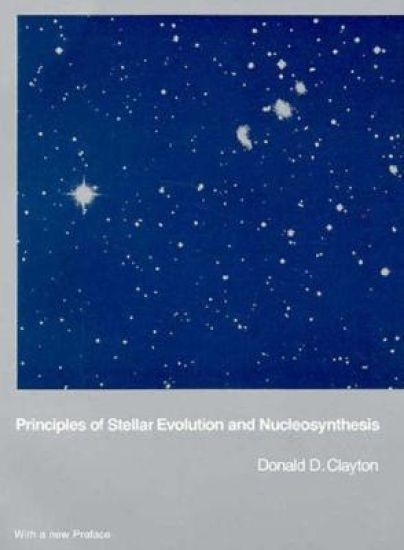
Principles of Stellar Evolution and Nucleosynthesis
Donald D. Clayton
University of Chicago Press
1984
nidottu
Donald D. Clayton's Principles of Stellar Evolution and Nucleosynthesis remains the standard work on the subject, a popular textbook for students in astronomy and astrophysics and a rich sourcebook for researchers. The basic principles of physics as they apply to the origin and evolution of stars and physical processes of the stellar interior are thoroughly and systematically set out. Clayton's new preface, which includes commentary and selected references to the recent literature, reviews the most important research carried out since the book's original publication in 1968.

Young Donny experienced a summer like no other: hanging with his buddies, spending time with family, and falling in love for the first time with a wonderful girl. Little did he know how that summer love would play out so many years later.Reminiscing, if it is perfect, provides feelings of well-being and contentment.If things turn out badly, you learn from your mistakes and move on.Saudade (pronounced SAU-da-gee) is a Portuguese word meaning "a type of nostalgia"-an intense and indescribable feeling of yearning for someone or something, and the desire to relive moments that have passed, or may never have happened. The word cannot be translated to English because it has no words to do justice to the deep feelings Saudade conveys. Three years ago, I found myself in this state of mind without an explanation. To uncover the answer I relived my past, drawing on memories from my later years in elementary school, my early years in high school, and beyond. It has been quite a journey.

Young Donny experienced a summer like no other: hanging with his buddies, spending time with family, and falling in love for the first time with a wonderful girl. Little did he know how that summer love would play out so many years later.Reminiscing, if it is perfect, provides feelings of well-being and contentment.If things turn out badly, you learn from your mistakes and move on.Saudade (pronounced SAU-da-gee) is a Portuguese word meaning "a type of nostalgia"-an intense and indescribable feeling of yearning for someone or something, and the desire to relive moments that have passed, or may never have happened. The word cannot be translated to English because it has no words to do justice to the deep feelings Saudade conveys. Three years ago, I found myself in this state of mind without an explanation. To uncover the answer I relived my past, drawing on memories from my later years in elementary school, my early years in high school, and beyond. It has been quite a journey.