Kirjojen hintavertailu. Mukana 11 213 693 kirjaa ja 12 kauppaa.

Kirjahaku

Etsi kirjoja tekijän nimen, kirjan nimen tai ISBN:n perusteella.

1000 tulosta hakusanalla Donald E Collins

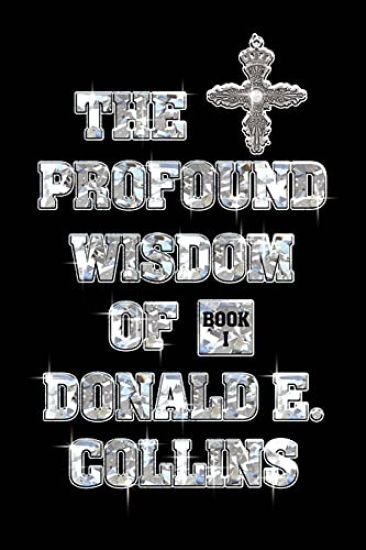
The Profound Wisdom of Donald E Collins

The Profound Wisdom of Donald E Collins

Donald E Collins

Page Publishing, Inc.
2021
pokkari
The Profound Wisdom of Donald E. Collins is a book composed of poetry and literature that's a personal reflection of love, faith, anxiety, and depression. The author's aim is to connect with his readers and encourage them with spiritual, emotional, and inspirational perspective. One meaning of profound is a very intense feeling of high intention of emotion. The author hopes that this book will convey that emotion to his readers as well as the Greek philosopher Aristotle's rhetorical appeal, ethos.
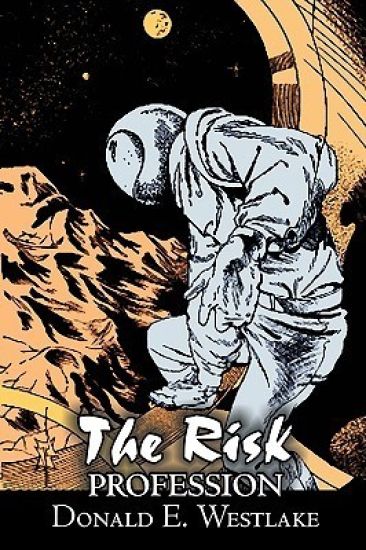
The Risk Profession by Donald E. Westlake, Science Fiction, Adventure, Space Opera, Mystery & Detective
WAS DONALD E. WESTLAKE A SCIENCE FICTION WRITER?Everyone knows him as the mystery writer who published books like The Hook (2000), Bad News 2001, and Put a Lid on It (2002) under his own name, Donald E. Westlake, and of course that he was also Richard Stark and a number of other favorite authors. But a science fiction writer? -- Really? -- You bet he was, early on in his career. (He even wrote one SF novel -- Anarchaos, in 1966, as "Curt Clark.")He also wrote quite a bit of short SF, like this weird little SF mystery that first graced the pages of Amazing in 1963.It's an engaging little tale, set in a asteroid-belt colony: our hero is an investigator for an interplanetary insurance company, ferreting out the truth behind suspicious (and sometimes, uhm, otherworldly) insurance claims. . . .
The Risk Profession by Donald E. Westlake, Science Fiction, Adventure, Space Opera, Mystery & Detective
WAS DONALD E. WESTLAKE A SCIENCE FICTION WRITER?Everyone knows him as the mystery writer who published books like The Hook (2000), Bad News 2001, and Put a Lid on It (2002) under his own name, Donald E. Westlake, and of course that he was also Richard Stark and a number of other favorite authors. But a science fiction writer? -- Really? -- You bet he was, early on in his career. (He even wrote one SF novel -- Anarchaos, in 1966, as "Curt Clark.")He also wrote quite a bit of short SF, like this weird little SF mystery that first graced the pages of Amazing in 1963.
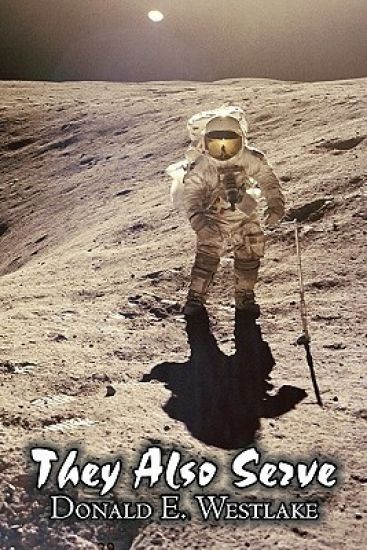
They Also Serve by Donald E. Westlake, Science Fiction, Adventure, Space Opera
"They built a spaceship, is the long and the short of it," Darquelnoy, the alien who'd been on the earth's moon for ages. observing.Ebor, an old friend of his, stopped in astonishment. "No ""Don't tell me no " cried Darquelnoy. "I "saw" it " He was obviously at his wit's end."It's unbelievable," said Ebor."I know," said Darquelnoy. He led the way into his quarters, motioned Ebor to a perch, and rang for his orderly. "It was just a little remote-controlled apparatus, of course," he said. "The fledgling attempt, you know. But it circled this Moon here, busily taking pictures, and went right back to the planet again, giving us all a terrible fright. There hadn't been the slightest indication they were planning anything "that" spectacular.""None?" asked Ebor. "Not a hint?"
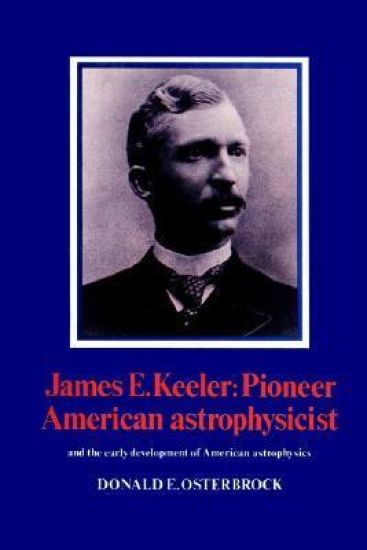
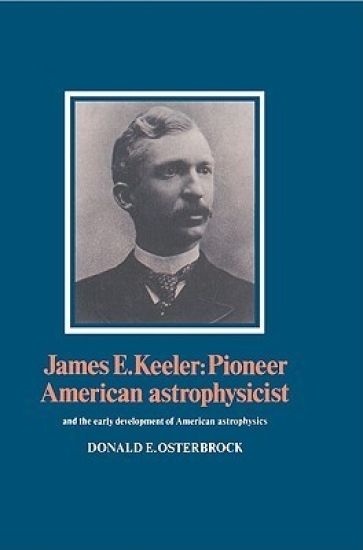
James E. Keeler: Pioneer American Astrophysicist

James E. Keeler: Pioneer American Astrophysicist

Donald E. Osterbrock

Cambridge University Press
2002
pokkari
This is the biography of James E. Keeler (1857–1900), a distinguished pioneer of astrophysics, the application of the methods of physics to understanding the nature of the stars, nebulae, planets, comets, and other objects that populate the universe. Keeler was an outstanding scientist, and his fellow astronomers and physicists at the end of the nineteenth century considered him the leading astronomical spectroscopist of his generation. His career was closely linked with that of George Ellery Hale, founder of Yerkes Observatory. Keeler himself was the first astronomer at Lick Observatory, and the story of his life tells much of the early history of these two early American ‘big-science’ research institutions.
Companion to the Papers of Donald Knuth

Companion to the Papers of Donald Knuth

Donald E. Knuth

Centre for the Study of Language Information
2012
nidottu
Donald E. Knuth's seminal publications have earned him a loyal following among scholars and computer scientists, and his award-winning textbooks have become classics that are often given credit for shaping the field of computer science. In this volume, he explains and comments on the changes he has made to his work over the last twenty years in response to new technologies and the evolving understanding of key concepts in computer science. His commentary is supplemented by a full bibliography of his works and a number of interviews with Knuth himself, which shed light on his professional life and publications as well as provide interesting biographical details. A giant in the field of computer science, Knuth has assembled materials that offer a full portrait of both the scientist and the man. The final volume of a series of his collected papers, "Companion to the Papers of Donald Knuth" is essential for the Knuth completist.
Companion to the Papers of Donald Knuth

Companion to the Papers of Donald Knuth

Donald E. Knuth

Centre for the Study of Language Information
2012
sidottu
Donald E. Knuth's seminal publications have earned him a loyal following among scholars and computer scientists, and his award-winning textbooks have become classics that are often given credit for shaping the field of computer science. In this volume, he explains and comments on the changes he has made to his work over the last twenty years in response to new technologies and the evolving understanding of key concepts in computer science. His commentary is supplemented by a full bibliography of his works and a number of interviews with Knuth himself, which shed light on his professional life and publications as well as provide interesting biographical details. A giant in the field of computer science, Knuth has assembled materials that offer a full portrait of both the scientist and the man. The final volume of a series of his collected papers, "Companion to the Papers of Donald Knuth" is essential for the Knuth completist.
Handbook of Lithium and Natural Calcium Chloride

Handbook of Lithium and Natural Calcium Chloride

Donald E. Garrett

Academic Press Inc
2004
sidottu
Handbook of Lithium and Natural Calcium Chloride is concerned with two major industrial minerals: Lithium and Calcium Chloride. The geology of their deposits is first reviewed, along with discussions of most of the major deposits and theories of their origin. The commercial mining and processing plants are next described, followed by a review of the rather extensive literature on other proposed processing methods. The more important uses for lithium and calcium chloride are next covered, along with their environmental considerations. This is followed by a brief review of the production statistics for each industry, and some of their compounds' phase data and physical properties.
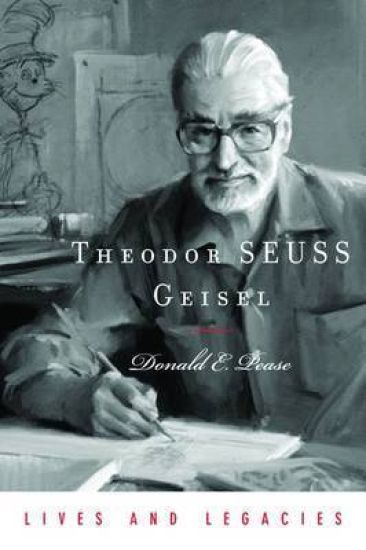
Theodor Geisel

Theodor Geisel

Donald E. Pease

Oxford University Press Inc
2016
nidottu
Dr. Seuss's infectious rhymes, fanciful creatures, and roundabout plots not only changed the way children read but imagined the world. And to Think That I Saw It On Mulberry Street, Green Eggs and Ham,The Cat and the Hat, these and other classics have sold hundreds of millions of copies and entertained children and adults for decades. After graduating from Dartmouth, Theodor Geisel used his talents as an ad-man, political provocateur, and social satirist, gradually but irrevocably turning to children's books. Theodor SEUSS Geisel tells the unlikely story of this remarkable transformation. In this compact and engrossing biography, Donald Pease reveals the evolution of Dr. Seuss's creative persona while offering an honest appraisal of his life. The book also features many of Dr. Seuss's lesser-known illustrations, including college drawings, insecticide ads, and wartime political cartoons-all of which offer a glimpse of his early artistic style and the visual origins of the more famous creatures that later populated his children's books. As Pease traces the full arc of Dr. Seuss's prolific career, he combines close textual readings of many of Dr. Seuss's works with a unique look at their genesis to shed new light on the enduring legacy of America's favorite children's book author.
Theodor SEUSS Geisel

Theodor SEUSS Geisel

Donald E. Pease

Oxford University Press Inc
2010
sidottu
Dr. Seuss' infectious rhymes, his blue-tufted, strong-willed creatures, and his knack for pithy, roundabout plots have been entertaining children and adults for decades. And as Donald Pease shows in this marvelous biography, the seemingly haphazard trajectory of Theodor Geisel's life bears a close resemblance to the zigzag plot lines of his children's books. Here is an engaging look at a man who indeed lived a zigzag life, by turns a cartoonist, ad agency artist (for Flit bug killer), author, caricaturist, documentary-film writer and producer, political cartoonist, and editor. Pease follows Geisel's life from his childhood in Massachusetts, to his sacking from the editorship of Dartmouth's humor magazine, to the publication of And to Think That I Saw It on Mulberry Street--after 17 rejections--which finally launched him on the career for which he is best known. It was a career marked by whimsy. Geisel began work on Green Eggs and Ham, for instance, only after Bennett Cerf, his editor at Random House, wagered that he could not write a children's book that used no more than fifty different words. Geisel won, and the result was a series of works over the next ten years--How the Grinch Stole Christmas!, Yertle the Turtle, The Sneetches and Other Stories, Hop on Pop--that changed the way children everywhere learned to read. Given unprecedented access to Dartmouth's extensive Geisel holdings, Pease captures this life in full as he offers fresh insights into the sources of Geisel's creativity, from his surreal images to his anti-authoritarian stance and slapstick humor. Readers are treated to many lesser-known illustrations, such as his censored creations during college, insecticide ads, and wartime political cartoons--all of which offer a glimpse of his early artistic style and the visual origins of the more famous creatures that later populated his children's books.
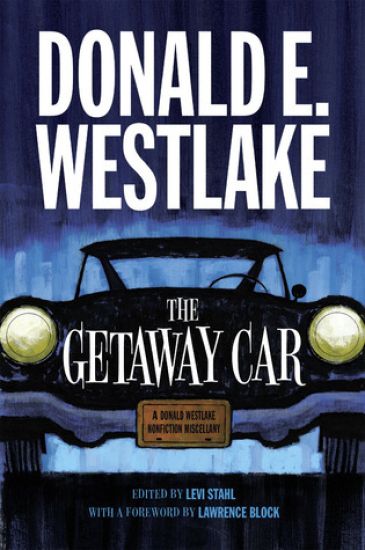
The Getaway Car

The Getaway Car

Donald E. Westlake

University of Chicago Press
2014
nidottu
Over the course of a fifty-year career, Donald Westlake published nearly one hundred books, including not one - but two - long-running series, starring the hard-hitting Parker and the hapless John Dortmunder. In the six years since his death, Westlake's reputation has only grown, with fans continuing to marvel at his tightly constructed plots, no-nonsense prose, and keen, even unsettling, insights into human behavior. With The Getaway Car, we get our first glimpse at another side of Westlake the writer: what he did when he wasn't busy making stuff up. And it's fascinating. Setting previously published pieces, many little-seen, alongside never-before-published material found in Westlake's working files, the book offers a clear picture of the man behind the books - including his background, experience, and thoughts on his own work and that of his peers, mentors, and influences. The book opens with revealing (and funny) fragments from an unpublished autobiography, then goes on to offer an extended history of private eye fiction, a conversation among Westlake's numerous pen names, letters to friends and colleagues, interviews, appreciations of fellow writers, and much, much more. There's even a recipe for Sloth a la Dortmunder. Really. Rounded out with a Foreword by Westlake's longtime friend Lawrence Block, The Getaway Car is a fitting capstone to a storied career, and a wonderful opportunity to revel anew in the voice and sensibility of a master craftsman.
Yerkes Observatory, 1892-1950

Yerkes Observatory, 1892-1950

Donald E. Osterbrock

University of Chicago Press
1999
nidottu
This is a centennial study of Yerkes Observatory, built a century ago by the University of Chicago as one of America's first big science centres. The text describes the changing fortunes of the Observatory under its first three directors, and is illustrated with many archival photographs. Under its founder and first director, George Ellery Hale, Yerkes pioneered the new science of astrophysics. E.B. Frost, Hale's successor, allowed Yerkes to decline from 1904 to 1932, although it still trained rising young astronomers such as Edward Hubble. Finally, with the support of Robert M. Hutchins, the University of Chicago's "boy president", the "boy director" Otto Struve presided over Yerkes' revitalization in the 1930s and 1940s.
Conversations with a Painting

Conversations with a Painting

Donald E Grayston

Tellwell Talent
2019
pokkari
A man encounters a painting for sale in a small town in British Columbia. He decides he cannot live without it, no matter what the cost. He buys it, and for the rest of his life the painting accompanies him, guides him, lives within him. The man is Donald Grayston, pilgrim, priest, and teacher and this is the story of his unfolding spiritual journey over a period of fifty years. The painting is an emblem of the quest for wisdom that lay at the heart of the story, but it is the story itself, told with honesty, compassion and humour that will draw the readers in. What does it mean to open yourself, deeply and honestly to your own life? what does it mean to seek and respond to the presence of Spirit in your life? Can you open yourself to the call to love, in spite of all he fears and hesitations that hold you back? These and other questions - his own but also ours - animate this beautiful, soulful memoir.
Modern Communications Law

Modern Communications Law

Donald E. Lively

Praeger Publishers Inc
1991
sidottu
Modern Communications Law provides the most comprehensive and contemporary coverage of communications law available, a subject characterized by rapidly expanding and changing horizons. The book is thorough, informative, and accessible. It is divided into three main sections that respectively consider the media's nature and context, structural governance of the communications industry, and content issues. Lively provides an in-depth study of telephone communications--an area which affects virtually the entire citizenry--as well as print, broadcasting, cable, and other new media.The book contains several structural innovations calculated to enhance the teaching and learning process. The selection and editing of cases and other primary materials reflect the author's experience with topics that facilitate animated discussion. Additionally, the text is extensively annotated with pinpoint citations which heighten the book's utility for research and reference purposes. A particularly notable feature is the introduction of case summaries preceding all major court opinions. The synopses are intended to familiarize readers with the basic arguments, issues and reasoning so that they derive more meaning from the cases themselves than ever before. The book is well-suited for law school courses and is appropriate for communications law courses in the graduate and undergraduate curricula. Legal practitioners, media industry professionals and government regulators and policy-makers will find Modern Communications Law an essential resource.