This book is a self-directed guide to one of the most interesting and hilly capitals in the world, Rome. It is helpful to the traveler in this city with urban sprawl and steep hills to use a guide to avoid difficult situations. The authors want to help the traveler to plan ahead and use the book while traveling. ROME AND VATICAN EASY SIGHTSEEING'S authors have researched the city's nooks and crannies of a mix of 3,600 year's of civilization and architecture. Few cities have retained structures with designs so different and still functioning after 4,000 years. Many travelers have limited time and sometimes limited mobility. Rome challenges disabled, elderly and wheelchair riders and this book is helpful for wheelchair riders who have a strong pusher and plan visits to sights that state, "WHEELCHAIR ACCESSIBLE". There are a broad range of handicapped travelers, some use the wheelchair as a walker, and will find it to be a valuable support for balance and rest when traveling. Rome and the Vatican are accessible to nearly everyone when you use this book to search for suitable bypasses, shortcuts and suggested accessible routes in this huge city. Don's arthritic legs and wheelchairs make him work out strategies for bypassing the situations that call for more strenuous walking. Lorinda's care for her ninety-year-old mother provided her with the special skills for ambulation care of travelers. Tourists have sometimes been unkind to Rome by complaining that it is a little like Los Angeles, big and spread out for people who have trouble walking. Even Rome's topography of seven hills can be conquered by maps and clever organization. The book shows 14 clustered sights; Colosseum and Forum, Termini, Barbarini, Pantheon, Piazza Navona, Quirinal Hill, San Giovanni Basilica, Piazza Spagno, Piazza Popolo, Trastevere, Villa Borghese Gardens, Near the Tiber, Galleries near Borghese, and the Vatican. It has separate maps of these sights-clustered neighborhoods, and how to locate them. The last section of the book details the campaign by American, British and Italian soldiers to defeat the German occupiers of Italy during World War II. 360,000 Italians died fighting against the Germans and 100,000 American, British, French, Polish and German soldiers died in Italy. Information is given on how to locate American buried servicemen in Italy near Rome. The authors explain as knowledgeable tour guides, good friends and city insiders with the assistance of detailed maps, words and pictures. They write from experience working with handicapped adults and children.
Children Want to Write is a collection of Donald Graves most significant writings paired with video that illuminates his research and his inspiring work with teachers. See the earliest documented use of invented spelling, the earliest attempts to guide young children through a writing process, the earliest conferences. This collection allows you to see this revolutionary shift in writing instruction-with its emphasis on observation, reflection, and approaching children as writers. Heinemann is honored to have been Don's publishing partner for more than three decades and over more than a dozen books-to have watched his research and vision become not only a classroom reality but the core of our publishing philosophy. His influence is so vast that we will meet him again and again on the pages of every book and resource we publish. His spirit pervades each of our books-in the conviction that children want to write and read if given the chance; in the flourishing of the workshop model of instruction that he pioneered; and in his abiding faith in teachers' ability to make sound instructional decisions.
"Donald Wolfe has written one of the most absorbing accounts of Marilyn's life to date."--Fred Lawrence Guiles, author of Norma Jean"Admirable ...Wolfe takes us very close indeed to the dark truth about Monroe, the Kennedys, and that lonely death in the California night."--Anthony Summers, author of Goddess: The Secret Lives of Marilyn MonroeFifty years after her death, the Marilyn Monroe mystique remains as strong and alluring as ever--as evidenced by Michelle Williams' Golden Globe-winning performance in the critically acclaimed film, My Week with Marilyn, and NBC TV's drama Smash about the creation of a Marilyn-themed Broadway musical. In The Last Days of Marilyn Monroe, author Donald H. Wolfe, a former Hollywood screenwriter and film editor, examines the tragic starlet's final weeks and offers startling evidence to support his provocative claim that Marilyn's alleged suicide was, in fact, a homicide. A powerful and intimate look into the dark side of Hollywood and John F. Kennedy's Camelot, The Last Days of Marilyn Monroe is a must-read for movie buffs, true crime aficionados, and the many still enchanted by the Monroe magic.
Technical Editing: An Introduction to Editing in the Workplace offers the most comprehensive, accessible, and current approach to technical and professional editing. Written by an experienced author team, the first part of the text provides an overview of the editing process (appraising the document, creating an editing plan, and implementing the plan), the second part covers substantive editing (editing for organization, completeness, accuracy, etc.), and the third part explains copyediting (from its principles and procedures to their application in practice) and proofreading. The authors discuss such topics as fraud in the workplace and whistleblowing; navigation aids in print and digital documents; redaction of classified or confidential information; layout and design principles; controlled languages, the plain English movement, and international varieties of English; content reuse and content management systems; and electronic editing skills. The book provides ample coverage of grammar, punctuation, and usage, with many authentic examples from technical and business documents.
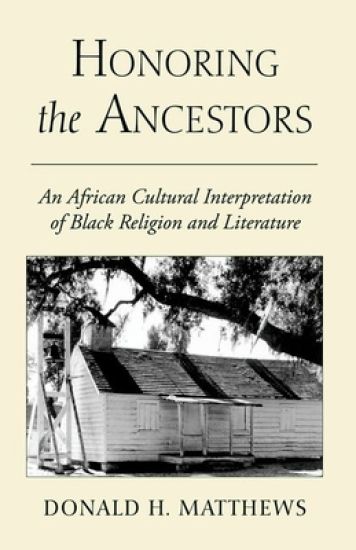
This text has two major emphases: it is an analysis of the methods employed by social scientists, historians, and literary critics in the study of African-American religion; and it is a constructive theological statement regarding African-American religion. "The Negro Spiritual" serves as the source material for both purposes.
The author identifies and defines the features of traditional utilitarian theories which account for their appeal, demonstrates that no theory which is exclusively act-oriented can have all the properties that ultilitarians have attempted to build into their theories, and develops a new theory co-operative utilitarianism,
Donald Matthews affirms once and for all the African foundation of African-American religious practice. His analysis of the methods employed by historians, social scientists, and literary critics in the study of African-American religion and the Negro spiritual leads him to develop a methodology that encompasses contemporary scholarship without compromising the integrity of African-American religion and culture. Because the Negro spiritual is the earliest extant body of African-American folk religious narration, Matthews believes that it holds the key to understanding African-American religion. He explores the works of such seminal black scholars as W. E. B. DuBois, Melville Herskovits, and Zora Neale Hurston, tracing the early development of the African-centered approach to the interpretation of African-American religion. This approach involves "cultural/structuralism", the author's term for the method used by DuBois, Herskovits, and Hurston that emphasizes the thick reading of narrative expressions. Such a reading allows the scholar to identify the cultural significance of particular oral and written texts and serves as a point of identification and a cultural link between African and African-American religion. Matthews' close analysis of the spiritual employs a dialectical and postmodernist reading and reveals a religious philosophy that addresses the deepest concerns and desires of Africans in America. These concerns are cultural, political, and psychological, but are ultimately related to African religious structures of meaning. Honoring the Ancestors poses a challenge to end the battle between Afrocentrists and multiculturalists by acknowledging their common intellectual heritage in the works of DuBois, Herskovits, and Hurston. It will be of great interest to students and scholars of African-American religion and culture and those interested in Afrocentric literature.
This second edition of The Graying of America greatly expands and updates the most comprehensive reference book on aging that is readily accessible to the lay reader. Featuring nontechnical language, user-friendly indexes, and more than 150 new entries, the second edition covers new topics such as acupuncture, wheelchairs, adjusting to bifocals, preparing for traveling, improving communication with physicians, and avoiding eye strain in computer use. Among other updates are more detailed coverage of health problems including arthritis, diabetes, osteoporosis, and various kinds of cancer, as well as advice on reducing the stress of caring for a family member with Alzheimer's disease. In addition to discussing hundreds of common ailments and conditions, Kausler and Kausler provide constructive guidance on regular physical activity, mental stimulation, and other behaviors that promote "successful aging."
ON THE FUTURE OF PERSPECTIVES When Patrick Bateson and Peter Klopfer offered me the editorship of Perspectives in 1992, the world of academic publishing was in one of its periodic upheavals. Subscriptions to series-even distinguished series such as Perspec tives-had been declining and individual volume prices had been rising, a trend that if continued could only result in the series pricing itself out of the market. In the course of the negotiations around the change of editors, the publishers offered a cost-cutting solution: change the production pattern to "camera ready" and elimi nate the costs of indexing and proofreading. While I could see the sense in this proposal, I was reluctant to accept it. Part of what I had always liked about the volumes in this series was that they were real books, intelligently proofread, nicely laid out, and provided with proper indexes. Thus, I in return offered a "Devil's bargain": the publisher should maintain the present quality of the series for two more volumes and make a renewed effort to advertise the series to our ethological and sociobiological colleagues, while I as the new series editor committed myself to a renewed effort to make Perspectives the publication of choice for writers who are trying to get their message out to the world intact and readers who are seeking clear, coherent, comprehensive and untrammeled presentations of authors' ideas and research programs.
Foreshadowing the twentieth-century experience, the Spanish American War was America's first modern foreign war. Catapulting the United States into an international world power, the war had lasting international implications. Besides America's acquisition of Puerto Rico, the Philippines, Hawaii, and Guam, the war led the United States to take to the international stage, confronting Germany and Japan (foreshadowing the conflict of World War II), and creating a diplomatic bridge between Great Britain and the United States. For Spain, the 1898-1899 conflict was the death knell of empire, which led to a national crisis culminating in the Spanish Civil War. This volume provides easily accessible information on the naval and army operations, Spanish operations, and the political background to the military events, with an emphasis on future foreign affairs.The Spanish American War is seminal to an understanding of twentieth-century U.S. foreign relations—in Cuba, the Pacific, especially Japan, and with Great Britain. It is also central to an understanding of twentieth-century Spain. U.S. military history also requires an understanding of amphibious operations, naval and army reform, deployment command and control, and interservice cooperation as reflected in the Spanish American War. This book provides a quick reference to what was once called this splendid little war.
Originally published in 1987, the purpose of this title was to develop a conceptual framework for understanding individual humans as complex, functional entities. It was felt that a sound developmental theory of human personality and behaviour would help synthesize existing scientific and clinical information into a coherent representation of a person as a functional unit, guide future research, and facilitate the work of the health and human services professions. The volume is aimed at a multidisciplinary-multiprofessional audience.
Originally published in 1987, the purpose of this title was to develop a conceptual framework for understanding individual humans as complex, functional entities. It was felt that a sound developmental theory of human personality and behaviour would help synthesize existing scientific and clinical information into a coherent representation of a person as a functional unit, guide future research, and facilitate the work of the health and human services professions. The volume is aimed at a multidisciplinary-multiprofessional audience.
This first detailed ethnographic account of the Pahang Malay people of peninsular Malaysia focuses on the society's traditional agricultural system, particularly on its specialization in the production of rice on largely unmodified natural swampland. Dr. Lambert discusses the historical development of Pahang Malay rice farming, its dependence on indigenous knowledge of local ecology, and its adaptability to adverse conditions. Farmers experimenting with cultivars, adapting new technologies to local conditions, and using their own seed selection skills have over several decades substantially improved their rice yields. Dr. Lambert suggests that well-adapted indigenous farming systems found throughout the world should be studied and the adoption of these successful agricultural practices should be encouraged by governments and development planners.
This first detailed ethnographic account of the Pahang Malay people of peninsular Malaysia focuses on the society's traditional agricultural system, particularly on its specialization in the production of rice on largely unmodified natural swampland. Dr. Lambert discusses the historical development of Pahang Malay rice farming, its dependence on indigenous knowledge of local ecology, and its adaptability to adverse conditions. Farmers experimenting with cultivars, adapting new technologies to local conditions, and using their own seed selection skills have over several decades substantially improved their rice yields. Dr. Lambert suggests that well-adapted indigenous farming systems found throughout the world should be studied and the adoption of these successful agricultural practices should be encouraged by governments and development planners.
The American Teacher is a comprehensive education foundations text with an emphasis on the historical continuity of educational issues and their practical application in the classroom. Aspiring teachers enter the classrooms with an innate optimism, and the challenge of The American Teacher is to engage them and to provide meaningful direction to channel their idealism. By reconnecting individuals with their society, community, and workplace, this engaging text provides education students with a grounding in their profession and an understanding of how important social and political issues affect educational practice.
The American Teacher is a comprehensive education foundations text with an emphasis on the historical continuity of educational issues and their practical application in the classroom. Aspiring teachers enter the classrooms with an innate optimism, and the challenge of The American Teacher is to engage them and to provide meaningful direction to channel their idealism. By reconnecting individuals with their society, community, and workplace, this engaging text provides education students with a grounding in their profession and an understanding of how important social and political issues affect educational practice.
The first comprehensive, practical guide to the selection, construction, and installation of soil bioengineering and biotechnical slope protection Here is the ultimate guide to physically attractive, environmentally compatible, and cost-effective methods of protecting slopes from erosion and mass wasting. Lavishly illustrated with more than 150 photographs and supplemented with scores of charts and tables, this book covers the entire subject from general principles and background on the nature of soil erosion and mass movement to detailed information on root strengths, treatment selection, unit costs, critical tractive stresses, methods for harvesting and handling live cuttings, and more. Four illustrated case studies, each addressing a different set of problems and solutions, demonstrate both the application of particular technologies and the site investigation, planning, scheduling, and organization required to complete these projects successfully. This unique reference handbook *Reviews the horticultural and engineering underpinnings for biotechnical and soil engineering treatments *Documents and explains the role of woody plants in stabilizing slopes against both surficial erosion and mass movement *Provides details on a broad range of soil bioengineering methods, including live staking, live fascines, brushlayering, live crib walls, branchpacking, and live slope gratings *Describes various biotechnical methods and materials, including the incorporation of vegetation in erosion control blankets, flexible mats, cellular revetments (geocells), rock armor (rip rap), and gabion and open-front crib walls *Summarizes the findings of the National Science Foundation-sponsored workshop to assess the state of the art and determine research needs For practicing professionals, researchers, and students in geotechnical engineering, geology, soil science, forestry and forest engineering, landscape architecture, environmental horticulture, and restoration ecology, this book offers thorough, up-to-date coverage that is not available from any other single source.