JIMMY is the perfect story for anyone searching for the love to accept themselves or the grace to forgive. A terrible accident carries Jimmy and his father down different forks in the river. While Jimmy refuses to be defined by his new physical limitations, his father struggles with emotional wounds that threaten to consume him. Through Jimmy's eyes we see the immense natural beauty of the Ozarks and we remember that friends bring joy to life and soften the pain of loss. Jimmy is the caring, emotionally brave hero we all need. JIMMY is a baseball story, a tale from the Ozarks, and a salve for the soul.
This delightful tale offers a modern-day reinvention of the beloved Bible story known throughout the world, with an Ozarks flair Three brave and good-hearted orphans, Hammie, Cammie, and Harpie King, set out with their friend Zara to save the baby Emmanuel from greedy, evil Marshal Herrod and his henchmen. The task seems impossible, but with the help of friends they meet along the way, they learn that anything is possible with faith, perseverance, and inspiration. An Ozarks Christmas Story skillfully weaves Ozarks folklore into a classic story while asking: Are the risky and seemingly impossible things we do really worthwhile? And of course, the answer is always yes, when we do them for the ones we love. Warm, inventive, and entertaining, this book is sure to become a family favorite for the holiday season
In her seventeeth book adventure, bestselling author Jessica Fletcher travels to provence for some haute cuisine, and becomes embroiled in a culinary murder mystery.
As America's most infamous former Secretary of Defense lies poised to unleash his wistful recollections and rewriting of the war on terror, authors Eric Martin and Stephen Elliott humbly submit their take to the historical record: Donald. What would happen if Donald Rumsfeld, former defense secretary and architect of the war on terror, was abducted at night from his Maryland home, held without charges in his own prison system, denied a trial, and kept in a place where no one could find him, beyond the reach of the law? Donald is a high-wire allegory that answers this question, in equal parts breakneck thriller and gradual descent into madness. But it is also a novel rooted in the harrowing stories of real people caught in America's military campaigns. And while there are those who would try to convince us that war is full of uncertainty--of knowns and unknowns--Donald reminds us that there remain things we know to be wrong.
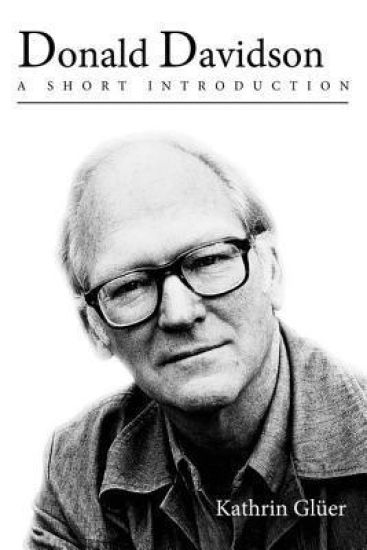
Donald Davidson was one of the 20th Century's deepest analytic thinkers. He developed a systematic picture of the human mind and its relation to the world, an original and sustained vision that exerted a shaping influence well beyond analytic philosophy of mind and language. At its center is an idea of minded creatures as essentially rational animals: Rational animals can be interpreted, their behavior can be understood, and the contents of their thoughts are, in principle, open to others. The combination of a rigorous analytic stance with aspects of humanism so distinctive of Davidsonian thought finds its maybe most characteristic expression when this central idea is brought to bear on the relation of the mental to the physical: Davidson defended the irreducibility of its rational nature while acknowledging that the mental is ultimately determined by the physical. Davidson made contributions of lasting importance to a wide range of topics -- from general theory of meaning and content over formal semantics, the theories of truth, explanation, and action, to metaphysics and epistemology. His writings almost entirely consist of short, elegant, and often witty papers. These dense and thematically tightly interwoven essays present a profound challenge to the reader. This book provides a concise, systematic introduction to all the main elements of Davidson's philosophy. It places the theory of meaning and content at the very center of his thought. By using interpretation, and the interpreter, as key ideas it clearly brings out the underlying structure and unified nature of Davidson's work. Kathrin Glüer carefully outlines his principal claims and arguments, and discusses them in some detail. The book thus makes Davidson's thought accessible in its genuine depth, and acquaints the reader with the main lines of discussion surrounding it.
Donald Davidson was one of the 20th Century's deepest analytic thinkers. He developed a systematic picture of the human mind and its relation to the world, an original and sustained vision that exerted a shaping influence well beyond analytic philosophy of mind and language. At its center is an idea of minded creatures as essentially rational animals: Rational animals can be interpreted, their behavior can be understood, and the contents of their thoughts are, in principle, open to others. The combination of a rigorous analytic stance with aspects of humanism so distinctive of Davidsonian thought finds its maybe most characteristic expression when this central idea is brought to bear on the relation of the mental to the physical: Davidson defended the irreducibility of its rational nature while acknowledging that the mental is ultimately determined by the physical. Davidson made contributions of lasting importance to a wide range of topics -- from general theory of meaning and content over formal semantics, the theories of truth, explanation, and action, to metaphysics and epistemology. His writings almost entirely consist of short, elegant, and often witty papers. These dense and thematically tightly interwoven essays present a profound challenge to the reader. This book provides a concise, systematic introduction to all the main elements of Davidson's philosophy. It places the theory of meaning and content at the very center of his thought. By using interpretation, and the interpreter, as key ideas it clearly brings out the underlying structure and unified nature of Davidson's work. Kathrin Gl¨ uer carefully outlines his principal claims and arguments, and discusses them in some detail. The book thus makes Davidson's thought accessible in its genuine depth, and acquaints the reader with the main lines of discussion surrounding it.
Donald Davidson (1917-2003) was one of the most important philosophers of the late twentieth century. His work on language and the theory of meaning has been particularly influential.Two of the world's leading authorities on Davidson's philosophy, Ernest Lepore and Kirk Ludwig, provide a systematic exposition of his work in this field and of his contributions to philosophy of mind, metaphysics, and epistemology which spring from it. Their second aim is to assess Davidson's program critically, to mark its successes, but also to identify where its ccomplishments fall short of its ambitions, and, since it is an on-going research program, to assess its prospects for the future, and to contribute to the expansion of that program. Criticizing and extending Davidson's thought, as well as providing an introduction to it, Lepore and Ludwig address a broad academic audience. Their work will be of fundamental importance for those who are coming to Davidson's work for the first time; while some philosophical sophistication and training is presupposed, it is accessible both to advanced undergraduates and to graduate students. It will also be welcomed by professional philosophers, linguists, and anyone wishing to assess and understand Davidson's remarkable intellectual legacy.
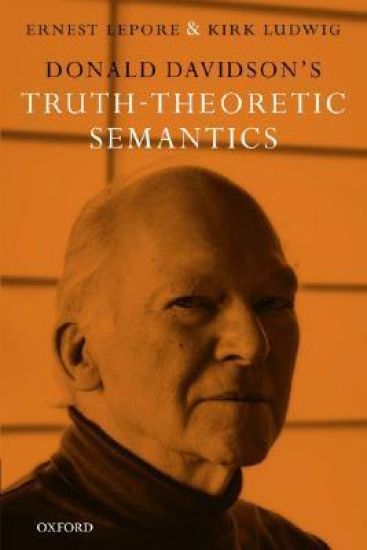
Ernest Lepore and Kirk Ludwig examine the foundations and applications of Davidson's influential program of truth-theoretic semantics for natural languages. The program uses an axiomatic truth theory for a language, which meets certain constraints, to serve the goals of a compositional meaning theory. Lepore and Ludwig explain and clarify the motivations for the approach, and then consider how to apply the framework to a range of important natural language constructions, including quantifiers, proper names, indexicals, simple and complex demonstratives, quotation, adjectives and adverbs, the simple and perfect tenses, temporal adverbials and temporal quantifiers, tense in sentential complement clauses, attitude and indirect discourse reports, and the problem of interrogative and imperative sentences. They not only discuss Davidson's own contributions to these subjects but consider criticisms, developments, and alternatives as well. They conclude with a discussion of logical form in natural language in light of the approach, the role of the concept of truth in the program, and Davidson's view of it. Anyone working on meaning will find this book invaluable.
Ernest Lepore and Kirk Ludwig examine the foundations and applications of Davidson's influential program of truth-theoretic semantics for natural languages. The program uses an axiomatic truth theory for a language, which meets certain constraints, to serve the goals of a compositional meaning theory. Lepore and Ludwig explain and clarify the motivations for the approach, and then consider how to apply the framework to a range of important natural language constructions, including quantifiers, proper names, indexicals, simple and complex demonstratives, quotation, adjectives and adverbs, the simple and perfect tenses, temporal adverbials and temporal quantifiers, tense in sentential complement clauses, attitude and indirect discourse reports, and the problem of interrogative and imperative sentences. They not only discuss Davidson's own contributions to these subjects but consider criticisms, developments, and alternatives as well. They conclude with a discussion of logical form in natural language in light of the approach, the role of the concept of truth in the program, and Davidson's view of it. Anyone working on meaning will find this book invaluable.
Donald Michie was an extraordinary character. In a scientific career that spanned nearly 65 years, he was the pioneer in several fields including computing, mouse embryology, transplantation biology, and machine intelligence. Tragically, he died in a car crash in 2007. Here, Ashwin Srinivasan presents a varied collection of Michie's writings, from Colossus and computers to mouse genetics and politics. Srinivasan, a computer scientist and grand-student of Donald Michie, introduces each section and brings together an engaging collection of lively essays, revealing Michie's remarkable personality and painting a picture of his life and interests.
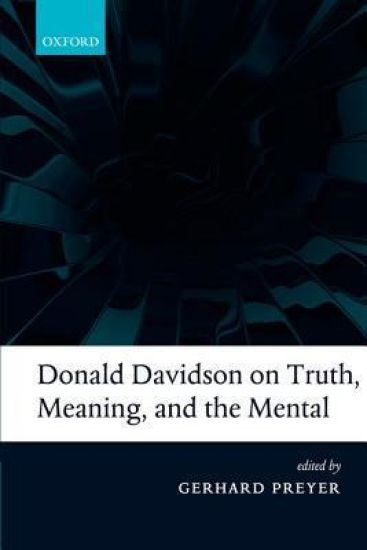
The analysis of the connections between truth, meaning, thought, and action poses a major philosophical challenge--one that Donald Davidson addressed by establishing a unified theory of language and mind. This volume offers a reappraisal of Davidson's intellectual legacy. Twelve specially written essays by leading philosophers in the field illuminate a range of enduring philosophical problems, and engage in particular with Ernie Lepore and Kirk Ludwig's interpretation of Davidson's philosophy. The collection affirms Davidson's continuing influence on the study of language, mind, and action, and offers a variety of new perspectives on his work.
Donald Judd (1928-1994) is one of the most influential American artists of the postwar era. Beginning in the 1960s, he developed new ideas about art-in both his works and writings-that challenged many of modernism's core tenets by resisting the categories of painting and sculpture. Judd described this work as "specific objects." Critics labeled it minimalism. Perhaps because Judd's own critical writings provide a discursive framework for his work, some of the monographic essays on his work are not widely known. This volume collects critical and scholarly writings on Judd, examining his work as both artist and critic.
This pioneering book, the first monograph devoted to Donald Judd, addresses the whole breadth of Judd’s practices. Drawing on documents found in nearly twenty archives, David Raskin explains why some of Judd’s works of art seem startlingly ephemeral while others remain insistently physical. In the process of answering this previously perplexing question, Raskin traces Judd’s principles from his beginnings as an art critic through his fabulous installations and designs in Marfa, Texas. He discusses Judd’s early important paintings and idiosyncratic red objects, as well as the three-dimensional works that are celebrated throughout the world. He also examines Judd’s commitment to empirical values and his political activism, and concludes by considering the importance of Judd’s example for recent art. Ultimately, Raskin develops a picture of Judd as never before seen: he shows us an artist who asserted his individuality with spare designs; who found spiritual values in plywood, Plexiglas, and industrial production; who refused to distinguish between thinking and feeling while asserting that science marked the limits of knowledge; who claimed that his art provided intuitions of morality but not a specific set of tenets; and who worked for political causes that were neither left nor right.