In United States v. Clark, Andre Clark has been charged with bank robbery after the Main Street Bank in Nita City was robbed by three unknown individuals. An unidentified caller reported to 911 that he saw the three individuals run from the bank and followed them. He reported that they switched cars and then stopped at a house. Based on this call, Nita Bureau of Investigation agents went to the house, searched it, and found a handgun, $12,000, and a mask. The three men at the residence, including Andre Clark, William Cole, and Jason Fleming were arrested and indicted. Cole has pled guilty and Fleming with be tried at a later time. There are three witnesses for the State and two for the defendant. There is a DNA expert that may be called by either party.
When the Mormons established their theocratic city of Nauvoo on the banks of the Mississippi in 1839, they made self-defense a priority, having encountered persecution, violence, and forcible expulsion elsewhere. Organized under Illinois law, the Nauvoo Legion was a city militia made up primarily of Latter-day Saints. This comprehensive work on the history, structure, and purpose of the Nauvoo Legion traces its unique story from its founding to the Mormon exodus in 1846.An American construct in design, appearance, and function, the Nauvoo Legion quickly became one of America's largest--and most feared--militias. The authors describe its origins, daily activities, and general conduct, including parades, sham battles, uniforms, and military operations. And they also present a new interpretation of the Legion's essential purpose and character. Drawing upon overlooked state militia records and recently discovered archival material, they identify the thousands of citizen soldiers who served.Despite the nominal authority of the Illinois governor, the Nauvoo Legion was led by Mormon Prophet Joseph Smith. As the militia grew in strength and military prowess, neighboring non-Mormons grew wary. Soon, local fears led to violence and the killing of Smith and his brother, Hyrum, in 1844. When the Nauvoo Charter was revoked, the militia no longer enjoyed legal status and assumed a distinctly different role in Mormon affairs until it was reconstituted after the Mormon emigration to Utah.Impeccably researched and honestly told, this groundbreaking study fills a major gap in Latter-day Saint church history and adds a significant chapter to the annals of American militias.
Everything You Need to Boost Your USMLE Step 3 Score!LANGE Q&A: USMLE Step 3 is a comprehensive Q&A review of the core topics tested on the USMLE Step 3. It begins with an introduction to what residents can expect on exam day and strategy tips about answering questions. Chapters are organized by topic so you can focus your studies on your weakest areas. The final four chapters consist of practice tests in blocks of 50 questions each and emphasize the most frequently tested topics. Explanations discuss correct and incorrect answer options for a complete high-yield review. 850+ review Q&As plus detailed explanations for each! Four comprehensive practice tests for self-evaluation Color photos of skin and eye disorders Special focuses on rheumatology, ethics, epidemiology, shock, and lipids management
"Nine Stages of Donald J. Trump" will follow the steps of the new interpritation of the Enneagram, "The Keys to Unity". Donald Trump started with a vision, his vision became his fulfillment, his fulfillment empowered him to complete his life mission, President of United States. With the love Trump has for his country, he will make America Great Again. If we want peace and unity in our world, we must first start with ourselves, "BE THE CHANGE THAT YOU WANT TO SEE THE WORLD" by Mahatma Gandhi. Fr. Giacomo Capoverdi (video) Hermit of Loreto (Tom Zimmer) predicted in the 1980s that God had His hand on Donald Trump, and would use him as His instrument. Also, he predicted that Trump was going to lead America back to God. LifeSiteNews (video) Plenty of evidence suggests Trump is fulfilling prophecy, leading America back to God.
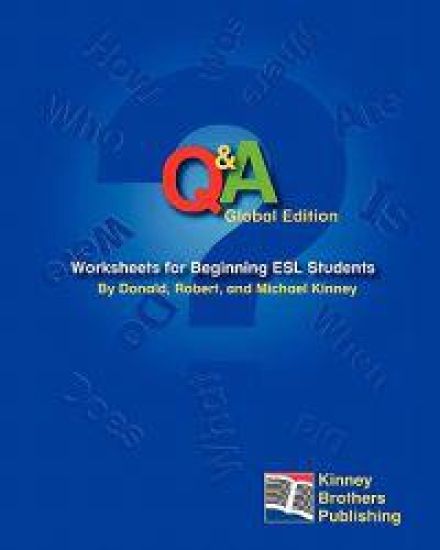
Q&A, by Kinney Brothers Publishing, is an ESL resource packed with over 200 pages of reading, writing and speaking practice. In an easy-to-understand format and with engaging and fun images, Q&A exercises students in the basics of "who, what, where, when, which, how, does, is, are" and "can" questions. Teachers and students will find page after page of repetitive Q&A practice in present simple, present continuous, and simple past tenses appropriate for beginning ESL students.
In wireless communication systems, the network keeps track of a user’s location through an up-to-date user profile stored in various databases. A user profile contains not only a user’s current location information, but also service information, such as billing and authentication. The cov- age area of an access network is divided into registration areas (RAs), and each RA is associated with a location database. The two basic op- ations in mobility management are location update and location lookup. When a user moves across the boundaries of these RAs, the network updates his location information in the pertinent databases. When a caller places a call using the callee’s identification, the network queries the relevant database(s) to obtain the current location and other service information of the callee. The performance of mobility management can be further enhanced by using replicas of user profiles which may be kept at various locations. Replication techniques make profile information more readily available, thus reducing lookup cost and latency, but to keep these replicas c- sistent and fresh, they must be updated whenever the user profile is updated. The principle of replication is to replicate if the benefit of replication is greater than its overhead. The difficulty, however, lies in accurately measuring the benefit and overhead.
In wireless communication systems, the network keeps track of a user’s location through an up-to-date user profile stored in various databases. A user profile contains not only a user’s current location information, but also service information, such as billing and authentication. The cov- age area of an access network is divided into registration areas (RAs), and each RA is associated with a location database. The two basic op- ations in mobility management are location update and location lookup. When a user moves across the boundaries of these RAs, the network updates his location information in the pertinent databases. When a caller places a call using the callee’s identification, the network queries the relevant database(s) to obtain the current location and other service information of the callee. The performance of mobility management can be further enhanced by using replicas of user profiles which may be kept at various locations. Replication techniques make profile information more readily available, thus reducing lookup cost and latency, but to keep these replicas c- sistent and fresh, they must be updated whenever the user profile is updated. The principle of replication is to replicate if the benefit of replication is greater than its overhead. The difficulty, however, lies in accurately measuring the benefit and overhead.
A pocket-size, brilliantly colorful, simple-to-use guide to dragonflies, containing dozens of full-color photographs that enable readers of all ages to identify the most common species; range maps; tips on attracting dragonflies, information on habitat needs, life cycle, food preferences; and much more.
As America's most infamous former Secretary of Defense lies poised to unleash his wistful recollections and rewriting of the war on terror, authors Eric Martin and Stephen Elliott humbly submit their take to the historical record: Donald. What would happen if Donald Rumsfeld, former defense secretary and architect of the war on terror, was abducted at night from his Maryland home, held without charges in his own prison system, denied a trial, and kept in a place where no one could find him, beyond the reach of the law? Donald is a high-wire allegory that answers this question, in equal parts breakneck thriller and gradual descent into madness. But it is also a novel rooted in the harrowing stories of real people caught in America's military campaigns. And while there are those who would try to convince us that war is full of uncertainty--of knowns and unknowns--Donald reminds us that there remain things we know to be wrong.
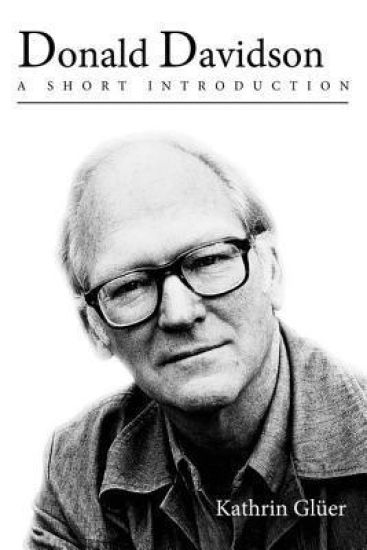
Donald Davidson was one of the 20th Century's deepest analytic thinkers. He developed a systematic picture of the human mind and its relation to the world, an original and sustained vision that exerted a shaping influence well beyond analytic philosophy of mind and language. At its center is an idea of minded creatures as essentially rational animals: Rational animals can be interpreted, their behavior can be understood, and the contents of their thoughts are, in principle, open to others. The combination of a rigorous analytic stance with aspects of humanism so distinctive of Davidsonian thought finds its maybe most characteristic expression when this central idea is brought to bear on the relation of the mental to the physical: Davidson defended the irreducibility of its rational nature while acknowledging that the mental is ultimately determined by the physical. Davidson made contributions of lasting importance to a wide range of topics -- from general theory of meaning and content over formal semantics, the theories of truth, explanation, and action, to metaphysics and epistemology. His writings almost entirely consist of short, elegant, and often witty papers. These dense and thematically tightly interwoven essays present a profound challenge to the reader. This book provides a concise, systematic introduction to all the main elements of Davidson's philosophy. It places the theory of meaning and content at the very center of his thought. By using interpretation, and the interpreter, as key ideas it clearly brings out the underlying structure and unified nature of Davidson's work. Kathrin Glüer carefully outlines his principal claims and arguments, and discusses them in some detail. The book thus makes Davidson's thought accessible in its genuine depth, and acquaints the reader with the main lines of discussion surrounding it.
Donald Davidson was one of the 20th Century's deepest analytic thinkers. He developed a systematic picture of the human mind and its relation to the world, an original and sustained vision that exerted a shaping influence well beyond analytic philosophy of mind and language. At its center is an idea of minded creatures as essentially rational animals: Rational animals can be interpreted, their behavior can be understood, and the contents of their thoughts are, in principle, open to others. The combination of a rigorous analytic stance with aspects of humanism so distinctive of Davidsonian thought finds its maybe most characteristic expression when this central idea is brought to bear on the relation of the mental to the physical: Davidson defended the irreducibility of its rational nature while acknowledging that the mental is ultimately determined by the physical. Davidson made contributions of lasting importance to a wide range of topics -- from general theory of meaning and content over formal semantics, the theories of truth, explanation, and action, to metaphysics and epistemology. His writings almost entirely consist of short, elegant, and often witty papers. These dense and thematically tightly interwoven essays present a profound challenge to the reader. This book provides a concise, systematic introduction to all the main elements of Davidson's philosophy. It places the theory of meaning and content at the very center of his thought. By using interpretation, and the interpreter, as key ideas it clearly brings out the underlying structure and unified nature of Davidson's work. Kathrin Gl¨ uer carefully outlines his principal claims and arguments, and discusses them in some detail. The book thus makes Davidson's thought accessible in its genuine depth, and acquaints the reader with the main lines of discussion surrounding it.
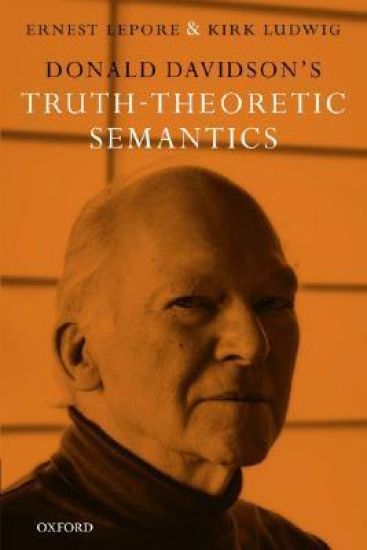
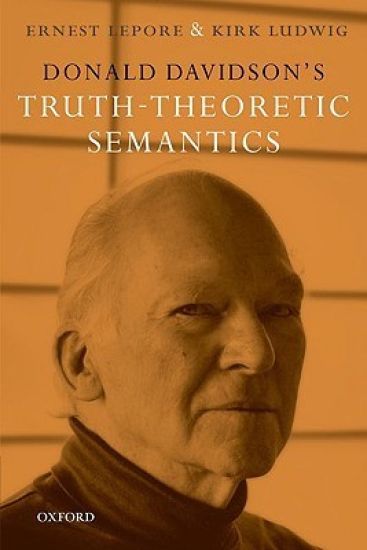
Donald Davidson (1917-2003) was one of the most important philosophers of the late twentieth century. His work on language and the theory of meaning has been particularly influential.Two of the world's leading authorities on Davidson's philosophy, Ernest Lepore and Kirk Ludwig, provide a systematic exposition of his work in this field and of his contributions to philosophy of mind, metaphysics, and epistemology which spring from it. Their second aim is to assess Davidson's program critically, to mark its successes, but also to identify where its ccomplishments fall short of its ambitions, and, since it is an on-going research program, to assess its prospects for the future, and to contribute to the expansion of that program. Criticizing and extending Davidson's thought, as well as providing an introduction to it, Lepore and Ludwig address a broad academic audience. Their work will be of fundamental importance for those who are coming to Davidson's work for the first time; while some philosophical sophistication and training is presupposed, it is accessible both to advanced undergraduates and to graduate students. It will also be welcomed by professional philosophers, linguists, and anyone wishing to assess and understand Davidson's remarkable intellectual legacy.
Ernest Lepore and Kirk Ludwig examine the foundations and applications of Davidson's influential program of truth-theoretic semantics for natural languages. The program uses an axiomatic truth theory for a language, which meets certain constraints, to serve the goals of a compositional meaning theory. Lepore and Ludwig explain and clarify the motivations for the approach, and then consider how to apply the framework to a range of important natural language constructions, including quantifiers, proper names, indexicals, simple and complex demonstratives, quotation, adjectives and adverbs, the simple and perfect tenses, temporal adverbials and temporal quantifiers, tense in sentential complement clauses, attitude and indirect discourse reports, and the problem of interrogative and imperative sentences. They not only discuss Davidson's own contributions to these subjects but consider criticisms, developments, and alternatives as well. They conclude with a discussion of logical form in natural language in light of the approach, the role of the concept of truth in the program, and Davidson's view of it. Anyone working on meaning will find this book invaluable.
Ernest Lepore and Kirk Ludwig examine the foundations and applications of Davidson's influential program of truth-theoretic semantics for natural languages. The program uses an axiomatic truth theory for a language, which meets certain constraints, to serve the goals of a compositional meaning theory. Lepore and Ludwig explain and clarify the motivations for the approach, and then consider how to apply the framework to a range of important natural language constructions, including quantifiers, proper names, indexicals, simple and complex demonstratives, quotation, adjectives and adverbs, the simple and perfect tenses, temporal adverbials and temporal quantifiers, tense in sentential complement clauses, attitude and indirect discourse reports, and the problem of interrogative and imperative sentences. They not only discuss Davidson's own contributions to these subjects but consider criticisms, developments, and alternatives as well. They conclude with a discussion of logical form in natural language in light of the approach, the role of the concept of truth in the program, and Davidson's view of it. Anyone working on meaning will find this book invaluable.