Kirjojen hintavertailu. Mukana 11 244 527 kirjaa ja 12 kauppaa.

Kirjahaku

Etsi kirjoja tekijän nimen, kirjan nimen tai ISBN:n perusteella.

1000 tulosta hakusanalla Donald W. Carson; James W. Johnson

Mo

Mo

Donald W. Carson; James W. Johnson

University of Arizona Press
2004
nidottu
Everybody liked Mo. Throughout his political life and especially during his bid for the Democratic presidential nomination in 1976 thousands of people were drawn to Arizona congressman Morris K. Udall by his humor, humanity, and courage. This biography traces the remarkable career of the candidate who was "too funny to be president" and introduces readers to Mo the politician, Mo the environmentalist, and Mo the man. Journalists Donald Carson and James Johnson interviewed more than one hundred of Udall's associates and family members to create an unusually rich portrait. They recall Udall's Mormon boyhood in Arizona when he lost an eye at age six, his service during World War II, his brief career in professional basketball, and his work as a lawyer and county prosecutor, which earned him a reputation for fairness and openness. Mo provides the most complete record of Udall's thirty-year congressional career ever published. It reveals how he challenged the House seniority system and turned the House Interior Committee into a powerful panel that did as much to protect the environment as any organization in the twentieth century. It shows Udall to have been a consensus builder for environmental issues who paved the way for the Alaska Lands Act of 1980, helped set aside 2.4 million acres of wilderness in Arizona, and fought for the Central Arizona Project, one of the most ambitious water projects in U.S. history. Carson and Johnson record Udall's early opposition to the Vietnam War at a time when that conflict was largely perceived as a just cause, as well as his early advocacy of campaign finance reform. They also provide a behind-the-scenes account of his run for the presidency the first House member to seek the office in nearly a century which gained him an intensely loyal national following. Mo explores the paradoxes that beset Udall: He was a man able to accomplish things politically because people genuinely liked and respected him, yet he was a loner and workaholic whose focus on politics overshadowed his personal life. Carson and Johnson devote a chapter to the famous Udall sense of humor. They also look sensitively at his role as a husband and father and at his proud and stubborn bout with Parkinson's disease. Mo Udall will long be remembered for his contributions to environmental legislation, for his unflagging efforts in behalf of Arizona, and for the gentle humor with which he conducted his life. This book secures his legacy.
Joe Rochefort's War

Joe Rochefort's War

Elliot W Carlson; Donald M Showers

Naval Institute Press
2013
pokkari
Elliot Carlson’s award-winning biography of Capt. Joe Rochefort is the first to be written about the officer who headed Station Hypo, the U.S. Navy’s signals monitoring and cryptographic intelligence unit at Pearl Harbor, and who broke the Japanese navy’s code before the Battle of Midway. His conclusions, bitterly opposed by some top Navy brass, are credited with making the U.S. victory possible and helping to change the course of the war. The author tells the story of how opponents in Washington forced Rochefort’s removal from Station Hypo and denied him the Distinguished Service Medal recommended by Admiral Nimitz.
Donald W. Winnicott

Donald W. Winnicott

Laura Dethiville

Routledge
2019
sidottu
Winnicott was continually innovating, inventing, and proposing unexpected solutions in his analytical work whenever he noticed that clinical experience "didn't stick to the theory". This approach can make his work seem rather diffuse, with concepts that are sometimes confusing and needing to be clarified. Laura Dethiville has taken on the task of re-evaluating and explaining the principal rudiments of his theories, such as the transitional object, the self, the false self, the importance of environment, and dissociation. She also reveals how Winnicott showed himself to be a forerunner in the care of symptomatic illness in our society, including his innovative treatment of loss of identity, anorexia or bulimia, delinquency, psychosomatic illness, and school disorders. In this book the author has succeeded in avoiding psychoanalytic jargon and, although initially aimed at psychoanalysts, it is also accessible for educators, child carers, paediatricians, and to all those interested in early childhood, the constitution of the psyche, and the constitution of the interpersonal link.
Donald W. Winnicott and the History of the Present
In November 2015, The Winnicott Trust held a major conference in London to celebrate the forthcoming publication of the Collected Works of D. W. Winnicott. Most of the papers given then now constitute the chapters in this book. It not only reflects the ongoing contemporary relevance of Winnicott's work, clinical and theoretical, but these chapters demonstrate the aliveness of Winnicott's contribution as present day practitioners and academics use his ideas in their own way. The chapters range from accounts of the early developmental processes and relationships (Roussillon, Murray), the psychoanalytic setting (Bolognini, Bonaminio, Fabozzi, Joyce, Hopkins) creativity and the arts (Wright, Robinson), Winnicott in the outside world (Kahr, Karpf), to the challenge to the psychoanalytic paradigm that Winnicott's ideas constitute (Loparic).
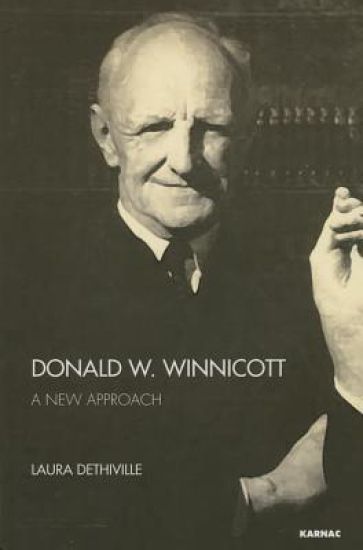
Donald W. Winnicott

Donald W. Winnicott

Dethiville Laura

Karnac Books
2014
nidottu
Winnicott was continually innovating, inventing, and proposing unexpected solutions in his analytical work whenever he noticed that clinical experience "didn't stick to the theory". This approach can make his work seem rather diffuse, with concepts that are sometimes confusing and needing to be clarified. Laura Dethiville has taken on the task of re-evaluating and explaining the principal rudiments of his theories, such as the transitional object, the self, the false self, the importance of environment, and dissociation. She also reveals how Winnicott showed himself to be a forerunner in the care of symptomatic illness in our society, including his innovative treatment of loss of identity, anorexia or bulimia, delinquency, psychosomatic illness, and school disorders. In this book the author has succeeded in avoiding psychoanalytic jargon and, although initially aimed at psychoanalysts, it is also accessible for educators, child carers, paediatricians, and to all those interested in early childhood, the constitution of the psyche, and the constitution of the interpersonal link.
Donald W. Winnicott and the History of the Present
In November 2015, The Winnicott Trust held a major conference in London to celebrate the forthcoming publication of the Collected Works of D. W. Winnicott. Most of the papers given then now constitute the chapters in this book. It not only reflects the ongoing contemporary relevance of Winnicott's work, clinical and theoretical, but these chapters demonstrate the aliveness of Winnicott's contribution as present day practitioners and academics use his ideas in their own way. The chapters range from accounts of the early developmental processes and relationships (Roussillon, Murray), the psychoanalytic setting (Bolognini, Bonaminio, Fabozzi, Joyce, Hopkins) creativity and the arts (Wright, Robinson), Winnicott in the outside world (Kahr, Karpf), to the challenge to the psychoanalytic paradigm that Winnicott's ideas constitute (Loparic).
The Clinic of Donald W. Winnicott

The Clinic of Donald W. Winnicott

Laura Dethiville

Routledge
2018
sidottu
Paediatric psychoanalyst Donald W. Winnicott is widely recognized as a remarkable clinician. Deprivation, regression, play, antisocial tendencies and "the use of the object" are part of the many clinical conceptions he conceived, and here Laura Dethiville explains each in a clear and precise way, highlighting Winnicott’s originality and enduring relevance. The Clinic of Donald W. Winnicott offers all readers a glimpse of what Winnicott brings to the understanding of the human being, and will appeal to students new to his work, as well as practitioners looking for a concise overview of his work.
The Clinic of Donald W. Winnicott

The Clinic of Donald W. Winnicott

Laura Dethiville

Routledge
2018
nidottu
Paediatric psychoanalyst Donald W. Winnicott is widely recognized as a remarkable clinician. Deprivation, regression, play, antisocial tendencies and "the use of the object" are part of the many clinical conceptions he conceived, and here Laura Dethiville explains each in a clear and precise way, highlighting Winnicott’s originality and enduring relevance. The Clinic of Donald W. Winnicott offers all readers a glimpse of what Winnicott brings to the understanding of the human being, and will appeal to students new to his work, as well as practitioners looking for a concise overview of his work.
The Railroad Photography of Donald W. Furler

The Railroad Photography of Donald W. Furler

Scott Lothes

Center for Railroad Photography Art
2020
sidottu
The Railroad Photography of Donald W. Furler showcases the black-and-white imagery of a master of the craft. Furler (1917-1994) grew up in New Jersey and helped pioneer the "action shot" to show trains at speed. He faithfully and dramatically documented the final decade of steam operations in the northeastern United States with technically-superior and often creative images portraying the trains in their environments. While his work appeared frequently in early issues of Trains magazine in the 1940s and 1950s, it has rarely been seen since. As someone who helped write the rules for railroad action photography, an examination of Furler's photography is long overdue.
Generativität und Bindungserfahrung in Lebensläufen von Psychotherapeuten am Beispiel von Donald W. Winnicott
K nstlern wird oft eine psychische Pr gung durch fr he Kindheitserlebnisse und anschlie ende kreative Verarbeitung nachgesagt. Bei Wissenschaftlern sieht eine fundierte Auseinandersetzung mit Biographie und theoretischem Werk meist anders aus. Gerade bei psychotherapeutisch t tigen rzten, P dagogen, Psychologen und weiteren verwandten Fachgruppen ergibt sich eine forschungsrelevante Verbindung, da sich diese Wissenschaftler sowohl theoretisch als auch praktisch direkt mit der psychischen Entwicklung ber den Lebenslauf hinweg besch ftigen. Da es in dieser Untersuchung nicht allein um die reine Verarbeitung von Bindungsmustern in der fr hen Kindheit gehen soll, wird im psychotherapeutischen Feld die reflektierte Form eines generativen Bandes er rtert, das von beispielhaften Forschern theoretisch verarbeitet wurde, um prospektive Theoreme der Erziehung, Therapie und Bildung der n chsten Generation weiterzugeben. Hierbei werden sowohl Fragestellungen der Biographie- und Lebenslaufforschung miteinbezogen, als auch bindungstheoretische Erkenntnisse zum Begriff der Generativit t im Lebenszyklus, zur Adoleszenz, wie zu zeitgen ssischer Kreativit tsforschung. Paradigmatisches Beispiel f r die Fusion dieser Entwicklungen ist der Lebenslauf und das Werk des Kinderarztes und Psychoanalytikers Donald W. Winnicott, von dem ein biographisches Fragment aus dem Nachlass in Bezug auf die Sinndimensionen von Generativit t und fr her Bindungserfahrung nach Ulrich Oevermanns Methode der Objektiven Hermeneutik analysiert wird.
The Biology and Identification of the Coccidia (Apicomplexa) of Rabbits of the World

The Biology and Identification of the Coccidia (Apicomplexa) of Rabbits of the World

Donald W. Duszynski; Lee Couch

Elsevier Science Publishing Co Inc
2013
sidottu
The Biology and Identification of the Coccidia (Apicomplexa) of Rabbits of the World is a taxonomic summation of a damaging intestinal parasite found in rabbits and transmissible to other species, including humans. This book conceptually and historically summarizes the world's literature on the parasite and also provides a quick guide to isolation procedures, identification, strategies for management, and available chemotherapy. It is a vital source of knowledge about coccidia’s real and potential transmission to humans, which can lead to dangerous health problems, like severe dehydration, vomiting, lethargy and even death. Coccidiosis is an intestinal disease that affects several different animal species, including canines and humans, and is one of the most prevalent protozoal infections in North America. The causative agent is a protozoan that has the ability to multiply rapidly and cause major damage in the intestinal wall, rupturing the cells of the intestinal lining. The final stage, the oocyst, is extremely resistant to environmental stress and is difficult to completely remove from the environment. Oocysts are frequent contaminants of feed and water and when the sporulated oocysts are ingested by other animals, they start the life cycle over in the new host. With the demand for rabbits in scientific research and for rabbit meat for human consumption increasingly globally each year, rabbits are of epidemiologic significance for laboratory workers, university researchers, veterinarians, pet owners, and breeders.
Natural Resource Administration

Natural Resource Administration

Donald W. Sparling

Academic Press Inc
2014
nidottu
Natural Resource and Wildlife Administration presents a clear perspective on natural resource administration in North America, how it developed, how it is currently structured, and where it might be heading. Intertwined areas of natural resources, including wildlife administration, fisheries, forestry, and other competitive land uses, are heavily discussed. The book covers the history of natural resource management in Europe and North America, proceeding to environmental law; agencies involved in wildlife and natural resource management; and the human dimensions of public relations and economic concerns. Natural Resource and Wildlife Administration provides solid background on the history of natural resource conservation, critical laws protecting resources, and the nature of agencies. The interconnectedness among natural resources makes this a useful text for disciplines such as wildlife, fisheries, and forestry.
The Biology and Identification of the Coccidia (Apicomplexa) of Turtles of the World

The Biology and Identification of the Coccidia (Apicomplexa) of Turtles of the World

Donald W. Duszynski; Johnica J. Morrow

Academic Press Inc
2014
nidottu
The Biology and Identification of the Coccidia (Apicomplexa) of Turtles of the World is an invaluable resource for researchers in protozoology, coccidia, and parasitology, veterinary sciences, animal sciences, zoology, and biology. This first-of-its-kind work offers a taxonomic guide to apicomplexan parasites of turtles that enables easy parasite identification, with a summary of virtually everything known about the biology of each known parasite species. It is an important documentation of this specific area, useful to a broad base of readers, including researchers in biology, parasitology, animal husbandry, diseases of wild and domestic animals, veterinary medicine, and faculty members in universities with graduate programs in these areas. There are about 330 turtle species on Earth; many are endangered, a growing number of species are kept as pets, and some are still used as food by humans. Turtles, like other vertebrate animals have many different kinds of parasites (viruses, bacteria, protozoa, worms, arthropods, and others). Coccidiosis in turtles has prevented large-scale turtle breeding, and represents a serious problem in need of control. This succinct and highly focused book will aid in that effort.
Ecotoxicology Essentials

Ecotoxicology Essentials

Donald W. Sparling

Academic Press Inc
2016
nidottu
Ecotoxicology Essentials: Environmental Contaminants and Their Biological Effects on Animals and Plants provides a fundamental understanding of this area for students and professionals in ecotoxicology, ecology, conservation, chemistry, public health, wildlife management, fisheries, and many other disciplines. Although new chemicals and potential problems are developed every year, a basic education is essential to address these new challenges, and this work gives such training. Written with the regulatory framework in mind, the material guides readers on modelling, how to conduct assessments, and human and wildlife risk, focusing on effects on animals rather than transport of chemicals. Simple discussions of chemistry are complemented by coverage on the behavior of the animal, dynamics of the ecosystem, real-life situations like drought, and predators in the system – i.e., the natural system versus the lab setting. The book’s first section contains chapters on the principles of contaminant toxicology including a brief history of the science of ecotoxicology, basic principles of the science, testing methods, and ways of determining if animals have been exposed to either acute or chronic concentrations of contaminants. The second section deals with the primary classes of contaminants including their chemical characteristics, sources, uses, and effects on organisms. The third section focuses on more complex issues such as the regulation of pollution, population and community effects, risk assessment and modelling.
The Biology and Identification of the Coccidia (Apicomplexa) of Marsupials of the World
The Biology and Identification of the Coccidia (Apicomplexa) of Marsupials of the World contains the most up-to-date information on the former order marsupial that is now partitioned by mammalogists into seven separate orders that contain 20 families, 86 genera, and 318 species that live on land or in trees in Oceania and the Americas. Marsupials, like other vertebrate animals have many different kinds of parasites (e.g. viruses, protozoa, worms, arthropods, etc.), but there is no definitive text that covers any one of these groups found in all marsupials. Coccidiosis is a serious global problem in most domesticated animals, and under increasing circumstances of loss of habitat and crowding, may also affect some wild animal populations, thus, there is a real need for their identification and control.
The Biology and Identification of the Coccidia (Apicomplexa) of Carnivores of the World

The Biology and Identification of the Coccidia (Apicomplexa) of Carnivores of the World

Donald W. Duszynski; Jana Kvicerová; R. Scott Seville

Academic Press Inc
2018
nidottu
The fundamental concept of The Biology and Identification of the Coccidia (Apicomplexa) of Carnivores of the World is to provide an up-to-date reference guide to the identification, taxonomy, and known biology of apicomplexan intestinal and tissue parasites of carnivores including, but not limited to, geographic distribution, prevalence, sporulation, prepatent and patent periods, site(s) of infection in the definitive and (if known) intermediate hosts, endogenous development, cross-transmission, pathology, phylogeny, and (if known) their treatments. These data will allow easy parasite recognition with a summation of virtually everything now known about the biology of each parasite species covered. The last (very modest) and only treatise published on this subject was in 1981 so this book fills a fundamental gap in our knowledge of what is now known, and what is not, about the coccidian parasites that infect and sometimes kill carnivores and/or their prey that can harbor intermediate stages, including many domestic and game animals.
Principles of Hormone/Behavior Relations

Principles of Hormone/Behavior Relations

Donald W. Pfaff; Robert T Rubin; Jill E. Schneider; Geoff Head

Academic Press Inc
2018
nidottu
Principles of Hormone/Behavior Relations, Second Edition, provides an introduction to the underlying principles of endocrine regulation of behavior, a newly emerging area of research within neurobiology and endocrinology. It addresses the properties of hormone/behavior relations, including the influence of family background, timing issues, neuroanatomical features, cellular mechanisms, and the importance of environmental context and evolution. This new edition incorporates critical advances in the field, also including increased coverage of hormonal influences on food intake, and on the cardiovascular system. The addition of entirely new principles provides further coverage of epigenetics and appetite. Thoroughly revised and updated, this book is an ideal resource for neuroscientists and researchers engaging in this rapidly expanding field of study.
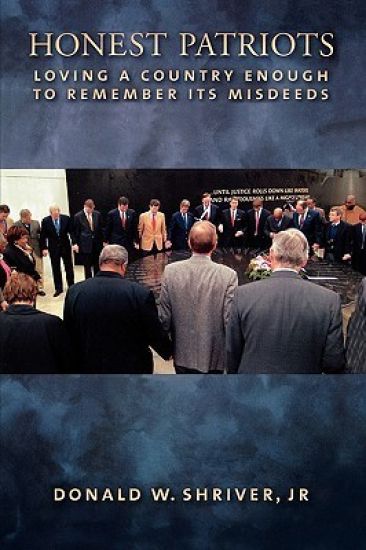
Honest Patriots

Honest Patriots

Donald W. Shriver

Oxford University Press Inc
2005
sidottu
In Honest Patriots, renowned public theologian and ethicist Donald W. Shriver, Jr. argues that we must acknowledge and repent of the morally negative events in our nation's past. The failure to do so skews the relations of many Americans to one another, breeds ongoing hostility, and damages the health of our society. events in American history is essential to the health of our Yet our civic identity today largely rests on denials, forgetfulness, and inattention to the memories of neighbors whose ancestors suffered great injustices at the hands of some dominant majority. Shriver contends that repentance for these injustices must find a place in our political culture. Such repentance must be carefully and deliberately cultivated through the accurate teaching of history, by means of public symbols that embody both positive and negative memory, and through public leadership to this end. events skews the relations of many Americans to one another Religious people and religious organizations have an important role to play in this process. Historically, the Christian tradition has concentrated on the personal dimensions of forgiveness and repentance to the near-total neglect of their collective aspects. Recently, however, the idea of collective moral responsibility has gained new and public visibility. Official apologies for past collective injustice have multiplied, along with calls for reparations. anyone's ancestors, says Shriver, is to be blind to the Shriver looks in detail at the examples of Germany and South Africa, and their pioneering efforts to foster and express collective repentance. He then turns to the historic wrongs perpetrated against African Americans and Native Americans and to recent efforts by American citizens and governmental bodies to seek public justice by remembering public injustice. The call for collective repentance presents many challenges: What can it mean to morally master a past whose victims are dead and whose sufferings cannot be alleviated? What are the measures that lend substance to language and action expressing repentance? What symbolic and tangible acts produce credible turns away from past wrongs? What are the dynamics-psychological, social, and political-whereby we can safely consign an evil to the past? How can public life witness to corporate crimes of the past in such a way that descendents of victims can be confident that they will never be repeated? In his provocative answers to these questions Shriver creates a compelling new vision of the collective repentance and apology that must precede real progress in relations between the races in this country.
Honest Patriots

Honest Patriots

Donald W. Shriver

Oxford University Press Inc
2008
nidottu
Donald Shriver argues that recognition of morally negative events in American history is essential to the health of our society. The failure to acknowledge and repent of these events skews the relations of many Americans to one another and breeds ongoing hostility. To obscure the suffering of anyone's ancestors, says Shriver, is to be blind to the continuing impact of that suffering upon the descendants. Yet our civic identity largely rests on denials, forgetfulness, and inattention to the memories of neighbors whose ancestors suffered great injustices at the hands of some dominant majority. Shriver contends that repentance for these injustices must find a place in our political culture. It must be carefully cultivated through the accurate teaching of history, public symbols that embody both positive and negative memory, and public leadership to this end. Religious people and religious organizations have an important role to play in this process. In the past, the Christian tradition has so concentrated on the personal dimensions of forgiveness and repentance that their collective aspects have been severely neglected. More recently, however, the idea of collective moral responsibility has come into public prominence. Official apologies for past collective injustice have multiplied, as have calls for reparations. Focusing on the wrongs suffered by African Americans and Native Americans, Shriver examines the challenges associated with the call for collective repentance: What can it mean to morally master a past whose victims are dead and whose sufferings cannot be alleviated? What are the measures that lend substance to language and action expressing repentance? What symbolic and tangible acts produce credible turns away from past wrongs? What are the dynamics-psychological, social, and political-whereby we can safely consign an evil to the past? How can public life witness to corporate crimes of the past in such a way that descendents of victims can be confident that they will never be repeated? In answering these questions Shriver creates a compelling vision of the collective repentance and apology that must precede real progress in relations between the races in this country.
Bad Boys, Bad Men 3rd edition

Bad Boys, Bad Men 3rd edition

Donald W. Black

OXFORD UNIVERSITY PRESS INC
2022
nidottu
Whether called black sheep, sociopaths, felons, con men, or misfits, some break all the rules. They shirk responsibilities, abuse drugs and alcohol, take up criminal careers, and lash out at family members. In the worst cases they commit rape, murder, and other violent acts as though they lack a conscience. What makes these people behave the way they do? Bad Boys, Bad Men examines antisocial personality disorders, or ASPD, the mysterious and misunderstood mental condition that underlies a lifelong penchant for bad behavior. Black interweaves scientific data with stories drawn from his own work as a psychiatrist, current events, new research, and real-world case studies to explore antisocial behavior in men and to chart the history, nature, and treatment of a misunderstood disorder affecting nearly seven million Americans. Citing new evidence from genetics and neuroscience, Black argues that this condition is tied to biological causes, and that some people are simply born bad. The newly revised edition includes up to date information on the epidemiology, risk factors, pathophysiology, natural history, genetics, and treatment of ASPD. Black discusses the antisocial woman as well as narcissistic personality disorder, both of which often intertwine with ASPD. New vignettes demonstrating sociopathic and psychopathic behavior include Donald Trump, Jeffrey Epstein, Harvey Weinstein, Robert Durst, and Anna Sorkin. Examining compelling cases that read like medical detective stories, Black separates the lies these men tell from the facts that their lives reveal. His book not only describes the warning signs that predict which troubled children are more likely to become dangerous adults, but also details the progress toward treatment for ASPD. Written to help patients and family members, Bad Boys, Bad Men is essential reading for anyone interested in understanding antisocial and psychopathic behavior.