

Kirjahaku
Etsi kirjoja tekijän nimen, kirjan nimen tai ISBN:n perusteella.
30 tulosta hakusanalla Donnarae Menard

Strength of the Mayan Leopard
Donnarae Menard
Createspace Independent Publishing Platform
2014
nidottu

Born into a poverty-stricken family in the slums of ancient Egypt, sold into slavery to work as a servant in Pharaoh's palace, Ankh fights for survival for herself and the boy-child secretly sired by the Pharaoh's only male heir-a child that might one day lay claim to Hokakhty's throne.

Science says everyone dreams. Do you? Do you dream? Do you remember your dreams? Do you play them throughout the day on the wide-screen retina in your mind. Do you re-dream previous dreams? Can you call up a specific dream and watch it whenever you want? Dreams of A Mad Woman are my dreams, or at least six of the ones I've watched multiple times. Drew, who has a brother/business partner with control issues, Martha who's dreams end up in a puddle, and Epii who is a wild child. Then there's Alyssa, Leon, and Hobbie all with hidden secrets.Pull up a seat, have some popcorn, and dream with me.


In the year 912 Wu-Lee was born the daughter to a powerful Chinese magistrate. Four years later her life was changed when a roving band of Mongolian raiders annihilated her family. Saved by her nursemaid she grew to womanhood hidden as a slave in a neighboring village. Only one person knew her secret. Then life twisted again and the raiders returned looking for a princess to answer a dead chieftains vision. Wu-Lee's secret was offered to the raiders in exchange for the secret holder's life. The raiders took Wu-Lee north.There on the barren Steppes, alienated from her captors and impregnated by their ruthless leader she grew strong and wise. She needed to protect her child and herself. But could she perpetuate a ruse that would take her back to China and save her and the son she had borne?
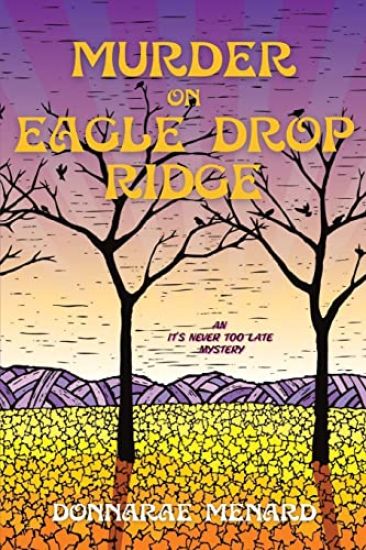
Murder on Eagle Drop Ridge: An It's Never Too Late Mystery
Donnarae Menard
Level Best Books
2022
nidottu
Things are looking up for Katelyn Took. She has a job, a roof over her head, a new love, and she's down to fourteen cats. If it weren't for the human remains, she fell into on Eagle Drop Ridge, she'd be over the moon.Then things start to slide. Before she recovers from falling into the first set of bones, a second set of remains is discovered fifty feet down at the bottom of the ledge. She knows there has to be a connection, even though the father of the male victim says there isn't. His tunnel vision is mirrored by the sheriff's, whose main focus is the female victim.Katelyn just wants it all cleared up before the climbing company that's considering renting the ledges drops out. It's a balancing act with the media thrown in for added confusion, and somehow the fate of her new love is jeopardized.Then Katelyn finds a small, shiny clue. What is she going to give up for peace of mind, or rather, what is going to be taken from her?
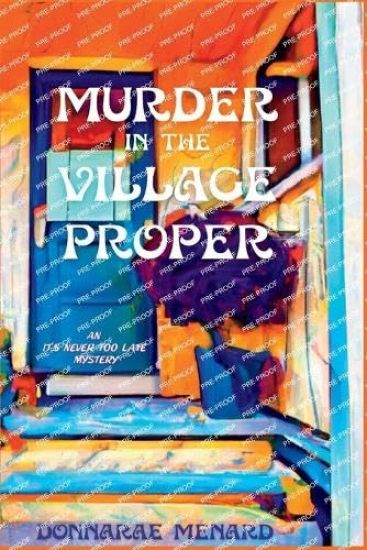
Katelyn Took came home to settle her grandmother's estate, only to discover not only did Gram leave seventeen cats. But Ruth Beauregard, a childhood chum, had moved in. Ruth was confused, penniless, and abandoned by her in-laws because they believed she had murdered her husband five years before. Ruth had improved, physically and mentally, but she still lived under the stigma of the Beauregard family's accusations. Katie believed Ruth was innocent and wanted her to be able to move on and be happy. But to make it so, she'd have to look for dirt under a lot of rocks, and it was looking like someone was going to throw those same rocks back. Hard. She could duck and weave, but could Katie find the truth without getting stoned to death?
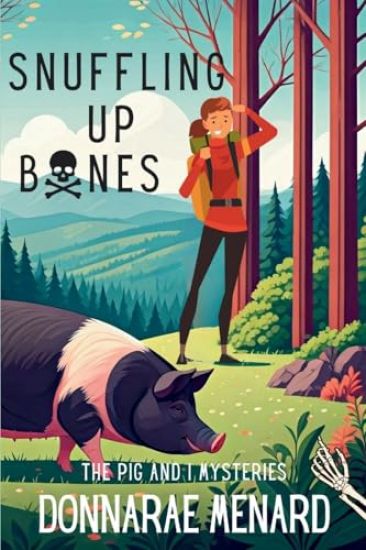
Spring is waning, and summer is on the way. It's a beautiful day for Doris Flynn to take Rex and Buttercup, her four-hundred-and-fifty-pound lap pig, for a walk along the ridge. While Doris is admiring the flora and fauna, Buttercup is snuffling up the seedier side of things and uncovers the remains of a deceased forest brethren. Though Buttercup is quite interested, Doris is disgusted. Diverting the pig isn't easy, but when she's gone, Doris is left looking at a human skull barely half a mile from her home. A call to 911 brings the sheriff and the medicolegal death investigator. Both are new, have an agenda, and are questioning the viability of a pet pig. While Doris ponders how the remains got to a place directly above her home and how her daughter is tied into the case, the sheriff, unsure of his own staff, is trying to decipher the why. That leaves only the who and how, the medicolegal death investigator's forte. Are they going to find a way to work together and figure this out, or are the outsiders now prowling the area going to wreak more havoc?
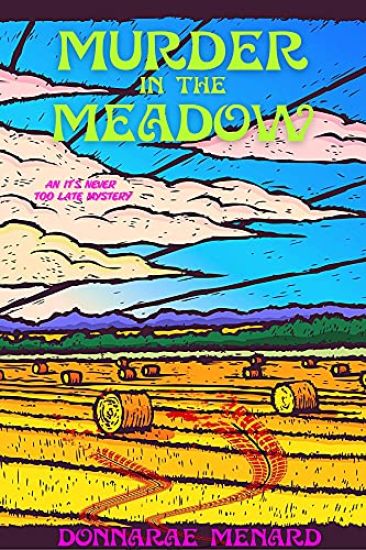
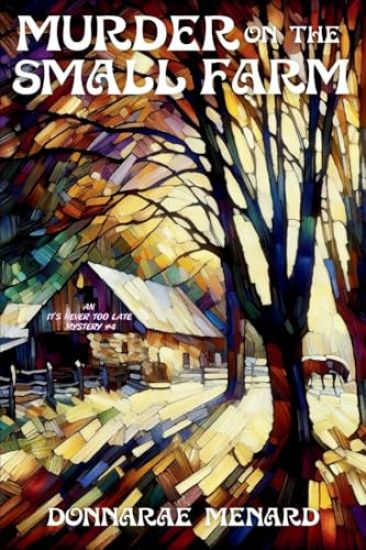
After ten years gone, Katelyn Took returns home in 1974 to find the grandmother who raised her has been killed in the farm meadow. Gram's will leaves Katelyn ownership of the now dilapidated farm, but includes a stipulation regarding seventeen cats. Then there's the confused old woman still living in the farmhouse. Katelyn doesn't want to stay, but the longer she does, the more drawn into finding Gram's killer she becomes.

Apartheid and Racism in South African Children's Literature 1985-1995
Donnarae MacCann; Yulisa Amadu Maddy
Routledge
2013
nidottu
While white racism has global dimensions, it has an unshakeable lease on life in South African political organizations and its educational system. Donnarae MacCann and Yulisa Maddy here provide a thorough and provocative analysis of South African children's literature during the key decade around Nelson Mandela's release from prison. Their research demonstrates that the literature of this period was derived from the same milieu -- intellectual, educational, religious, political, and economic -- that brought white supremacy to South Africa during colonial times. This volume is a signal contribution to the study of children's literature and its relation to racism and social conditions.

This penetrating study of the white supremacy myth in books for the young adds an important dimension to American intellectual history. The study pinpoints an intersecting adult and child culture: it demonstrates that many children's stories had political, literary, and social contexts that paralleled the way adult books, schools, churches, and government institutions similarly maligned black identity, culture, and intelligence. The book reveals how links between the socialization of children and conservative trends in the 19th century foretold 20th century disregard for social justice in American social policy. The author demonstrates that cultural pluralism, an ongoing corrective to white supremacist fabrications, is informed by the insights and historical assessments offered in this study.

Apartheid and Racism in South African Children's Literature 1985-1995
Donnarae MacCann; Yulisa Amadu Maddy
Routledge
2001
sidottu
While white racism has global dimensions, it has an unshakeable lease on life in South African political organizations and its educational system. Donnarae MacCann and Yulisa Maddy here provide a thorough and provocative analysis of South African children's literature during the key decade around Nelson Mandela's release from prison. Their research demonstrates that the literature of this period was derived from the same milieu -- intellectual, educational, religious, political, and economic -- that brought white supremacy to South Africa during colonial times. This volume is a signal contribution to the study of children's literature and its relation to racism and social conditions.
Neo-Imperialism in Children's Literature About Africa
Yulisa Amadu Maddy; Donnarae MacCann
Routledge
2011
nidottu
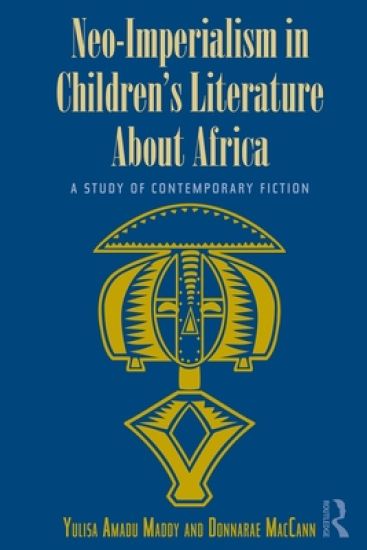
In the spirit of their last collaboration, Apartheid and Racism in South African Children's Literature, 1985-1995, Yulisa Amadu Maddy and Donnarae MacCann once again come together to expose the neo-imperialist overtones of contemporary children's fiction about Africa. Examining the portrayal of African social customs, religious philosophies, and political structures in fiction for young people, Maddy and MacCann reveal the Western biases that often infuse stories by well-known Western authors.In the book's introductory section, Maddy and MacCann offer historical information concerning Western notions of Africa as "primitive," and then present background information about the complexity of feminism in Africa and about the ongoing institutionalization of racism. The main body of the study contains critiques of the novels or short stories of eleven well-known writers, including Isabel Allende and Nancy Farmer--all demonstrating that children's literature continues to mis-represent conditions and social relations in Africa. The study concludes with a look at those short stories of Beverley Naidoo which bring insight and historical accuracy to South African conflicts and emerging solutions. Educators, literature professors, publishers, professors of Diaspora and African studies, and students of the mass media will find Maddy and MacCann’s critique of racism in the representation of Africa to be indispensible to students of multicultural literature.
Neo-Imperialism in Children's Literature About Africa
Yulisa Amadu Maddy; Donnarae MacCann
Routledge
2008
sidottu
In the spirit of their last collaboration, Apartheid and Racism in South African Children's Literature, 1985-1995, Yulisa Amadu Maddy and Donnarae MacCann once again come together to expose the neo-imperialist overtones of contemporary children's fiction about Africa. Examining the portrayal of African social customs, religious philosophies, and political structures in fiction for young people, Maddy and MacCann reveal the Western biases that often infuse stories by well-known Western authors.In the book's introductory section, Maddy and MacCann offer historical information concerning Western notions of Africa as "primitive," and then present background information about the complexity of feminism in Africa and about the ongoing institutionalization of racism. The main body of the study contains critiques of the novels or short stories of eleven well-known writers, including Isabel Allende and Nancy Farmer--all demonstrating that children's literature continues to mis-represent conditions and social relations in Africa. The study concludes with a look at those short stories of Beverley Naidoo which bring insight and historical accuracy to South African conflicts and emerging solutions. Educators, literature professors, publishers, professors of Diaspora and African studies, and students of the mass media will find Maddy and MacCann’s critique of racism in the representation of Africa to be indispensible to students of multicultural literature.
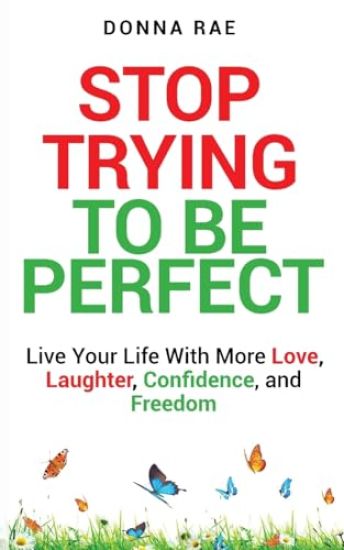
Stop Trying to be PerfectLive Your Life With More Love, Laughter, Confidence, and FreedomA jumbo course presented in easy-to-read, bite size chunks. Do you feel stuck in your life? Are your mind and body full of anxiety, stress and fear? Are you hurting yourself and others by trying to get everything right? Have you lost your sense of fun and adventure? Wrapped up in kindness, a touch of humour and deep humility, each chapter in Stop Trying to be Perfect is packed with real-life stories, practical exercises, and loads of simple wisdom. With each chapter presenting a new topic to help you learn and grow into a happier, healthier place, Stop Trying to be Perfect gives you what you need to make real change in your life.The powerful personal stories help you understand what you might be going through. Meanwhile, the gentle coaching along the way encourages you to believe in your ability to grow into a happier, more functional version of yourself.There is also plenty of insightful but simple advice on how to get the best out of the time you spend on any self-help book, making it easier for you to move forward in your personal development journey. Reflection questions, journalling suggestions and topics help you change your habits, shift your thinking and lower your stress and anxiety. Each precious step forward is designed to have a flow on effect, creating greater harmony and contentment in your relationships with yourself and others, and a lasting positive impact on your well-being.Just one - two minutes of re-reading each morning will give you enough to work with for the rest of the day, helping you to feel more self-confident and empowered. The more you read and reflect on what you are learning, the more you will feel your mindset shift and your heart brighten. You can even start in the middle if you see a chapter title that gives you what you need right now. Stop Trying to Be Perfect is not just another self-help title. It is an inspirational, personal transformation book for men and women alike, fostering personal growth and spiritual transformation. It contains tips and tools you will want to return to throughout your whole life.


The Birthright Changed Hands: Revelations Revealed
Donna Rae
Createspace Independent Publishing Platform
2014
nidottu