

Kirjahaku
Etsi kirjoja tekijän nimen, kirjan nimen tai ISBN:n perusteella.
1000 tulosta hakusanalla Doris Allimadi
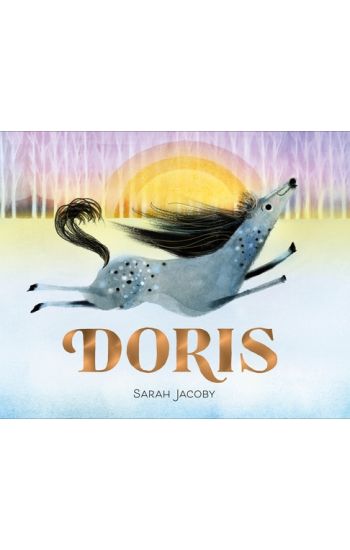
Doris has always reveled in the warmth of a spotlight. Her whole life, she’s danced the nights away, With friends from the only home she’s ever known. But one day, Doris twirls… Out Of Step …Until she stumbles across a whole new kind of spotlight. This gorgeous tale, filled with breathtaking art, is a classic in the making, reminiscent of favourites such as Ferdinand and Peter Rabbit. It will surely melt your heart and might even make you want to dance in the moonlight!




What if you were born to stand out, but longed to blend in? Being a bright red elephant, Doris is VERY easy to spot. Can you see her? Of course you can. But Doris is shy – she just wants to lose herself in a colourful crowd. Come on a journey of self-discovery as one little elephant comes to appreciate her own specialness. A colourful adventure that will entrance even the youngest children.

A charming picture book about a very shy elephant and her fear of standing out. Doris does NOT like to stand out. But as a red elephant, no matter where she hides, she is easily spotted. Whether hiding behind a flock of birds, within a bed of flowers, or among a school of fish, she can be seen. Can she find a way to build her confidence and embrace her colorful self? Doris features bright, engaging illustrations that showcase the adorable main character, and readers will enjoy the repetition throughout this elephant book as Doris tries in vain to blend in. With strong social appeal and messages about embracing yourself, self-esteem, individuality, and accepting differences, Doris is perfect for kindergarten and preschool book libraries, or anyone looking for children's books for ages 3-5. Young readers will delight in spotting Doris across pages filled with eye-catching artwork as she learns the importance of uniqueness and gains the confidence to finally say, "Look at me "

DORIS
Partnership Publishing
2020
nidottu
A compelling and visceral story that touches the depths of human hearts. Based on a true encounter by the author, H.O.WARD, presents his character Doris as a homeless vagabond on the streets of London in 1966, where she has the misfortune to fall ill and taken to hospital by her street friend Harry. It is Harry who continues the story of Doris, a tender and caring Queen Alexandra Nurse, telling of her journey through military training in Inverarary, Scotland, her experience of war torn Italy in Anzio, and her romance in Florence, before her forced return to London, England. As with all lives, they should not be judged on the merits of the surroundings in which the person is first encountered, but by the complete understanding and quality of the person, if they should then be judged at all. Read what can only be described as a sensitive walk through the life of a lovely lady, with its highs and heart-wrenching lows.

"Doris er ingen kvinne. Den absurde tanken på at noen en gang skal omtale henne som dame, kan få henne til å bryte ut i høy, hånlig latter. Doris vet hva hun er. Folk må ikke tro at hun ikke skjønner at de betrakter henne, her hun står og ruver midt i glaningen på yachtens tak, stygg og deilig, det avhenger av hvem som ser". Den 14-årige Doris og hennes far Roy Arne Holmås er på ferie et sted langs Norges vestkyst i en yacht på over femti fot, også den kalt Doris. Doris og faren har latt moren Bella og resten av reisefølget sitt i stikken og seiler tilsynelatende planløst rundt på havet. Tenåringen Doris bærer med seg motvilje og ambivalens på reisen, både mot foreldrene og mot livet på sjøen, mens hun jakter på mobildekning og drømmer om gjensynet med sin tretten år eldre flamme, Jimmy. Hvilke planer har egentlig den uforutsigbare faren hennes? Hvor skal de? Og hvor lenge har han tenkt at de skal være på reise? "Doris" er en skarp skildring av tenåringslivet og et far-datter-forhold i ubalanse, på samme tid humoristisk og sår. Det er en varm og nådeløs beretning om å være under kontinuerlig oppsyn og om til stadighet å ha et blikk utenfra på seg selv.

Doris
Darkest Day Publishing
2025
nidottu

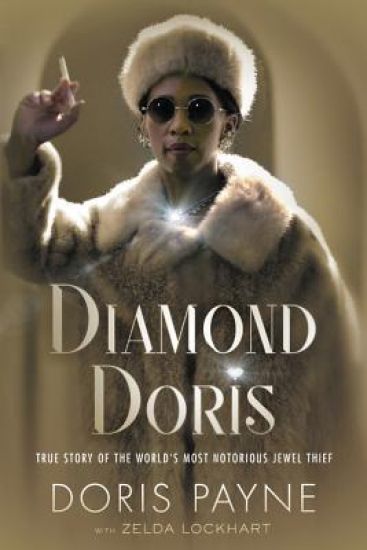
In the ebullient spirit of Ocean’s 8, The Heist, and Thelma & Louise, a sensational and entertaining memoir of the world’s most notorious jewel thief—a woman who defied society’s prejudices and norms to carve her own path, stealing from elite jewelers to live her dreams.Growing up during the Depression in the segregated coal town of Slab Fork, West Virginia, Doris Payne was told her dreams were unattainable for poor black girls like her. Surrounded by people who sought to limit her potential, Doris vowed to turn the tables after the owner of a jewelry store threw her out when a white customer arrived. Neither racism nor poverty would hold her back; she would get what she wanted and help her mother escape an abusive relationship.Using her southern charm, quick wit, and fascination with magic as her tools, Payne began shoplifting small pieces of jewelry from local stores. Over the course of six decades, her talents grew with each heist. Becoming an expert world-class jewel thief, she daringly pulled off numerous diamond robberies and her Jewish boyfriend fenced the stolen gems to Hollywood celebrities.Doris’s criminal exploits went unsolved well into the 1970s—partly because the stores did not want to admit that they were duped by a black woman. Eventually realizing Doris was using him, her boyfriend turned her in. She was arrested after stealing a diamond ring in Monte Carlo that was valued at more than half a million dollars. But even prison couldn’t contain this larger-than-life personality who cleverly used nuns as well as various ruses to help her break out. With her arrest in 2013 in San Diego, Doris’s fame skyrocketed when media coverage of her astonishing escapades exploded. Today, at eighty-seven, Doris, as bold and vibrant as ever, lives in Atlanta, and is celebrated for her glamorous legacy. She sums up her adventurous career best: “It beat being a teacher or a maid.” A rip-roaringly fun and exciting story as captivating and audacious as Catch Me if You Can and Can You Ever Forgive Me?—Diamond Doris is the portrait of a captivating anti-hero who refused to be defined by the prejudices and mores of a hypocritical society.

Diamond Doris: The True Story of the World's Most Notorious Jewel Thief
Doris Payne
Amistad Press
2020
nidottu
Soon to be a Major Motion PictureIn the ebullient spirit of Ocean's 8, The Heist, and Thelma & Louise, a sensational and entertaining memoir of the world's most notorious jewel thief--a woman who defied society's prejudices and norms to carve her own path, stealing from elite jewelers to live her dreams.Growing up during the Depression in the segregated coal town of Slab Fork, West Virginia, Doris Payne was told her dreams were unattainable for poor black girls like her. Surrounded by people who sought to limit her potential, Doris vowed to turn the tables after the owner of a jewelry store threw her out when a white customer arrived. Neither racism nor poverty would hold her back; she would get what she wanted and help her mother escape an abusive relationship.Using her southern charm, quick wit, and fascination with magic as her tools, Payne began shoplifting small pieces of jewelry from local stores. Over the course of six decades, her talents grew with each heist. Becoming an expert world-class jewel thief, she daringly pulled off numerous diamond robberies and her boyfriend fenced the stolen gems to Hollywood celebrities.Doris's criminal exploits went unsolved well into the 1970s--partly because the stores did not want to admit that they were duped by a black woman. Eventually realizing Doris was using him, her boyfriend turned her in. She was arrested after stealing a diamond ring in Monte Carlo that was valued at more than half a million dollars. But even prison couldn't contain this larger-than-life personality who cleverly used nuns as well as various ruses to help her break out. With her arrest in 2013 in San Diego, Doris's fame skyrocketed when media coverage of her astonishing escapades exploded. Today, at eighty-seven, Doris, as bold and vibrant as ever, lives in Atlanta, and is celebrated for her glamorous legacy. She sums up her adventurous career best: "It beat being a teacher or a maid." A rip-roaringly fun and exciting story as captivating and audacious as Catch Me if You Can and Can You Ever Forgive Me?--Diamond Doris is the portrait of a captivating anti-hero who refused to be defined by the prejudices and mores of a hypocritical society.
Doris Salcedo
University of Chicago Press
2015
sidottu
A mountain of chairs piled between buildings. Shoes sewn behind animal membranes into a wall. A massive crack running through the floor of Tate Modern. Powerful works like these by sculptor Doris Salcedo evoke the significance of bearing witness and processes of collective healing. Salcedo, who lives and works in Bogota, roots her art in Colombia's social and political landscape - including its long history of civil wars - with an elegance and poetic sensibility that balances the gravitas of her subjects. Her work is undergirded by intense fieldwork, including interviews with people who have suffered loss and endured trauma from political violence. In recent years, Salcedo has become increasingly interested in the universality of these experiences and expanded her research to Turkey, Italy, Great Britain, and the United States. Published to accompany Salcedo's first retrospective exhibition and the American debut of her major work Plegaria muda, Doris Salcedo is the most comprehensive survey of her sculptures and installations to date. In addition to featuring new contributions by respected scholars and curators, the book includes over one hundred color illustrations highlighting many pieces from Salcedo's twenty-five-year career. Offering fresh perspectives on a vital body of work, Doris Salcedo is a testament to the power of one of today's most important international artists.

Doris Chase has achieved international stature as a pioneer in the field of video art since she moved from Seattle to New York City in 1972. An artist of remarkable and continuous creativity, Chase now divides her time between her video headquarters in New York and a Seattle studio where she works on new projects in painting and sculpture.Beginning as an innovative painter and sculptor in Seattle in the 1950s, Chase created sculpture that was meant to be touched and manipulated by the viewer. Chase then developed large-scale kinetic sculptures in collaboration with choreographers, and her art was set in motion by dancers. In New York, her majors contribution to the evolution of artists' video has been her work in videodance. On videotape, dancers and sculpture evolve into luminous abstract forms which represent some of the most sophisticated employments of video technology by an artist of the 1970s. In the 1980s, Chase began working in the nascent genre of video theater. In these productions, she uses the imtimacy of the video screen to achieve a new synthesis of visual and dramatic art. Her video theatre compositions present multicultural and social commentary, utilizing scripts by writers such as Lee Breuer, Thulani Davis, and Jessica Hagedorn in the "Concepts" series. Collaborating with actresses Geralding Page, Ann Jackson, Roberta Wallach, Joan Plowright, and Luise Riner in the "By Herself" series, she focuses on the viewpoints and experiences of older women. Today, coming full circle, Doris Chase in Seattle is exploring a renewed interest in painting and sculpture as well as in the modernist aesthetic she never really ceased pursuing, even during her most adventuresome multimedia years.This profile by art historian Patricia Failing is both a celebration of a distinguished artists and a historical summary of the development of video as an art form from the early seventies to the present day. The making of Chase's widely acclaimed filmdance, Circles II (1972), is discussed within the context of her own artists evolution and also as exemplary of an artistic milieu shaped by McLuhanism and a growing interest in multimedia experimentation. An entire chapter focuses on the institutional and theoretical working environment for video artists in the 1970s, outlining the circumstances under which New York became the best-endowed center for the production of artists' video. Attention is also paid to the specific manner in which Chase learned to employ video technology, the mechanisms of exhibition and distribution of independent video art, and the theoretical and practical issues raised in collaborations among artists from different art forms. Centering upon first-hand commentary by Chase and her colleagues, Doris Chase, Artist in Motion is an accessible introduction to a pioneering artist and her milieu.The Foreword by noted critic and teacher of video art Ann-Sargent Wooster adds a valuable dimension to the volume. Doris Chase, Artist in Motion is illustrated with representative examples of Chase's work and includes selected lists of her videotapes and films as well as her works in public collections. It will appeal to students of video art as well as to those intersted in women artists and feminist performance.
A compelling look at Doris Salcedo's works from the past fifteen years, exploring how the artist challenges not only the limits of the materials she uses but also the traditions of sculpture itself Colombian sculptor and installation artist Doris Salcedo (b. 1958) creates works that address political violence and oppression. This pioneering book, which focuses on Salcedo's works from 2001 to the present, examines the development and evolution of her approach. These sculptures have pushed toward new extremes, incorporating organic materials-rose petals, grass, soil-in order to blur the line between the permanent and the ephemeral. This insightful text illuminates the artist's practice: exhaustive personal interviews and deep research joined with painstaking acts of making that both challenge limits and set new directions in materiality. Mary Schneider Enriquez convincingly argues for viewing Salcedo's oeuvre not just through a particular theoretical lens, such as violence studies or trauma and memory studies, but for the profound way the artist engages with and expands the traditions of sculpture as a medium.
Product information not available.

Through close readings of Doris Lessing's novels from The Grass is Singing to The Fifth Child, Margaret Moan Rowe maps many of the literary and cultural negotiations that make Doris Lessing both a maverick and a mainstream novelist. Examining the pull of paternal and maternal biographical and literary identification in Lessing, Rowe relates them to the tensions between the ordinary and the visionary in her fiction.
The purpose of this study is to examine the rationale of Doris Lessing's development from Classical Realism to mysticism and forms of science fiction and to consider the unifying motifs that appear throughout her novels in her consistent search for Sufi Equilibrium. The four novels selected in this study represent significant stages in Lessing's work. Chapter one focuses on The Grass is Singing, which represents the author's early traditionally realistic writing, to show how far the preoccupations of Lessing's later novels find expression in this early work. Chapter two studies The Golden Notebook, which marks a turning point in formal structure in Lessing's canon and is selected as evidence of her interest in Sufism at that early stage. Chapter three concentrates on the study of The Memoirs of a Survivor, which has elicited a comparatively limited amount of criticism but which proves to be a major achievement when brought into line with Sufi methods of writing. Chapter four considers Lessing's science fiction series, 'Canopus in Argos', tracing sources from Oriental literature - a key which unlocks many areas of obscurity.

Doris Lessing was one of the most impressive, prolific and vital of twentieth century writers. Her fiction is obsessed with the workings of cultural change and she radically extended the novel’s scope – most famously and influentially in The Golden Notebook – by questioning the realist tradition she inherited and the wider social beliefs about self, sexuality and authority which that tradition symbolized.This study, originally published in 1983, surveys her epic output from her early, African writings to her later experiments with space fiction. It traces her struggles to decentre imaginative life and to erase and to redraw the boundaries of our mental maps in favour of values on the margins of the official culture.