Kirjahaku
Etsi kirjoja tekijän nimen, kirjan nimen tai ISBN:n perusteella.
1000 tulosta hakusanalla Dorothy H. Crawford
For all our hubris, humans can be felled rapidly by an invisible enemy - viruses. All around us are minute entities that can damage and kill: the millions of viruses that pervade the natural world. Our bodies harbour many that we have long tolerated, but a new one, that jumps into humans from another species, can be lethal - as we have seen most recently with the virus responsible for COVID-19. But what are viruses, how do they cause disease, and how can we fight them? In Viruses: The Invisible Enemy, a brand new edition of her classic work, virologist Dorothy Crawford explores these questions. She takes the reader on a journey through the past to show how, as the human race evolved from hunter gatherer to farmer to our present urban, industrialised society, viruses have taken advantage of each lifestyle change to promote their own survival. We have acquired many new viruses along the way, some spreading globally and causing killer diseases. But now, in the 21st century, as humans increasingly encroach into and exploit the natural world, the rate of emergence of novel viruses is accelerating. Already we've had a flu pandemic, large epidemics from SARS, Ebola and Zika viruses, and most devastating of all, SARS-CoV-2, which swept around the world in 2020-21, causing the COVID-19 pandemic. The response of scientists has been rapid, producing vaccines in record time. But we can expect more such challenges in the future. This book discusses why and how SARS-CoV-2 and other killer viruses emerged, and how we can win the battle against such an enemy.
Very Short Introductions: Brilliant, Sharp, Inspiring Viruses are everywhere, and as the COVID-19 pandemic has shown, cannot be ignored. From their discovery to the unravelling of their intricate structures, this Very Short Introduction provides a rounded and concise account of the nature of viruses, how they attack their hosts, and the efforts to control them. In this new edition, Dorothy H. Crawford examines the recent rise in emerging virus infections, especially coronaviruses, including the viruses behind SARS and MERS, and SARS CoV-2 responsible for COVID-19. Crawford explores why the SARS-CoV-2 was able to spread rapidly to form a pandemic while others have produced more localized epidemics, as well as looking at the revolution in vaccine production that this has caused. Looking to the future, this Very Short Introduction considers the preventative measures and management of future dangerous viruses that are expected to emerge. ABOUT THE SERIES: The Very Short Introductions series from Oxford University Press contains hundreds of titles in almost every subject area. These pocket-sized books are the perfect way to get ahead in a new subject quickly. Our expert authors combine facts, analysis, perspective, new ideas, and enthusiasm to make interesting and challenging topics highly readable.
The hunt for the origin of the AIDS virus began over twenty years ago. It was a journey that went around the world and involved painstaking research to unravel how, when, and where the virus first infected humans. Dorothy H. Crawford traces the story back to the remote rain forests of Africa - home to the primates that carry the ancestral virus - and reveals how HIV-1 first jumped from chimpanzees to humans in rural south east Cameroon. Examining how this happened, and how it then travelled back to Colonial west central Africa where it eventually exploded as a pandemic, she asks why and how it was able to spread so widely. From hospital intensive care wards to research laboratories and the African rain forests, this is the wide-ranging story of a killer virus and a tale of scientific endeavour.
First discovered in 1976, and long regarded as an easily manageable virus affecting isolated rural communities, Ebola rocketed to world prominence in 2014 as a deadly epidemic swept through Guinea, Sierra Leone, and Liberia in West Africa. Thousands of people died as the extraordinarily contagious disease spread rapidly from villages to urban centres. Initial quarantine responses proved often too little and too late, and the medical infrastructure of the affected countries struggled to cope. By August 2014, several months after the start of the outbreak, the WHO declared the epidemic a public health emergency and international aid teams and volunteers began to pour in. But halting the epidemic proved to be hugely challenging, not only in terms of the practicalities of dealing with the sheer numbers of patients carrying the highly infectious virus, but in dealing with social and cultural barriers. The author, Dorothy Crawford, visited Sierra Leone while the epidemic was ongoing and met with those on the frontline in the fight against the virus. In Ebola Crawford combines personal accounts from these brave medical workers with the latest scientific reports to tell the story of the epidemic as it unfolded, and how it has changed our understanding of the virus. She looks at its origin and spread, the international response, and its devastating legacy to the health of those living in the three worst affected countries. She describes the efforts to prevent international spread, the treatment options for Ebola, including the drug and vaccine trials that eventually got underway in 2015, and the sensitive issue of running trials of experimental therapies during a lethal epidemic. Our understanding of the Ebola virus continues to develop as long-term health problems and complications following recovery from the disease are being identified. Epidemics of Ebola or other dangerous microbes will continue to threaten the world regularly. Already concerns have been raised by the possible impact of the Zika virus. What lessons have been learnt from Ebola? How, asks Crawford, might we prevent a repeat of the awful suffering seen in 2014-16?
Ever since we started huddling together in communities, the story of human history has been inextricably entwined with the story of microbes. They have evolved and spread amongst us, shaping our culture through infection, disease, and pandemic. At the same time, our changing human culture has itself influenced the evolutionary path of microbes. Dorothy H. Crawford here shows that one cannot be truly understood without the other. Beginning with a dramatic account of the SARS pandemic at the start of the 21st century, she takes us back in time to follow the interlinked history of microbes and man, taking an up-to-date look at ancient plagues and epidemics, and identifying key changes in the way humans have lived - such as our move from hunter-gatherer to farmer to city-dweller -- which made us vulnerable to microbe attack. Showing how we live our lives today -- with increasing crowding and air travel -- puts us once again at risk, Crawford asks whether we might ever conquer microbes completely, or whether we need to take a more microbe-centric view of the world. Among the possible answers, one thing becomes clear: that for generations to come, our deadly companions will continue to shape human history. Oxford Landmark Science books are 'must-read' classics of modern science writing which have crystallized big ideas, and shaped the way we think.
The hunt for the origin of the AIDS virus began over twenty years ago. It was a journey that went around the world and involved painstaking research to unravel how, when, and where the virus first infected humans. Dorothy H. Crawford traces the story back to the remote rain forests of Africa - home to the primates that carry the ancestral virus - and reveals how HIV-1 first jumped from chimpanzees to humans in rural south east Cameroon. Examining how this happened, and how it then travelled back to Colonial west central Africa where it eventually exploded as a pandemic, she asks why and how it was able to spread so widely. From hospital intensive care wards to research laboratories and the African rain forests, this is the wide-ranging story of a killer virus and a tale of scientific endeavour.
Cancer Virus
Dorothy H. Crawford; Alan Rickinson; Ingólfur Johannessen
Oxford University Press
2014
sidottu
The Epstein-Barr virus (EBV) was discovered in 1964. At the time, the very idea of a virus underlying a cancer was revolutionary. Cancer is, after all, not catching. Even now, the idea of a virus causing cancer surprises many people. But Epstein-Barr, named after its discoverers, Sir Anthony Epstein and Dr Yvonne Barr, is fascinating for other reasons too. Almost everyone carries it, yet it is only under certain circumstances that it produces disease. It has been associated with different, apparently unrelated, diseases in different populations: Burkitt's Lymphoma, producing tumours in the jaw, in African children; a nasal tumour in China; glandular fever in Europe and the USA; and the majority of cases of Hodgkin's Disease everywhere. This book tells the story of the discovery of the virus, and the recognition of its connection with these various diseases - an account that spans the world and involves some remarkable characters and individual stories.
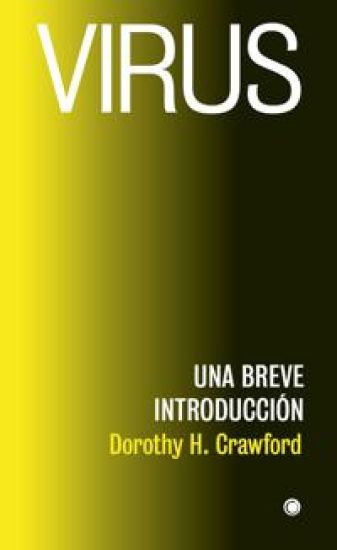
Los virus son noticia. Desde el surgimiento de pandemias como el VIH, la gripe porcina o el SARS, constantemente estamos siendo bombardeados con información sobre nuevas infecciones letales. La última y más dramática es el SARS-CoV-2. En esta breve introducción, Dorothy Crawford muestra hasta qué punto los virus resultan inteligentes y son, con mucho, las formas de vida más abundantes del planeta.En esta segunda edición actualizada, Crawford relata la historia de virus asesinos por todos conocidos, como el ébola y Zika, así como el virus del MERS, el SARS-Cov-1 y el Sars-Cov-2, causante de la pandemia de la covid-19, y analiza cómo en el siglo XXI los viajes aéreos facilitan la propagación internacional de los virus. También evalúa los efectos del calentamiento global, que ha hecho aumentar la dispersión de virus transmitidos por vectores como el dengue, la fiebre amarilla y el virus del Nilo Occidental, y adelanta los efectos que esto tendrá en las poblaciones de climas subtropicales y templados de América, Australasia y Europa. Asimismo, explora el papel que desempeñan los virus en el control del medio marino, pues hay casi dos mil millones de ellos en cada litro de agua de mar y resultan esenciales para el delicado ecosistema del océano. Finalmente, tras examinar nuestro actual estilo de vida, Crawford mira hacia el futuro para preguntarse si alguna vez podremos vivir en armonía con los virus y cómo deberíamos actuar para prevenir las consecuencias devastadoras asociadas a algunos virus emergentes.
This is a reprint of the second edition of Dr Rayner's standard text on the stratigraphy and historical geology of the British Isles. The book is written for undergraduates and other readers who may have only a general acquaintance with the broad principles of geology. An introductory chapter reviews the basic principles of stratigraphy, geochronology and tectonics. The various geological systems found in the British Isles are then considered in turn. A valuable feature of the book is the extensive treatment of different regional areas within the discussion of a particular geological system. In the final chapter the author reviews briefly those major economic resources that are related to stratigraphy. Throughout the text care has been taken to introduce the plate tectonic interpretation of stratigraphic features. Much more is known about the neighbouring continental shelf and the geology of sea floors and this also is included in order to provide a comprehensive integrated account of the geological history of the British Isles.
Problem-based Learning
Dorothy H. Evensen; Cindy E. Hmelo; Cindy E. Hmelo-Silver
Routledge Member of the Taylor and Francis Group
2000
sidottu
This volume collects recent studies conducted within the area of medical education that investigate two of the critical components of problem-based curricula--the group meeting and self-directed learning--and demonstrates that understanding these complex phenomena is critical to the operation of this innovative curriculum. It is the editors' contention that it is these components of problem-based learning that connect the initiating "problem" with the process of effective "learning." Revealing how this occurs is the task taken on by researchers contributing to this volume. The studies include use of self-reports, interviews, observations, verbal protocols, and micro-analysis to find ways into the psychological processes and sociological contexts that constitute the world of problem-based learning.
Problem-based Learning
Dorothy H. Evensen; Cindy E. Hmelo; Cindy E. Hmelo-Silver
Routledge Member of the Taylor and Francis Group
2000
nidottu
This volume collects recent studies conducted within the area of medical education that investigate two of the critical components of problem-based curricula--the group meeting and self-directed learning--and demonstrates that understanding these complex phenomena is critical to the operation of this innovative curriculum. It is the editors' contention that it is these components of problem-based learning that connect the initiating "problem" with the process of effective "learning." Revealing how this occurs is the task taken on by researchers contributing to this volume. The studies include use of self-reports, interviews, observations, verbal protocols, and micro-analysis to find ways into the psychological processes and sociological contexts that constitute the world of problem-based learning.
Observing and Recording the Behavior of Young Children
Dorothy H. Cohen; Virginia Stern; Nancy Balaban; Nancy Gropper
Teachers' College Press
2015
nidottu
In the Sixth Edition of their classic text, the authors reiterate the critical importance of observing and recording the behavior of young children, especially in the current atmosphere of accountability and testing. In addition, because children with special needs are now widely included in a majority of early childhood classrooms, they have completely rewritten a chapter to focus more broadly on observing behaviors that may be viewed as disquieting.Designed to help teachers better understand children’s behavior, the book outlines methods for recordkeeping that provide a realistic picture of each child’s interactions and experiences in the classroom. Numerous examples of teachers’ observations of children from birth to age 8 enrich this work and make it accessible, practical, and enjoyable to read.
Observing and Recording the Behavior of Young Children
Dorothy H. Cohen; Virginia Stern; Nancy Balaban; Nancy Gropper; Jane Andris
TEACHERS' COLLEGE PRESS
2024
nidottu
This classic text has been helping teachers better understand young children's behaviour for over 6 decades. Now available in an updated seventh edition, this popular resource is designed to deepen pre- and inservice teachers' understanding of children (birth–age 8) as unique individuals within a developmental context. Observation notes recorded over time reveal patterns in children's behaviour, as well as ways in which behaviours may change. To strengthen teachers' efforts to better understand children as individuals, the authors provide a timeless methodology for documenting young children's behaviour as they actively engage in classroom life. They outline methods for recordkeeping that capture children's interactions and experiences in the classroom. Numerous examples of teachers' observations of children enrich this work and make it accessible, practical, and enjoyable to read. Book Features: Provides early childhood educators with a guide for observing and recording as a way of better understanding children, while holding judgment in abeyance.Examines the need for teachers to reflect on their own experiences, even as children, and how these may influence their reactions to children's interactions and behaviours.Focuses on the centrality of family, community, and culture in children's lives, reflecting the diversity in contemporary early childhood classrooms.Explains the imperative for teachers to observe and record the behaviour of young children as a means of interpreting their developmental capacities and abilities.
Observing and Recording the Behavior of Young Children
Dorothy H. Cohen; Virginia Stern; Nancy Balaban; Nancy Gropper; Jane Andris
TEACHERS' COLLEGE PRESS
2024
sidottu
This classic text has been helping teachers better understand young children's behaviour for over 6 decades. Now available in an updated seventh edition, this popular resource is designed to deepen pre- and inservice teachers' understanding of children (birth-age 8) as unique individuals within a developmental context. Observation notes recorded over time reveal patterns in children's behaviour, as well as ways in which behaviours may change. To strengthen teachers' efforts to better understand children as individuals, the authors provide a timeless methodology for documenting young children's behaviour as they actively engage in classroom life. They outline methods for recordkeeping that capture children's interactions and experiences in the classroom. Numerous examples of teachers' observations of children enrich this work and make it accessible, practical, and enjoyable to read. Book Features: Provides early childhood educators with a guide for observing and recording as a way of better understanding children, while holding judgment in abeyance.Examines the need for teachers to reflect on their own experiences, even as children, and how these may influence their reactions to children's interactions and behaviours.Focuses on the centrality of family, community, and culture in children's lives, reflecting the diversity in contemporary early childhood classrooms.Explains the imperative for teachers to observe and record the behaviour of young children as a means of interpreting their developmental capacities and abilities.
It's Like Heaven
Dorothy H. Jordan; Kirby Smart; Karl Smart
University of Georgia Press
2020
sidottu
In 1982 Dorothy H. Jordan founded Camp Sunshine to provide children with cancer a safe, normal childhood experience, to show them that others share their challenges, and to help them find community and support. In 1983 approximately forty campers between the ages of seven and eighteen attended the first summer camp, held in the north Georgia mountains. Thirty-five years later, more than four hundred campers attended the 2018 summer camp, and several hundred more children and family members participated in more than 150 additional recreational, educational, and supportive Camp Sunshine programs held throughout the year in metro Atlanta, Savannah, and other areas of Georgia.Today Camp Sunshine, a nonprofit organization, has hundreds of dedicated volunteers who help the leadership staff of the camp with its multiple year-round programs, as well as pediatric oncology nurses and other medical professionals who take care of the campers’ medical needs while they attend those programs.It’s Like Heaven documents the story of the first thirty-five years of Camp Sunshine through the voices of campers, their nurses, counselors, and other volunteers. Each chapter is a former camper’s first-person story about childhood cancer and the Camp Sunshine journey, followed by reflections on the camper’s experience by the camper’s nurse or another member of the camp community, creating a unique narrative of each camper’s struggle and path toward healing. Every story includes photos of both the camper and the camper’s mentor as well as several photos that illustrate the connections, bonds, and strength of community created through Camp Sunshine.
Marian Alexander Spencer was born in 1920 in the Ohio River town of Gallipolis, Ohio, one year after the "Red Summer" of 1919 that saw an upsurge in race riots and lynchings. Following the example of her grandfather, an ex-slave and community leader, Marian joined the NAACP at thirteen and grew up to achieve not only a number of civic leadership firsts in her adopted home city of Cincinnati, but a legacy of lasting civil rights victories. Of these, the best known is the desegregation of Cincinnati's Coney Island amusement park. She also fought to desegregate Cincinnati schools and to stop the introduction of observers in black voting precincts in Ohio. Her campaign to raise awareness of industrial toxic-waste practices in minority neighborhoods was later adapted into national Superfund legislation. In 2012, Marian's friend and colleague Dot Christenson sat down with her to record her memories. The resulting biography not only gives us the life story of remarkable leader but encapsulates many of the twentieth century's greatest struggles and advances. Spencer's story will prove inspirational and instructive to citizens and students alike.