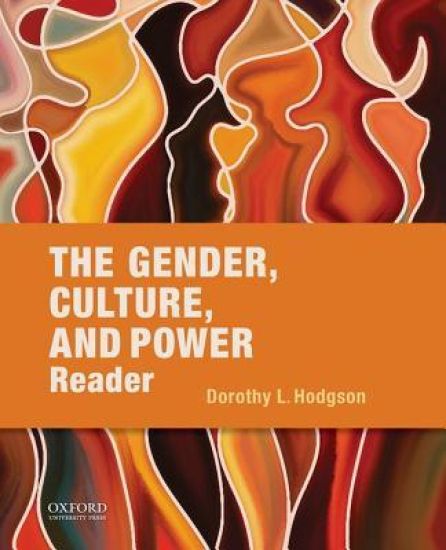
The Gender, Culture, and Power Reader explores different approaches to the study and conceptualization of gender, the value and limitations of gender as an analytic category, and the theoretical insights about gender produced by ethnographic research into the everyday lives, labors, loves, and livelihoods of people throughout the world. Why does gender "matter"? How are dominant ideas and practices of gender perceived, produced, experienced, and contested in different societies? How does ethnographic research provide access to these stories, perspectives, and experiences? What is the relationship between evidence and theory? The Gender, Culture, and Power Reader addresses these questions and more. Expertly edited by Dorothy L. Hodgson, this diverse reader includes both classical debates and relevant contemporary topics like gender-based violence and human rights.
When, where, why, and by whom is law used to force desired social change in the name of justice? Why has culture come to be seen as inherently oppressive to women? In this finely crafted book, Dorothy L. Hodgson examines the history of legal ideas and institutions in Tanzania – from customary law to human rights – as specific forms of justice that often reflect elite ideas about gender, culture, and social change. Drawing on evidence from Maasai communities, she explores how the legacies of colonial law-making continue to influence contemporary efforts to create laws, codify marriage, criminalize FGM, and contest land grabs by state officials. Despite the easy dismissal by elites of the priorities and perspectives of grassroots women, she shows how Maasai women have always had powerful ways to confront and challenge injustice, express their priorities, and reveal the limits of rights-based legal ideals.
When, where, why, and by whom is law used to force desired social change in the name of justice? Why has culture come to be seen as inherently oppressive to women? In this finely crafted book, Dorothy L. Hodgson examines the history of legal ideas and institutions in Tanzania – from customary law to human rights – as specific forms of justice that often reflect elite ideas about gender, culture, and social change. Drawing on evidence from Maasai communities, she explores how the legacies of colonial law-making continue to influence contemporary efforts to create laws, codify marriage, criminalize FGM, and contest land grabs by state officials. Despite the easy dismissal by elites of the priorities and perspectives of grassroots women, she shows how Maasai women have always had powerful ways to confront and challenge injustice, express their priorities, and reveal the limits of rights-based legal ideals.
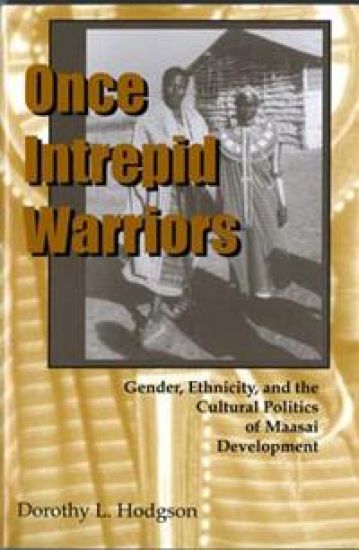
"Once Intrepid Warriors advances a brilliantly persuasive critique of development among the Maasai. . . . This historical ethnography is a tour de force, counter-balancing the analysis of cultural, political, and socio-economic transformation over the longue duree with intimate and memorable portraits of representative individuals." —Richard Werbner "In a series of chapters on the interrelationships of ethnicity, gender, and 'modernity,' Hodgson concludes that it is not the Maasai who have remained static, but rather the external images of them." —Choice ". . . meticulous and well-documented . . . a valuable resource. . . ." —Africa
In Africa, why have so many more women converted to Christianity than men? What explains the appeal of Christianity to women? What does religious conversion mean for the negotiation of gender and ethnic identity? What role does religious conversion play as a tool for empowering women? In The Church of Women, Dorothy L. Hodgson looks at how gender has shaped the encounter between missionary priests and Maasai men and women in Tanzania. Building on her extensive experience with Maasai and the Spiritan missionaries, Hodgson explores how gendered change among Maasai has shaped women's notions of religious faith, religious practice, and spiritual power. Hodgson explores the appeal of Catholicism among women in East Africa, the enmeshing of Catholic practice with Maasai spirituality, and the meaning of conversion to new Christians. This rich, engaging, and original book challenges notions about religious encounter and the role of ethnic identity, female authority, and power among Maasai.
What happens to marginalized groups from Africa when they ally with the indigenous peoples' movement? Who claims to be indigenous and why? Dorothy L. Hodgson explores how indigenous identity, both in concept and in practice, plays out in the context of economic liberalization, transnational capitalism, state restructuring, and political democratization. Hodgson brings her long experience with Maasai to her understanding of the shifting contours of their contemporary struggles for recognition, representation, rights, and resources. Being Maasai, Becoming Indigenous is a deep and sensitive reflection on the possibilities and limits of transnational advocacy and the dilemmas of political action, civil society, and change in Maasai communities.
What happens to marginalized groups from Africa when they ally with the indigenous peoples' movement? Who claims to be indigenous and why? Dorothy L. Hodgson explores how indigenous identity, both in concept and in practice, plays out in the context of economic liberalization, transnational capitalism, state restructuring, and political democratization. Hodgson brings her long experience with Maasai to her understanding of the shifting contours of their contemporary struggles for recognition, representation, rights, and resources. Being Maasai, Becoming Indigenous is a deep and sensitive reflection on the possibilities and limits of transnational advocacy and the dilemmas of political action, civil society, and change in Maasai communities.
Do African men and women think about and act out their ethnicity in different ways? Most studies of ethnicity in Africa consider men’s experiences, but rarely have scholars examined whether women have the same idea of what it means to be, for example, Igbo or Tswana or Kikuyu. Or, studies have invoked the adage “women have no tribe” to indicate a woman’s loss of ethnicity as she marries into her husband’s community. This volume engages directly the issue of women’s ethnicity and makes stimulating contributions to debates about how and why women’s movements have a unifying role in African political organization and peace movements.Drawing on extensive field research in many different regions of Africa, the contributors demonstrate in their essays that women do make choices about the forms of ethnicity they embrace, creating alternatives to male-centered definitions—in some cases rejecting a specific ethnic identity in favor of an interethnic alliance, in others reinterpreting the meaning of ethnicity within gendered domains, and in others performing ethnic power in gendered ways. Their analysis helps explain why African women may be more likely to champion interethnic political movements while men often promote an ethnicity based on martial masculinity. Bringing together anthropologists, historians, linguists, and political scientists, Gendering Ethnicity in African Women’s Lives offers a diverse and timely look at a neglected but important topic.
Based on long-term ethnographic research, this book explores the intersection of "gender" and "modernity" as they are mediated in the lives and subjectivities of diverse individuals and groups. How are the messages of modernity/tradition gendered? How are the material practices and cultural meanings of modernity shaped by local ideas of gender and "progress"? Together these chapters demonstrate that the ideas of progress, rationality, order and development encompassed by modernity are profoundly gendered, whether conveyed by mass media images of consumption, agendas of nation building, or legal discourse. Furthermore, the mutual inflections of gender and modernity are at once pervasively "global" occurring in different locales and ways and deeply "local" shaping and shaped by the structures and experiences of culture, class, ethnicity and nation.
Since the publication of the first edition in 1977, Africa has established itself as a leading resource for teaching, business, and scholarship. This fourth edition has been completely revised and focuses on the dynamism and diversity of contemporary Africa. The volume emphasizes contemporary culture–civil and social issues, art, religion, and the political scene–and provides an overview of significant themes that bear on Africa's place in the world. Historically grounded, Africa provides a comprehensive view of the ways that African women and men have constructed their lives and engaged in collective activities at the local, national, and global levels.
Available in one volume, all the short stories by legendary Golden Age mystery writer Dorothy L. Sayers, "one of the greatest mystery-story writers of the twentieth] century." (Los Angeles Times)A sure treat for Dorothy L. Sayers's legions of fans, The Complete Stories is the ultimate collectible. This delightfully gruesome collection includes tantalizing puzzles and baffling cases that will provide mystery lovers with a sumptuous feast of criminal doings and all those amusing and appalling things that happen on the way to the gallows.
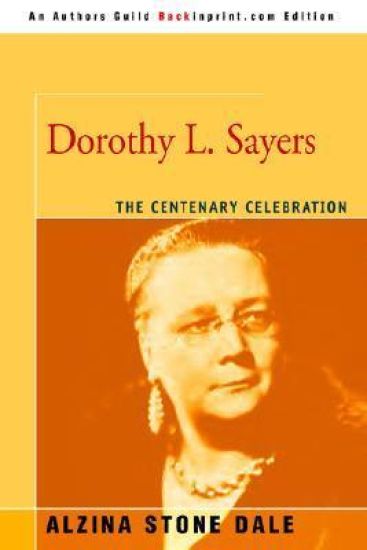
1993 marked the 100th birthday of Dorothy L. Sayers and in her honor Dale gathered a baker's dozen of the finest and most popular mystery writers from the United States and United Kingdom who discuss the way Sayers taught them their trade. The collection was nominated for Malice Domestic's non-fiction Agatha Award.
Dorothy L. Sayers was a woman of contrasts. A strong Christian, she had a baby - out of wedlock - by a man she did not love. Possessing a fierce intellect, she translated Dante, and also created one of the most popular fictional detectives ever in Lord Peter Wimsey. Drawing on material often difficult to access, particularly her collected letters, Colin Duriez reassesses Sayers’ life, her writings, her studies, and her faith to present a rich and captivating portrait of this formidable character.
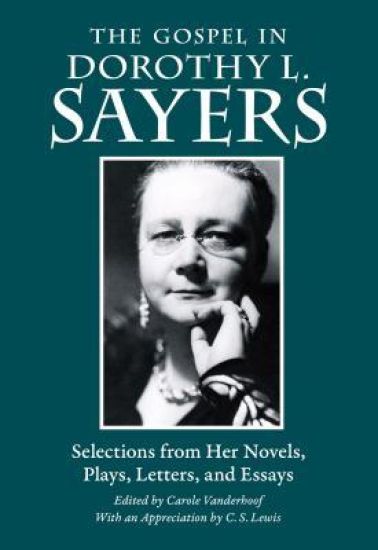
In this anthology, renowned murder mystery writer Dorothy L. Sayers tackles faith, doubt, human nature, and the most dramatic story ever told. For almost a century, a series of labyrinthine murder mysteries have kept fans turning pages hungrily as Lord Peter Wimsey and Harriet Vane discover whodunit, again and again. Detective novel enthusiasts may not know that for almost as many years, Christian thinkers have appreciated the same Dorothy L. Sayers for her acumen as an essayist, playwright, apologist, and preeminent translator of Dante's Divine Comedy. Now, for the first time, an anthology brings together the best of both worlds. The selections uncover the gospel themes woven throughout Sayers's popular fiction as well as her religious plays, correspondence, talks, and essays. Clues dropped throughout her detective stories reveal an attention to matters of faith that underlies all her work. Those who know Sayers from her nonfiction writings may wonder how she could also write popular genre fiction. Sayers, like her friend G. K. Chesterton, found murder mysteries a vehicle to explore the choices characters make between good and evil. Along with C. S. Lewis and the other Inklings, with whom she maintained a lively correspondence, Sayers used her popular fiction to probe deeper questions. She addressed not only matters of guilt and innocence, sin and redemption, but also the cost of war, the role of the conscience, and the place of women in society. None of these themes proved any hindrance to spinning a captivating yarn. Her murder mysteries are more reminiscent of Jane Austen than Arthur Conan Doyle, with all the tense interpersonal exploration of the modern novel.
Explore the real-life settings and inspirations behind the Golden Age mysteries of Dorothy L Sayers This beautifully crafted fold-out guide is the perfect companion for devotees of Lord Peter Wimsey and Harriet Vane, mapping the landscape of one of detective fiction's most celebrated creators. Follow in the footsteps of both Sayers herself and her iconic characters across London streets, Oxford colleges, sleepy English villages, and into Scotland and Wales. From the Piccadilly flat that inspired Lord Peter's luxurious bachelor residence to the advertising agency where Sayers crafted campaigns for Guinness while conceiving "Murder Must Advertise," each location reveals another layer of connection between the author's life and her fictional world. Discover: * London Landmarks: The Naval and Military Club that became the Bellona Club, Miss Climpson's Pimlico residence, and Harriet Vane's trial at the Old Bailey * Oxford Connections: Stroll through Shrewsbury College (modelled on Sayers' alma mater Somerville) where Harriet investigates in "Gaudy Night," and visit Christ Church where the Duke of Denver studied * Country Investigations: Explore Fenchurch St. Paul with its famous bell tower, the Yorkshire moors of "Clouds of Witness," and the artistic community of Kirkcudbright featured in "Five Red Herrings" Each entry includes historical context, literary connections, and precise details of its significance in Sayers' life or fiction. Illustrated with charming maps and artistic renderings, this guide transforms literary tourism into detective work itself, uncovering the authentic settings that defined the Golden Age of British mystery. Whether planning actual visits or enjoying armchair travel, this guide offers both casual fans and dedicated Sayers scholars a deeper appreciation of how place shaped the character of one of Britain's most enduring literary figures and her beloved creations. Includes: Annotated map, illustrated postcard, and comprehensive index of locations across 46 sites.
This handsome 5-volume box set brings together the first five instalments of the Lord Peter Wimsey mystery series, an iconic British detective. Lord Peter Wimsey uses his personal wealth and vast intellect to solve some of the nation's most confounding mysteries. Each novel features a unique cast of characters with Wimsey at its centre, monocled and ready for action. As one of the most iconic gentleman detectives, Wimsey's stories are a staple of the classic mystery canon. This collection includes five brilliant titles: - Whose Body?- Clouds of Witness- Unnatural Death- The Unpleasantness at the Bellona Club- Strong Poison ABOUT THE SERIES: The Arcturus Classic Collections series features delightful, high-quality paperback box sets of classic works of literature
Dorothy L. Sayers was one of the "Queens of Crime." Alongside writers like Agatha Christie, she perfected the whodunnit, but also used the genre to explore social, ethical, and emotional matters. Her characters, particularly Lord Peter Wimsey and his investigative partner Harriet Vane, struggle with the complexities of life and love in a rapidly changing world while solving some of the most intricate and complex mysteries ever offered to the reading public. Sayers was also an important theoretician of detective fiction, a religious dramatist, a public intellectual, and one of the 20th century's most important translators of Dante. While focusing on her mystery fiction, this companion offers a full view of all aspects of Sayers's career. It is an ideal introduction for readers new to Sayers's diverse and rewarding body of work, and an invaluable companion for her many fans.