Augusta Ada Byron, Countess of Lovelace, was the daughter of Lord Byron and a close friend to many of the leading figures of the Victorian era; based on her report on Charles Babbage's Analytical Engine she is also generally known as the inventor of the science of computer programming. In this engrossing biography, Dorothy Stein strips away the many layers of myth to reveal a story far more dramatic and fascinating than previous accounts have indicated.Dorothy Stein is a psychologist with a special interest in thought and language and a background in physics and computer programming. She has taught courses in nineteenth-century women's history and in the biology and psychology of sex differences, and is particularly concerned with the use of myth in science.
Originally published in 1995, this book confronts the contentious political issues on all sides of the population debate, including immigration, demographic competition, gender ratios, reproductive research and children’s rights. The book argues that lower fertility rates are preferred by women themselves; are beneficial in their own right to both women and children; and should not be used as a bargaining chip in any other area of the development debate. Drawing on a large body of research in anthropology, child psychology and population studies the book presents evidence that the poor do not necessarily have large families as form of financial security, or to put them to work; people without offspring are less lonely in old age; immigration and refugee controls in the Northern Hemisphere have been more driven by politics than rational calculation and human rights; social security does not require a large cohort of young workers. This book is a challenging contribution to the development debate. It presents a persuasive case for policies which recognise hopeful trends in relieving the environmental and social pressures of a globally increasing population.
Originally published in 1995, this book confronts the contentious political issues on all sides of the population debate, including immigration, demographic competition, gender ratios, reproductive research and children’s rights. The book argues that lower fertility rates are preferred by women themselves; are beneficial in their own right to both women and children; and should not be used as a bargaining chip in any other area of the development debate. Drawing on a large body of research in anthropology, child psychology and population studies the book presents evidence that the poor do not necessarily have large families as form of financial security, or to put them to work; people without offspring are less lonely in old age; immigration and refugee controls in the Northern Hemisphere have been more driven by politics than rational calculation and human rights; social security does not require a large cohort of young workers. This book is a challenging contribution to the development debate. It presents a persuasive case for policies which recognise hopeful trends in relieving the environmental and social pressures of a globally increasing population.
Easter is the high point of the year for millions of Christians around the world. And for most of them, there can be no Easter without Lent, the season that leads up to it. A time for self-denial, soul-searching, and spiritual preparation, Lent makes time for daily reading and reflection. This time-tested collection of devotions will deepen and stretch your faith, and can be returned to year after year. Culled from the wealth of twenty centuries, the selections are ecumenical in scope, representing the best classic and contemporary Christian writers. This expanded second edition adds dozens of voices, new and old, and takes the reader all the way through Eastertide to Pentecost. Includes ninety-six Lenten and Easter readings, plus seven chapter-opening poems, by Eberhard Arnold, Saint Augustine, Wendell Berry, Christoph Friedrich Blumhardt, Dietrich Bonhoeffer, G. K. Chesterton, Dorothy Day, Meister Eckhart, Khalil Gibran, Clarence Jordan, Soren Kierkegaard, Madeleine L'Engle, C. S. Lewis, George MacDonald, Thomas Merton, Malcolm Muggeridge, Kathleen Norris, Henri Nouwen, Christina Rosetti, Fleming Rutledge, Dorothy Sayers, Edith Stein, Mother Teresa, Leo Tolstoy, N. T. Wright, Alfred Kazin, Amy Carmichael, Barbara Brown Taylor, Barbara Cawthorne Crafton, Blaise Pascal, Brennan Manning, Dag Hammarskjöld, Dorothee Soelle, Dylan Thomas, E. Stanley Jones, Emil Brunner, Frederick Buechner, Fyodor Dostoevsky, Geoffrey Hill, Henry Drummond, J. Heinrich Arnold, Jean-Pierre de Caussade, Johann Christoph Arnold, John Dear, John Donne, John Masefield, John Stott, John Updike, Jürgen Moltmann, Karl Barth, Madeleine L’Engle, Martin Luther, Oscar Wilde, Oswald Chambers, Paul Tillich, Peter Kreeft, Philip Berrigan, Philip Yancey, Romano Guardini, Sadhu Sundar Singh , Saint Augustine, Simone Weil, Thomas à Kempis, Toyohiko Kagawa, Walter J. Ciszek, Walter Wangerin, Watchman Nee, William Willimon and others.
Dietrich Bonhoeffer; John Donne; C. S. Lewis; Henri J. M. Nouwen; Meister Eckhart; Dorothy Day; Thomas Stearns Eliot; Stein Edith; Aquinas Thomas; Yancey Philip
Though Christians the world over make yearly preparations for Lent, there’s a conspicuous lack of good books for that other great spiritual season: Advent. All the same, this four-week period leading up to Christmas is making a comeback as growing numbers reject shopping-mall frenzy and examine the deeper meaning of the season. Ecumenical in scope, these fifty devotions invite the reader to contemplate the great themes of Christmas and the significance that the coming of Jesus has for each of us – not only during Advent, but every day. Whether dipped into at leisure or used on a daily basis, Watch for the Light gives the phrase “holiday preparations” new depth and meaning. Includes writings by Christoph Friedrich Blumhardt, Sylvia Plath, J. B. Phillips, Friedrich Wilhelm Foerster, Henri Nouwen, Bernard of Clairvaux, Kathleen Norris, Meister Eckhart, St. Thomas Aquinas, Karl Rahner, Isaac Penington, Madeleine L’Engle, Alfred Delp, Loretta Ross-Gotta, William Stringfellow, J. Heinrich Arnold, Edith Stein, Philip Britts, Jane Kenyon, John Howard Yoder, Emmy Arnold, Karl Barth, Oscar Romero, William Willimon, Johann Christoph Arnold, Gail Godwin, Leonardo Boff, G. M. Hopkins, Evelyn Underhill, Dorothy Day, Brennan Manning, Dietrich Bonhoeffer, Romano Guardini, Annie Dillard, Martin Luther, St. John Chrysostom, Giovanni Papini, Dorothee Soelle, C. S. Lewis, Gustavo Gutiérrez, Philip Yancey, J. T. Clement, Thomas Merton, Eberhard Arnold, Ernesto Cardenal, T. S. Eliot, John Donne, Gian Carlo Menotti and Jürgen Moltmann.
"I still love my flag and my country. I'm proud of my military service and I would do it all over again. I still believe in Duty, Honor and Country." John York Jr. served his country and his fellow citizens through a long and honorable career in the armed forces, and was in the thick of the action in Korea and Vietnam as a helicopter flyer and senior instructor, and an expert with both helicopters and fixed-wing aircraft. HIs story is a fine picture of the friendships and the ups and downs of service life, supported throughout by a rock-solid marriage. This is the story of our fighting men (and, later, women). Above all, it is John York's own story. It will be read with appreciation by both veterans and by those who would like to experience a part of our contemporary history through the eyes of an experienced and accomplished observer.
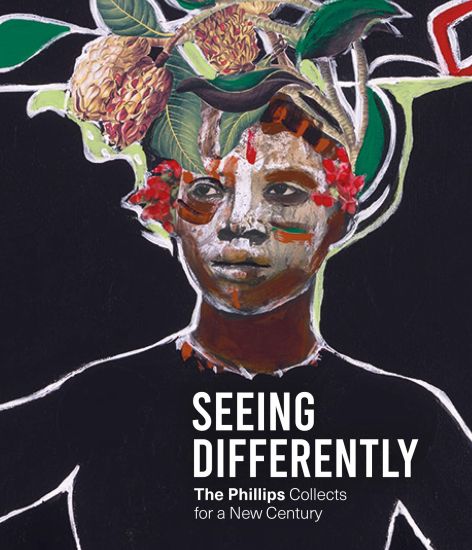
An expansive collection catalogue that offers a multiplicity of fresh perspectives on recent modern and contemporary art acquisitions in The Phillips Collection. Planned to coincide with The Phillips Collection's centennial and exhibition, this ground-breaking volume offers an unprecedented breadth of insights and inclusive narratives on the Phillips's growing art collection from a range of voices, including artists, critics, and scholars. Seeing Differently features works across wide-ranging media by renowned artists from the 19th to the 21st centuries, including Benny Andrews, Alexander Calder, Edgar Degas, Simone Leigh, and Renee Stout. An opening essay by Dorothy Kosinski, artist conversations, thematic essays, and 150 plates with 50 object responses by notable contributors, ensure that this will be a lasting art historical resource. AUTHORS: David C. Driskell is an artist, scholar, and professor emeritus at the University of Maryland. Mary Jane Jacob is professor and executive director of exhibitions at The School of the Art Institute of Chicago. Dorothy Kosinski is Vradenburg Director & CEO of The Phillips Collection. Elsa Smithgall is senior curator at The Phillips Collection. 278 colour illustrations
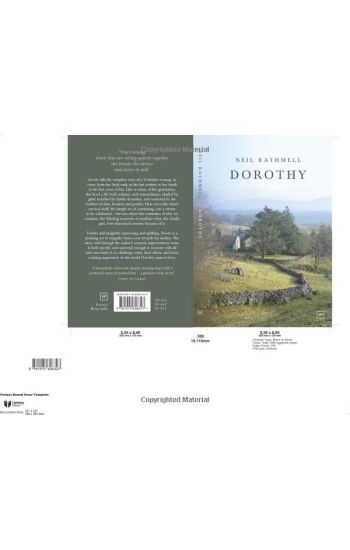
"One eveningwhen they are sitting quietly togethershe breaks the silenceand starts to talk"Dorothy tells the complete story of a Yorkshire woman, in verse, from her birth early in the last century to her death in the first years of this. Like so many of her generation, she lived a life both ordinary and extraordinary; shaded by grief, troubled by family dynamics, and restricted by the realities of class, location and gender. Hers was a life where survival itself, the simple act of continuing, was a victory to be celebrated - but one where the reminders of why we continue, the blinding moments of sunshine when the clouds part, were that much sweeter because of it.Tender and insightful, harrowing and uplifting, Dorothy is a stunning act of empathy from a son towards his mother. Her story, told through the author's assured, unpretentious verse, is both specific and universal enough to resonate with all who encounter it; to challenge some, heal others, and leave a lasting impression on the world Dorothy came to love.