Kirjojen hintavertailu. Mukana 11 244 527 kirjaa ja 12 kauppaa.

Kirjahaku

Etsi kirjoja tekijän nimen, kirjan nimen tai ISBN:n perusteella.

1000 tulosta hakusanalla Douglas K. Rex

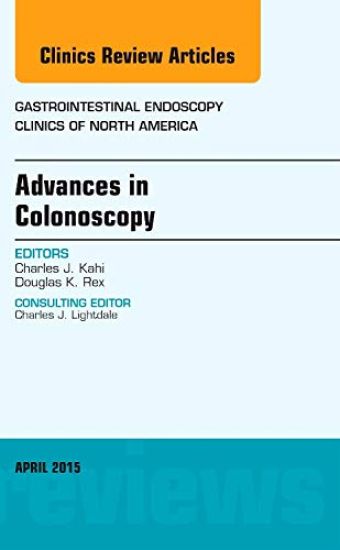
Advances in Colonoscopy, An Issue of Gastrointestinal Endoscopy Clinics

Advances in Colonoscopy, An Issue of Gastrointestinal Endoscopy Clinics

Douglas K. Rex

Elsevier - Health Sciences Division
2015
sidottu
Colonoscopy is the bread and butter for endoscopists and advances in the procedure to reduce time, improve efficiency, and prevent errors are very important for this group. The newest advances look at colonoscopy efficiency and a better way to target tissue sampling, which avoids random biopsies and instead looks at ways to predict areas for sampling. The Guest Editors have selected top experts to provide these important updates and they also address current thinking that questions the continued value of colonoscopies as predictors of colon cancer. The issue will be a very popular one, and it needs to be heavily promoted.
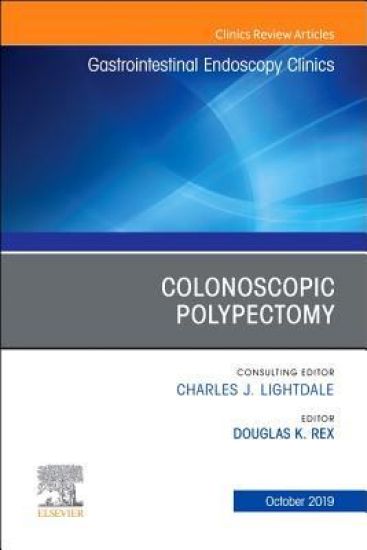
Colonoscopic Polypectomy, An Issue of Gastrointestinal Endoscopy Clinics

Colonoscopic Polypectomy, An Issue of Gastrointestinal Endoscopy Clinics

Douglas K. Rex

Elsevier - Health Sciences Division
2019
sidottu
In collaboration with Consulting Editor, Dr. Charles Lightdale, Dr. Douglas K. Rex has put together a state-of the-art issue of the Gastrointestinal Endoscopy Clinics of North America devoted to Colonoscopic Polypectomy. Expert authors have contributed clinical reviews that address best practices, evidentiary support, and expert recommendations. Articles specifically address the following topics: Endoscopic assessment prior to resection: What the experts do; Reviewing the evidence that polypectomy prevents cancer; The cold revolution: how far can it go?; Best methods for resection of diminutive and small polyps; Teaching polypectomy and assessing the quality of polypectomy; How to perform wide-field EMR and follow-up examinations; Surgery vs. EMR vs. ESD for large polyps: Making sense of when to use which approach; How to learn and perform ESD and full thickness endoscopic resection in the colorectum in the U.S; Underwater endoscopic mucosal resection (EMR); Lesion retrieval, lesions handling, marking; and Closure of defects and management of complications. Readers will come away with the latest information they need to evaluate options for lesion resection and to improve outcomes.
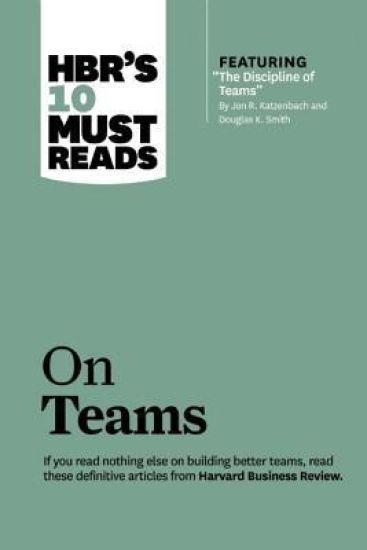
HBR's 10 Must Reads on Teams (with featured article "The Discipline of Teams," by Jon R. Katzenbach and Douglas K. Smith)

HBR's 10 Must Reads on Teams (with featured article "The Discipline of Teams," by Jon R. Katzenbach and Douglas K. Smith)

Harvard Business Review; Jon R. Katzenbach; Lynda Gratton; Kathleen M. Eisenhardt

Harvard Business Review Press
2013
pokkari
NEW from the bestselling HBR's 10 Must Reads series. Most teams underperform. Yours can beat the odds. If you read nothing else on building better teams, read these 10 articles. We've combed through hundreds of articles in the Harvard Business Review archive and selected the most important ones to help you assemble and steer teams that get results. Leading experts such as Jon Katzenbach, Teresa Amabile, and Tamara Erickson provide the insights and advice you need to: * Boost team performance through mutual accountability * Motivate large, diverse groups to tackle complex projects * Increase your teams' emotional intelligence * Prevent decision deadlock * Extract results from a bunch of touchy superstars * Fight constructively with top-management colleagues Looking for more Must Read articles from Harvard Business Review? Check out these titles in the popular series: HBR's 10 Must Reads: The Essentials HBR's 10 Must Reads on Communication HBR's 10 Must Reads on Collaboration HBR's 10 Must Reads on Innovation HBR's 10 Must Reads on Leadership HBR's 10 Must Reads on Making Smart Decisions HBR's 10 Must Reads on Managing Yourself HBR's 10 Must Reads on Strategic Marketing
HBR's 10 Must Reads on Teams (with featured article "The Discipline of Teams," by Jon R. Katzenbach and Douglas K. Smith)

HBR's 10 Must Reads on Teams (with featured article "The Discipline of Teams," by Jon R. Katzenbach and Douglas K. Smith)

Harvard Business Review; Jon R. Katzenbach; Lynda Gratton; Kathleen M. Eisenhardt

Harvard Business Review Press
2013
sidottu
Most teams underperform. Yours can beat the odds. If you read nothing else on building better teams, read these 10 articles. We’ve combed through hundreds of articles in the Harvard Business Review archive and selected the most important ones to help you assemble and steer teams that get results. Leading experts such as Jon Katzenbach, Teresa Amabile, and Tamara Erickson provide the insights and advice you need to: Boost team performance through mutual accountabilityMotivate large, diverse groups to tackle complex projectsIncrease your teams’ emotional intelligencePrevent decision deadlockExtract results from a bunch of touchy superstarsFight constructively with top-management colleagues
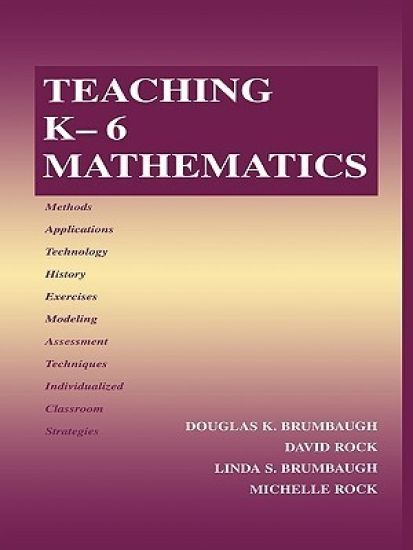
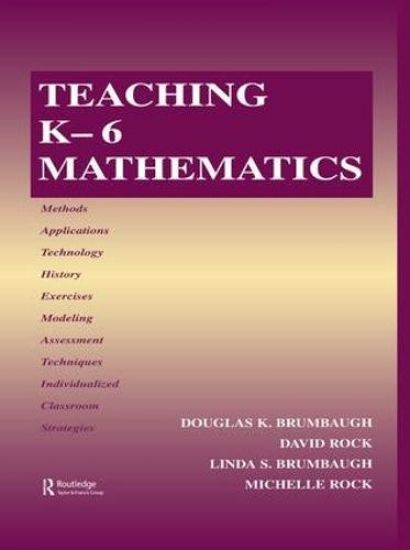
Teaching K-6 Mathematics

Teaching K-6 Mathematics

Douglas K. Brumbaugh; David Rock; Linda S. Brumbaugh; Michelle Lynn Rock

Routledge Member of the Taylor and Francis Group
2002
nidottu
This developmentally sound, research-based, practical text speaks directly to preservice elementary mathematics students about the multitude of ways they can help their future students learn to see the power, beauty, necessity, and usefulness of mathematics in the world.Part 1 deals with guiding principles that permeate the text, while Parts 2-11 deal with the specific NCTM Standards for grades K-6. Teaching K-6 Mathematics: *is aligned with the current NCTM Curriculum and Evaluation Standards for School Mathematics; *integrates content and methodology; *emphasizes use of technology as a teaching/learning tool; *stresses problem solving; *provides basic information on current research in mathematics education; *focuses on identification of error patterns and analysis; *uses a down-to-earth, friendly writing style that engages the student rather than prescribing what to do; and *includes many activities and exercises, including games, tricks, and amusements that can be used in the classroom to increase student interest in mathematics. Features: *Technology is integral throughout the text. Students are expected to perform Internet searches, investigate new sites appropriate for elementary students, sample new software that could be used in the classroom, and develop ways to blend calculators into the curriculum. *Manipulatives are considered essential for students to learn elementary mathematics concepts. Cuisenaire rods, base 10- blocks, chips, number lines, and geoboards are all part of the manipulative landscape that is created in this text. *Careful attention is given to blending rote work, developmental activities, fun, application, technology, manipulatives, assessment, and planning, so that prospective teachers become accustomed to using varied approaches and decision making as a curriculum is determined. *Tricks, Activities, and Games (TAG) provide a wealth of ideas to attract students to learning mathematics.
Teaching K-6 Mathematics

Teaching K-6 Mathematics

Douglas K. Brumbaugh; David Rock; Linda S. Brumbaugh; Michelle Lynn Rock

Routledge
2017
sidottu
This developmentally sound, research-based, practical text speaks directly to preservice elementary mathematics students about the multitude of ways they can help their future students learn to see the power, beauty, necessity, and usefulness of mathematics in the world.Part 1 deals with guiding principles that permeate the text, while Parts 2-11 deal with the specific NCTM Standards for grades K-6. Teaching K-6 Mathematics: is aligned with the current NCTM Curriculum and Evaluation Standards for School Mathematics; integrates content and methodology; emphasizes use of technology as a teaching/learning tool; stresses problem solving; provides basic information on current research in mathematics education; focuses on identification of error patterns and analysis; uses a down-to-earth, friendly writing style that engages the student rather than prescribing what to do; and includes many activities and exercises, including games, tricks, and amusements that can be used in the classroom to increase student interest in mathematics. Features: Technology is integral throughout the text. Students are expected to perform Internet searches, investigate new sites appropriate for elementary students, sample new software that could be used in the classroom, and develop ways to blend calculators into the curriculum. Manipulatives are considered essential for students to learn elementary mathematics concepts. Cuisenaire rods, base 10- blocks, chips, number lines, and geoboards are all part of the manipulative landscape that is created in this text. Careful attention is given to blending rote work, developmental activities, fun, application, technology, manipulatives, assessment, and planning, so that prospective teachers become accustomed to using varied approaches and decision making as a curriculum is determined. Tricks, Activities,
Web Services, Service-Oriented Architectures, and Cloud Computing

Web Services, Service-Oriented Architectures, and Cloud Computing

Douglas K. Barry

Morgan Kaufmann Publishers In
2013
nidottu
Web Services, Service-Oriented Architectures, and Cloud Computing is a jargon-free, highly illustrated explanation of how to leverage the rapidly multiplying services available on the Internet. The future of business will depend on software agents, mobile devices, public and private clouds, big data, and other highly connected technology. IT professionals will need to evaluate and combine online services into service-oriented architectures (SOA), often depending on Web services and cloud computing. This can mean a fundamental shift away from custom software and towards a more nimble use of semantic vocabularies, middle-tier systems, adapters and other standardizing aspects. This book is a guide for the savvy manager who wants to capitalize on this technological revolution. It begins with a high-level example of how an average person might interact with a service-oriented architecture, and progresses to more detail, discussing technical forces driving adoption and how to manage technology, culture and personnel issues that can arise during adoption. An extensive reference section provides quick access to commonly used terms and concepts.
The Stones Will Cry Out

The Stones Will Cry Out

Douglas K. Huneke

Praeger Publishers Inc
1995
sidottu
Nineteen ninety-five is the 50th anniversary of the liberation of the death camps and of the martyrdom of the Protestant theologian and resistance leader, Dietrich Bonhoeffer. The author weaves together the stories of his studies at the Shoah archives and former death camps in Central and Eastern Europe and at the Israeli Holocaust memorial. Following the reflections and narratives there is a lengthy compilation of resources for worship services, interfaith observances, and both study and dialogue programs. The unique section on liturgical resources includes models for seasonal services, historical background, sermons and sermon outlines, prayers, readings, hymns, litanies, other resources, and an annotated bibliography.
Make Success Measurable!

Make Success Measurable!

Douglas K. Smith

John Wiley Sons Inc
1999
sidottu
"Performance begins with focusing on outcomes instead of activities. In my experience, most people in most organizations most of the time do the reverse. They concentrate their efforts on the pursuit of activities instead of outcomes. As a result, they rarely set or achieve performance results that matter." Today's performance challenges demand outcomes—both financial and nonfinancial—that must simultaneously benefit customers, shareholders, employees, and management. Therein lies a cycle of sustainable performance that functions as a framework to ensure your organization's goals are set, met, and balanced for today's business world. Make Success Measurable! enables you to avoid activity-based goals that can go on indefinitely, and articulate aggressive outcome-based goals that are specific, measurable, achievable, relevant, and time-bound. This is a how-to book, emphasizing outcomes as opposed to actions in setting goals. You'll learn how to: Set goals that matter to customers, shareholders, and funders. Set nonfinancial as well as financial goals and link them together. Understand and use outcome-based goals that support success while avoiding activity-based goals that produce failure. Select and use management disciplines needed to achieve your goals. Smith provides the what's and why's behind today's performance challenges and shows how to convert them into measurable concrete achievements. Using an innovative approach, Smith divides each chapter into an explanatory Mindbook section and a practice Workbook section. The Mindbook sections provide descriptions and explain key concepts, frameworks, tools, and techniques. They seek to build your intellectual understanding of how to set and achieve the performance goals that matter. The Workbook sections include detailed examples and exercises that you and your colleagues can use to practice the concepts, tools, and techniques put forth in the Mindbook section. Workbook exercises allow you to convert understanding into action—and action into results! "Doug Smith's work on performance and measurement has been an invaluable management resource for us. We believe that if you can't measure it, you can't improve it. Thanks to Doug, we can focus on the right measures to drive performance against today's many new and different challenges throughout our enterprise."—Leon Gorman, President, L.L. Bean, Inc. "Make Success Measurable! is a practical and powerful step-by-step guide to setting and achieving the goals we all need to accomplish in a constantly changing and challenging world."—Charles Dolan, Chairman, Cablevision Systems Corporation. "No one writes as clearly about today's key management issues as Doug Smith. Whether you're in a small eCommerce startup or a large, already established organization, the frameworks, tools, techniques, and exercises contained in this book are the only things you'll need to manage the performance that matters to your customers, your people, and your shareholders."—Steve Goldstein, CEO, eChores and former CEO, American Express Bank. "Achieving results that matter—to donors and clients—is the true measure of success for any nonprofit organization. This book provides a thoughtful and extremely practical guide for setting goals and effectively meeting them. It is an absolutely indispensable tool for leaders and a model for good management."—Jenna Dorn, President, National Museum of Health.
Essentials of Individual Achievement Assessment

Essentials of Individual Achievement Assessment

Douglas K. Smith

John Wiley Sons Inc
2001
nidottu
Quickly acquire the knowledge and skills you need to confidently administer, score, and interpret individual achievement tests Essentials of Individual Achievement Assessment covers the achievement tests used in educational planning, transitional programming for students with disabilities, and career/vocational planning–including the major individually administered tests such as the Wechsler Individual Achievement Test (WIAT®-II), Kaufman Test of Educational Achievement (K-TEA), Peabody Individual Achievement Test-Revised (PIAT-R), and the Wide Range Achievement Test-3 (WRAT3™). To use these tests properly, professionals need an authoritative source of advice and guidance on how to administer, score, and interpret them. Written by school psychologist Douglas K. Smith, Essentials of Individual Achievement Assessment is that source. Like all the volumes in the Essentials of Psychological Assessment series, this book is designed to help busy mental health professionals quickly acquire the knowledge and skills they need to make optimal use of major psychological assessment instruments. Each concise chapter features numerous callout boxes highlighting key concepts, bulleted points, and extensive illustrative material, as well as test questions that help you gauge and reinforce your grasp of the information covered. Essentials of Individual Achievement Assessment provides step-by-step guidance on test administration, scoring, and interpretation. As well, the author provides his expert assessment of the tests’ relative strengths and weaknesses, valuable advice on their clinical applications, and several illuminating case reports. Other titles in the Essentials of Psychological Assessment series: Essentials of WJ IIITM Tests of Achievement Assessment Essentials of WJ IIITM Cognitive Abilities Assessment Essentials of Career Interest Assessment Essentials of WISC-III® and WPPSI-R® Assessment Essentials of Cross-Battery Assessment Essentials of Nonverbal Assessment Essentials of Cognitive Assessment with KAIT and Other Kaufman Measures Essentials of NEPSY® Assessment For a complete list of books in our Essentials of Psychological Assessment series, visit us on the Web at: www.essentials.wiley.com
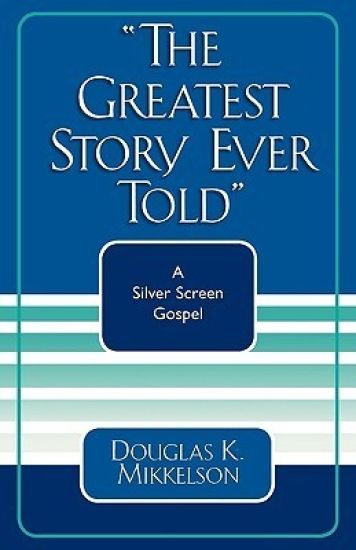
The Greatest Story Ever Told

The Greatest Story Ever Told

Douglas K. Mikkelson

University Press of America
2003
nidottu
The 1965 film "The Greatest Story Ever Told" ranks among the most popular "Jesus movies" ever made. However, the film inevitably leads viewers to ask, "Is that in the Bible, or did they make that up, or what?" The Greatest Story Ever Told: A Silver Screen Gospel attempts to answer this question. Provided is a scene-by-scene summary of and commentary on the movie. The analysis is anchored by reviewing scenes of the movie alongside analogous events in the New Testament. The detailed commentaries also explore the relationship of the scenes to other ancient literary sources such as the Old Testament/Hebrew Bible, non-canonical gospels, apocryphal literature, ancient Jewish and Roman authors such as Josephus and Tacitus, and more.
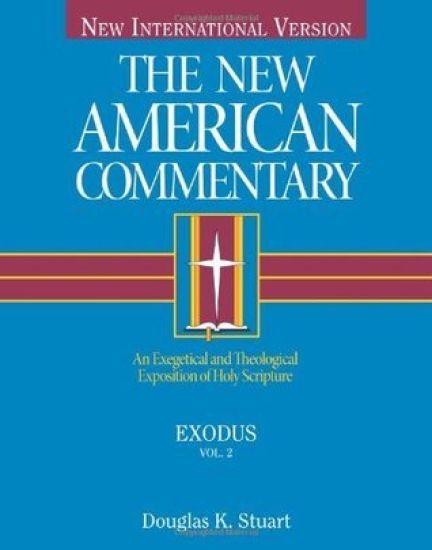
Exodus

Exodus

Douglas K. Stuart

Broadman Holman Publishers
2006
sidottu
THE NEW AMERICAN COMMENTARY is for the minister or Bible student who wants to understand and expound the Scriptures. Notable features include: * commentary based on THE NEW INTERNATIONAL VERSION;* the NIV text printed in the body of the commentary; * sound scholarly methodology that reflects capable research in the original languages; * interpretation that emphasizes the theological unity of each book and of Scripture as a whole; * readable and applicable exposition.
Mathematics Content for Elementary Teachers

Mathematics Content for Elementary Teachers

Douglas K. Brumbaugh

Routledge Member of the Taylor and Francis Group
2004
nidottu
THE book for elementary education mathematics content courses! Designed to help prospective teachers of elementary school mathematics learn content beyond the rote level, this text stimulates readers to think beyond just getting the problem right and fosters their development into thoughtful, reflective, self-motivated, life-long learners. It stresses the what and why of elementary school mathematics content. Hints are provided about how to teach the content but this is mostly left to courses and texts that are dedicated to that purpose.The text is organized around the National Council for Teachers of Mathematics' Principles and Standards for School Mathematics. The Standards dictate the basic sections of the text. Within each section, appropriate specific topics are developed, intertwined with technology, problem solving, assessment, equity issues, planning, teaching skills, use of manipulatives, sequencing, and much more. In addition, major focal points of the Standards are emphasized throughout: effective teachers of mathematics should be able to motivate all students to learn, should understand the developmental levels of how children learn, should concentrate on what children need to become active participants in the learning environment, and should be engaged in ongoing investigations of new mathematical concepts and teaching strategies.Mathematics Content for Elementary Teachers is based on several fundamental premises:*The focus of mathematics education should be on the process, not the answer.*Elementary teachers should know the mathematics content they are teaching, know more than the content they are teaching, and teach from the overflow of knowledge.*It is important for teachers to be flexible in allowing students to use different procedures--teaching from the "overflow of knowledge" implies knowing how to do a given operation more than one way and being willing to examine many different ways.*Teachers need to learn to carefully cover the topics to be taught, to reflect upon them, and to be able to organize them. To help prospective elementary teachers concentrate on the mathematics content they will be expected to teach and begin to build the foundation for the methods they will use, this text includes only elementary mathematics content and does not address middle school concepts.Pedagogical features:*The text is organized according to NCTM Standards.*An informal writing style speaks directly to readers and is geared to pre-service teachers.*Focus is given to multiple methods of problem solving at four developmental levels.*Questions, exercises, and activities are interspersed throughout each section rather than gathered at the end of each chapter.*Complete solutions for exercises are provided.
Making the Heartland Quilt

Making the Heartland Quilt

Douglas K. Meyer

Southern Illinois University Press
2016
nidottu
Douglas K. Meyer reconstructs the settlement patterns of thirty-three immigrant groups and confirms the emergence of discrete culture regions and regional way stations.Meyer argues that midcontinental Illinois symbolizes a historic test-strip of the diverse population origins that unfolded during the Great Migration. Basing his research on the 1850 United States manuscript schedules, Meyer dissects the geographical configurations of twenty-three native and ten foreign-born adult male immigrant groups who peopled Illinois. His historical geographical approach leads to the comprehension of a new and clearer map of settlement and migration history in the state.Meyer finds that both cohesive and mixed immigrant settlements were established. Balkan-like immigrant enclaves or islands were interwoven into evolving local, regional, and national settlement networks. The midcontinental location of Illinois, its water and land linkages, and its lengthy north-south axis enhanced cultural diversity. The barrier effect of Lake Michigan contributed to the convergence and mixing of immigrants. Thus, Meyer demonstrates, Illinois epitomizes Midwestern dichotomies: northern versus southern; native-born versus foreign-born; rural versus urban; and agricultural versus manufacturing.
The Moses of Rovno

The Moses of Rovno

Douglas K. Huneke

Random House
1990
pokkari
"Fritz Graebe's courage justifies our faith in humankind."--Elie Wiesel, author of Night"This book combines a story of high moral passion with all the excitement of a spy thriller. Fritz Graebe, who as a non-Jew risked his life repeatedly during World War II to save Jews from Hitler's firing squads and death camps, was also an exceedingly astute and clever man who time and again outwitted the Nazis at their own game. Tragically there were too few Fritz Graebes to avert catastrophe for the great majority of European Jews, but his story is a reminder that during even the darkest moments of human history there are individuals who, at great personal cost, say 'no' to the darkness and provide beacons of light for the rest of us. As we face our own moral dilemmas, we can only hope that some of Fritz Graebe's courage rubs off on us."--Dr. Robert McAfee Brown, professor of theology and ethics, Pacific School of Religion, Berkeley, California
Transfer on Trial

Transfer on Trial

Douglas K. Detterman; Robert J. Sternberg

Praeger Publishers Inc
1993
sidottu
The importance of transfer for understanding intelligence, cognition, and education has been debated for a century, as it has been one of the central theoretical issues in psychology, education, and cognition. Education theories are based on the assumption that students will transfer what they learn in school to new situations. But what if transfer does not occur? Much of current educational practice could be called into question. This book presents views on the status of transfer research. Detterman argues that there is little evidence to support the existence of the transfer of complex skills such as those usually taught in school. Contributors Earl C. Butterfield and James G. Greeno argue that transfer not only exists but that it is fundamental to complex cognitive performance. Other contributors take intermediate positions, presenting a review of transfer studies in applied domains. These authors explore the situations in which transfer can or cannot occur.