Kirjojen hintavertailu. Mukana 11 244 527 kirjaa ja 12 kauppaa.

Kirjahaku

Etsi kirjoja tekijän nimen, kirjan nimen tai ISBN:n perusteella.

1000 tulosta hakusanalla Douglas M Charles

The FBI's Obscene File

The FBI's Obscene File

Douglas M. Charles

University Press of Kansas
2012
sidottu
What do pop artist Andy Warhol, sex researcher Alfred Kinsey, and cinematic comedians Abbott & Costello have in common? They all found a prominent place in the FBI's ""Obscene File."" In this startling new study Douglas Charles reveals how, for more than seventy years, FBI officials placed obscenity, pornography, and the politics of morality among their topmost concerns. Illuminating this largely neglected aspect of FBI history, Charles charts the evolution of the Bureau's efforts to combat the spread of obscenity and its perceived insidious effects. He contends that, especially during the five decades under J. Edgar Hoover, these efforts became a surprisingly high priority and at times expressly wielded for political ends, even as Hoover hid the file from public view in order to preserve the Bureau's squeaky-clean image. Charles recounts how the ""Obscene File"" was conceived and organised by Hoover and describes its contents including magazines, films, and artwork, along with dossiers on offenders. He examines the FBI's targeting of 1940s and '50s ""race music"" with its depictions of ""lewd and licentious acts in obscene and foul language."" He describes how it collected photos of activities at gay bars and prosecuted businesses that published ""obscene"" pro-gay magazines, as well as participated in the ""Lavender Scare"" that targeted gays in the federal government. He also details the FBI's efforts to short-circuit the distribution of the film Deep Throat and disrupt the pornographic movie industry. On the political front, Charles tells how Hoover found a fellow crusader in Richard Nixon, who hijacked the obscenity issue to rally an electoral base weary of an ""anything-goes"" decade. But as changing mores and laws redefined obscenity, subsequent directors moved away from Hoover's approach and focused more on mob control of pornography, kiddie porn, and the war on drugs. Subsequently, the ""Obscene File"" mostly fell into disuse during the presidencies of Bill Clinton and George W. Bush, the latter president unable to gain any traction with his own obscenity initiatives. Taking in the whole scope of these operations, Charles's insightful history offers a previously unseen look at a major facet of FBI activities and contributes significantly to our understanding of Hoover and his legacy.
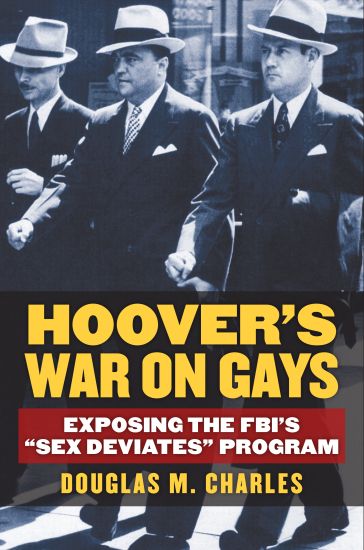
Hoover's War on Gays

Hoover's War on Gays

Douglas M. Charles

University Press of Kansas
2015
sidottu
At the FBI, the “Sex Deviates” program covered a lot of ground, literally; at its peak, J. Edgar Hoover’s notorious “Sex Deviates” file encompassed nearly 99 cubic feet or more than 330,000 pages of information. In 1977–1978 these files were destroyed—and it would seem that four decades of the FBI’s dirty secrets went up in smoke. But in a remarkable feat of investigative research, synthesis, and scholarly detective work, Douglas M. Charles manages to fill in the yawning blanks in the bureau’s history of systematic (some would say obsessive) interest in the lives of gay and lesbian Americans in the twentieth century. His book, Hoover’s War on Gays, is the first to fully expose the extraordinary invasion of US citizens’ privacy perpetrated on a historic scale by an institution tasked with protecting American life. For much of the twentieth century, when exposure might mean nothing short of ruin, gay American men and women had much to fear from law enforcement of every kind—but none so much as the FBI, with its inexhaustible federal resources, connections, and its carefully crafted reputation for ethical, by-the-book operations. What Hoover’s War on Gays reveals, rather, is the FBI’s distinctly unethical, off-the-books long-term targeting of gay men and women and their organizations under cover of “official” rationale— such as suspicion of criminal activity or vulnerability to blackmail and influence. The book offers a wide-scale view of this policy and practice, from a notorious child kidnapping and murder of the 1930s (ostensibly by a sexual predator with homosexual tendencies), educating the public about the threat of “deviates,” through WWII’s security concerns about homosexuals who might be compromised by the enemy, to the Cold War’s “Lavender Scare” when any and all gays working for the US government shared the fate of suspected Communist sympathizers. Charles’s work also details paradoxical ways in which these incursions conjured counterefforts—like the Mattachine Society; ONE, Inc.; and the Daughters of Bilitis—aimed at protecting and serving the interests of postwar gay culture. With its painstaking recovery of a dark chapter in American history and its new insights into seemingly familiar episodes of that story—involving noted journalists, politicians, and celebrities—this thorough and deeply engaging book reveals the perils of authority run amok and stands as a reminder of damage done in the name of decency.
Aristophanes and Athens

Aristophanes and Athens

Douglas M. MacDowell

Oxford University Press
1995
sidottu
BL Covers every play, with extensive quotations in English Aristophanes' comedies are famous for their comic characters and earthy humour, but they are also highly topical, with many contemporary political allusions easily missed today. Douglas MacDowell provides students with a long needed accessible and essential introductory guide to the plays, focusing particularly on information about the Athens of the day.
Aristophanes and Athens

Aristophanes and Athens

Douglas M. MacDowell

Oxford University Press
1995
nidottu
The plays of Aristophanes are the oldest comedies which still survive. They are famous for their comic characters, their fantastic plots, their farcical action, and their earthy humour. But they are also highly topical, full of comments, both comic and serious, on politics and other current affairs in classical Athens. This book provides an accessible introduction to Aristophanes' plays, focusing particularly on their relationship to Athenian politics and life, and to the effect that Aristophanes hoped to have on his audience. All passages quoted from them are given in new verse translations, and readers do not need any knowledge of Greek. But scholarly problems are not ignored, and specialists will find here both new suggestions and summaries of different interpretations with recent bibliographical information in the notes.
Demosthenes the Orator

Demosthenes the Orator

Douglas M. MacDowell

Oxford University Press
2009
sidottu
In the most comprehensive account available of the texts of Demosthenes, Douglas M. MacDowell describes and assesses all of the great orator's speeches, including those for the lawcourts as well as the addresses to the Ekklesia. Besides the genuine speeches, MacDowell also covers those which have probably wrongly been ascribed to Demosthenes, such as the ones written for delivery by Apollodorus; and he considers too the Epistles, the Prooemia, and the puzzling Erotic Speech.
Berkeley's Philosophy of Mathematics

Berkeley's Philosophy of Mathematics

Douglas M. Jesseph

University of Chicago Press
1993
sidottu
In this first modern, critical assessment of the place of mathematics in Berkeley's philosophy and Berkeley's place in the history of mathematics, Douglas M. Jesseph provides a bold reinterpretation of Berkeley's work. Jesseph challenges the prevailing view that Berkeley's mathematical writings are peripheral to his philosophy and argues that mathematics is in fact central to his thought, developing out of his critique of abstraction. Jesseph's argument situates Berkeley's ideas within the larger historical and intellectual context of the Scientific Revolution. Jesseph begins with Berkeley's radical opposition to the received view of mathematics in the philosophy of the late seventeenth and early eighteenth centuries, when mathematics was considered a "science of abstractions." Since this view seriously conflicted with Berkeley's critique of abstract ideas, Jesseph contends that he was forced to come up with a nonabstract philosophy of mathematics. Jesseph examines Berkeley's unique treatments of geometry and arithmetic and his famous critique of the calculus in The Analyst. By putting Berkeley's mathematical writings in the perspective of his larger philosophical project and examining their impact on eighteenth-century British mathematics, Jesseph makes a major contribution to philosophy and to the history and philosophy of science.
Berkeley's Philosophy of Mathematics

Berkeley's Philosophy of Mathematics

Douglas M. Jesseph

University of Chicago Press
1993
nidottu
In this first modern, critical assessment of the place of mathematics in Berkeley's philosophy and Berkeley's place in the history of mathematics, Douglas M. Jesseph provides a bold reinterpretation of Berkeley's work. Jesseph challenges the prevailing view that Berkeley's mathematical writings are peripheral to his philosophy and argues that mathematics is in fact central to his thought, developing out of his critique of abstraction. Jesseph's argument situates Berkeley's ideas within the larger historical and intellectual context of the Scientific Revolution.Jesseph begins with Berkeley's radical opposition to the received view of mathematics in the philosophy of the late seventeenth and early eighteenth centuries, when mathematics was considered a "science of abstractions." Since this view seriously conflicted with Berkeley's critique of abstract ideas, Jesseph contends that he was forced to come up with a nonabstract philosophy of mathematics. Jesseph examines Berkeley's unique treatments of geometry and arithmetic and his famous critique of the calculus in The Analyst.By putting Berkeley's mathematical writings in the perspective of his larger philosophical project and examining their impact on eighteenth-century British mathematics, Jesseph makes a major contribution to philosophy and to the history and philosophy of science.
Squaring the Circle

Squaring the Circle

Douglas M. Jesseph

University of Chicago Press
2000
sidottu
In 1655, the philosopher Thomas Hobbes claimed he had solved the centuries-old problem of "squaring of the circle" (constructing a square equal in area to a given circle). With a scathing rebuttal to Hobbes's claims, the mathematician John Wallis began one of the longest and most intense intellectual disputes of all time. This book presents an account of the controversy, from the core mathematics to the broader philosophical, political and religious issues at stake. Hobbes believed that by recasting geometry in a materialist mold, he could solve any geometric problem and thereby demonstrate the power of his materialist metaphysics. Wallis, a prominent Presbyterian divine as well as an eminent mathematician, refuted Hobbes's geometry as a means of discrediting his philosophy, which Wallis saw as a dangerous mix of atheism and pernicious political theory. Hobbes and Wallis's "battle of the books" illuminates the intimate relationship between science and crucial 17th-century debates over the limits of sovereign power and the existence of God.
Squaring the Circle

Squaring the Circle

Douglas M. Jesseph

University of Chicago Press
2000
nidottu
In 1655, the philosopher Thomas Hobbes claimed he had solved the centuries-old problem of "squaring of the circle" (constructing a square equal in area to a given circle). With a scathing rebuttal to Hobbes's claims, the mathematician John Wallis began one of the longest and most intense intellectual disputes of all time. This book presents an account of the controversy, from the core mathematics to the broader philosophical, political and religious issues at stake. Hobbes believed that by recasting geometry in a materialist mold, he could solve any geometric problem and thereby demonstrate the power of his materialist metaphysics. Wallis, a prominent Presbyterian divine as well as an eminent mathematician, refuted Hobbes's geometry as a means of discrediting his philosophy, which Wallis saw as a dangerous mix of atheism and pernicious political theory. Hobbes and Wallis's "battle of the books" illuminates the intimate relationship between science and crucial 17th-century debates over the limits of sovereign power and the existence of God.
Corporate Nonunion Complaint Procedures and Systems

Corporate Nonunion Complaint Procedures and Systems

Douglas M. McCabe

Praeger Publishers Inc
1988
sidottu
In the most comprehensive work on the subject published to date, McCabe presents a thorough analysis of internal dispute resolution systems in 78 of the nation's leading nonunion companies. The study's primary focus is on the procedural requirements involved in processing employee complaints for companies desiring to establish or improve internal grievance resolution programs. Three major types of procedures are examined in depth: nonunion grievance arbitration systems, nonunion internal tribunals and peer review systems, and nonunion open-door policies and formal appeal systems.McCabe's organizing precept is the belief that it is always in management's own self interest to recognize the need for sound and equitable nonunion complaint and grievance procedures. Following his analysis of complaint procedures as stipulated in the employee relations manuals of the 78 companies under study, McCabe appraises the effectiveness of these procedures in actual practice. He demonstrates that in order to be successful, each company must tailor an individualized package of dispute resolution techniques to fit its own corporate philosophy of employer-employee relations. A comprehensive literature review and a bibliography for both practitioners and scholars of strategic human resources management complete this definitive study of dispute resolution in nonunion settings.
Publishing in the Information Age

Publishing in the Information Age

Douglas M. Eisenhart

Praeger Publishers Inc
1996
nidottu
With the increasing use and penetration of digital information technologies throughout its processes and products, the publishing industry is undergoing a fundamental and irreversible transformation. Provided here is a comprehensive single-volume study of that transformation which demonstrates how publishing managers can best take advantage of the opportunities the profound changes will bring. In 15 clearly-written chapters, the seven key elements of publishing, the 7M's, are detailed. An enumeration of critical core concepts and over 30 figures and tables assist in this timely analysis that is essential reading for all stakeholders in the future of publishing.This eloquent and masterful book details how the recent advancements in digital information technology mark a fundamental and irreversible transformation in the publishing industry. The clearly presented and highly readable text provides a much-needed, concise, easy-to-grasp introduction to this new world of digital publishing, the opportunities it presents, and what it means for managers in the industry, including the fundamental shift from format-based enterprises (e.g., book publishers) to firms that are developers and managers of intellectual properties in multiple forms which best meet their customers' information needs. Throughout the study, the author, a media executive who has held managerial positions in major book publishing, cable television, and software firms, focuses on the business strategies that both traditional print-based and new media publishing firms must implement to adapt and thrive in this rapidly evolving and complex environment.After an introductory chapter that reviews the major symptoms of change in the current publishing industry environment, the author examines the Information Age and the new information industry as the foundation for his analysis. He then presents his new framework, the seven Ms of publishing, that serves both as the structural backbone and main thesis of the study. The central 11 chapters of the book detail these seven Ms: the five value-added Ms of Material, Mode, Media, Means, and Market; and the two infrastructural Ms of Management and Money. The author supports his analysis with over 30 figures and tables that vividly depict the key points of the study. He also delineates 45 core concepts of publishing in the Information Age within the seven Ms. The final chapter of the book presents the author's vision of the digital publishing enterprise and the paradigm of promise for managers and other stakeholders in the future of publishing.
Insatiable Is Not Sustainable

Insatiable Is Not Sustainable

Douglas M. Brown

Praeger Publishers Inc
2001
sidottu
In today's culture of insatiable freedom, many believe that to be human is to be an insatiable self-actualizer. Yet insatiable is not sustainable. In order to solve today's crisis of environmental sustainability--and human sustainability--we must let go of our obsession to constantly be more. The desire to have all that we can have comes, Brown argues, from a cultural norm that has evolved to become an economic, social, and moral imperative-that To Be is to achieve more, improve more, and insatiably have more, to the point of planetary extinction.Incorporating the views of classic scholars--Aristotle, J. S. Mill, Marx, Thorstein Veblen--into his own unique interpretation, Brown traces human history from the earliest hunters and gatherers through the emergence of capitalism and the evolution to today's insatiable self and the culture of insatiable freedom. In conclusion, Brown argues cogently for the creation of a culture of sustainability, offering practical ways to achieve this goal.
Insatiable is Not Sustainable

Insatiable is Not Sustainable

Douglas M. Brown

Praeger Publishers Inc
2001
nidottu
In today's culture of insatiable freedom, many believe that to be human is to be an insatiable self-actualizer. Yet insatiable is not sustainable. In order to solve today's crisis of environmental sustainability--and human sustainability--we must let go of our obsession to constantly be more. The desire to have all that we can have comes, Brown argues, from a cultural norm that has evolved to become an economic, social, and moral imperative-that To Be is to achieve more, improve more, and insatiably have more, to the point of planetary extinction.Incorporating the views of classic scholars--Aristotle, J. S. Mill, Marx, Thorstein Veblen--into his own unique interpretation, Brown traces human history from the earliest hunters and gatherers through the emergence of capitalism and the evolution to today's insatiable self and the culture of insatiable freedom. In conclusion, Brown argues cogently for the creation of a culture of sustainability, offering practical ways to achieve this goal.
Iroquois on Fire

Iroquois on Fire

Douglas M. George-Kanentiio

Praeger Publishers Inc
2006
sidottu
In their homelands in what is now New York state, Iroquois and their issues have come to dominate public debate as the residents of the region seek ways to resolve the multibillion dollar land claims against the state. This initial dispute over territorial title has grown to encompass gambling, treaties, taxation, and what it means to claim Native sovereignty in a world experiencing fantastic technological change. New York's influence is such that the experiences of Iroquois interaction with the state will surely affect how Natives and other states deal with similar issues. This is an essential volume for those wishing to better understand these issues, written from an Iroquois perspective by someone who has taken an active role in tribal affairs and who is dedicated to preserving the philosophies of his people.Douglas George-Kanentiio, a member of the Mohawk Nation and an activist for Native American claims, details the history of his Nation from initial contact with the Europeans through to the casino crises. As a key figure in events of the last two decades, George-Kanentiio uses aspects of his personal story to highlight issues of public interest: the land, family and community, geography, federal interference in tribal affairs, religion, political activism, land use/claims, and connections to organized crime.
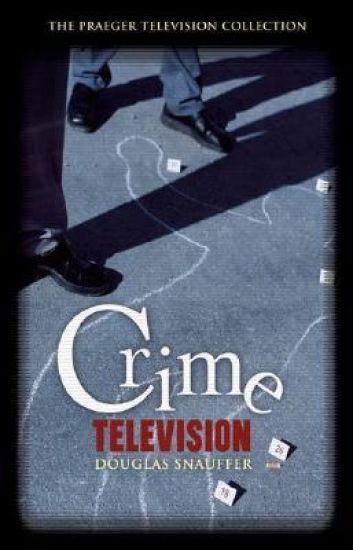
Crime Television

Crime Television

Douglas M. Snauffer

Praeger Publishers Inc
2006
sidottu
Crime dramas have been a staple of the television landscape since the advent of the medium. Along with comedies and soap operas, the police procedural made an easy transition from radio to TV, and starting with Dragnet in 1952, quickly became one of the most popular genres. Crime television has proven to be a fascinating reflection of changes and developments in the culture at large. In the '50s and early '60s, the square-jawed, just-the-facts detectives of The Untouchables and The FBI put police work in the best light possible. As the '60s gave way to the '70s, however, the depictions gained more subtle shading, and The Streets of San Francisco, The Rockford Files, and Baretta offered conflicted heroes in more complex worlds. This trend has of course continued in more recent decades, with Steven Bochco's dramas seeking a new realism through frank depictions of language and sexuality on television. In chronicling these developments and illustrating how the genre has reflected our ideas of crime and crime solving through the decades, author Douglas Snauffer provides essential reading for any fan. This work provides a comprehensive history of detective and police shows on television, with, among other elements, production histories of seminal programs, and interviews with some of the most important writers and producers of crime television. Besides the shows listed above, this volume will also discuss such programs as: Peter Gunn, The Mod Squad, Hawaii Five-O, Columbo, Starsky and Hutch, Charlie's Angels, Magnum P.I., Miami Vice, T.J. Hooker, Remington Steele, Cagney and Lacey, Murder, She Wrote, The Commish, Homicide: Life on the Street, Monk, and many more.
Prime Time Soap Operas

Prime Time Soap Operas

Douglas M. Snauffer

Praeger Publishers Inc
2009
sidottu
Prime time soaps are often revered long after their runs on television have ended, as Dallas, Twin Peaks, and Beverly Hills 90210 readily demonstrate. Due to their profound impact, it's easy to forget how recently the genre itself was born. Dallas premiered in 1978, and was originally intended to air solely as a five-part mini-series. Then, in 1981, producer Aaron Spelling stepped in and introduced his own ultra-glitzy entry Dynasty. Between these two mega-hits, the era of the nighttime soap was born. Soaps soon spun off into non-traditional avenues as well, in sitcoms like Filthy Rich and the supernatural drama Twin Peaks. Then, with the arrival of the more youth-oriented Fox Network, producers were able to hook an entirely new generation on programs such as Beverly Hills, 90210, Melrose Place, and Party of Five. Pay-cable channels have also stepped into the picture and now act as trendsetters with hits like Sex and the City, Six Feet Under, The Sopranos, and The L Word. Now, from the spiritually themed 7th Heaven to the naughty neighbors of ABC's Desperate Housewives, soaps dominate prime time. Prime Time Soaps covers all the major shows within the soap-opera genre, and also investigates all the ways that soaps have contributed to the development of more general television trends. Interviews with producers, actors, and other artistic collaborators also supplement this revealing and entertaining account. Even outside of their genre, these shows continue to influence current programming. Few series on TV today are purely episodic, instead containing on-going storylines involving the personal dilemmas of their characters. Another very recognizable contribution from soaps occurred on the evening of March 21, 1980, when Dallas finished out its third year with J.R. Ewing being shot by an unknown assailant, leaving fans to wait until the fall for the resolution. This was the beginning of the cliffhanger endings that are now implemented by just about every series on television. Prime Time Soaps covers all the major shows, and also investigates all the ways that soaps have contributed to the development of more general television trends. Interviews with producers, actors, and other artistic collaborators supplement this revealing and entertaining account.
Occupation and Class Consciousness in America

Occupation and Class Consciousness in America

Douglas M. Eichar

Praeger Publishers Inc
1989
sidottu
Eichar takes a new conceptual and empirical approach to the question of class consciousness. Drawing on recent work in industrial psychology, as well as organization and management theory, he assesses the impact of occupation on working class consciousness and political orientation in terms of the content of work experience. He uses job characteristic theory to clarify the relationship between occupation and class to test whether certain job characteristics influence the class consciousness and political orientation of workers.Eichar begins by establishing theoretical distinctions relating to occupation and class. He next looks at basic job characteristics and examines occupational self-direction and its relation to class consciousness. From a review of recent literature, the author develops a set of hypotheses relating to the impact of occupational self-direction and alienation on class consciousness. He tests these hypotheses empirically using job information from respondents and descriptions of job characteristics. Interpreting his findings, Eichar points out significant differences in the impact of alienation and occupational self-direction depending on the level of class consciousness. Offering solid empirical analysis and careful review of the new class theories, as well as more traditional views of the relationship between work and political attitudes, this study will be of interest in political sociology, Marxist studies, industrial psychology, management theory, and related fields.