Kirjojen hintavertailu. Mukana 11 342 296 kirjaa ja 12 kauppaa.

Kirjahaku

Etsi kirjoja tekijän nimen, kirjan nimen tai ISBN:n perusteella.

1000 tulosta hakusanalla Douglas Robinson

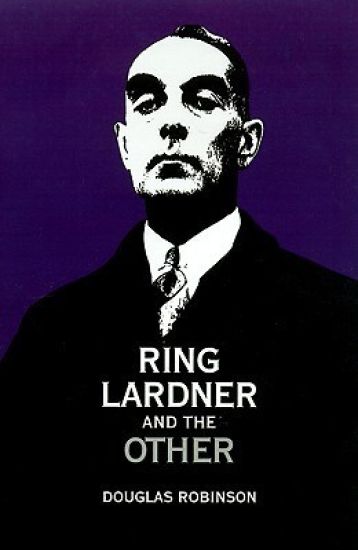
Ring Lardner and the Other

Ring Lardner and the Other

Douglas Robinson

Oxford University Press Inc
1993
sidottu
Ring Lardner was one of the most popular figures of the early twentieth century - newspaper columnist, sports writer, short story writer and personality - yet he has received little attention from scholars. Douglas Robinson's new book examines the writings of a critically neglected American writer; it also uses Lardner as the basis for a theoretical inquiry into language and literature, and a study of men and masculinity at the turn of the century.
The Dao of Translation

The Dao of Translation

Douglas Robinson

Routledge
2018
nidottu
The Dao of Translation sets up an East-West dialogue on the nature of language and translation, and specifically on the "unknown forces" that shape the act of translation. To that end it mobilizes two radically different readings of the Daodejing (formerly romanized as the Tao Te Ching): the traditional "mystical" reading according to which the Dao is a mysterious force that cannot be known, and a more recent reading put forward by Sinologists Roger T. Ames and David L. Hall, to the effect that the Dao is simply the way things happen. Key to Ames and Hall’s reading is that what makes the Dao seem both powerful and mysterious is that it channels habit into action—or what the author calls social ecologies, or icoses. The author puts Daoism (and ancient Confucianism) into dialogue with nineteenth-century Western theorists of the sign, Charles Sanders Peirce and Ferdinand de Saussure (and their followers), in order to develop an "icotic" understanding of the tensions between habit and surprise in the activity of translating. The Dao of Translation will interest linguists and translation scholars. This book will also engage researchers of ancient Chinese philosophy and provide Western scholars with a thought-provoking cross-examination of Eastern and Western perspectives.
Becoming a Translator

Becoming a Translator

Douglas Robinson

Routledge
2019
sidottu
Fusing theory with advice and information about the practicalities of translating, Becoming a Translator is the essential resource for novice and practicing translators. The book explains how the market works, helps translators learn how to translate faster and more accurately, as well as providing invaluable advice and tips about how to deal with potential problems, such as stress.The fourth edition has been revised and updated throughout, offering: a whole new chapter on multimedia translation, with a discussion of the move from "intersemiotic translation" to "audiovisual translation," "media access" and "accessibility studies" new sections on cognitive translation studies, translation technology, online translator communities, crowd-sourced translation, and online ethnography "tweetstorms" capturing the best advice from top industry professionals on Twitter student voices, especially from Greater ChinaIncluding suggestions for discussion, activities, and hints for the teaching of translation, and drawing on detailed advice from top translation professionals, the fourth edition of Becoming a Translator remains invaluable for students and teachers of Translation Studies, as well as those working in the field of translation.
Becoming a Translator

Becoming a Translator

Douglas Robinson

Routledge
2019
nidottu
Fusing theory with advice and information about the practicalities of translating, Becoming a Translator is the essential resource for novice and practicing translators. The book explains how the market works, helps translators learn how to translate faster and more accurately, as well as providing invaluable advice and tips about how to deal with potential problems, such as stress.The fourth edition has been revised and updated throughout, offering: a whole new chapter on multimedia translation, with a discussion of the move from "intersemiotic translation" to "audiovisual translation," "media access" and "accessibility studies" new sections on cognitive translation studies, translation technology, online translator communities, crowd-sourced translation, and online ethnography "tweetstorms" capturing the best advice from top industry professionals on Twitter student voices, especially from Greater ChinaIncluding suggestions for discussion, activities, and hints for the teaching of translation, and drawing on detailed advice from top translation professionals, the fourth edition of Becoming a Translator remains invaluable for students and teachers of Translation Studies, as well as those working in the field of translation.
Critical Translation Studies

Critical Translation Studies

Douglas Robinson

Routledge
2019
nidottu
This book offers an introduction for Translation Studies (TS) scholars to Critical Translation Studies (CTS), a cultural-studies approach to the study of translation spearheaded by Sakai Naoki and Lydia H. Liu, with an implicit focus on translation as a social practice shaped by power relations in society. The central claim in CTS is that translators help condition what TS scholars take to be the primal scene of translation: two languages, two language communities, with the translator as mediator. According to Sakai, intralingual translation is primal: we are all foreigners to each other, making every address to another "heterolingual", thus a form of translation; and it is the order that these acts of translation bring to communication that begins to generate the "two separate languages" scenario. CTS is dedicated to the historicization of the social relations that create that scenario.In three sets of "Critical Theses on Translation," the book outlines and explains (and partly critiques) the CTS approach; in five interspersed chapters, the book delves more deeply into CTS, with an eye to making it do work that will be useful to TS scholars.
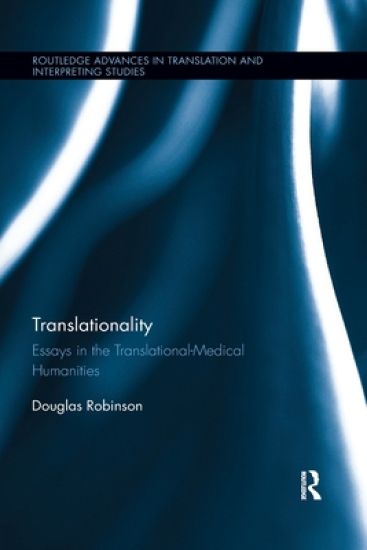
Translationality

Translationality

Douglas Robinson

Routledge
2019
nidottu
This book defines "translationality" by weaving a number of sub- and interdisciplinary interests through the medical humanities: medicine in literature, the translational history of medical literature, a medical (neuroscience) approach to literary translation and translational hermeneutics, and a humanities (phenomenological/performative) approach to translational medicine. It consists of three long essays: the first on the traditional medicine-in-literature side of the medical humanities, with a close look at a recent novel built around the Capgras delusion and other neurological misidentification disorders; the second beginning with the traditional history-of-medicine side of the medical humanities, but segueing into literary history, translation history, and translation theory; the third on the social neuroscience of translational hermeneutics. The conclusion links the discussion up with a humanistic (performative/phenomenological) take on translational medicine.
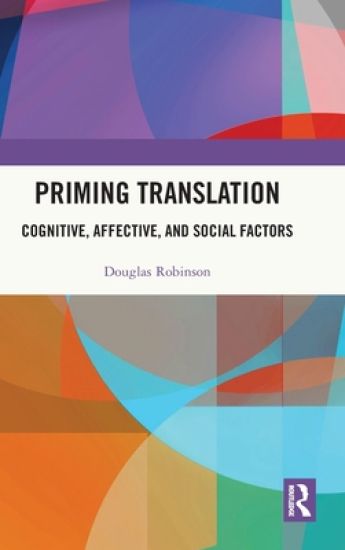
Priming Translation

Priming Translation

Douglas Robinson

TAYLOR FRANCIS LTD
2022
sidottu
This innovative volume builds on Michael S. Gazzaniga’s Interpreter Theory toward radically expanding the theoretical and methodological scope of translational priming research.Gazzaniga’s Interpreter Theory, based on empirical studies carried out with split-brain patients, argues for the Left-Brain Interpreter (LBI), a module in the brain’s left hemisphere that seeks to make sense of their world based on available evidence—and, where no evidence is available, primed by past memories, confabulates coherence. The volume unpacks this idea in translation research to test whether translators are primed to confabulate by the LBI in their own work. Robinson investigates existing empirical research to test hypotheses on the translational links between the LBI and cognitive priming, the Right-Brain Interpreter and affective priming, and the Collective Full-Brain Interpreter and social priming. Taken together, the book seeks to open translational priming studies up to the full range of cognitive, affective, and social primes and to prime cognitive translation researchers to implement this broader dynamic in future research.This book will be of interest to scholars in translation and interpreting studies, especially those working in cognitive translation and interpreting studies.
Priming Translation

Priming Translation

Douglas Robinson

TAYLOR FRANCIS LTD
2024
nidottu
This innovative volume builds on Michael S. Gazzaniga’s Interpreter Theory toward radically expanding the theoretical and methodological scope of translational priming research.Gazzaniga’s Interpreter Theory, based on empirical studies carried out with split-brain patients, argues for the Left-Brain Interpreter (LBI), a module in the brain’s left hemisphere that seeks to make sense of their world based on available evidence—and, where no evidence is available, primed by past memories, confabulates coherence. The volume unpacks this idea in translation research to test whether translators are primed to confabulate by the LBI in their own work. Robinson investigates existing empirical research to test hypotheses on the translational links between the LBI and cognitive priming, the Right-Brain Interpreter and affective priming, and the Collective Full-Brain Interpreter and social priming. Taken together, the book seeks to open translational priming studies up to the full range of cognitive, affective, and social primes and to prime cognitive translation researchers to implement this broader dynamic in future research.This book will be of interest to scholars in translation and interpreting studies, especially those working in cognitive translation and interpreting studies.
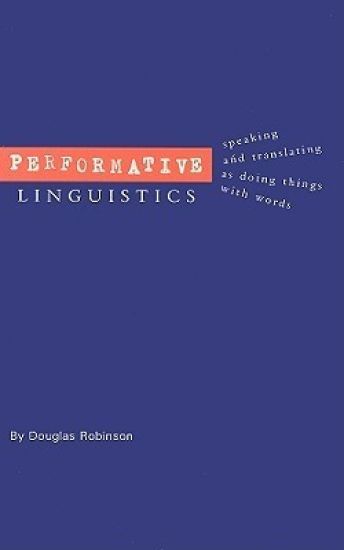
Performative Linguistics

Performative Linguistics

Douglas Robinson

Routledge
2002
sidottu
In this book, Douglas Robinson introduces a new distinction between 'constative' and 'performative' linguistics, arguing that Austin's distinction can be used to understand linguistic methodologies. Constative linguistics, Robinson suggests, includes methodologies aimed at 'freezing' language as an abstract sign system, while performative linguistics explores how language is used or 'performed' in those speech situations. Robinson then tests his hypothesis on the act of translation.Drawing on a range of language scholars and theorists, Performative Linguistics consolidates the many disparate action-approaches to language into a new paradigm for the study of language.
Introducing Performative Pragmatics

Introducing Performative Pragmatics

Douglas Robinson

Routledge
2005
nidottu
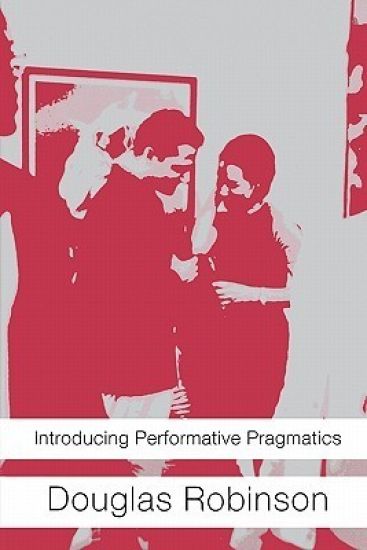
This user-friendly introduction to a new ‘performative’ methodology in linguistic pragmatics breaks away from the traditional approach which understands language as a machine. Drawing on a wide spectrum of research and theory from the past thirty years in particular, Douglas Robinson presents a combination of ‘action-oriented approaches’ from sources such as J.L. Austin, H. Paul Grice, Harold Garfinkel and Erving Goffman.Paying particular attention to language as drama, the group regulation of language use, individual resistance to these regulatory pressures and nonverbal communication, the work also explains groundbreaking concepts and analytical models.With a key points section, discussion questions and exercises in every chapter, this book will be an invaluable resource to students and teachers on a variety of courses, including linguistic pragmatics, sociolinguistics and interpersonal communication.
Introducing Performative Pragmatics

Introducing Performative Pragmatics

Douglas Robinson

Routledge
2005
sidottu
This user-friendly introduction to a new ‘performative’ methodology in linguistic pragmatics breaks away from the traditional approach which understands language as a machine. Drawing on a wide spectrum of research and theory from the past thirty years in particular, Douglas Robinson presents a combination of ‘action-oriented approaches’ from sources such as J.L. Austin, H. Paul Grice, Harold Garfinkel and Erving Goffman.Paying particular attention to language as drama, the group regulation of language use, individual resistance to these regulatory pressures and nonverbal communication, the work also explains groundbreaking concepts and analytical models.With a key points section, discussion questions and exercises in every chapter, this book will be an invaluable resource to students and teachers on a variety of courses, including linguistic pragmatics, sociolinguistics and interpersonal communication.
Performative Linguistics

Performative Linguistics

Douglas Robinson

Routledge
2002
nidottu
In this book, Douglas Robinson introduces a new distinction between 'constative' and 'performative' linguistics, arguing that Austin's distinction can be used to understand linguistic methodologies. Constative linguistics, Robinson suggests, includes methodologies aimed at 'freezing' language as an abstract sign system, while performative linguistics explores how language is used or 'performed' in those speech situations. Robinson then tests his hypothesis on the act of translation.Drawing on a range of language scholars and theorists, Performative Linguistics consolidates the many disparate action-approaches to language into a new paradigm for the study of language.
Estrangement and the Somatics of Literature

Estrangement and the Somatics of Literature

Douglas Robinson

Johns Hopkins University Press
2008
sidottu
Drawing together the estrangement theories of Viktor Shklovsky and Bertolt Brecht with Leo Tolstoy's theory of infection, Douglas Robinson studies the ways in which shared evaluative affect regulates both literary familiarity-convention and tradition-and modern strategies of alienation, depersonalization, and malaise. This book begins with two assumptions, both taken from Tolstoy's late aesthetic treatise What Is Art? (1898): that there is a malaise in culture, and that literature's power to "infect" readers with the moral values of the author is a possible cure for this malaise. Exploring these ideas of estrangement within the contexts of earlier, contemporary, and later critical theory, Robinson argues that Shklovsky and Brecht follow Tolstoy in their efforts to fight depersonalization by imbuing readers with the transformative guidance of collectivized feeling. Robinson's somatic approach to literature offers a powerful alternative to depersonalizing structuralist and poststructuralist theorization without simply retreating into conservative rejection and reaction. Both a comparative study of Russian and German literary-theoretical history and an insightful examination of the somatics of literature, this groundbreaking work provides a deeper understanding of how literature affects the reader and offers a new perspective on present-day problems in poststructuralist approaches to the human condition.
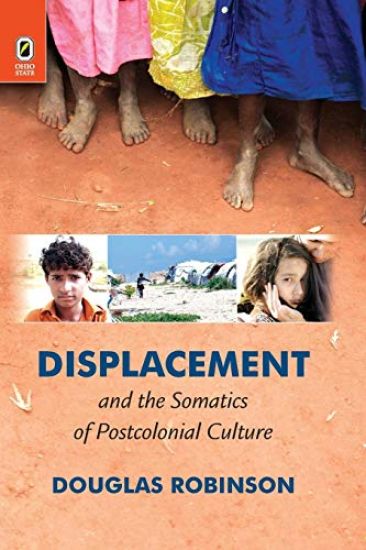
Displacement and the Somatics of Postcolonial Culture

Displacement and the Somatics of Postcolonial Culture

Douglas Robinson

Ohio State University Press
2017
pokkari
Displacement and the Somatics of Postcolonial Culture is Douglas Robinson s study of postcolonial affect specifically, of the breakdown of the normative (regulatory) circulation of affect in the refugee experience and the colonial encounter, the restructuring of that regulatory circulation in colonization, and the persistence of that restructuring in decolonization and intergenerational trauma. Robinson defines somatics as a cultural construction of reality and identity through the regulatory circulation of evaluative affect.This book is divided into three essays covering the refugee experience, colonization and decolonization, and intergenerational trauma. Each essay contains a review of empirical studies of its main topic, a study of literary representations of that topic, and a study of postcolonial theoretical spins. The literary representations in the refugee essay are a novel and short story by the Haitian writer Edwidge Danticat; in the colonization essay a short film by Javier Fesser and a novella by Mahasweta Devi (translated by Gayatri Chakravorty Spivak); and in the intergenerational trauma essay novels by James Welch and Toni Morrison and a short story by Percival Everett. The first essay s theoretical spins include Deleuze and Guattari on nomad thought and Iain Chambers on migrancy; the second s, Nietzsche s Genealogy of Morals and theories of postcolonial affect in Bhabha and Spivak; the third s, work on historical trauma by Cathy Caruth and Dominic LaCapra."
Translation and Taboo

Translation and Taboo

Douglas Robinson

Northern Illinois University Press
1996
pokkari
From the time of the first written sacred texts in the West, taboo has proscribed the act and art of translation. So argues Robinson, who with candor verging on iconoclasm explores the age-old prohibition of translation of sacred texts and shows how similar taboos influence intercultural exchange even today. Probing concepts about language, culture, and geopolitical boundaries-both archaic and contemporary-he examines the philosophy and theory of translation and intercultural exchange. In the process, he challenges presuppositions about what cultures hold sacred.
No Less a Man

No Less a Man

Douglas Robinson

Bowling Green University Popular Press,US
1994
nidottu
Robert B. Parker's detective Spenser. John Rambo, created by David Morrell and played on the silver screen by Sylvester Stallone. Bruce Springsteen. All three, Douglas Robinson claims, are central figures in a new form of popular men's art: art that explores what it means to be a man in a feminist age. Robinson develops a three-stage transformation myth out of Joseph Campbell's studies of hero mythology: the road of trials, on which repressive -normality- is tested and found lacking (Spenser); a symbolic death in which defensive rational ego-structures are surrendered (the Rambo of First Blood); and regeneration and return, the gradual rebirth of masculinity in a redemptive transformation (Springsteen).
A Zombie Theory of Translation

A Zombie Theory of Translation

Douglas Robinson

Cambridge University Press
2026
sidottu
In 'Des Tours de Babel' Jacques Derrida brilliantly deconstructs Benjamin's 1923 essay, but in 'What is a 'Relevant' Translation?' his wording suggestively hints at the possibility that Benjamin sees the source text dying and returning to life as the translation, in which only the body (not the mind, not the spirit, not the sense) of the source text survives. Smash these two brilliant theorists' ideas together and arguably what emerges is a zombie theory of translation: zombies, after all, are mindless embodied revenants. If we shift Derrida's titular question slightly, and ask “What is a 'Revenant' Translation?”, one radical answer would be that it is a zombie translation. To that end this Element not only theorizes the six million Holocaust Shylock-zombies but explores that theme narratively, in a 5,000-word short story interwoven with the 20,000-word article.
A Zombie Theory of Translation

A Zombie Theory of Translation

Douglas Robinson

Cambridge University Press
2026
nidottu
In 'Des Tours de Babel' Jacques Derrida brilliantly deconstructs Benjamin's 1923 essay, but in 'What is a 'Relevant' Translation?' his wording suggestively hints at the possibility that Benjamin sees the source text dying and returning to life as the translation, in which only the body (not the mind, not the spirit, not the sense) of the source text survives. Smash these two brilliant theorists' ideas together and arguably what emerges is a zombie theory of translation: zombies, after all, are mindless embodied revenants. If we shift Derrida's titular question slightly, and ask “What is a 'Revenant' Translation?”, one radical answer would be that it is a zombie translation. To that end this Element not only theorizes the six million Holocaust Shylock-zombies but explores that theme narratively, in a 5,000-word short story interwoven with the 20,000-word article.
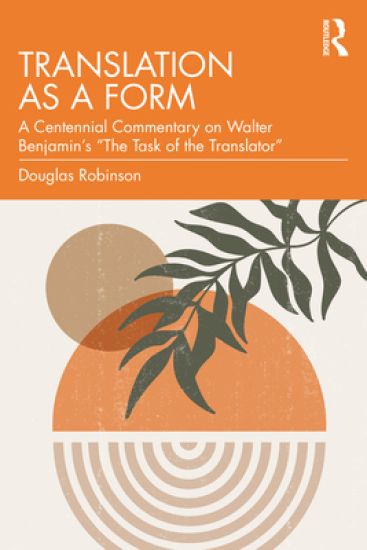
Translation as a Form

Translation as a Form

Douglas Robinson

TAYLOR FRANCIS LTD
2022
nidottu
This is a book-length commentary on Walter Benjamin’s 1923 essay "Die Aufgabe des Übersetzers," best known in English under the title "The Task of the Translator." Benjamin’s essay is at once an immensely attractive work for top-flight theorists of translation and comparative literature and a frustratingly cryptic work that cries out for commentary. Almost every one of the claims he makes in it seems wildly counterintuitive, because he articulates none of the background support that would help readers place it in larger literary-historical contexts: Jewish mystical traditions from Philo Judaeus’s Logos-based Neoplatonism to thirteenth-century Lurianic Kabbalah; Romantic and post-Romantic esotericisms from Novalis and the Schlegels to Hölderlin and Goethe; modernist avant-garde foreclosures on "the public" and generally the communicative contexts of literature.The book is divided into 78 passages, from one to a few sentences in length. Each of the passages becomes its own commentarial unit, consisting of a Benjaminian interlinear box, a paraphrase, a commentary, and a list of other commentators who have engaged the specific passage in question. Because the passages cover the entire text of the essay in sequence, reading straight through the book provides the reader with an augmented experience of reading the essay.Robinson’s commentary is key reading for scholars and postgraduate students of translation, comparative literature, and critical theory.
Translation as a Form

Translation as a Form

Douglas Robinson

TAYLOR FRANCIS LTD
2022
sidottu
This is a book-length commentary on Walter Benjamin’s 1923 essay "Die Aufgabe des Übersetzers," best known in English under the title "The Task of the Translator." Benjamin’s essay is at once an immensely attractive work for top-flight theorists of translation and comparative literature and a frustratingly cryptic work that cries out for commentary. Almost every one of the claims he makes in it seems wildly counterintuitive, because he articulates none of the background support that would help readers place it in larger literary-historical contexts: Jewish mystical traditions from Philo Judaeus’s Logos-based Neoplatonism to thirteenth-century Lurianic Kabbalah; Romantic and post-Romantic esotericisms from Novalis and the Schlegels to Hölderlin and Goethe; modernist avant-garde foreclosures on "the public" and generally the communicative contexts of literature.The book is divided into 78 passages, from one to a few sentences in length. Each of the passages becomes its own commentarial unit, consisting of a Benjaminian interlinear box, a paraphrase, a commentary, and a list of other commentators who have engaged the specific passage in question. Because the passages cover the entire text of the essay in sequence, reading straight through the book provides the reader with an augmented experience of reading the essay.Robinson’s commentary is key reading for scholars and postgraduate students of translation, comparative literature, and critical theory.