The nervous system is a complex, sophisticated system that regulates and coordinates body activities. It is made up of two major divisions: the central nervous system consisting of the brain and spinal cord and the peripheral nervous system. This consists of all other neural elements, including the peripheral nerves and the autonomic nerves. Peripheral nerves are the essential connections between the brain and spinal cord and the body. Without nerves there is no movement or sensation. Our Wired Nerves: The Human Nerve Connectome, reviews the essential anatomy and physiology of the peripheral nerve. It introduces the reader to what neuropathies are, how pain arises from damaged nerves and how nerves might be regenerated, including new and exciting ideas over how to coax their regrowth. Written by Dr. Douglas Zochodne leading expert in the field, and first book to focus on the Peripheral nerves it will surely be an essential reference for researchers and clinicians alike.
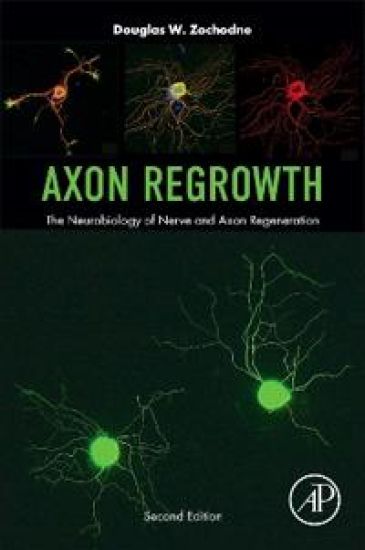
Axon Regrowth: The Neurobiology of Nerve and Axon Regeneration, originally published in 2008 and now fully revised—with a refocus on the central nervous system and axon regeneration—emphasizes the commonalities and differences with peripheral nerve regeneration. The book reviews the substantial problems of axon and nerve regeneration, including molecular mechanisms and the approaches that can be used to experimentally address new avenues. Both researchers and clinicians alike will consider this a valuable resource.
Before Antonín Dvorák's New World Symphony became one of the most universally beloved pieces of classical music, it exposed the deep wounds of racism at the dawn of the Jim Crow era while serving as a flashpoint in broader debates about the American ideals of freedom and equality. Drawing from a diverse array of historical voices, author Douglas W. Shadle's richly textured account of the symphony's 1893 premiere shows that even the classical concert hall could not remain insulated from the country's racial politics.
Before Antonín Dvorák's New World Symphony became one of the most universally beloved pieces of classical music, it exposed the deep wounds of racism at the dawn of the Jim Crow era while serving as a flashpoint in broader debates about the American ideals of freedom and equality. Drawing from a diverse array of historical voices, author Douglas W. Shadle's richly textured account of the symphony's 1893 premiere shows that even the classical concert hall could not remain insulated from the country's racial politics.
We ought to opt for the best-that is, we ought to choose the option that is best in terms of whatever ultimately matters. So, if maximizing happiness is what ultimately matters, then we ought to perform the option that results in the most happiness. And if, instead, abiding by the Golden Rule is what ultimately matters, then we ought to perform the option that best abides by this rule. However, even if we know what ultimately matters, this is not always sufficient for determining which option we ought to perform. There are other questions that we need to consider as well. Which events are options for us? How do we rank our options-in terms of their own goodness or in terms of the goodness of the best options that entail them? How exactly does that which ultimately matters determine which options we ought to perform? In Opting for the Best, Douglas W. Portmore focuses on these three questions, which he argues can best be answered by putting aside any specific determination of what ultimately matters. He argues that tackling these three questions is crucial to solving many of the puzzles concerning what we ought to do, including those involving supererogation, indeterminate outcomes, overdetermined outcomes, predictable future misbehavior, and good acts that entail bad acts, among others. Engaging with arguments in areas as wide-ranging as action theory and deontic logic, the solutions that Portmore offers systematize our thinking about some of the most complex issues in practical philosophy.
Trichotillomania (TTM) is a complex disorder that is difficult to treat as few effective therapeutic options exist. Behaviour therapy has the greatest empirical support, but the number of mental health providers familiar with TTM and its treatment is quite small. This manual was written as a tool for therapists to become familiar with an effective treatment for TTM. The treatment approach described in this guide blends traditional behaviour with therapy elements of habit reversal training and stimulus control techniques with the more contemporary behavioural elements of Acceptance and Commitment Therapy (ACT). In the first phase of the program, clients are taught skills for stopping and preventing their unconscious pulling episodes. In the second phase, clients are introduced to ACT. Unlike traditional interventions that aim to change type or frequency of pulling-related cognitions in the hopes of reducing urges to pull hair, this innovative program uses strategies to change the function of these cognitions. Clients are taught to see urges for what they really are and to accept their pulling-related throughts, feelings, and urges wihtout fighting against them. This is accomplished through discussions about the function of language and defusion exercises that show the client how to respond to thoughts about pulling less literally. Over the course of 10 weeks, clients learn to be aware of their pulling and warning signals, use self-management strategies for stopping and preventing pulling, stop fighting against their pulling-related urges and thoughts, and work towards increasing their quality of life. Self-monitoring and homework assignments keep clients motivated and engaged throughout. Designed to be used with older adolescents and adults, this innovative intervention has proven efficacy and is sure to be a powerful tool for the clinician who treats TTM.
Trichotillomania (TTM) is a complex disorder which involves at least two levels of psychological functioning. At one level, it is a habitual behaviour. This type of TTM involves 'automatic pulling' and typically occurs without a person's awareness. The second type of TTM is more closely related to emotional functioning or regulation and is known as 'focused pulling'. Generally, it is believed that most individuals with TTM exhibit both types of pulling. THe most common treatment for TTM is Habit Reversal Therapy (HRT), and its main focus is the habitual, or 'automatic' aspect of the disorder. In this new treatment program, Drs Wood and Twohig have designed a treatment which combines the basic aspects of HRT with Acceptance and Commitment Therapy (ACT) to address the 'focused' aspects of the pulling. ACT seeks to alter the thoughts and feelings surrounding the pulling, and removes the compulsive aspect of the pulling urge, while HRT focuses on increasing the awareness of the pulling and teaches the person to utilise a competing behaviour instead of pulling. Together, these two techniques work to decrease all incidents of pulling, and help the client understand and come to terms with the emotional triggers of their disorder. In a clinical setting, this combined treatment was proven very effective, with high maintenance rates over a three-month period. This treatment consists of 10 60-minute sessions spread out over six weeks, with the final two sessions taking place every two weeks to ease the client out of the therapeutic environment and intrduce relapse prevention techniques. This corresponding workbook will contain monitoring forms to help the client maintain an awareness of their pulling, as well as self-assessment tests and other homework exercises.
In 2002, the Tourette Syndrome Association formed the TS Behavioral Sciences Consortium (BSC). The charge of the BSC was to develop and test nonpharmacological treatment options for individuals, both children and adults with Tourette Syndrome. This manual is the result of their work, and represents the most scientifically effective behavioral treatment for Tourette Syndrome available today. The treatment program uses Habit Reversal Training (HRT) for children and adults with chronic tic disorder. Individual treatment is based at its core on awareness training, the development of a specific competing response for each tic, and the use of functionally-based strategies for the elimination of tic-exacerbating antecedent and consequent variables. In addition, individual treatment includes techniques designed to enhance patient compliance, including social support and an inconvenience review, as well as scheduled time for the therapist and client to discuss areas of functioning that individuals with TS may find difficult, such as social/familial difficulties and disruptive/anger/rage behavior. Each week, clients are given homework assignments, to be done 4-5 times per week, consisting of 20 to 30 minutes of awareness and competing response training to tics addressed in session. The client will be encouraged to keep tally marks to monitor tic behavior. Home-based monitoring and competing response training are reviewed at each session. All homework assignments will be available in the companion workbook.
In 2002, the Tourette Syndrome Association formed the TS Behavioral Sciences Consortium (BSC). The charge of the BSC was to develop and test nonpharmacological treatment options for individuals, both children and adults with Tourette Syndrome. This manual is the result of their work, and represents the most scientifically effective behavioral treatment for Tourette Syndrome available today. The treatment program uses Habit Reversal Training (HRT) for children and adults with chronic tic disorder. Individual treatment is based at its core on awareness training, the development of a specific competing response for each tic, and the use of functionally-based strategies for the elimination of tic-exacerbating antecedent and consequent variables. In addition, individual treatment includes techniques designed to enhance patient compliance, including social support and an inconvenience review, as well as scheduled time for the therapist and client to discuss areas of functioning that individuals with TS may find difficult, such as social/familial difficulties and disruptive/anger/rage behavior. Each week, clients are given homework assignments, to be done 4-5 times per week, consisting of 20 to 30 minutes of awareness and competing response training to tics addressed in session. The client will be encouraged to keep tally marks to monitor tic behavior. Home-based monitoring and competing response training are reviewed at each session. All homework assignments will be available in the companion workbook.
In 2002, the Tourette Syndrome Association formed the TS Behavioral Sciences Consortium (BSC). The charge of the BSC was to develop and test nonpharmacological treatment options for individuals, both children and adults with Tourette Syndrome. This manual is the result of their work, and represents the most scientifically effective behavioral treatment for Tourette Syndrome available today. The treatment program uses Habit Reversal Training (HRT) for children and adults with chronic tic disorder. Individual treatment is based at its core on awareness training, the development of a specific competing response for each tic, and the use of functionally-based strategies for the elimination of tic-exacerbating antecedent and consequent variables. In addition, individual treatment includes techniques designed to enhance patient compliance, including social support and an inconvenience review, as well as scheduled time for the therapist and client to discuss areas of functioning that individuals with TS may find difficult, such as social/familial difficulties and disruptive anger/rage behavior. Each week, clients are given homework assignments, to be done 4-5 times per week, consisting of 20 to 30 minutes of awareness and competing response training to tics addressed in session. The client will be encouraged to keep tally marks to monitor tic behavior. Home-based monitoring and competing response training are reviewed at each session. All homework assignments will be available in this companion workbook.
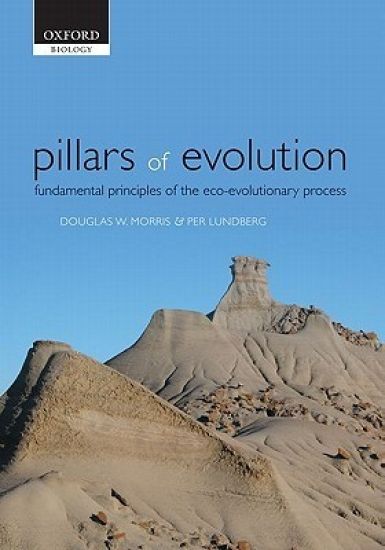
Pillars of Evolution provides a fresh and provocative perspective on adaptive evolution. Readers new to the study of evolution will find a refreshing new insight that establishes evolutionary biology as a rigorous and predictive science, whilst practicing biologists will discover a provocative book that challenges traditional approaches. The book begins by leading readers through the mechanics of heredity, reproduction, movement, survival, and development. With that framework in place, it then explores the numerous ways that traits emerge from the interactions between genetics, development, and the environment. The key message is that adaptive changes in traits (and their underlying allelic frequencies) evolve through the traits' functions and their connection with fitness. The complex mappings from genes-to-traits-to-fitness are characterized in the structure of evolution. A single "structure matrix" describes why individuals vary in the values of adaptive traits, their ability to perform the function of those traits, and in the fitness they accrue. Fitness depends on how organisms interact with and perceive their environment in time and space. These relationships are made explicit in spatial, temporal, and organizational scale that also sets the stage for the crucially important role that ecology always plays in evolution. The ecological hallmarks of density- and frequency-dependent interactions allow the authors to explore new and exciting insights into evolution's dynamics. The theories and principles are then brought together in a final synthesis on adaptation. The book's unique approach unites genetic, development, and environmental influences into a single comprehensive treatment of the eco-evolutionary process.
Pillars of Evolution provides a fresh and provocative perspective on adaptive evolution. Readers new to the study of evolution will find a refreshing new insight that establishes evolutionary biology as a rigorous and predictive science, whilst practicing biologists will discover a provocative book that challenges traditional approaches. The book begins by leading readers through the mechanics of heredity, reproduction, movement, survival, and development. With that framework in place, it then explores the numerous ways that traits emerge from the interactions between genetics, development, and the environment. The key message is that adaptive changes in traits (and their underlying allelic frequencies) evolve through the traits' functions and their connection with fitness. The complex mappings from genes-to-traits-to-fitness are characterized in the structure of evolution. A single "structure matrix" describes why individuals vary in the values of adaptive traits, their ability to perform the function of those traits, and in the fitness they accrue. Fitness depends on how organisms interact with and perceive their environment in time and space. These relationships are made explicit in spatial, temporal, and organizational scale that also sets the stage for the crucially important role that ecology always plays in evolution. The ecological hallmarks of density- and frequency-dependent interactions allow the authors to explore new and exciting insights into evolution's dynamics. The theories and principles are then brought together in a final synthesis on adaptation. The book's unique approach unites genetic, development, and environmental influences into a single comprehensive treatment of the eco-evolutionary process.
Since the publication of the first edition in 2006, financial regulation around the world has changed dramatically as a result of the 2008 global financial crisis. As one of the world's leading financial centres, international regulatory reforms have had a significant impact on the legal and regulatory system in Hong Kong. This new second edition provides a comprehensive and authoritative single-volume guide to the main areas of financial regulation and financial law in Hong Kong. Given the massive changes in financial regulation globally and in Hong Kong, the second edition has been substantially rewritten and revised to address changes in markets and their legal and regulatory frameworks, as well as the implications of these changes to future market development. The book is in five parts: The first part considers the evolution of Hong Kong's role as a financial centre and the development of its financial regulatory structure, one that is perhaps unusually complex given the size of the jurisdiction. The second part discusses the regulation of the banking, securities, insurance sectors, including the regulatory powers of the Hong Kong Monetary Authority (HKMA), the Securities and Futures Commission of Hong Kong (SFC), the Office of the Commissioner of Insurance (OCI), and the forthcoming Independent Insurance Authority (IIA). The third part covers regulation of financial products and services, including securities offerings and listings, investment products and asset management, financial derivatives, and takeovers and mergers. The fourth part addresses market conduct and misconduct, including corporate governance, market abuse and financial crime. Finally, the fifth part examines the international context, focusing on the relationship between Hong Kong's financial markets and regulation and mainland China as well as key issues for Hong Kong's role as a major global financial centre.
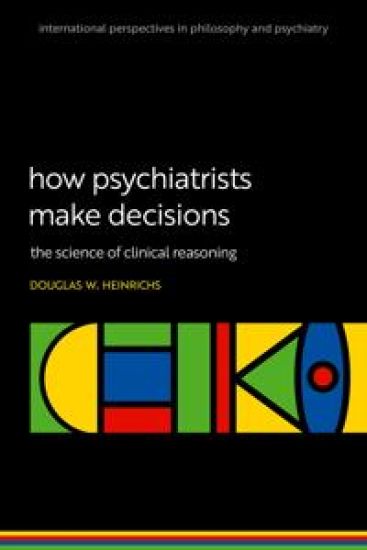
In an age of 'scientific psychiatry' and evidenced-based medicine, the judgement of the psychiatric clinician in treating an individual patient has been devalued as the 'art' of medicine as opposed to science, with reduced evidentiary value. The clinician is asked to apply the results of formal research studies of groups of patients, the patient reduced to a token of a type, the latter usually defined by diagnosis. Yet the limits of formal research to guide the treatment of the unique individual requires clinical judgments where there is little formal guidance while the clinician's deliberations are devalued as necessary but of questionable validity. This dilemma has been encouraged by the tacit nature of the way clinicians reach decisions. In this book, Heinrichs makes explicit the underlying methodology of the clinical reasoning of experienced psychiatrists. Starting with a detailed phenomenological examination of specific cases, he argues that this methodology involves constructing models of each individual patient composed of patterns of propensities and their interaction (POP models). From this, rational interventions can be hypothesized and predictions generated and tested. The nature and characteristics of this modelling procedure is described in detail. By making the model explicit, clinicians can more critically assess their work. Such models can also play a valuable role in educating clinical trainees. This is discussed using recent work of cognitive scientists studying how expertise is developed across disciplines where considerable ambiguity and complexity exist. From this, specific recommendations follow for applying POP models in training settings, to help turn novices into experts. Finally, the book challenges the devaluing of clinical judgment about individual patients by examining contemporary developments in the philosophy of science. Problems with the hypothetico-deductive view of science led to a naturalistic exploration of science. Model construction to represent concrete pieces of reality to solve concrete problems has emerged as the fundamental process in science as practiced across all scientific disciplines. POP modelling simply constitutes this process in psychiatry. Hence, when properly understood and rigorous applied, clinical reasoning is a fully scientific process, and merits high epistemological credibility.
This therapist guide addresses the treatment of Tourette syndrome (TS) in children and adults. The goal of this 11-session program is to teach the patient effective tic management skills rather than to cure the tic disorder. Complete with step-by-step instructions for running sessions, as well as lists of materials needed, session outlines, and copies of forms necessary for treatment, this therapist guide provides all the information needed to successfully treat tic disorders. Now into its second edition, this well-established treatment protocol is now recognized as a first-line treatment for tics in individuals across the world and outlines the protocol for the Comprehensive Behavioral Intervention for Tics (CBIT). Written by the treatment developers, this book provides not only the technical knowledge of how the treatment can be effectively implemented, but also includes the collected wisdom from nearly 20 years of treating patients with the protocol. This updated protocol is a must have for anyone treating individuals with tic disorders. Also available is an updated and revised corresponding workbook for parents and their children, as well as the original workbook designed specifically for adolescent and adult clients.
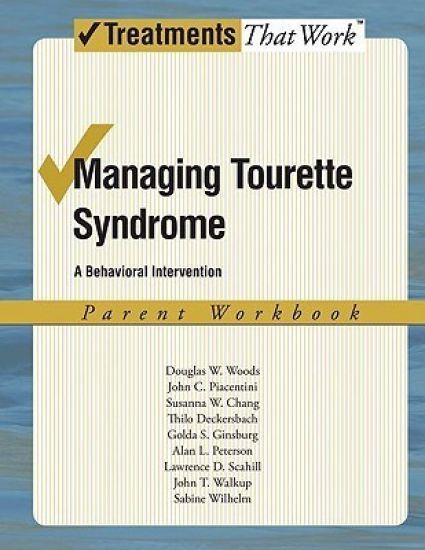
This Parent Workbook addresses the treatment of Tourette syndrome (TS) in children and adults. The goal of this 11-session program is to teach the patient effective tic management skills rather than to cure the tic disorder. Children, alongside parents, will be taught how to become aware of tics, how to substitute other behaviors to manage tics when they start to appear, and how to avoid factors that may make tics worse, as well as relaxation techniques to reduce stress and relapse prevention strategies. The workbook provides user-friendly forms for tracking symptoms and monitoring tic severity. Now into its second edition, this well-established treatment protocol is recognized as a first-line treatment for tics in individuals across the world and outlines the protocol for the Comprehensive Behavioral Intervention for Tics (CBIT). Written by the treatment developers, this book provides not only the technical knowledge of how the treatment can be effectively implemented, but also includes the collected wisdom from nearly 20 years of treating patients with the protocol. This updated protocol is a must have for anyone trying to manage tic disorder. Also available is an updated and revised corresponding therapist guide, as well as the original workbook designed specifically for adolescent and adult clients.
Commonsense Consequentialism is a book about morality, rationality, and the interconnections between the two. In it, Douglas W. Portmore defends a version of consequentialism that both comports with our commonsense moral intuitions and shares with other consequentialist theories the same compelling teleological conception of practical reasons. Broadly construed, consequentialism is the view that an act's deontic status is determined by how its outcome ranks relative to those of the available alternatives on some evaluative ranking. Portmore argues that outcomes should be ranked, not according to their impersonal value, but according to how much reason the relevant agent has to desire that each outcome obtains and that, when outcomes are ranked in this way, we arrive at a version of consequentialism that can better account for our commonsense moral intuitions than even many forms of deontology can. What's more, Portmore argues that we should accept this version of consequentialism, because we should accept both that an agent can be morally required to do only what she has most reason to do and that what she has most reason to do is to perform the act that would produce the outcome that she has most reason to want to obtain. Although the primary aim of the book is to defend a particular moral theory (viz., commonsense consequentialism), Portmore defends this theory as part of a coherent whole concerning our commonsense views about the nature and substance of both morality and rationality. Thus, it will be of interest not only to those working on consequentialism and other areas of normative ethics, but also to those working in metaethics. Beyond offering an account of morality, Portmore offers accounts of practical reasons, practical rationality, and the objective/subjective obligation distinction.
Commonsense Consequentialism is a book about morality, rationality, and the interconnections between the two. In it, Douglas W. Portmore defends a version of consequentialism that both comports with our commonsense moral intuitions and shares with other consequentialist theories the same compelling teleological conception of practical reasons. Broadly construed, consequentialism is the view that an act's deontic status is determined by how its outcome ranks relative to those of the available alternatives on some evaluative ranking. Portmore argues that outcomes should be ranked, not according to their impersonal value, but according to how much reason the relevant agent has to desire that each outcome obtains and that, when outcomes are ranked in this way, we arrive at a version of consequentialism that can better account for our commonsense moral intuitions than even many forms of deontology can. What's more, Portmore argues that we should accept this version of consequentialism, because we should accept both that an agent can be morally required to do only what she has most reason to do and that what she has most reason to do is to perform the act that would produce the outcome that she has most reason to want to obtain. Although the primary aim of the book is to defend a particular moral theory (viz., commonsense consequentialism), Portmore defends this theory as part of a coherent whole concerning our commonsense views about the nature and substance of both morality and rationality. Thus, it will be of interest not only to those working on consequentialism and other areas of normative ethics, but also to those working in metaethics. Beyond offering an account of morality, Portmore offers accounts of practical reasons, practical rationality, and the objective/subjective obligation distinction.
Few events in the history of humanity rival the Industrial Revolution. Following its onset in eighteenth-century Britain, sweeping changes in agriculture, manufacturing, transportation, and technology began to gain unstoppable momentum throughout Europe, North America, and eventually much of the world, with profound effects on socioeconomic and cultural conditions. In "The Institutional Revolution", Douglas W. Allen offers a carefully researched and thought-provoking account of how dramatic changes in institutions - the formal and informal rules that govern a society-resulted from the unprecedented economic development that took place during the Industrial Revolution. Fundamental to these changes were the many significant improvements in the ability to measure performance - whether of government officials, laborers, or naval officers - thereby reducing the amount of variance in daily affairs. Offering fascinating insight into how institutions address the cost of monitoring others, Allen provides readers along the way with an understanding of the critical roles of seemingly bizarre institutions, from dueling to the purchase of one's rank in the British Army. Engagingly written, "The Institutional Revolution" traces the dramatic shift from premodern institutions based on patronage, purchase, and personal ties toward modern institutions based on standardization, merit, and wage labor.
When we share or receive good or bad news, from ordinary events such as the birth of a child to public catastrophes such as 9/11, our "old" lives come to an end, and suddenly we see the world with new eyes. In "Bad News, Good News", Douglas W. Maynard explores how we tell and hear such news, and what's similar and different about the ways we experience good and bad news itself. Uncovering the verbal and nonverbal patterns in the bearing of news on everyday conversations as well as in hospitals and other settings, Maynard shows how people give and receive good or bad news, how they come to "realize" the news and their new world, and how they construct social relationships through the sharing of news. He also reveals the implications of his study for understanding public affairs in which the conveyance of news may influence society at large, and he provides recommendations for professionals and others on how to convey bad or good news more effectively. For anyone who wants to understand how news gets communicated, "Bad News, Good News" offers a wealth of scholarly insights and practical advice.