(Piano/Vocal/Guitar Artist Songbook). 17 classic songs as played by this legendary New Orleans jazz/blues singer and pianist, including: Bring Your Own Along * Down in New Orleans * Gris-Gris Gumbo Ya Ya * I Walked on Gilded Splinters * Iko Iko * Mama Roux * Right Place, Wrong Time * Such a Night * and more.
A comprehensive guide for women on how to balance hormones safely and naturally addresses the specific needs of PMS, menopause, and other hormone irregularities, in a reference that provides dosage guidelines, a symptom-tracking calendar, and a discussion of common causes. Original.
This is a study of the origins, writing and reception of Dr John Walker's 'The Sufferings of the Clergy' (1714), which was an important account of the events of the Civil War period as they affected individual localities and parishes as well as the clergy themselves. Dr Tatham explores the circumstances in which Walker wrote the book, the nature of the sources used to compile it and the manner in which he used them as well as the contemporary criticism that greeted its publication. He also includes a calendar of Walker's collection of manuscripts in the Bodleian Library, two letters from Walker concerning the book and a list of the principal printed authorities cited by Walker.
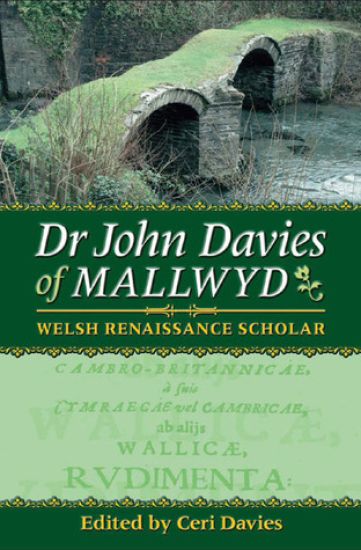
Dr John Davies of Mallwyd (c. 1567-1644) was the greatest scholar of the later Renaissance period in Wales. He was an industrious collector and copyist of manuscripts and his work in preserving bardic vocabulary established the basis for a scientific study of the Welsh language. This book, whose publication coincides with the 400th anniversary of John Davies's installation as rector of Mallwyd, examines his varied and remarkably rich contribution - as biblical translator and pastor, as grammarian and lexicographer, and as one who strove to promote the standing and dignity of the language and literary heritage of his native Wales within the context of a wider Renaissance humanism.
Dr. John WorldPeace JD Poems 1977.Dr. John WorldPeace JDDESCRIPTION FOR CREATESPACE FOR JWP POEM BOOKSI am publishing 2400 +/- poems from 1970 through 2017. I have published some other books of selections of these poems. I expect to have them all published by the end of September. Search for all my books under Dr. John WorldPeace JD.Dr. John WorldPeace JD NOTESI was born in 1948, in Houston, Texas.In October 1970, I wrote my first poem of the poems that I am publishing. Over the next 48 years, I wrote about 2400 poems. Most of the poems could be looked at as a short biography of my life; one page snap-shots of what I was thinking or experiencing in the moment.I have at times published a selection of the poems. In June 2018, I began to self-publish the selections of poems and all the poems I have ever written to date (about 2400) in chronological order using Amazon's CreateSpace. There will be about 30 books in total. I jumped around and did not publish the various books in chronological order. I expect to finish this project in August 2018.I will continue to write poems and in fact, will probably increase the volume of poems over the coming years. I also intend to pick a theme like Santa Fe, New Mexico and write a book about my impressions there. The number of possible subjects is infinite.I have also published a book of Haiku which are 3 line poems with 5, 7, 5 syllables per line. I would expect to publish a book of these poems annually and also some theme books of Haiku.My genetics and my current state of health make me confident, barring some accident, that I will live past 100.I do not force my poems. I don't write unless I feel inspired. I have no desire to set a world record for number of poems written in a lifetime.The poems are written in a couple of minutes, 2-10, then put away in a binder by year. I have lost less than a dozen poems over the years. Usually within 5-10 minutes after writing the poem I have no real memory of what I wrote. However, if I reread it, I will have a familiarity with what I wrote. The changes I make when publishing are very few. (Maybe 1 word in every 10 poems)
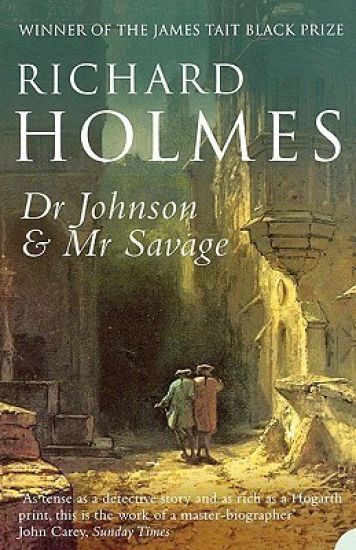
A classic reissue of Richard Holmes’s brilliant book on Samuel Johnson’s friendship with the poet Richard Savage, which won the James Tait Black Prize for Biography. Dr Johnson & Mr Savage is the story of a mysterious eighteenth-century friendship. Richard Savage was a poet, playwright and convicted murderer who roamed through the brothels and society salons of Augustan England creating a legend of poetic injustice. Strangest of all his achievements was the friendship he inspired in Samuel Johnson, then a young, unknown schoolmaster just arrived in London to seek his literary fortune. This puzzling intimacy helped to form Johnson’s experience of the world and human passions, and led to his masterpiece The Life of Richard Savage, which revolutionized the art of biography and virtually invented the idea of the poet as a romantic, outcast figure. Richard Holmes gradually reconstructs this alliance, throwing suprising new light on the character of Dr Johnson. This extraordinary book also questions the very nature of life-writing and exposes the conflicts between friendship, truth and advocacy which the modern form has inherited.
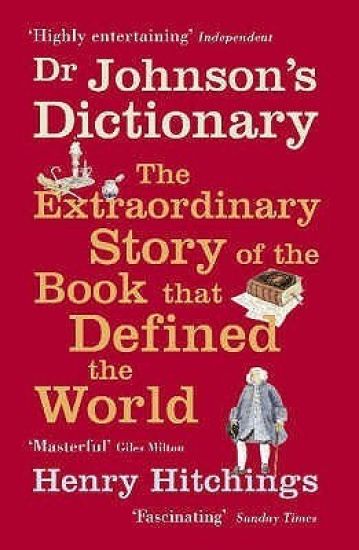
By 1700, France and Italy already had dictionaries of their own, and it became a matter of national pride that England should rival them. Dr Johnson rose to the challenge, turning over the garret of his London home to the creation of his Dictionary. He imagined it would take three years. Eight years later it was finally published, full of idiosyncrasies, but complete nevertheless. It would become the most important British cultural monument of the eighteenth century. This is the story of Johnson's attempt to define each and every word. In wonderfully engaging chapters, Hitchings describes Johnson's adventure - his ambition and vision, his moments of despair, the mistakes he made along the way and his ultimate triumph.
William Strahan was one of the leading figures in the book trade of the eighteenth century. As King’s Printer, a member of Parliament and the owner of the greatest printing house in London, he stood at the head of his craft: in addition to his long friendship and business connection with Johnson, he was the publisher of Gibbon, Adam Smith, Hume and Robertson. His intimacy with Benjamin Franklin led him to extend to America his lively interest in politics as well as trade.Originally published in 1964, Strahan’s career had for the most part been relegated to footnotes in the biographies of other men. This was the first full length survey of his life as a whole. The author, who had himself been both publisher and printer, had been able to draw upon much hitherto unpublished material in collections in this country and the United States, Strahan was an admirable letter writer, and his correspondence with authors, booksellers and printers touches on many problems still relevant at the time – the earnings of writers, bestsellers and flops, price-cutting and piracy, long credit and bad debts. The book is thus a portrait of the book trade at a particularly interesting stage of its development as well as the story of a remarkable career.
Arnold McNair (1885–1975) was a British legal academic, judge of the International Court of Justice and the first president of the European Court of Human Rights. In this book, which was originally published in 1948, McNair presents an engaging study of the relationship between Doctor Johnson and various aspects of law. The text reveals the legal context in which Johnson lived, providing information on his legal friends and contemporaries, his library, his views on professional ethics, his arguments and other legal activities in both Scots and English law, and his general comments on legal matters. Extensive quotation and authoritative argument underpin discussion throughout. A bibliography and textual notes are also included. This book will be of value to anyone with an interest in Johnson and legal history.
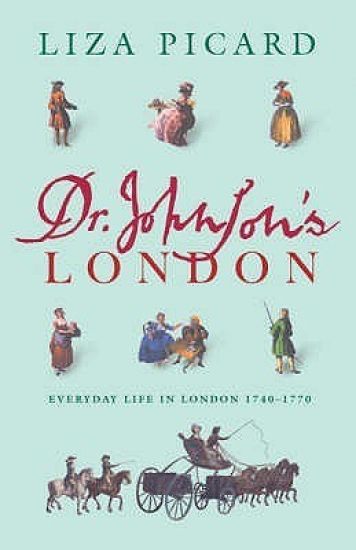
'A Baedeker of the past, absorbing and revealing in equal measure' Peter Ackroyd'Brings the age's tortuous splendours and profound murkiness vividly to life' ObserverWhen Dr Johnson published his great Dictionary in 1755, London was the biggest city in Europe. The opulence of the rich and the comfort of the 'middling' sort contrasted sharply with the back-breaking labour and pitiful wages of the poor. Executions were rated one of the best amusements, but there was bullock-hunting and cock-fighting too. Crime, from pickpockets to highwaymen, was rife, prisons were poisonous and law-enforcement rudimentary.Dr Johnson's London is the result of the author's passionate interest in the practical details of the everyday life of our ancestors: the streets, houses and gardens; cooking, housework, laundry and shopping; clothes and cosmetics; medicine, sex, hobbies, education and etiquette. The book spans the years 1740 to 1770, starting when the gin craze was gaining ground and ending when the east coast of America was still British. While brilliantly recording the strangeness and individuality of the past, Dr Johnson's London continually reminds us of parallels with the present day.
A work by the author who has also written, the classic "Techniques of High Magic" in 1976 with Francis King, and "Oracle of Geomancy and Terrestrial Astrology" which has become the standard work on Western divinatory geomancy.
This chronology, like others in the series, presents the story of Dr Johnson's life in a readily accessible format to provide scholar and general reader alike with a quick guide to dates, people and places together with supplementary indexes.
This chronology, like others in the series, presents the story of Dr Johnson's life in a readily accessible format to provide scholar and general reader alike with a quick guide to dates, people and places together with supplementary indexes.
John William Polidori (1795–1821) was, for a brief period, the personal physician to Lord Byron. Half Italian, he was the uncle of the Rossetti siblings, and it was William Michael Rossetti, in his role as family recorder, who published Polidori's manuscript diary after nearly a century, in 1911. This account of his time with Byron (which ended two months later when they quarrelled and parted company) is the only contemporary account of the few weeks, crucial to the development of the Romantic movement, during which Mary Shelley's Frankenstein arose from a storytelling competition at the Villa Diodati. Polidori's later career as a physician and writer was hampered by a severe accident in 1817 which left him with brain damage. His most famous work, The Vampyre, was published in 1819, but attributed to Byron, leading both men to threaten the publisher with lawsuits. Polidori died (probably a suicide) two years later.