Kirjahaku
Etsi kirjoja tekijän nimen, kirjan nimen tai ISBN:n perusteella.
1000 tulosta hakusanalla Dr. George W. Mitchell
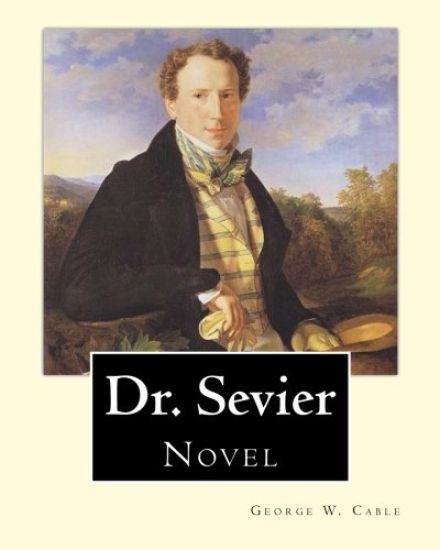
Dr. Sevier By: George W. Cable: "Dr Sevier" from George Washington Cable. American novelist notable for the realism of his portrayals
George W. Cable
Createspace Independent Publishing Platform
2017
nidottu
George Washington Cable (October 12, 1844 - January 31, 1925) was an American novelist notable for the realism of his portrayals of Creole life in his native New Orleans, Louisiana. He has been called "the most important southern artist working in the late 19th century, as well as the first modern southern writer." In his treatment of racism, mixed-race families and miscegenation, his fiction has been thought to anticipate that of William Faulkner. He also wrote articles critical of contemporary society. Due to hostility against him after two 1885 essays encouraging racial equality and opposing Jim Crow, Cable moved with his family to Northampton, Massachusetts. He lived there for the next thirty years, then moved to Florida. Biography: Cable was born in 1844 in New Orleans, Louisiana, the son of George W. Cable, Sr., and Rebecca Boardman Cable. They were wealthy slaveholders who were members of the Presbyterian Church and New Orleans society, whose families had moved there after the Louisiana Purchase. First educated in private schools, the younger Cable had to get work after his father died young. The elder Cable had lost investments, and the family struggled financially. Cable later learned French on his own. He served in the Confederate Army during the American Civil War, in which he took part in support of the Southern cause. His experiences changed his ideas about Southern and Louisiana society, and he began writing during a two-year bout with malaria. In 1870 Cable went into journalism, writing for the New Orleans Picayune. He worked for them from 1865 to 1879, by which time he had become an established writer. In 1869, George Cable married Louisa Stewart Bartlett, with whom he had several children. He was invited to submit stories in Scribner's Monthly, where his story "Sieur George," published in 1873, was a critical and popular success. He published six more stories of Creole life with Scribner's in the following three years. The stories were collected and published in a book in 1879 as Old Creole Days. 2] While romantic in plot, the stories revealed the multi-cultural and multi-racial nature of antebellum New Orleans society, with ties among French, Spanish, African, Native American and Caribbean Creoles. He also addressed conflicts that arose following the Louisiana Purchase, when traditional New Orleans Creoles of color had to confront Anglo-Americans - who ultimately asserted their concept of a biracial society, rather than acknowledging the multiracial class of free people of color.In 1880 Cable published his first novel, The Grandissimes: A Story of Creole Life, portraying multiracial members and different classes of society in the early 1800s shortly after the Louisiana Purchase. It had first been serialized in Scribner's. The plot follows the adventures and romances of several members of the Grandissime family, a French Creole family with mixed-race members. He used this historical romance as a way to explore society and its racial injustice, as he addressed European Creoles, the mixed-race class, pla age, slavery, and lynchings. Also in 1880, the United States Census Bureau commissioned Cable to write a "historical sketch" of pre-Civil War New Orleans for a special section of the 10th United States Census' "Social statistics of cities." He submitted a well-researched 313-page history. It was greatly reduced for publication in 1884. His novella Madame Delphine (1881), expanded from a short story, featured the issue of miscegenation, in which a woman of partially African descent tries to arrange the marriage of her daughter, who has more European ancestry, to one of the French Creole elite. In 1884 he published a work, Dr. Sevier, on prison reform...

Selections From The Miscellaneous Writings Of Dr. George W. Bagby
George William Bagby
Kessinger Pub
2007
pokkari


Dr. B.H. Carroll, The Colossus of Baptist History
George W. Truett; J. M. Carroll
Createspace Independent Publishing Platform
2015
nidottu
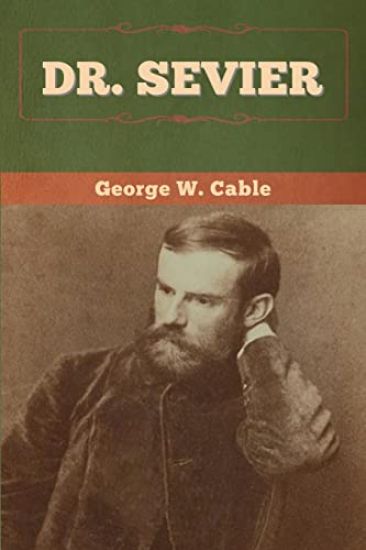
George Washington Cable (October 12, 1844 - January 31, 1925) was an American novelist notable for the realism of his portrayals of Creole life in his native New Orleans, Louisiana. He has been called "the most important southern artist working in the late 19th century", as well as "the first modern southern writer." In his treatment of racism, mixed-race families and miscegenation, his fiction has been thought to anticipate that of William Faulkner.He also wrote articles critical of contemporary society. Due to hostility against him after two 1885 essays encouraging racial equality and opposing Jim Crow, Cable moved with his family to Northampton, Massachusetts. He lived there for the next thirty years, then moved to Florida. Cable was friends with Mark Twain, and the two writers did speaking tours together. In 1884 and 1885 they visited Toronto, Canada, twice, on a reading tour known as the "Twins of Genius" tour. Twain said of Cable that "when it comes down to moral honesty, limpid impotence, and utterly blameless piety, the Apostles were mere policemen compared] to Cable," despite his dark, "indelicate" depictions of society. Twain also mentions Cable in his book Life on the Mississippi: The party had the privilege of idling through this ancient quarter of New Orleans with the South's finest literary genius, the author of "the Grandissimes." In him the South has found a masterly delineator of its interior life and its history. In truth, I find by experience, that the untrained eye and vacant mind can inspect it and learn of it and judge of it more clearly and profitably in his books than by personal contact with it.With Mr. Cable along to see for you, and describe and explain and illuminate, a jog through that old quarter is a vivid pleasure. And you have a vivid sense as of unseen or dimly seen things--vivid, and yet fitful and darkling; you glimpse salient features, but lose the fine shades or catch them imperfectly through the vision of the imagination: a case, as it were, of ignorant near-sighted stranger traversing the rim of wide vague horizons of Alps with an inspired and enlightened long-sighted native.Modern literary historians have said that Cable's treatment of racism in his fiction influenced the later work of William Faulkner and Robert Penn Warren. He has been called "the most important southern artist working in the late 19th century, as well as the first modern southern writer."In 2008 a new edition of his history of the South, including footnotes and research, was published by Louisiana State University Press under the title, The New Orleans of George Washington Cable: The 1887 Census Office Report, edited and with an introduction by Lawrence N. Powell.Cable may have coined the term "authors' editor", in his 1910 tribute to his editor Richard Watson Gilder, when he wrote "I think he was peculiarly an authors' editor, and not merely a publishers'."; this is the earliest known use of the term in print. (wikipedia.org)
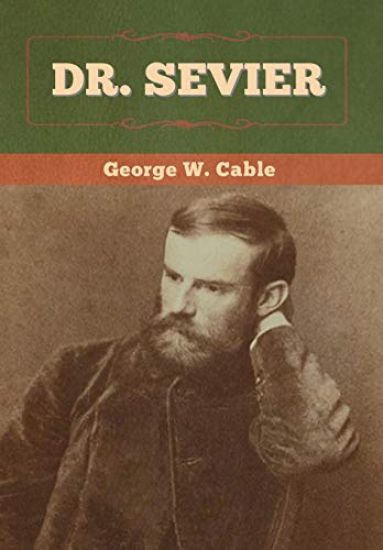
George Washington Cable (October 12, 1844 - January 31, 1925) was an American novelist notable for the realism of his portrayals of Creole life in his native New Orleans, Louisiana. He has been called "the most important southern artist working in the late 19th century", as well as "the first modern southern writer." In his treatment of racism, mixed-race families and miscegenation, his fiction has been thought to anticipate that of William Faulkner.He also wrote articles critical of contemporary society. Due to hostility against him after two 1885 essays encouraging racial equality and opposing Jim Crow, Cable moved with his family to Northampton, Massachusetts. He lived there for the next thirty years, then moved to Florida. Cable was friends with Mark Twain, and the two writers did speaking tours together. In 1884 and 1885 they visited Toronto, Canada, twice, on a reading tour known as the "Twins of Genius" tour. Twain said of Cable that "when it comes down to moral honesty, limpid impotence, and utterly blameless piety, the Apostles were mere policemen compared] to Cable," despite his dark, "indelicate" depictions of society. Twain also mentions Cable in his book Life on the Mississippi: The party had the privilege of idling through this ancient quarter of New Orleans with the South's finest literary genius, the author of "the Grandissimes." In him the South has found a masterly delineator of its interior life and its history. In truth, I find by experience, that the untrained eye and vacant mind can inspect it and learn of it and judge of it more clearly and profitably in his books than by personal contact with it.With Mr. Cable along to see for you, and describe and explain and illuminate, a jog through that old quarter is a vivid pleasure. And you have a vivid sense as of unseen or dimly seen things--vivid, and yet fitful and darkling; you glimpse salient features, but lose the fine shades or catch them imperfectly through the vision of the imagination: a case, as it were, of ignorant near-sighted stranger traversing the rim of wide vague horizons of Alps with an inspired and enlightened long-sighted native.Modern literary historians have said that Cable's treatment of racism in his fiction influenced the later work of William Faulkner and Robert Penn Warren. He has been called "the most important southern artist working in the late 19th century, as well as the first modern southern writer."In 2008 a new edition of his history of the South, including footnotes and research, was published by Louisiana State University Press under the title, The New Orleans of George Washington Cable: The 1887 Census Office Report, edited and with an introduction by Lawrence N. Powell.Cable may have coined the term "authors' editor", in his 1910 tribute to his editor Richard Watson Gilder, when he wrote "I think he was peculiarly an authors' editor, and not merely a publishers'."; this is the earliest known use of the term in print. (wikipedia.org)

Reproduction of the original: Dr. Sevier by George W. Cable
Reproduction of the original: Dr. Sevier by George W. Cable

The book "" Dr. Sevier, has been considered important throughout the human history, and so that this work is never forgotten we have made efforts in its preservation by republishing this book in a modern format for present and future generations. This whole book has been reformatted, retyped and designed. These books are not made of scanned copies and hence the text is clear and readable.


Reviews of Environmental Contamination and Toxicology
Dr. George W. Ware
Springer-Verlag New York Inc.
2001
sidottu
Reviews of Environmental Contamination and Toxicology provides detailed review articles concerned with aspects of chemical contaminants, including pesticides, in the total environment with toxicological considerations and consequences.

Reviews of Environmental Contamination and Toxicology
Dr. George W. Ware
Springer-Verlag New York Inc.
2013
nidottu
Reviews of Environmental Contamination and Toxicology provides detailed review articles concerned with aspects of chemical contaminants, including pesticides, in the total environment with toxicological considerations and consequences.


This work has been selected by scholars as being culturally important, and is part of the knowledge base of civilization as we know it. This work was reproduced from the original artifact, and remains as true to the original work as possible. Therefore, you will see the original copyright references, library stamps (as most of these works have been housed in our most important libraries around the world), and other notations in the work.This work is in the public domain in the United States of America, and possibly other nations. Within the United States, you may freely copy and distribute this work, as no entity (individual or corporate) has a copyright on the body of the work.As a reproduction of a historical artifact, this work may contain missing or blurred pages, poor pictures, errant marks, etc. Scholars believe, and we concur, that this work is important enough to be preserved, reproduced, and made generally available to the public. We appreciate your support of the preservation process, and thank you for being an important part of keeping this knowledge alive and relevant.
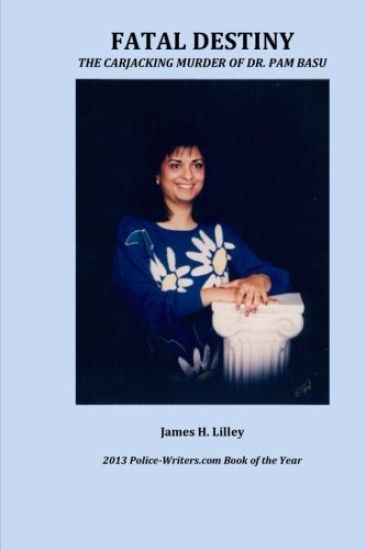
FATAL DESTINY - The Carjacking Murder of Dr. Pam Basu: The Carjacking Murder of Dr. Pam Basu
Biswanth Steve Basu; George H. W. Bush
James H. Lilley
2012
nidottu

Hebrews: Developing Confidence for Reading the Letter
Dr Herbert W. Bateman IV; Dr George H. Guthrie
Cyber-Center for Biblical Studies
2018
nidottu
This book, Hebrews: Developing Confidence for Reading the Letter, is part of the Let's Know the Bible series intended to build confidence in reading the Bible one book at a time. The book was initially designed for a Let's Know the Bible Conference held in Northern Indiana for people who what to read the Bible with understanding but redesigned to be used with corresponding (free) YouTube videos. The book opens with Bateman and Guthrie examining the new covenant. Whereas Bateman discusses the new covenant in Jeremiah and its application in several Dead Sea Scrolls, Guthrie shows how the new covenant is a central argument in Hebrews. After the discussion about the new covenant, Guthrie provides three ways to transform your reading of Hebrews by understanding the backdrop for Hebrews, tracking the Christ-ology in Hebrews, and hearing the word of encourage in Hebrews. Bateman provides numerous charts that reinforces Guthrie's presentation. Hebrews: Developing Confidence for Reading the Letter ends with a collection of short essays on building confidence for reading the Bible written by pastors who pastor in Northern Indiana. Reading a Good Translation, Grasping God's Big Picture, Read the Bible in Big Chunks, Read the Bible with Others, Increasing a Congregation's Bible knowledge are a few titles.