
Kirjahaku
Etsi kirjoja tekijän nimen, kirjan nimen tai ISBN:n perusteella.
1000 tulosta hakusanalla Drew M. Valla


A provocative and entirely new account of ethical reasoning that reconceives the traditional understanding of ethical action negatively In this radical reconsideration of ethical reasoning in contemporary European philosophy, Drew M. Dalton makes the case for an absolutely grounded account of ethical normativity developed from a scientifically informed and purely materialistic metaphysics. Expanding on speculative realist arguments, Dalton argues that the limits placed on the nature of ethical judgments by Kant’s critique can be overcome through a moral evaluation of the laws of nature--specifically, the entropic principle that undergirds the laws of physics, chemistry, and biology. In order to extract a moral meaning from this simple material fact, Dalton scrutinizes the presumptions of classical accounts and traditional understandings of good and evil within the history of Western philosophy and ultimately asserts that ethical normativity can be reestablished absolutely without reverting to dogmatism. By overturning our assumptions about the nature and value of reality, The Matter of Evil: From Speculative Realism to Ethical Pessimism presents a provocative new model of ethical responsibility that is both logically justifiable and scientifically sound. Dalton argues for “ethical pessimism,” a position previously marginalized in the West, as a means to cultivate an account of ethical responsibility and political activism that takes seriously the unbecoming of being and the moral horror of existence.
A provocative and entirely new account of ethical reasoning that reconceives the traditional understanding of ethical action negatively In this radical reconsideration of ethical reasoning in contemporary European philosophy, Drew M. Dalton makes the case for an absolutely grounded account of ethical normativity developed from a scientifically informed and purely materialistic metaphysics. Expanding on speculative realist arguments, Dalton argues that the limits placed on the nature of ethical judgments by Kant’s critique can be overcome through a moral evaluation of the laws of nature--specifically, the entropic principle that undergirds the laws of physics, chemistry, and biology. In order to extract a moral meaning from this simple material fact, Dalton scrutinizes the presumptions of classical accounts and traditional understandings of good and evil within the history of Western philosophy and ultimately asserts that ethical normativity can be reestablished absolutely without reverting to dogmatism. By overturning our assumptions about the nature and value of reality, The Matter of Evil: From Speculative Realism to Ethical Pessimism presents a provocative new model of ethical responsibility that is both logically justifiable and scientifically sound. Dalton argues for “ethical pessimism,” a position previously marginalized in the West, as a means to cultivate an account of ethical responsibility and political activism that takes seriously the unbecoming of being and the moral horror of existence.

Making A Marine in the 21st Century
Drew M. Cooper; Matthew R. Cooper
Fortitude Graphic Design and Printing
2017
nidottu
Opening a new debate on ethical reasoning after Kant, Drew Dalton addresses the problem of the absolute in ethical and political thought. Attacking the foundation of European philosophical morality, he critiques the idea that in order for ethical judgement to have any real power, it must attempt to discover and affirm some conception of the absolute good. Without rejecting the essential role the absolute plays within ethical reasoning, Dalton interrogates the assumed value of the absolute. Dalton brings some of the most influential contemporary philosophical traditions into dialogue with each other: speculative realists like Badiou and Meillassoux; phenomenologists, including Husserl, Heidegger, and Levinas; German Idealists, especially Kant and Schelling; psychoanalysts Freud and Lacan; and finally, post-structuralists, specifically Foucault, Deleuze, and Ranciere. The relevance of these thinkers to concrete socio-political problems is shown through reflections on the Holocaust, suicide bombings, the rise of neo-liberalism and neo-nationalism, as well as rampant consumerism and racism. This book re-defines ethical reasoning as that which refuses absolutes and resists what Milton's devil in Paradise Lost called the “tyranny of heaven.” Against traditional ethical reasoning, Dalton sees evil not as a moral failure, but as the result of an all too easy assent to the absolute; an assent which can only be countered through active resistance. For Dalton, resistance to the absolute is the sole channel through which the good can be defined.
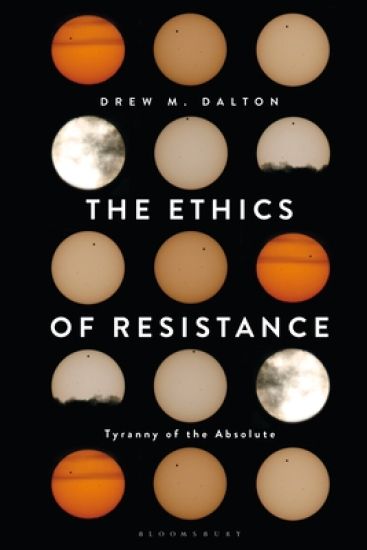
Opening a new debate on ethical reasoning after Kant, Drew Dalton addresses the problem of the absolute in ethical and political thought. Attacking the foundation of European philosophical morality, he critiques the idea that in order for ethical judgement to have any real power, it must attempt to discover and affirm some conception of the absolute good. Without rejecting the essential role the absolute plays within ethical reasoning, Dalton interrogates the assumed value of the absolute. Dalton brings some of the most influential contemporary philosophical traditions into dialogue with each other: speculative realists like Badiou and Meillassoux; phenomenologists, including Husserl, Heidegger, and Levinas; German Idealists, especially Kant and Schelling; psychoanalysts Freud and Lacan; and finally, post-structuralists, specifically Foucault, Deleuze, and Ranciere. The relevance of these thinkers to concrete socio-political problems is shown through reflections on the Holocaust, suicide bombings, the rise of neo-liberalism and neo-nationalism, as well as rampant consumerism and racism. This book re-defines ethical reasoning as that which refuses absolutes and resists what Milton's devil in Paradise Lost called the “tyranny of heaven.” Against traditional ethical reasoning, Dalton sees evil not as a moral failure, but as the result of an all too easy assent to the absolute; an assent which can only be countered through active resistance. For Dalton, resistance to the absolute is the sole channel through which the good can be defined.

Becoming the Twin Cities: Swindles, Schemes, and Enduring Rivalries
Drew M. Ross
Minnesota Historical Society Press
2025
nidottu
Whethermotivated by visionary ideals or commercial gain or political ambition, manyhave tried to unite Minneapolis and St. Paul into one city, and all havefailed. This book explains why. Why haven't Minneapolis and St.Paul merged into one city? In Becoming the Twin Cities, award-winningwriter Drew M. Ross uncovers the nineteenth-century history of scheming andself-dealing, social rivalries and political grudges, and utopian idealism andpersonal ambition that explains how the Twin Cities became the separate citieswith different governments and distinct personalities that we know today. Beginning with thestory of Fort Snelling's founding and Joseph Plympton's expansion of a reservearound it, Ross follows up with the land-grabbing and money-making schemes ofHenry Rice and Franklin Steele, explores the rivalries between localRepublicans and Democrats (and their partisan newspapers), and details thebattles over the locations and significance of the capitol, the state fair, andthe Midway neighborhood. Figures like Lieutenant Zebulon Pike and tavern keeperStephen Desnoyer, visionary architect Horace W. S. Cleveland, religious leader(and land speculator) Archbishop John Ireland, and the pugnacious publisherBill King--all had a hand in the push-pull tension that has fundamentally shapedthe Twin Cities to this day. Unlike FortSnelling's river confluence location from which the cities were born or the St.Anthony Falls that powered their growth, the Twin Cities do not align to anatural or inevitable division on the map. Instead, people made the borderbetween Minneapolis and St. Paul, attempted to erase it, and ultimatelyunderscored it. Becoming the Twin Cities examines the historicalunderpinnings of a beloved American metropolitan region's unique identity.

Surface Water Quality
Ruth Patrick; Faith Douglass; Drew M. Palavage; Paul M. Stewart
Princeton University Press
2014
pokkari
Addressing ecologists, legislators, lawyers, and industrialists alike, Ruth Patrick asks what has been accomplished with the millions of dollars spent on upgrading our surface waters. Has the water improved in spite of the fact that the crayfish, snails, and algae are not those that one would expect to find in natural rivers and estuaries? To evaluate the success of environmental laws over the past two decades, the author examines the aquatic life of river systems in the Delaware Valley, Texas, and Georgia--the only areas in the United States where she found enough biological data to determine trends over time. Although tracing the impact of environmental laws is difficult, Patrick found that for these three water systems the results were generally positive. However, if society as a whole wants effective environmental legislation, organizations must take on a more systematic and orderly approach to data gathering. Patrick argues that in monitoring the waters, one must study protozoa, algae, and worms as well as fish, oysters, and shrimp; one must track amounts of metal as well as low concentrations of oxygen. In proposing options for the future, the author predicts that the cost of such monitoring will be higher than present expenditures, but the cost of lax control will be even greater. Originally published in 1992. The Princeton Legacy Library uses the latest print-on-demand technology to again make available previously out-of-print books from the distinguished backlist of Princeton University Press. These editions preserve the original texts of these important books while presenting them in durable paperback and hardcover editions. The goal of the Princeton Legacy Library is to vastly increase access to the rich scholarly heritage found in the thousands of books published by Princeton University Press since its founding in 1905.
Surface Water Quality
Ruth Patrick; Faith Douglass; Drew M. Palavage; Paul M. Stewart
Princeton University Press
2016
sidottu
Addressing ecologists, legislators, lawyers, and industrialists alike, Ruth Patrick asks what has been accomplished with the millions of dollars spent on upgrading our surface waters. Has the water improved in spite of the fact that the crayfish, snails, and algae are not those that one would expect to find in natural rivers and estuaries? To evaluate the success of environmental laws over the past two decades, the author examines the aquatic life of river systems in the Delaware Valley, Texas, and Georgia--the only areas in the United States where she found enough biological data to determine trends over time. Although tracing the impact of environmental laws is difficult, Patrick found that for these three water systems the results were generally positive. However, if society as a whole wants effective environmental legislation, organizations must take on a more systematic and orderly approach to data gathering. Patrick argues that in monitoring the waters, one must study protozoa, algae, and worms as well as fish, oysters, and shrimp; one must track amounts of metal as well as low concentrations of oxygen. In proposing options for the future, the author predicts that the cost of such monitoring will be higher than present expenditures, but the cost of lax control will be even greater. Originally published in 1992. The Princeton Legacy Library uses the latest print-on-demand technology to again make available previously out-of-print books from the distinguished backlist of Princeton University Press. These editions preserve the original texts of these important books while presenting them in durable paperback and hardcover editions. The goal of the Princeton Legacy Library is to vastly increase access to the rich scholarly heritage found in the thousands of books published by Princeton University Press since its founding in 1905.

Forecasting Public Recovery Expenditures' Effect on Construction Prices and the Demand for Construction Labor
Aaron Strong; Jeffrey B Wenger; Isaac M Opper; Drew M Anderson; Kathryn a Edwards; Kyle Siler-Evans; Jessie Coe; R J Briggs
RAND Corporation
2022
pokkari



BVibrant: Learn 21 simple movements that keep you feeling fabulous for your entire life
Drew Overholser M. a.
Createspace Independent Publishing Platform
2010
nidottu

In the early days of motion pictures - before superstars, before studio conglomerates, before even the advent of sound - there was a woman named Pearl White (1889-1938). A quintessential beauty of the time, with her perfectly tousled bob and come-hither stare, White's rise to stardom was swift; her assumption of the title of queen of American motion picture serials equally deserved. Born the youngest of five children in a small, rural Missouri farm town, White left high school at only 15, taking on jobs to help keep her family financially afloat, work that included small parts in plays for a local stock company. At 18 she began a three-year stage career with the Trousdale Stock Company, touring on the road and sinking her teeth into leading roles in productions such as Jane Eyre. As she continued to build her professional repertoire, White joined the Powers Film Company in New York and made her film debut in 1910. Her reputation for fearless performances and her penchant for doing her own stunt work soon set her apart from her female colleagues. It was that same daring attitude that would put her on the map internationally as an actress. From flying airplanes to swimming across rapid rivers, to racing cars in serials like The Perils of Pauline (1914), White was undaunted by the demands of her onscreen career. She would go on to star in popular serial classics such as The Exploits of Elaine (1915), Pearl of the Army (1916), The House of Hate (1918), and The Lightning Raider (1919). As active socially as she was professionally, White would also translate her audacious spirit outside of her career by playing a part in the early feminist movement. Her projection of a positive image of bravery on screen served as a model for suffragettes battling for women's rights in the US. William M. Drew's The Woman Who Dared: The Life and Times of Pearl White, Queen of the Serials, is the first full-length biography of this pioneering star. A study in film and female agency, Drew delves into the cultural impact of Pearl White's work and how it evolved along a concurrent trajectory with the social upheavals of the Progressive Era.

More than one-fifth of US households with children have at least one child with special needs. Raising a child with special needs is spiritually, emotionally, mentally, and physically challenging. Parents of these children need encouragement to restore hope and a passion for God in their lives--but the realities of having to be parent, nurse, therapist, and caregiver make it difficult to find the time or initiative to seek encouragement.Packed with encouragement from parents who understand this complicated balancing act, Refresh is designed to provide just what these parents need. The devotional guides parents to spiritual truths that can be applied to the demands they face every day. It offers perspective and hope through the varying stages and phases families experience, from diagnosis to loss and grief.Each day's devotional includes a reading from Scripture, as well as stories and testimonies from parents who intimately know the struggle readers face. Their children represent a wide range of special needs, including autism, cerebral palsy, Down syndrome, genetic disorders, chronic illness, and more. Drew and Green show how the truths of God's Word are relevant, regardless of the diagnosis. Their devotional illuminates the unique lessons and perspectives to be gained as a result of raising a child with special needs.Insightful and powerful, Refresh will help weary parents grow spiritual roots and turn toward the Light that never fades.