

Kirjahaku
Etsi kirjoja tekijän nimen, kirjan nimen tai ISBN:n perusteella.
1000 tulosta hakusanalla Duane C Baker M D

Wilcox's Surgical Anatomy of the Heart
Robert H. Anderson; Andrew C. Cook; Diane E. Spicer; Anthony M. Hlavacek; Carl L. Backer; Justin T. Tretter
Cambridge University Press
2024
muu
This classic textbook on cardiac anatomy has been updated in its fifth edition with additional high quality surgical and pathological photographs, as well as new information and recent findings of the last decade. Beginning with an overview of surgical approaches to the heart, the book goes on to discuss the surgical anatomy of the cardiac chambers, the valves, and the circulation and conduction system within the heart, moving on to cover malformations, lesions, and abnormalities. This edition is informed by the most up-to-date research findings, and a new chapter has been added which reviews cardiac development. A complimentary digital companion now accompanies the book, allowing readers to view the images in high-resolution on screen. Written from the stance of the cardiac surgeon, this updated book is essential reading for consultants and trainees in cardiac surgery, cardiology and cardiovascular radiology, and anatomists.

Disgusted by publishers and editors who refused to cover important stories for fear of offending advertisers, the press baron E. W. Scripps rejected conventional wisdom and set out to prove that an ad-free newspaper could be profitable entirely on circulation. Duane C. S. Stoltzfus details the history of Scripps’s innovative 1911 experiment, which began in Chicago amid great secrecy. The tabloid-sized newspaper was called the Day Book, and at a penny a copy, it aimed for a working-class market, crusading for higher wages, more unions, safer factories, lower streetcar fares, and women’s right to vote. It also tackled the important stories ignored by most other dailies, like the labor conflicts that shook Chicago in 1912. Though the Day Book’s financial losses steadily declined over the years, it never became profitable, and publication ended in 1917. Nevertheless, Stoltzfus explains that the Day Book served as an important ally of workers, a keen watchdog on advertisers, and it redefined news by providing an example of a paper that treated its readers first as citizens with rights rather than simply as consumers.

An accessible guide to cybersecurity for the everyday user, covering cryptography and public key infrastructure, malware, blockchain, and other topics.It seems that everything we touch is connected to the internet, from mobile phones and wearable technology to home appliances and cyber assistants. The more connected our computer systems, the more exposed they are to cyber attacks--attempts to steal data, corrupt software, disrupt operations, and even physically damage hardware and network infrastructures. In this volume of the MIT Press Essential Knowledge series, cybersecurity expert Duane Wilson offers an accessible guide to cybersecurity issues for everyday users, describing risks associated with internet use, modern methods of defense against cyber attacks, and general principles for safer internet use.Wilson describes the principles that underlie all cybersecurity defense: confidentiality, integrity, availability, authentication, authorization, and non-repudiation (validating the source of information). He explains that confidentiality is accomplished by cryptography; examines the different layers of defense; analyzes cyber risks, threats, and vulnerabilities; and breaks down the cyber kill chain and the many forms of malware. He reviews some online applications of cybersecurity, including end-to-end security protection, secure ecommerce transactions, smart devices with built-in protections, and blockchain technology. Finally, Wilson considers the future of cybersecurity, discussing the continuing evolution of cyber defenses as well as research that may alter the overall threat landscape.

Recommended for ages 9-14, "Secret of the Tunnels" tells the story of adventurous nine-year-old Will Allen who trades sunny California for foggy England. Will is used to being uprooted for his father's mysterious military career. It gives Will's life a sense of adventure, and the intrepid 9-year-old faces adventure with grit and determination. When Will's family discovers an ancient Bible - worth lots of money - in the tunnels beneath their new home, Will is thrown into the thick of a murderous plot. Will he be able to save himself and his family?



Geographic Location of a Computer Node Examining a Time-to-Location Algorithm and Multiple Autonomous System Networks
Duane C Sorgaard
Hutson Street Press
2025
sidottu

Geographic Location of a Computer Node Examining a Time-to-Location Algorithm and Multiple Autonomous System Networks
Duane C Sorgaard
Hutson Street Press
2025
pokkari

The fourth book in the Healthcare Payment System series, Cost-Based, Charge-Based, and Contractual Payment Systems compares cost-based systems, charge-based payment approaches, and contractually-based payment processes with fee-schedule payment systems and prospective payment systems. Supplying readers with a clear understanding of important background material on the different types of healthcare providers, it covers the basics of cost-based, charge-based, and contractual payment systems. The book illustrates essential concepts with a series of simple case studies making it ideal for anyone interested in learning more about the specific systems and processes used for payment in healthcare services. It discusses Medicare cost-based payment systems, Medicare payment approaches, and includes an appendix that outlines the various Medicare payment systems. Demystifying contractual language, it outlines managed care contracts and also: Delves into the intricacies involved with adjudication of claims Considers capitated payment systems Addresses healthcare costs and cost-based reimbursement systems Examines charge-based and contractual payment systems Describes where healthcare payment systems are headed in the future Since compliance is inherent throughout the process of providing services, filling claims, and receiving payment, the book examines the range of compliance concerns, including statutory, contractual, and overpayment issues. Using numerous examples to illustrate the processes used for capitated contract arrangements, the book includes coverage of claim adjustment, managed care contracts, and the various combinations of payment systems used by third-party administrators.

Medicare fraud is big business, but while only a few profit from intentional malfeasance, the Centers for Medicare and Medicaid Services is now taking a closer look at everyone. The Medicare Recovery Audit Contractor Program, already infamously known as the RAC, swings into full operation in 2010 and every healthcare provider that receives payment under any of the Medicare fee-for-service payment systems will be subject to RAC scrutiny. And scrutinize, they will . Instead of developing another bureaucracy, the government has turned the job of auditing over to outside firms whose payment will be based exclusively on finder fees for recouping improper payments. There will be little tolerance for poor record keeping or gray areas of coding. Written by medical billing guru and Lean accounting expert, Duane Abbey, The Medicare Recovery Audit Contractor Program: A Survival Guide for Healthcare Providers explains all that is required to prepare and successfully defend against inappropriate RAC audit recoveries. Using the same succinct style that always makes his writing so accessible, Abbey illustrates his lessons with simple case studies placed in the context of a fictitious community whose population is served by a hospital, clinics, a nursing facility, and other providers all seeking to maintain compliance and profitability. In discussing RAC guidelines, this resource Shows how to identify overpayment areas and associated compliance issues Details a systematic problem-solving process relative to RAC processes Addresses resource requirements including new personnel, such as RAC specialists Includes planning models for developing compliance departments Provides an extensive glossary to make sense of medical billing‘s alphabet soup of acronyms While the book works well as a stand-alone reference

The third book in the Healthcare Payment Systems series, Prospective Payment Systems examines the various types of prospective payment systems (PPS) used by healthcare providers and third-party payers. Emphasizing the basic elements of PPS, it considers the many variations of payment for hospital inpatient and outpatient services, skilled nursing facilities, home health agencies, long-term hospital care, and rehabilitation facilities along with other providers. The book describes the anatomy of PPS, including cost reports, adjudication features and processes, relative weights, and payment processes. It outlines the features and documentation requirements for Medicare Severity Diagnosis Related Groups (MS-DRGs), the Medicare Ambulatory Payment Classifications (APCs), Medicare HHPPS, Medicare Skilled Nursing Resource Utilization Groups (RUGs), and private third-party payers. Provides a framework for understanding and analyzing the characteristics of any PPS Discusses Medicare prospective payment systems and approaches Includes specific references to helpful resources, both online and in print Facilitates a clear understanding of the complexities related to PPS covering specific topics at a high level and revisiting similar topics to reinforce understanding Complete with a detailed listing of the acronyms most-commonly used in healthcare coding, billing, and reimbursement, the book includes a series of case studies that illustrate key concepts. It concludes with a discussion of the challenges with PPS including compliance and overpayment issues to provide you with the real-world understanding needed to make sense of any PPS.

Geographic Location of a Computer Node Examining a Time-To-Location Algorithm and Multiple Autonomous System Networks
Duane C Sorgaard
Biblioscholar
2012
pokkari



To Hutterites and members of other pacifist sects, serving the military in any way goes against the biblical commandment "thou shalt not kill" and Jesus' admonition to turn the other cheek when confronted with violence. Pacifists in Chains tells the story of four young men - Joseph Hofer, Michael Hofer, David Hofer, and Jacob Wipf - who followed these beliefs and refused to perform military service in World War I. The men paid a steep price for their resistance, imprisoned in Alcatraz and Fort Leavenworth, where the two youngest died. The Hutterites buried the men as martyrs, citing mistreatment. Using archival material, letters from the four men and others imprisoned during the war, and interviews with their descendants, Duane C. S. Stoltzfus explores the tension between a country preparing to enter into a world war and a people whose history of martyrdom for their pacifist beliefs goes back to their sixteenth-century Reformation beginnings.
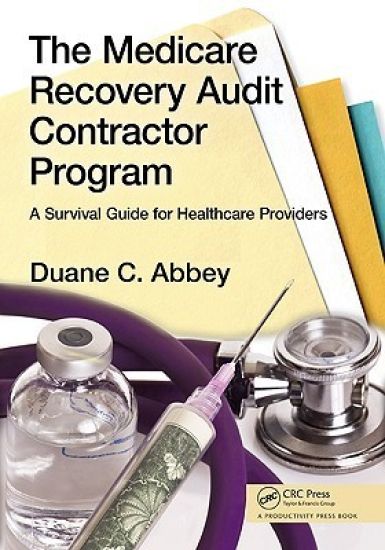
Medicare fraud is big business, but while only a few profit from intentional malfeasance, the Centers for Medicare & Medicaid Services is now taking a closer look at everyone. The Medicare Recovery Audit Contractor Program, already infamously known as the RAC, swings into full operation in 2010 and every healthcare provider that receives payment under any of the Medicare fee-for-service payment systems will be subject to RAC scrutiny. And scrutinize, they will… .Instead of developing another bureaucracy, the government has turned the job of auditing over to outside firms whose payment will be based exclusively on finder fees for recouping improper payments. There will be little tolerance for poor record keeping or gray areas of coding.Written by medical billing guru and Lean accounting expert, Duane Abbey, The Medicare Recovery Audit Contractor Program: A Survival Guide for Healthcare Providers explains all that is required to prepare and successfully defend against inappropriate RAC audit recoveries. Using the same succinct style that always makes his writing so accessible, Abbey illustrates his lessons with simple case studies placed in the context of a fictitious community whose population is served by a hospital, clinics, a nursing facility, and other providers all seeking to maintain compliance and profitability.In discussing RAC guidelines, this resource — Shows how to identify overpayment areas and associated compliance issuesDetails a systematic problem-solving process relative to RAC processes Addresses resource requirements including new personnel, such as RAC specialists Includes planning models for developing compliance departments Provides an extensive glossary to make sense of medical billing’s alphabet soup of acronymsWhile the book works well as a stand-alone reference for those seeking advice on RAC audits, readers will also discover that this volume extends the lesson of Abbey’s classic Compliance for Coding, Billing & Reimbursement, Second Edition , making this book a natural companion for those wanting to fully explore the role of compliance and Lean accounting in medical billing.

For healthcare providers and patients alike, the ways of private third-party payer payment systems can be mysterious and oftentimes quite frustrating. Payment for hospital, nursing, or homecare services can be subject to a variety of payment systems including cost-based and charge-based or those with payments that are determined in advance. Knowing the specific rules needed to navigate each type of payment system is essential for all healthcare administrators and accountants.Healthcare Payment Systems: Fee Schedule Payment System, the second volume in a series by expert consultant and workshop facilitator Duane Abbey, is dedicated to fee schedule payment systems. Always accessible and entertaining in his approach, Dr. Abbey illustrates the diverse challenges involved with these systems through the discussion of reimbursement claims for several individuals in a fictitious community served by a hospital, a nursing facility, and a hospice among other healthcare providers, Including more than 60 very real scenarios that illustrate best practices for various fee payment challenges, this comprehensive volume — Explores the general concept of usual, customary, and reasonable (UCR) that is often applied by private third-party payers Provides web links to a number of essential resources including various government acts and manualsDiscusses in-depth what is arguably the most complex fee schedule system: the Medicare Physician Fee ScheduleDefines a comprehensive list of acronyms used in the medical payment industryConceptually, fee schedule payment systems are one of the simpler approaches; however, even straightforward healthcare payment systems can, and indeed do, become quite complex. No payment system exists in a vacuum. In fact, when services are provided, the reimbursement from multiple payment systems may be required. This guide shows you how all these systems work, as well as how they interface with one another in everyday practical use. Understanding the differences among systems and learning how to navigate them can make a huge difference in whether a claim is accepted or not and how much payment is allowed.

Cost-Based, Charge-Based, and Contractual Payment Systems
Duane C. Abbey
Productivity Press
2012
nidottu
The fourth book in the Healthcare Payment System series, Cost-Based, Charge-Based, and Contractual Payment Systems compares cost-based systems, charge-based payment approaches, and contractually-based payment processes with fee-schedule payment systems and prospective payment systems. Supplying readers with a clear understanding of important background material on the different types of healthcare providers, it covers the basics of cost-based, charge-based, and contractual payment systems. The book illustrates essential concepts with a series of simple case studies—making it ideal for anyone interested in learning more about the specific systems and processes used for payment in healthcare services. It discusses Medicare cost-based payment systems, Medicare payment approaches, and includes an appendix that outlines the various Medicare payment systems. Demystifying contractual language, it outlines managed care contracts and also: Delves into the intricacies involved with adjudication of claimsConsiders capitated payment systemsAddresses healthcare costs and cost-based reimbursement systemsExamines charge-based and contractual payment systemsDescribes where healthcare payment systems are headed in the futureSince compliance is inherent throughout the process of providing services, filling claims, and receiving payment, the book examines the range of compliance concerns, including statutory, contractual, and overpayment issues. Using numerous examples to illustrate the processes used for capitated contract arrangements, the book includes coverage of claim adjustment, managed care contracts, and the various combinations of payment systems used by third-party administrators.

The third book in the Healthcare Payment Systems series, Prospective Payment Systems examines the various types of prospective payment systems (PPS) used by healthcare providers and third-party payers. Emphasizing the basic elements of PPS, it considers the many variations of payment for hospital inpatient and outpatient services, skilled nursing facilities, home health agencies, long-term hospital care, and rehabilitation facilities along with other providers. The book describes the anatomy of PPS, including cost reports, adjudication features and processes, relative weights, and payment processes. It outlines the features and documentation requirements for Medicare Severity Diagnosis Related Groups (MS-DRGs), the Medicare Ambulatory Payment Classifications (APCs), Medicare HHPPS, Medicare Skilled Nursing Resource Utilization Groups (RUGs), and private third-party payers. Provides a framework for understanding and analyzing the characteristics of any PPSDiscusses Medicare prospective payment systems and approachesIncludes specific references to helpful resources, both online and in printFacilitates a clear understanding of the complexities related to PPS—covering specific topics at a high level and revisiting similar topics to reinforce understandingComplete with a detailed listing of the acronyms most-commonly used in healthcare coding, billing, and reimbursement, the book includes a series of case studies that illustrate key concepts. It concludes with a discussion of the challenges with PPS—including compliance and overpayment issues—to provide you with the real-world understanding needed to make sense of any PPS.