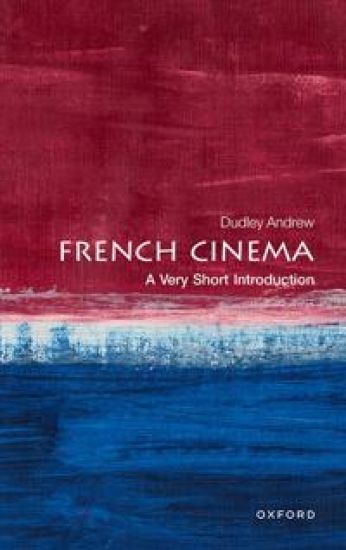
It is often claimed that the French invented cinema. Dominating the production and distribution of cinema until World War 1, when they were supplanted by Hollywood, the French cinema industry encompassed all genres, from popular entertainment to avant-garde practice. The French invented the "auteur" and the "ciné-club"; they incubated criticism from the 1920s to our own day that is unrivalled; and they boast more film journals, fan magazines, TV shows, and festivals devoted to film than anywhere else. This Very Short Introduction opens up French cinema through focusing on some of its most notable works, using the lens of the New Wave decade (1958-1968) that changed cinema worldwide. Exploring the entire French cinematic oeuvre, Dudley Andrew teases out distinguishing themes, tendencies, and lineages, to bring what is most crucial about French Cinema into alignment. He discusses how style has shaped the look of female stars and film form alike, analysing the "made up" aesthetic of many films, and the paradoxical penchant for French cinema to cruelly unmask surface beauty in quests for authenticity. Discussing how French cinema as a whole pits strong-willed characters against auteurs with high-minded ideas of film art, funded by French cinema's close rapport to literature, painting, and music, Dudley considers how the New Wave emerged from these struggles, becoming an emblem of ambition for cinema that persists today. He goes on to show how the values promulgated by the New Wave directors brought the three decades that preceded it into focus, and explores the deep resonance of those values today, fifty years later. ABOUT THE SERIES: The Very Short Introductions series from Oxford University Press contains hundreds of titles in almost every subject area. These pocket-sized books are the perfect way to get ahead in a new subject quickly. Our expert authors combine facts, analysis, perspective, new ideas, and enthusiasm to make interesting and challenging topics highly readable.
André Bazin, often dubbed the father of the French New Wave, has had an immense impact on film art. He is credited with almost single-handedly establishing the study of film as an accepted intellectual pursuit. The journal that he founded in 1951, Cahiers du Cinéma, remains the most influential archive of cinema criticism. He remains one of the most read, most studied, and most engaging figures ever to have written about film. The last few years have witnessed a massive resurgence of interest in Bazin among critics, scholars, and students of every persuasion. His writings, a mainstay of film theory courses, are now finding a place on the syllabi of core courses in film history, criticism, and appreciation. Andrew's intellectual biography is a landmark in film scholarship.
Just before World War II, French cinema reached a high point that has been dubbed the style of "poetic realism." Working with unforgettable actors like Jean Gabin and Arletty, directors such as Renoir, Carne, Gremillon, Duvivier, and Chenal routinely captured the prizes for best film at every festival and in every country, and their accomplishments led to general agreement that the French were the first to give maturity to the sound cinema. Here the distinguished film scholar Dudley Andrew examines the motivations and consequences of these remarkable films by looking at the cultural web in which they were made. Beyond giving a rich view of the life and worth of cinema in France, Andrew contributes substantially to our knowledge of how films are dealt with in history. Where earlier studies have treated the masterpieces of this era either in themselves or as part of the vision of their creators, and where certain recent scholars have reacted to this by dissolving the masterpieces back into the system of entertainment that made them possible, Andrew stresses the dialogue of culture and cinema. In his view, the films open questions that take us into the culture, while our understanding of the culture gives energy, direction, and consequence to our reading of the films. The book demonstrates the value of this hermeneutic approach for one set of texts and one period, but it should very much interest film theorists and film historians of all sorts.
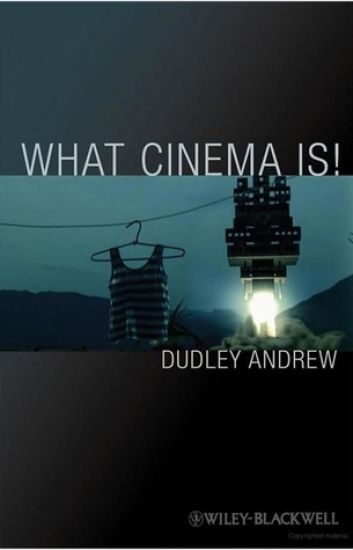
What Cinema Is! offers an engaging answer to Andre Bazin's famous question, exploring his 'idea of cinema' with a sweeping look back at the near century of Cinema's phenomenal ascendancy. Written by one of the foremost film scholars of our timeEstablishes cinema's distinction from the current enthusiasm over audio-visual entertainment, without relegating cinema to a single, older modeExamines cinema's institutions and its social force through the qualities of key filmsTraces the history of an idea that has made cinema supremely alive to (and in) our times
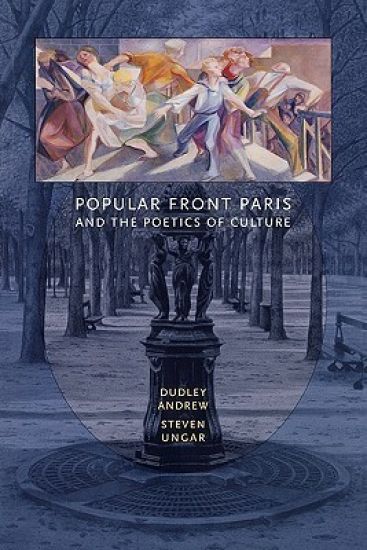
The story of Paris in the 1930s seems straightforward enough, with the Popular Front movement leading toward the inspiring 1936 election of a leftist coalition government. The socialist victory, which resulted in fundamental improvements in the lives of workers, was then derailed in a precipitous descent that culminated in France's capitulation before the Nazis in June 1940. Yet no matter how minutely recounted, this "straight story" clarifies only the political activity behind which turbulent cultural currents brought about far-reaching changes in everyday life and the way it is represented.In this book, Dudley Andrew and Steven Ungar apply an evocative "poetics of culture" to capture the complex atmospherics of Paris in the 1930s. They highlight the new symbolic forces put in play by technologies of the illustrated press and the sound film—technologies that converged with efforts among writers (Gide, Malraux, Céline), artists (Renoir, Dalí), and other intellectuals (Mounier, de Rougemont, Leiris) to respond to the decade's crises.Their analysis takes them to expositions and music halls, to upscale architecture and fashion sites, to traditional neighborhoods, and to overseas territories, the latter portrayed in metropolitan exhibits and colonial cinema. Rather than a straight story of the Popular Front, they have produced something closer to the format of an illustrated newspaper whose multiple columns represent the breadth of urban life during this critical decade at the end of the Third French Republic.
Kenji Mizoguchi's masterpiece Sanshô Dayû (1954) retells a classic Japanese folktale about an eleventh-century feudal official forced into exile by his political enemies. In his absence, his children fall under the corrupting influence of the malevolent bailiff Sansho. In their study of the film, film scholar Dudley Andrew and Japanese literature professor Carole Cavanaugh highlight the cultural, aesthetic and social contexts of this film which is at once rooted in folk legend and a modern artwork released in the aftermath of World War II. This edition includes a new foreword by the authors in which they consider the film's contemporary parallels in modern slavery and children torn from their families by malevolent authorities.
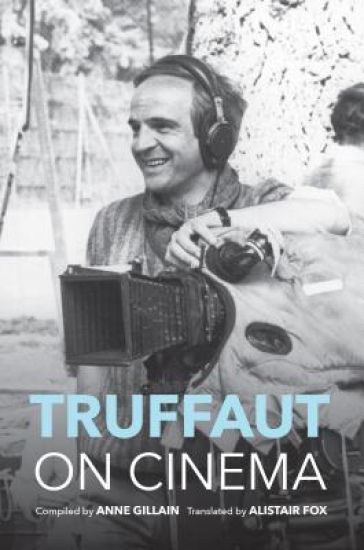
Between 1959 and 1984, French film director François Truffaut was interviewed over three hundred times. Each interview offers critical insight into the genesis of Truffaut's films as he shares the sources of his inspiration, the choice of his themes, and the development of his screenplays. In addition, Truffaut discusses his relationships with collaborators, actors, and the circumstances surrounding the shooting of each film. These texts, originally assembled by Anne Gillain and published in French in 1988, are presented here in a montage arranged chronologically by film. This compilation includes an impressive array of reflections on cinema as an art form. Truffaut defines the aims and practices of the French New Wave, comparing their efforts to the films made by their predecessors and including comments that encompass the entire history of cinema. Truffaut on Cinema provides commentary on contemporary events, a wealth of biographical information, and Truffaut's own artistic itinerary.
Between 1959 and 1984, French film director François Truffaut was interviewed over three hundred times. Each interview offers critical insight into the genesis of Truffaut's films as he shares the sources of his inspiration, the choice of his themes, and the development of his screenplays. In addition, Truffaut discusses his relationships with collaborators, actors, and the circumstances surrounding the shooting of each film. These texts, originally assembled by Anne Gillain and published in French in 1988, are presented here in a montage arranged chronologically by film. This compilation includes an impressive array of reflections on cinema as an art form. Truffaut defines the aims and practices of the French New Wave, comparing their efforts to the films made by their predecessors and including comments that encompass the entire history of cinema. Truffaut on Cinema provides commentary on contemporary events, a wealth of biographical information, and Truffaut's own artistic itinerary.
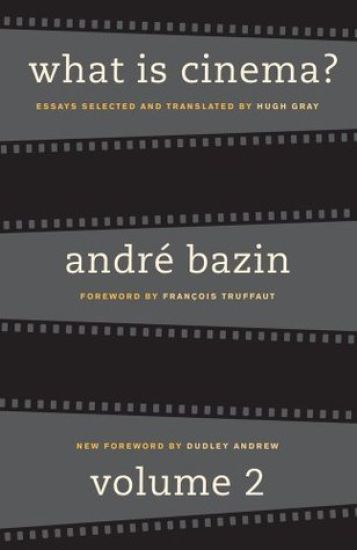
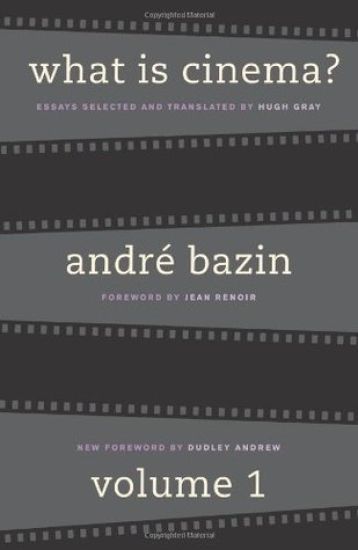
Andre Bazin's What Is Cinema? (volumes I and II) have been classics of film studies for as long as they've been available and are considered the gold standard in the field of film criticism. Although Bazin made no films, his name has been one of the most important in French cinema since World War II. He was co-founder of the influential Cahiers du Cinema, which under his leadership became one of the world's most distinguished publications. Championing the films of Jean Renoir (who contributed a short foreword to Volume I), Orson Welles, and Roberto Rossellini, he became the protege of Francois Truffaut, who honors him touchingly in his forword to Volume II. This new edition includes graceful forewords to each volume by Bazin scholar and biographer Dudley Andrew, who reconsiders Bazin and his place in contemporary film study. The essays themselves are erudite but always accessible, intellectual, and stimulating. As Renoir puts it, the essays of Bazin "will survive even if the cinema does not."
Andre Bazin's What Is Cinema? (volumes I and II) have been classics of film studies for as long as they've been available and are considered the gold standard in the field of film criticism. Although Bazin made no films, his name has been one of the most important in French cinema since World War II. He was co-founder of the influential Cahiers du Cinema, which under his leadership became one of the world's most distinguished publications. Championing the films of Jean Renoir (who contributed a short foreword to Volume I), Orson Welles, and Roberto Rossellini, he became the protege of Francois Truffaut, who honors him touchingly in his forword to Volume II. This new edition includes graceful forewords to each volume by Bazin scholar and biographer Dudley Andrew, who reconsiders Bazin and his place in contemporary film study. The essays themselves are erudite but always accessible, intellectual, and stimulating. As Renoir puts it, the essays of Bazin "will survive even if the cinema does not."
What Cinema Is! offers an engaging answer to Andre Bazin'sfamous question, exploring his 'idea of cinema' with a sweepinglook back at the near century of Cinema's phenomenal ascendancy. * Written by one of the foremost film scholars of our time * Establishes cinema's distinction from the current enthusiasmover audio-visual entertainment, without relegating cinema to asingle, older mode * Examines cinema's institutions and its social force through thequalities of key films * Traces the history of an idea that has made cinema supremelyalive to (and in) our times
very Day is Earth Day follows Jungle Bird and his friends as they learn about the history of Earth Day. From the Oval Office to the top of the Eiffel Tower, this book will take young readers on a journey of discovery while explaining the importance of protecting their environment, and what they can do to help our planet. So hop on board the time-traveling ship EARTH, fasten your seat belts, and discover why every day should be Earth Day.
Are you dealing with years of oppressive demonic influences, strongholds, and unintended access that the enemy may have gained? If you answered yes to this question, this book discusses eight key powerful rights that anyone who is under spiritual attack can use to gain freedom from those oppressive demonic influences, strongholds, and to revoke access to the enemy and learn just how to remain free from the oppression that the enemy uses to keep people bound and in a place of constant turmoil.This book offers the revelation that God gave the author to help herself, as well as others, by showing her how to read the enemy his rights. He is a thief who comes but to steal, kill, and destroy, and once the enemy has been arrested and Mirandized, he must be told where to go and remain there. After reading this book, you will come away, feeling empowered, free, and equipped with knowledge and skills that will make you armed and dangerous.
This heart-rending anthology is penned by 21 women who reveal the essence of self-determination...sharing the extremely moving details of their life challenges, and how they overcame pain, shame, and intimidation. SHINE presents the authors' narratives of how they broke their chains...using their newfound freedom to live powerful and effective lives..."speaking truth to power." For you, the reader, each page will pour out new possibilities for freedom in a new life that's filled with the power of God. I Will Shine Again Andrea Dudley "There is no easy walk to freedom anywhere, and many of us will have to pass through the valley of the shadow of death again and again before we reach the mountaintop of our desires." --Nelson Mandela "Listen carefully: Unless a grain of wheat is buried in the ground, dead to the world, it is never any more than a grain of wheat. But if it is buried, it sprouts and reproduces itself many times over. In the same way, anyone who holds on to life just as it is destroys that life. But if you let it go, reckless in your love, you'll have it forever, real and eternal." --The Gospel of John 12:24-25 Chippie the parakeet never saw it coming. One second he was peacefully perched in his cage. The next he was sucked in, washed up, and blown over. The problems began when Chippie's owner decided to clean Chippie's cage with a vacuum cleaner. She removed the attachment from the end of the hose and stuck it in the cage. The phone rang, and she turned to pick it up. She had barely said "hello" when Chippie got sucked in. The bird owner gasped, threw down the phone, turned off the vacuum, and opened the bag. There was Chippie...still alive, but stunned. Since the bird was covered with dust and soot, she grabbed him and raced to the bathroom. She turned on the faucet and held Chippie under the running water. Then, realizing that Chippie was soaked and shivering, she did what any compassionate bird owner would do, she reached for the hair dryer and blasted the pet with hot air. Poor Chippie never knew what hit him. A few days after the trauma, the reporter who had initially written about the event contacted Chippie's owner to see how the bird was recovering. "Well," she replied, "Chippie does not sing much anymore; he just sits and stares." It is not hard to see why. Sucked in, washed up, and blown over. That is enough to steal the song from the stoutest heart. Chippie's story is my story and yours. Many of us have been battered, scarred, and left for dead through divorce or sickness, job loss or the death of a loved one. Each one of us has a story. It is one thing when you do not have control over things that happened to you as a child, or if you're an elderly person or someone incapable of fending for yourself. It is another thing when you allow life to happen to you and you don't take responsibility for your own actions. If you've been sucked in, washed up, and blown over, don't be like Chippie. Rise again and start singing. Shine The truth is, everyone will have challenges and setbacks, and we are exactly where we are supposed to be based on the decisions that we have made. We all experience life-altering obstacles that threaten to dull our shine or even extinguish our light altogether. "Into each life some rain must fall, but too much is fallin' in mine," are the lyrics to a song. Have you ever wondered why bad things happen to good people? Or why good people seem to endure such a rain of tremendous hardships? The truth of the matter is, we are not exempt from experiencing challenging seasons in our lives. No one will go through their life with everything coming up roses. There are times in life where everything is really just excellent, life is prosperous, and everything you touch turns to gold The premise of this book is that you can shine even in the midst of tremendous obstacles That when you speak "your" truth to opposing forces, your light will brightly shine.
Kaum eine wirtschaftswissenschaftliche Disziplin hat in den vergangenen Jahren das Denken in der Okonomie so stark beeinflusst wie die moderne Institutionenokonomik. Dieses Buch beinhaltet gleichermassen Theorie und Empirie der Institutionenokonomik: Auf das Herausarbeiten bestimmter theoretischer Konstrukte folgt jeweils die Anwendung auf ein reales Beispiel mit vertiefenden Ubungsaufgaben und entsprechenden Losungen.