Kirjojen hintavertailu. Mukana 11 213 693 kirjaa ja 11 kauppaa.

Kirjahaku

Etsi kirjoja tekijän nimen, kirjan nimen tai ISBN:n perusteella.

1000 tulosta hakusanalla Dwayne A. Jones

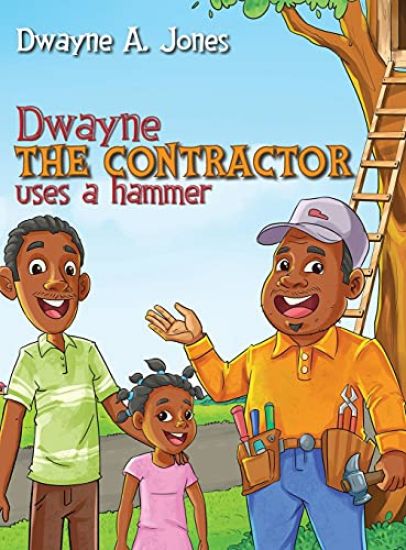
Dwayne the Contractor Uses a Hammer

Dwayne the Contractor Uses a Hammer

Dwayne A Jones

Red Yellow Blue
2021
sidottu
Dwayne the contractor uses a hammer Dwayne drives up to Mr. Jackson's house in his blue truck full of tools and materials. Dwayne rings the doorbell and Mr. Jackson and his daughter Kim greet the contractor and tell him of a few projects that need repair. The first project is placing a picture on the wall and continues as Kim watches. Dwayne uses his trusty hammer and goes tap tap tap as he repairs siding and the roof just to name a few projects. Near the end Dwayne the contractor helps Kim complete a personal project and receives a hug as he leaves. Dwayne states just show me and I'll fix it as he departs.
Dwayne the Contractor Paints a House

Dwayne the Contractor Paints a House

Dwayne A Jones

Red Yellow Blue
2021
sidottu
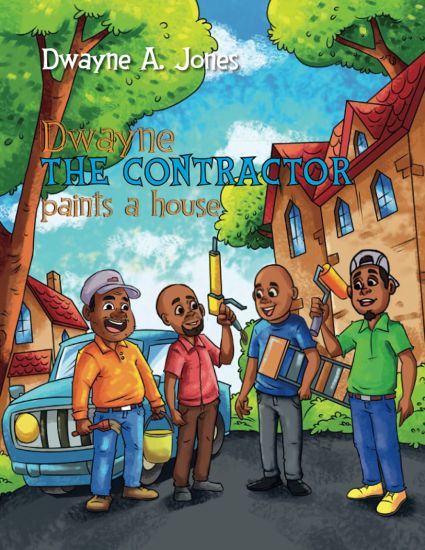
Dwayne the contractor paints a house Dwayne drives up to Ms. Anderson's house in his blue truck full of tools and materials with his brothers and cousin. Dwayne rings the doorbell and Ms. Anderson and her dog Ramsey greet the paint crew at the front door. The team scraps the house first and afterwards start painting the home. Dwayne accidentally kicks a bucket of paint over while checking on Maurice, Deushawn, and Shea's painting and caulking progress as they paint Ms. Anderson's two story house. In the end, Dwayne states just show me and I'll fix it as the paint crew departs.
Dwayne the Contractor Builds a Wood Fence

Dwayne the Contractor Builds a Wood Fence

Dwayne A Jones

Red Yellow Blue
2021
sidottu
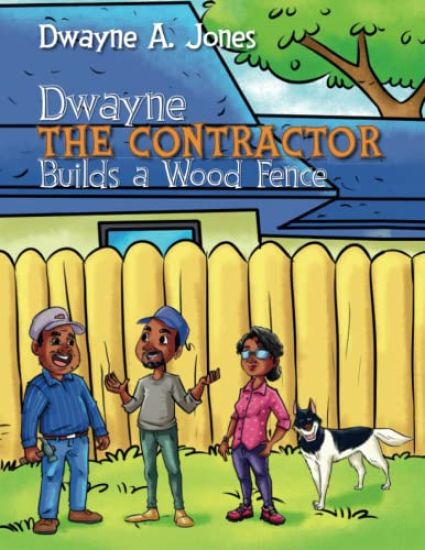
Dwayne the contractor builds a wood fence Dwayne drives up to the Davis' house in his blue truck full of tools and a wheelbarrow. Dwayne rings the doorbell and Mr. Davis greets Dwayne at the front door. Dwayne the contractor wheels his tools to the backyard and starts laying out post holes with Mr. Davis. Dwayne cuts wood and Mr. and Mrs. Davis assist with installing the fence. During a lunch break, the Davis' dog sneaks a sandwich. In the end, Dwayne states just show me and I'll fix it as he departs the completed fence project.
Dwayne the Contractor Builds a Wood Fence

Dwayne the Contractor Builds a Wood Fence

Dwayne A Jones

Red Yellow Blue
2021
pokkari
Dwayne the contractor builds a wood fence Dwayne drives up to the Davis' house in his blue truck full of tools and a wheelbarrow. Dwayne rings the doorbell and Mr. Davis greets Dwayne at the front door. Dwayne the contractor wheels his tools to the backyard and starts laying out post holes with Mr. Davis. Dwayne cuts wood and Mr. and Mrs. Davis assist with installing the fence. During a lunch break, the Davis' dog sneaks a sandwich. In the end, Dwayne states just show me and I'll fix it as he departs the completed fence project.
Dwayne the Contractor Builds a Wheelchair Ramp
Dwayne the contractor builds a wheelchair ramp Dwayne drives up to his parent's house in his blue truck full of tools and a wheelbarrow. Dwayne uses his key and goes into his parent's home and talks to his father Fred about building a wheelchair ramp for his mother. His brothers and cousin assist with the construction of the ramp as they use tools to build the forms and install concrete. In the end, Dwayne's mother is excited to have her new ramp installed.
Dwayne the Contractor Builds a Wheelchair Ramp
Dwayne the contractor builds a wheelchair ramp Dwayne drives up to his parent's house in his blue truck full of tools and a wheelbarrow. Dwayne uses his key and goes into his parent's home and talks to his father Fred about building a wheelchair ramp for his mother. His brothers and cousin assist with the construction of the ramp as they use tools to build the forms and install concrete. In the end, Dwayne's mother is excited to have her new ramp installed.
Orphic Tradition and the Birth of the Gods

Orphic Tradition and the Birth of the Gods

Dwayne A. Meisner

Oxford University Press Inc
2018
sidottu
The hatching of the Cosmic Egg, the swallowing of Phanes by Zeus, and the murder of Dionysus by the Titans were just a few of the many stories that appeared in ancient Greek epic poems that were thought to have been written by the legendary singer Orpheus. Most of this poetry is now lost, surviving only in the form of brief quotations by Greek philosophers. Orphic Tradition and the Birth of the Gods brings together the scattered fragments of four Orphic theogonies: the Derveni, Eudemian, Hieronyman, and Rhapsodic theogonies. Typically, theogonies are thought to be poetic accounts of the creation of the universe and the births of the gods, leading to the creation of humans and the establishment of the present state of the cosmos. The most famous example is Hesiod's Theogony, which unlike the Orphic theogonies has survived. But did Orphic theogonies look anything like Hesiod's Theogony? Meisner applies a new theoretical model for studying Orphic theogonies and suggests certain features that characterize them as different from Hesiod: the blending of Near Eastern narrative elements that are missing in Hesiod; the probability that these were short hymns, more like the Homeric Hymns than Hesiod; and the continuous discourse between myth and philosophy that can be seen in Orphic poems and the philosophers who quote them. Most importantly, this book argues that the Orphic myths of Phanes emerging from the Cosmic Egg and Zeus swallowing Phanes are at least as important as the well-known myth of Dionysus being dismembered by the Titans, long thought to have been the central myth of Orphism. As this book amply demonstrates, Orphic literature was a diverse and ever-changing tradition by which authors were able to think about the most current philosophical ideas through the medium of the most traditional poetic forms.
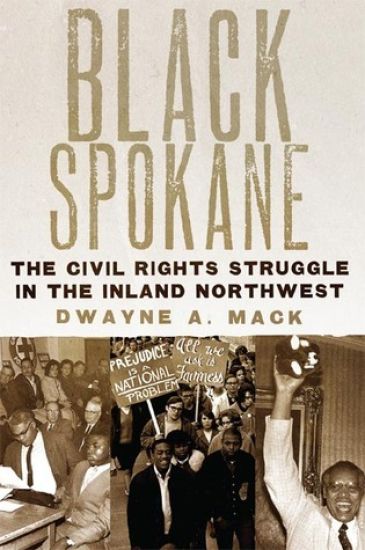
Black Spokane

Black Spokane

Dwayne A. Mack

University of Oklahoma Press
2014
sidottu
In 1981, decades before mainstream America elected Barack Obama, James Chase became the first African American mayor of Spokane, Washington, with the overwhelming support of a majority-white electorate. Chase's win failed to capture the attention of historians - as had the century-long evolution of the black community in Spokane. In Black Spokane: The Civil Rights Struggle in the Inland Northwest, Dwayne A. Mack corrects this oversight - and recovers a crucial chapter in the history of race relations and civil rights in America.As early as the 1880s, Spokane was a destination for black settlers escaping the racial oppression in the South - settlers who over the following decades built an infrastructure of churches, businesses, and social organizations to serve the black community. Drawing on oral histories, interviews, newspapers, and a rich array of other primary sources, Mack sets the stage for the years following World War II in the Inland Northwest, when an influx of black veterans would bring about a new era of racial issues. His book traces the earliest challenges faced by the NAACP and a small but sympathetic white population as Spokane became a significant part of the national civil rights struggle. International superstars such as Louis ""Satchmo"" Armstrong and Hazel Scott figure in this story, along with charismatic local preachers, entrepreneurs, and lawyers who stepped forward as civic leaders. These individuals' contributions, and the black community's encounters with racism, offer a view of the complexity of race relations in a city and a region not recognized historically as centers of racial strife. But in matters of race - from the first migration of black settlers to Spokane, through the politics of the Cold War and the civil rights movement, to the successes of the 1970s and '80s - Mack shows that Spokane has a story to tell, one that this book at long last incorporates into the larger history of twentieth-century America.
Black Spokane

Black Spokane

Dwayne A. Mack

UNIVERSITY OF OKLAHOMA PRESS
2022
nidottu
In 1981, decades before mainstream America elected Barack Obama, James Chase became the first African American mayor of Spokane, Washington, with the overwhelming support of a majority-white electorate. Chase’s win failed to capture the attention of historians—as had the century-long evolution of the black community in Spokane. In Black Spokane: The Civil Rights Struggle in the Inland Northwest, Dwayne A. Mack corrects this oversight—and recovers a crucial chapter in the history of race relations and civil rights in America.As early as the 1880s, Spokane was a destination for black settlers escaping the racial oppression in the South—settlers who over the following decades built an infrastructure of churches, businesses, and social organizations to serve the black community. Drawing on oral histories, interviews, newspapers, and a rich array of other primary sources, Mack sets the stage for the years following World War II in the Inland Northwest, when an influx of black veterans would bring about a new era of racial issues. His book traces the earliest challenges faced by the NAACP and a small but sympathetic white population as Spokane became a significant part of the national civil rights struggle. International superstars such as Louis “Satchmo” Armstrong and Hazel Scott figure in this story, along with charismatic local preachers, entrepreneurs, and lawyers who stepped forward as civic leaders. These individuals’ contributions, and the black community’s encounters with racism, offer a view of the complexity of race relations in a city and a region not recognized historically as centers of racial strife. But in matters of race—from the first migration of black settlers to Spokane, through the politics of the Cold War and the civil rights movement, to the successes of the 1970s and ’80s—Mack shows that Spokane has a story to tell, one that this book at long last incorporates into the larger history of twentieth-century America.
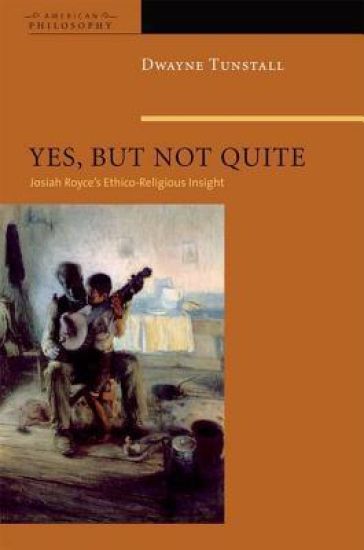
Yes, But Not Quite

Yes, But Not Quite

Dwayne A. Tunstall

Fordham University Press
2009
sidottu
This book contends that Josiah Royce bequeathed to philosophy a novel idealism based on an ethico-religious insight. This insight became the basis for an idealistic personalism, wherein the Real is the personal and a metaphysics of community is the most appropriate approach to metaphysics for personal beings, especially in an often impersonal and technological intellectual climate. The first part of the book traces how Royce constructed his idealistic personalism in response to criticisms made by George Holmes Howison. That personalism is interpreted as an ethical and panentheistic one, somewhat akin to Charles Hartshorne's process philosophy. The second part investigates Royce's idealistic metaphysics in general and his ethico-religious insight in particular. In the course of these investigations, the author examines how Royce's ethico-religious insight could be strengthened by incorporating the philosophical theology of Dr. Reverend Martin Luther King, Jr., and Emmanuel Levinas's ethical metaphysics. The author concludes by briefly exploring the possibility that Royce's progressive racial anti-essentialism is, in fact, a form of cultural, antiblack racism and asks whether his cultural, antiblack racism taints his ethico-religious insight.
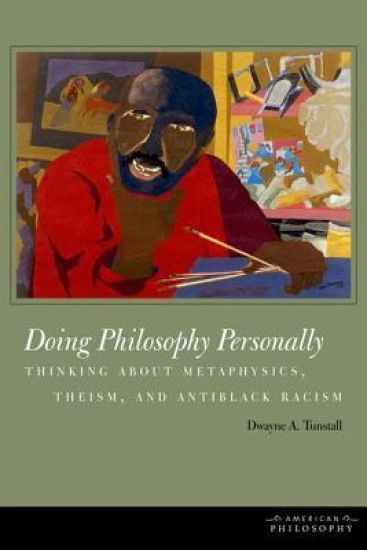
Doing Philosophy Personally

Doing Philosophy Personally

Dwayne A. Tunstall

Fordham University Press
2013
sidottu
Gabriel Marcel's reflective method is animated by his extraphilosophical commitment to battle the ever-present threat of dehumanization in late Western modernity. Unfortunately, Marcel neglected to examine what is perhaps the most prevalent threat of dehumanization in Western modernity: antiblack racism. Without such an account, Marcel's reflective method is weakened because it cannot live up to its extraphilosophical commitment. Tunstall remedies this shortcoming in his eloquent new volume.
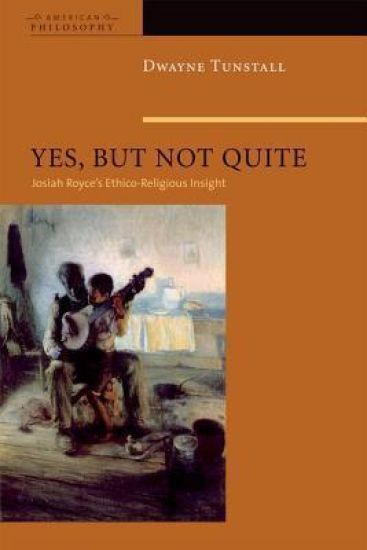
Yes, But Not Quite

Yes, But Not Quite

Dwayne A. Tunstall

Fordham University Press
2014
pokkari
This book contends that Josiah Royce bequeathed to philosophy a novel idealism based on an ethico-religious insight. This insight became the basis for an idealistic personalism, wherein the Real is the personal and a metaphysics of community is the most appropriate approach to metaphysics for personal beings, especially in an often impersonal and technological intellectual climate. The first part of the book traces how Royce constructed his idealistic personalism in response to criticisms made by George Holmes Howison. That personalism is interpreted as an ethical and panentheistic one, somewhat akin to Charles Hartshorne's process philosophy. The second part investigates Royce's idealistic metaphysics in general and his ethico-religious insight in particular. In the course of these investigations, the author examines how Royce's ethico-religious insight could be strengthened by incorporating the philosophical theology of Dr. Reverend Martin Luther King, Jr., and Emmanuel Levinas's ethical metaphysics. The author concludes by briefly exploring the possibility that Royce's progressive racial anti-essentialism is, in fact, a form of cultural, antiblack racism and asks whether his cultural, antiblack racism taints his ethico-religious insight.