
Kirjahaku
Etsi kirjoja tekijän nimen, kirjan nimen tai ISBN:n perusteella.
1000 tulosta hakusanalla Dwight McInvaill

From his formative years playing pure, hardcore honky-tonk for mid-’80s Los Angeles punk rockers through his subsequent surge to the top of the country charts, Dwight Yoakam has enjoyed a singular career. An electrifying live performer, superb writer, and virtuosic vocalist, he has successfully bridged two musical worlds that usually have little use for each other-commercial country and its alternative/Americana/roots-rocking counterpart. Defying the label “too country for rock, too rock for country,” Yoakam has triumphed while many of his peers have had to settle for cult acceptance. Four decades into his career, he has sold more than 25 million records and continues to tour regularly, with an extremely loyal fan base.In Dwight Yoakam, award-winning music journalist Don McLeese offers the first musical biography of this acclaimed artist. Tracing the seemingly disparate influences in Yoakam’s music, McLeese shows how he has combined rock and roll, rockabilly, country, blues, and gospel into a seamless whole. In particular, McLeese explores the essential issue of “authenticity” and how it applies to Yoakam, as well as to country music and popular culture in general. Drawing on wide-ranging interviews with Yoakam and his management, while also benefitting from the perspectives of others closely associated with his musical success (including producer-guitarist Pete Anderson, Yoakam’s partner throughout his most popular and creative decades), Dwight Yoakam pays tribute to the musician who has established himself as a visionary beyond time, an artist who could title an album Tomorrow’s Sounds Today and deliver it.

Dwight D. Eisenhower
Praeger Publishers Inc
1987
sidottu
Written by a group of scholars and other experts, including his campaign manager, administration officials, and government personnel, this volume offers a broad spectrum of opinion and analysis and a wealth of insider information not available in standard presidential biographies. most writers used Eisenhower's papers and other sources to good effect. Most papers are also well written and their notes quite useful. Choice This volume of twenty-four new essays enriches our understanding of Eisenhower as a leader and provides valuable historical hindsight on the issues and situations he faced during his two terms as president. Written by a group of scholars and other experts, including his campaign manager, administration officials, and government personnel, it offers a broad spectrum of opinion and analysis and a wealth of insider information not available in standard presidential biographies.

This first book-length assessment of Ike's consummate skills as a communicator shows how, contrary to popular belief, he used language effectively as a weapon to achieve well-conceived strategic ends during the Cold War. Medhurst demonstrates how Eisenhower chose his audiences and times deliberately. This reference is an invaluable text and resource for students, scholars, and professionals in rhetorical studies, mass communications, public opinion, presidential studies, and Cold War history.The critical analysis shows that, despite caricatures of Eisenhower as fuzzy, muddle-headed, and obscure in his public speeches, he pondered over just the right words and employed half-truths, was ambiguous and indirect in a tactical manner. He knew exactly what he was doing and why. Texts of speeches exemplify how he served as a strategic communicator. A selected chronology points to his most important speeches. The bibliography is the most comprehensive to date on Eisenhower as a public speaker. The study is based on extensive use of primary research materials from the Eisenhower Library.


Dwight D. Eisenhower and the Federal Highway Act
Charles U. Zug
UNIVERSITY PRESS OF KANSAS
2024
nidottu
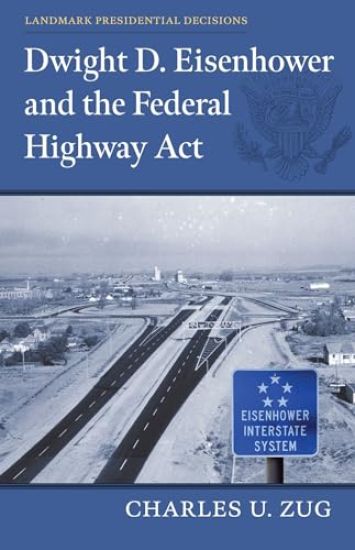
President Dwight D. Eisenhower is remembered by many as the originator of the American Interstate Highway System. He is also praised for restraining executive overreach, restoring the separation of powers, and presiding over an era of governmental equanimity and goodwill.In Dwight D. Eisenhower and the Federal Highway Act, Charles Zug contests all these assumptions. Through archival research, Zug shows that Eisenhower’s attempt to lead highway expansion during 1952–1955 ended in dismal failure. Far from championing the separation of powers, Eisenhower sought to marginalize Congress from the legislative process by secretly writing a transformative highway bill within the confines of his White House. And once it was announced, Eisenhower’s highway plan was almost universally panned: Ike’s own comptroller general deemed the plan’s funding mechanism “illegal” before a bipartisan majority laughed it out of the Senate in the spring of 1955. The highway bill that did eventually pass Congress in 1956, and that went on to launch the modern interstate system, was written by congressional Democrats and emphatically rejected Eisenhower’s basic approach to highway reform.Drawing on executive politics, American political development, and leadership studies, Zug uses the Federal Highway Act to argue for a foundational reassessment of Eisenhower’s legacy as highway founder, president, and political leader.
Dwight D. Eisenhower and the Federal Highway Act
Charles U. Zug
UNIVERSITY PRESS OF KANSAS
2024
sidottu
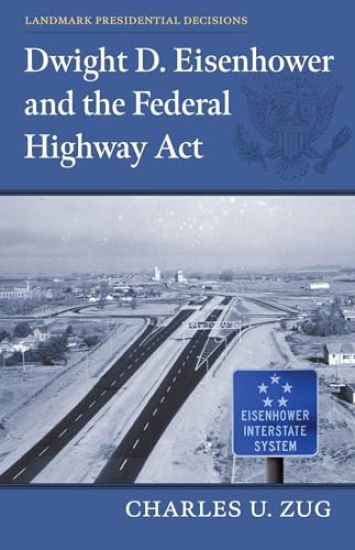
President Dwight D. Eisenhower is remembered by many as the originator of the American Interstate Highway System. He is also praised for restraining executive overreach, restoring the separation of powers, and presiding over an era of governmental equanimity and goodwill.In Dwight D. Eisenhower and the Federal Highway Act, Charles Zug contests all these assumptions. Through archival research, Zug shows that Eisenhower’s attempt to lead highway expansion during 1952–1955 ended in dismal failure. Far from championing the separation of powers, Eisenhower sought to marginalize Congress from the legislative process by secretly writing a transformative highway bill within the confines of his White House. And once it was announced, Eisenhower’s highway plan was almost universally panned: Ike’s own comptroller general deemed the plan’s funding mechanism “illegal” before a bipartisan majority laughed it out of the Senate in the spring of 1955. The highway bill that did eventually pass Congress in 1956, and that went on to launch the modern interstate system, was written by congressional Democrats and emphatically rejected Eisenhower’s basic approach to highway reform.Drawing on executive politics, American political development, and leadership studies, Zug uses the Federal Highway Act to argue for a foundational reassessment of Eisenhower’s legacy as highway founder, president, and political leader.
The Papers of Dwight David Eisenhower
Dwight David Eisenhower
Johns Hopkins University Press
1970
sidottu
Volumes XII and XIII follow Eisenhower's career from January 1, 1951 to the day before his inauguration.

The Papers of Dwight David Eisenhower
Dwight David Eisenhower
Johns Hopkins University Press
1984
sidottu
Volumes XII and XIII follow Eisenhower's career from January 1, 1951 to the day before his inauguration.

The Papers of Dwight David Eisenhower
Dwight David Eisenhower
Johns Hopkins University Press
2001
sidottu
Completing a monumental project that began with publication of The War Years in 1970, this final set of volumes of The Papers of Dwight David Eisenhower contains 1,783 documents drawn from Eisenhower's second term as president from 20 January 1957 to 20 January 1961. In these years Eisenhower worked hard to hold the focus of American national politics on the two major objectives he had set for his presidency in 1952: to sustain the policy of containment without precipitating a war with the Soviet Union and to reduce the role of the federal government in U.S. domestic affairs. In both cases, events at home and abroad intruded-diverting attention to immediate problems, endangering the peace, and forcing the White House to devote most of its leadership to the crises of the day. As president during this tense period, Eisenhower maintained an extensive and revealing correspondence with prominent individuals as well as with personal friends. These letters, together with the occasional entries made in his diary, shed considerable light upon the major national concerns of the 1950s. The volumes also include private and secret correspondence previously unavailable to scholars. Some of these items have been only recently declassified, and many appear here in print for the first time. Taken as a whole, the Eisenhower papers from 1957-61 provide firm documentary evidence of the manner in which Eisenhower dealt with the complex internal and external problems faced by all of our modern political leaders.
The Papers of Dwight David Eisenhower
Dwight David Eisenhower
Johns Hopkins University Press
2001
sidottu
Completing a monumental project that began with publication of The War Years in 1970, this final set of volumes of The Papers of Dwight David Eisenhower contains 1,783 documents drawn from Eisenhower's second term as president from 20 January 1957 to 20 January 1961. In these years Eisenhower worked hard to hold the focus of American national politics on the two major objectives he had set for his presidency in 1952: to sustain the policy of containment without precipitating a war with the Soviet Union and to reduce the role of the federal government in U.S. domestic affairs. In both cases, events at home and abroad intruded-diverting attention to immediate problems, endangering the peace, and forcing the White House to devote most of its leadership to the crises of the day. As president during this tense period, Eisenhower maintained an extensive and revealing correspondence with prominent individuals as well as with personal friends. These letters, together with the occasional entries made in his diary, shed considerable light upon the major national concerns of the 1950s. The volumes also include private and secret correspondence previously unavailable to scholars. Some of these items have been only recently declassified, and many appear here in print for the first time. Taken as a whole, the Eisenhower papers from 1957-61 provide firm documentary evidence of the manner in which Eisenhower dealt with the complex internal and external problems faced by all of our modern political leaders.
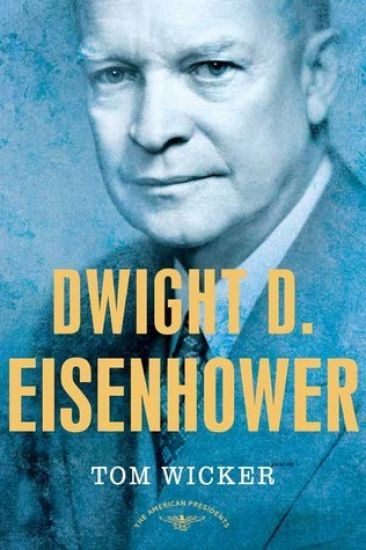
The presidency of the American military hero-turned-politician is reexamined without the distortions of 1950s nostalgia to reveal a deeply flawed administration beset by McCarthyism, civil rights disturbances, and Cold War "brinksmanship." 25,000 first printing.
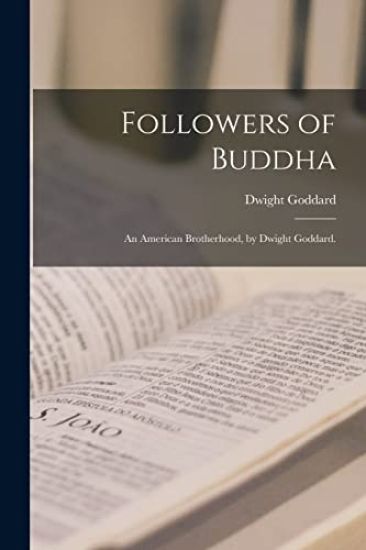
Followers of Buddha; an American Brotherhood, by Dwight Goddard.
Dwight 1861-1939 Goddard
Hassell Street Press
2021
nidottu
This work has been selected by scholars as being culturally important and is part of the knowledge base of civilization as we know it.This work is in the public domain in the United States of America, and possibly other nations. Within the United States, you may freely copy and distribute this work, as no entity (individual or corporate) has a copyright on the body of the work.Scholars believe, and we concur, that this work is important enough to be preserved, reproduced, and made generally available to the public. To ensure a quality reading experience, this work has been proofread and republished using a format that seamlessly blends the original graphical elements with text in an easy-to-read typeface.We appreciate your support of the preservation process, and thank you for being an important part of keeping this knowledge alive and relevant.
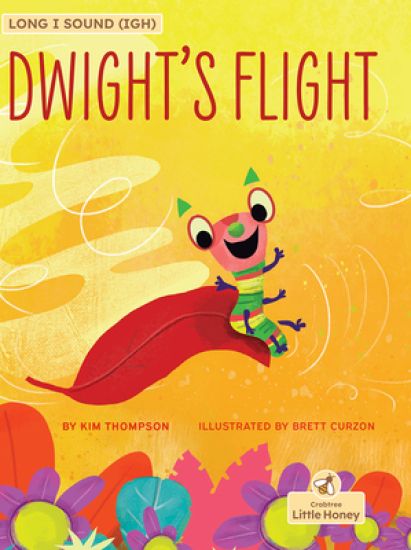
Dwight the caterpillar is munching on leaves when a gust of wind sends him on a scary, unexpected ride. Can Dwight learn to enjoy his flight? This funny story engages beginning readers while supporting them with learning resources and bonus features. Fully decodable text features high-frequency words, words to help with short vowel/long vowel discrimination, and words with the long i sound spelled with the vowel team igh. Downloadable Teacher Notes available.
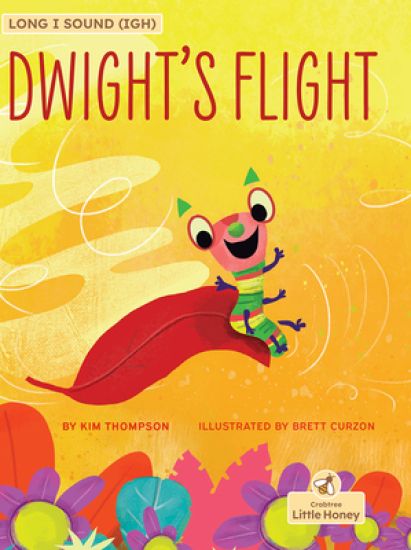
Dwight the caterpillar is munching on leaves when a gust of wind sends him on a scary, unexpected ride. Can Dwight learn to enjoy his flight? This funny story engages beginning readers while supporting them with learning resources and bonus features. Fully decodable text features high-frequency words, words to help with short vowel/long vowel discrimination, and words with the long i sound spelled with the vowel team igh. Downloadable Teacher Notes available.

Dwight's Little Black Book: The Perfect Dating Companion for a Handsome Man Named Dwight. A secret place for names, phone numbers, and addresses.
Wingman Publishing
Independently Published
2019
nidottu
Keep a record of all the girls that catch your eye
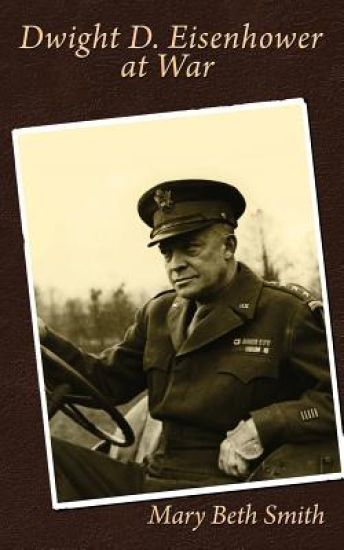
Eisenhower was the greatest general during the greatest war in history. It was a war between good and evil. According to Stephen Ambrose he said, "This war was a holy war. More than any other in history this war has been an array of the forces of evil against those of righteousness." This war was the pinnacle of his life.The book covers the battles of North Africa, Sicily, Italy, D-Day, the breakout into France, the Liberation of Paris, the Battle of the Bulge, the breach of the Rhine, the destruction of German industry in the Ruhr and the Russians' capture of Berlin.Nothing would compare with some of his triumphs in this war, not even the presidency. For years afterwards people were struck with awe in presence of this kind and humble man.

A Wizard brought a suit of armor to life in order to protect a Royal Bloodline.