

Kirjahaku
Etsi kirjoja tekijän nimen, kirjan nimen tai ISBN:n perusteella.
1000 tulosta hakusanalla Dwight N Hopkins
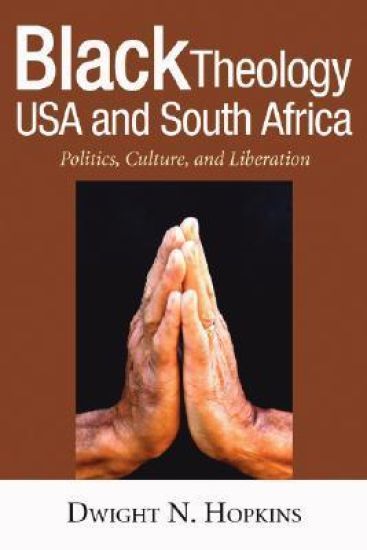
Black theology continually poses a challenge to Christian witness and faith. Through a critical analysis of leading religious thinkers, Dwight N. Hopkins explores the fundamental differences and similarities between black theology in the United States and black theology in South Africa and asks: What is the common denominator between the two? Part I examines the historical, political, cultural, and theological background of contemporary black theology in both countries. Hopkins delves into the distinctive situation of each country, focusing on civil rights, black power, and related political, cultural, and theological themes in the United States, and on civil disobedience, black consciousness, the unity of politics and culture, and political/cultural/theological themes in South Africa. Through interviews with leading black religious scholars, Part II explores these theologies in depth. Contrasting the cultural-theological trend with the political-theological trend in the USA, Hopkins explores the ideas of theologians Albert B. Cleage, James H. Cone, J. Deotis Roberts, William R. Jones, Gayraud S. Wilmore, Charles H. Long, Cecil W. Cone, and Vincent Harding. In Part III Hopkins examines the same two trends - cultural-theological and political-theological - in South Africa. Here the focus is on the impact of black consciousness and Soweto, and the works of Manas Buthelezi, Allan Boesak, Simon S. Maimela, Frank Chikane, Bonganjalo C. Goba, Itumeleng J. Mosala, Takatso A. Mofokeng, and Desmond M. Tutu. Part IV brings black theology USA and black theology South Africa into dialogue. Hopkins locates the common denominator between the tow theologies: that ""they both claim the Christian gospel as the gospel of liberation for black people struggling against racism and for a holistic humanity - physically and spiritually, politically and culturally."" He concludes by looking toward future areas of development and collaboration, arguing that an effective black theology of liberation must integrate politics and culture, insuring that the two are equal and complementary, ""two tributaries within the same current."" ""Hopkins' study is the only book which has dealt with both theologies independently and in relation to each other....It is a first-rate contribution to theology in general and to black theology in particular."" - James H. Cone ""Dwight Hopkins carefully maps the terrain between North American and South African Black Theology. This detailed analysis of the cultural and political connections which ignited the explosion of Black theology in both countries is an indispensable guidebook for Black and White coalitions at home or abroad."" - Gayraud Wilmore Dwight N. Hopkins teaches at the University of Chicago Divinity School, and is the author of Being Human: race, culture, and religion.


Hopkins contends that the lives of enslaved African Americans were the foundational source of liberating faith and practice for African Americans today. Down, Up, and Over draws on their religious experience, and the example of their faith and witness, to develop a constructive theology of liberation. "African American belief structures and hope practices blossom from the black folk's religious encounters with God," Hopkins contends. The first half of his ambitious work reconstructs the cultural matrix of African American religion-a total way of life formed by Protestantism, American culture, and the institution of slavery (1619-1865)-in which racial identities developed. Whites from Europe and blacks from Africa arrived with specific, differing views of God, faith, practice, and humanity. Hopkins recreates their worldviews and how white theology sought to remake African Americans into naturally inferior beings divinely ordained into subservience. The counter voice of enslaved blacks begets the Spirit of Liberation. Tracking that Spirit, Hopkins crafts an explicit black theology of the Spirit of Liberation for us (God, chapter 4), with us (Jesus, chapter 5), and in us (human purpose, chapter 6). Out of the crucible of slavery emerges the lineaments of a constructive religious vision: the constitution of a new self and a divinely purposed "liberation toward full spiritual and material humanity." Hopkins sweeping vision, impressive scholarship, and astute social analysis make for a fascinating and important volume, one that can help all readers find meaning and purpose in the daunting 350-year pilgrimage of African Americans.

Dwight Hopkins, whose important work in Black Theology has mediated class theological concerns through the prism of African American culture, here offers a fresh take on theological anthropology. Rather than defined "the human" as one eternal or inviolable essence, however, Hopkins looks to the multiple and conflicting notions of the human in contemporary thought, and particularly three key variables: culture, self, and race. Hopkins' critical reframing of these concepts firmly locates human endeavor, development, transcendence, and liberation in the particular messiness of struggle and strife.
'Another World is Possible' examines the many peoples who have mobilized religion and spirituality to forge identity. Some claim direct links to indigenous spiritual practices; others have appropriated externally introduced religions, modifying these with indigenous perspectives and practices. The voices of Black people from around the world are presented in essays ranging from the Indian subcontinent, Japan and Australia to Africa, the UK and the USA. From creation narratives to trickster heroes, from the role of spirituality in HIV positive South Africa to its place in mental health and among the poor, spirituality is shown to be essential to the survival of individuals and communities.
'Another World is Possible' examines the many peoples who have mobilized religion and spirituality to forge identity. Some claim direct links to indigenous spiritual practices; others have appropriated externally introduced religions, modifying these with indigenous perspectives and practices. The voices of Black people from around the world are presented in essays ranging from the Indian subcontinent, Japan and Australia to Africa, the UK and the USA. From creation narratives to trickster heroes, from the role of spirituality in HIV positive South Africa to its place in mental health and among the poor, spirituality is shown to be essential to the survival of individuals and communities.




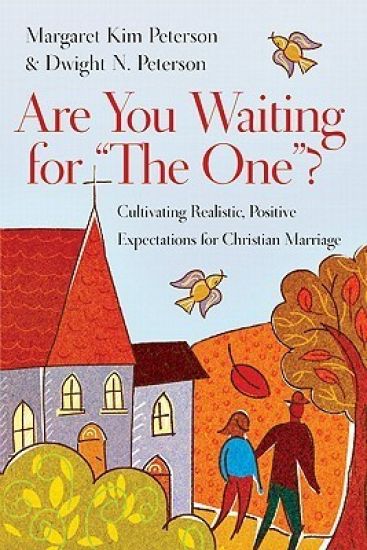
Are You Waiting for "The One"? – Cultivating Realistic, Positive Expectations for Christian Marriage
Margaret Kim Peterson; Dwight N. Peterson
Inter-Varsity Press,US
2011
nidottu
Does God want to write your love story? Well, maybe not—especially not if it is the culture's romanticized ideal of happily ever after! Margaret and Dwight Peterson help us sort out the difference between how our surrounding society often depicts marriage and how Christians really should approach this particular gift of God to all humanity. They guide us through many aspects of a growing, maturing marriage including being a family, handling conflict, friendship, children, household economics and weathering the transitions of life. In the end they show how Christian marriage is far deeper and stronger than a romantic fairy tale. In fact, it reflects the kind of love God has for us in the gospel of Jesus Christ who gave his life for us that we might have his life in us.
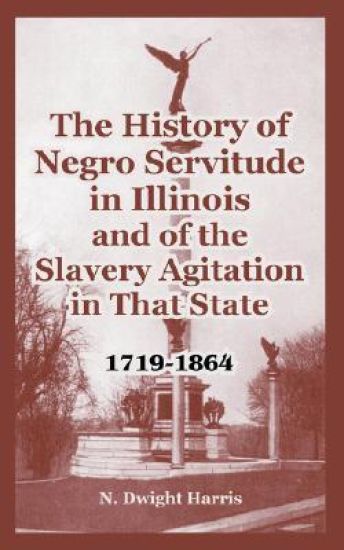
The History of Negro Servitude in Illinois and of the Slavery Agitation in That State
N Dwight Harris
University Press of the Pacific
2004
pokkari
Originally a University of Chicago doctoral dissertation, the first work of its kind, and the most thorough history of slavery in any state, of particular interest for its coverage of the work of Elijah P. Lovejoy, the Alton Riots, the evolution of the Free Soil Party, the Lincoln-Douglas debates, and subsequent post-Civil war developments. This study of the pro - and anti-slavery agitation in the state from 1719 to 1864 is cited and recommended in: Bibliography of Comparative Literature - Baldensperger. At the time of book publication in 1904, N. Dwight Harris, Ph.D., was Professor of History in Lawrence University.

Memorial Tribute to the Late Hon. D.N. Lathrope. Including Letters of Travel in Europe, Virginia and the West
Dwight Noble Lathrope
Outlook Verlag
2024
nidottu

Memorial Tribute to the Late Hon. D.N. Lathrope. Including Letters of Travel in Europe, Virginia and the West
Dwight Noble Lathrope
Antigonos Verlag
2025
nidottu