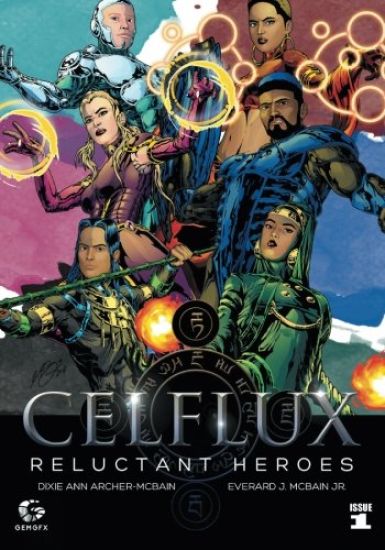
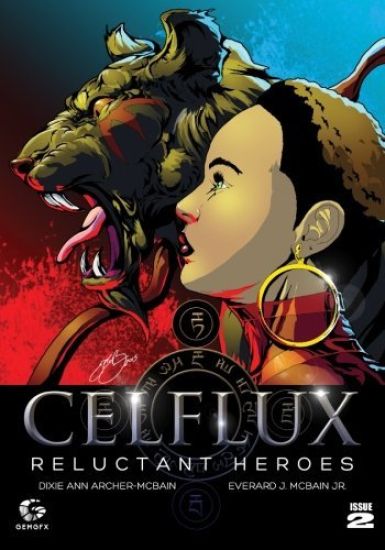
The second issue of the first volume of Celflux Reluctant Heroes. We join Okira, the kind-hearted, benevolent priestess from the realm of Erqua, as her journey begins. We see her face her first test. Will she succeed, or will the task seem to great for her? The epic begins now.
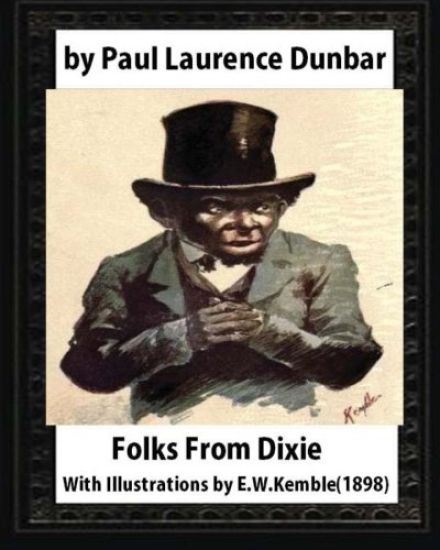
Edward Windsor Kemble (January 18, 1861 - September 19, 1933), usually cited as E. W. Kemble, was an American illustrator. He is known best for illustrating the first edition of Adventures of Huckleberry Finn and for his cartoons of African Americans.......... Paul Laurence Dunbar (June 27, 1872 - February 9, 1906) was an American poet, novelist, and playwright of the late 19th and early 20th centuries. Born in Dayton, Ohio, to parents who had been enslaved in Kentucky before the American Civil War, Dunbar began to write stories and verse when still a child; he was president of his high school's literary society. He published his first poems at the age of 16 in a Dayton newspaper. Much of Dunbar's more popular work in his lifetime was written in the Negro dialect associated with the antebellum South, though he also used the Midwestern regional dialect of James Whitcomb Riley. Dunbar's work was praised by William Dean Howells, a leading editor associated with the Harper's Weekly, and Dunbar was one of the first African-American writers to establish an international reputation. He wrote the lyrics for the musical comedy In Dahomey (1903), the first all-African-American musical produced on Broadway in New York. The musical later toured in the United States and the United Kingdom. Dunbar also wrote in conventional English in other poetry and novels. Since the late 20th century, scholars have become more interested in these other works. Suffering from tuberculosis, which then had no cure, Dunbar died in Dayton at the age of 33. Early life: Paul Laurence Dunbar was born at 311 Howard Street in Dayton, Ohio, on June 27, 1872, to parents who had been enslaved in Kentucky before the American Civil War. After being emancipated, his mother Matilda had moved to Dayton with other family members, including her two sons Robert and William from her first marriage. Dunbar's father Joshua had escaped from slavery in Kentucky before the war ended. He traveled to Massachusetts and volunteered for the 55th Massachusetts Infantry Regiment, one of the first two black units to serve in the war. The senior Dunbar also served in the 5th Massachusetts Cavalry Regiment. Paul Dunbar was born six months after Joshua and Matilda married on Christmas Eve, 1871. The marriage of Dunbar's parents was troubled and Dunbar's mother left Joshua soon after having their second child, a daughter.Joshua died on August 16, 1885; Paul was then 12 years old. Dunbar wrote his first poem at the age of six and gave his first public recital at the age of nine. His mother assisted him in his schooling, having learned to read expressly for that purpose. She often read the Bible with him, and thought he might become a minister in the African Methodist Episcopal Church. It was the first independent black denomination in America, founded in Philadelphia in the early 19th century. Dunbar was the only African-American student during his years at Central High School in Dayton; Orville Wright was a classmate and friend. Well-accepted, he was elected as president of the school's literary society, and became the editor of the school newspaper and a member of the debate club........
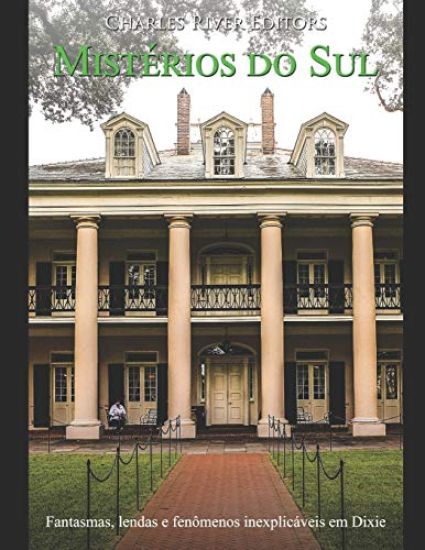
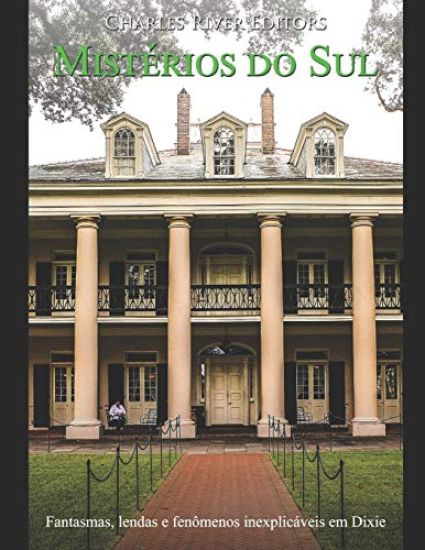
O sul da Am rica deu origem a muitas das grandes hist rias e lendas do pa s. Desde os primeiros tempos coloniais, tem sido um lugar de mist rio, repleto de col nias desaparecidas e apari es estranhas na floresta, mas a longa e orgulhosa hist ria do Sul sempre teve um lado mais sombrio e estranho.Um dos mist rios mais famosos da Am rica foi o primeiro. Apesar de ter deixado mais de 100 colonos na ilha de Roanoke em 1587, John White voltou a literalmente nada, com todos os vest gios do assentamento desaparecidos e nenhuma evid ncia de luta ou qualquer outra coisa que pudesse explicar o desaparecimento dos habitantes. White encontrou a palavra "Croatoan" esculpida em uma rvore pr xima, o que ele imaginou que poderia significar que os colonos se mudaram para uma ilha pr xima, mas ele n o foi capaz de realizar uma expedi o de busca por l . Os espanh is tamb m procuraram a col nia na esperan a de destru -la, mas nenhum dos europeus conseguiu encontrar os colonos de Roanoke ou explicar o que aconteceu com a col nia "perdida". O destino de Roanoke fascina as pessoas h mais de 400 anos, e n o faltam teorias sobre o desaparecimento da col nia. Al m da possibilidade de os colonos se mudarem para a ilha Croatoan, a maioria das teorias especula que eles foram exterminados por nativos americanos pr ximos ou assimilados por uma tribo.Os futuros assentamentos na rea sobreviveriam e come ariam a florescer, o que traria mais mist rio e fen menos inexplic veis. Contos de monstros e fantasmas espreita em seus bosques e casas antigas, e estranhos monumentos que podem ser de uma civiliza o esquecida, confundem os investigadores locais. Enquanto isso, os primeiros habitantes sempre foram supersticiosos, seja na Fl rida, Ge rgia, Maryland, Carolina do Norte, Carolina do Sul, Virg nia, Virg nia Ocidental, Alabama, Kentucky, Mississippi, Tennessee e leste da Louisiana.Mist rios do Sul: Fantasmas, lendas e fen menos inexplic veis em Dixie mostram uma amostra de hist rias estranhas, inexplic veis e simplesmente estranhas do Sul que fascinam as pessoas na regi o e nos arredores h s culos. Juntamente com fotos de pessoas, lugares e eventos importantes, voc aprender sobre o lado misterioso do Sul como nunca antes, em nenhum momento.
O sul da Am rica deu origem a muitas das grandes hist rias e lendas do pa s. Desde os primeiros tempos coloniais, tem sido um lugar de mist rio, repleto de col nias desaparecidas e apari es estranhas na floresta, mas a longa e orgulhosa hist ria do Sul sempre teve um lado mais sombrio e estranho.Um dos mist rios mais famosos da Am rica foi o primeiro. Apesar de ter deixado mais de 100 colonos na ilha de Roanoke em 1587, John White voltou a literalmente nada, com todos os vest gios do assentamento desaparecidos e nenhuma evid ncia de luta ou qualquer outra coisa que pudesse explicar o desaparecimento dos habitantes. White encontrou a palavra "Croatoan" esculpida em uma rvore pr xima, o que ele imaginou que poderia significar que os colonos se mudaram para uma ilha pr xima, mas ele n o foi capaz de realizar uma expedi o de busca por l . Os espanh is tamb m procuraram a col nia na esperan a de destru -la, mas nenhum dos europeus conseguiu encontrar os colonos de Roanoke ou explicar o que aconteceu com a col nia "perdida". O destino de Roanoke fascina as pessoas h mais de 400 anos, e n o faltam teorias sobre o desaparecimento da col nia. Al m da possibilidade de os colonos se mudarem para a ilha Croatoan, a maioria das teorias especula que eles foram exterminados por nativos americanos pr ximos ou assimilados por uma tribo.Os futuros assentamentos na rea sobreviveriam e come ariam a florescer, o que traria mais mist rio e fen menos inexplic veis. Contos de monstros e fantasmas espreita em seus bosques e casas antigas, e estranhos monumentos que podem ser de uma civiliza o esquecida, confundem os investigadores locais. Enquanto isso, os primeiros habitantes sempre foram supersticiosos, seja na Fl rida, Ge rgia, Maryland, Carolina do Norte, Carolina do Sul, Virg nia, Virg nia Ocidental, Alabama, Kentucky, Mississippi, Tennessee e leste da Louisiana.Mist rios do Sul: Fantasmas, lendas e fen menos inexplic veis em Dixie mostram uma amostra de hist rias estranhas, inexplic veis e simplesmente estranhas do Sul que fascinam as pessoas na regi o e nos arredores h s culos. Juntamente com fotos de pessoas, lugares e eventos importantes, voc aprender sobre o lado misterioso do Sul como nunca antes, em nenhum momento.
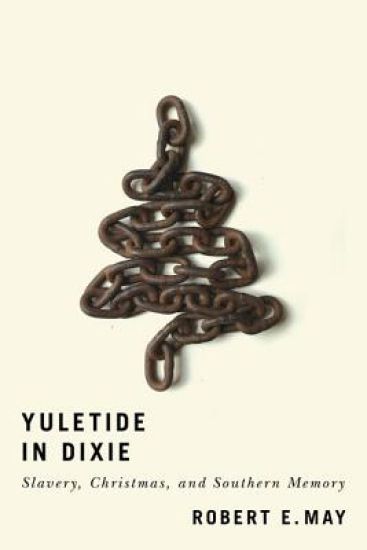
How did enslaved African Americans in the Old South really experience Christmas? Did Christmastime provide slaves with a lengthy and jubilant respite from labor and the whip, as is generally assumed, or is the story far more complex and troubling? In this provocative, revisionist, and sometimes chilling account, Robert E. May chides the conventional wisdom for simplifying black perspectives, uncritically accepting southern white literary tropes about the holiday, and overlooking evidence not only that countless southern whites passed Christmases fearful that their slaves would revolt but also that slavery’s most punitive features persisted at holiday time.In Yuletide in Dixie, May uncovers a dark reality that not only alters our understanding of that history but also sheds new light on the breakdown of slavery in the Civil War and how false assumptions about slave Christmases afterward became harnessed to myths undergirding white supremacy in the United States. By exposing the underside of slave Christmases, May helps us better understand the problematic stereotypes of modern southern historical tourism and why disputes over Confederate memory retain such staying power today. A major reinterpretation of human bondage, Yuletide in Dixie challenges disturbing myths embedded deeply in our culture.
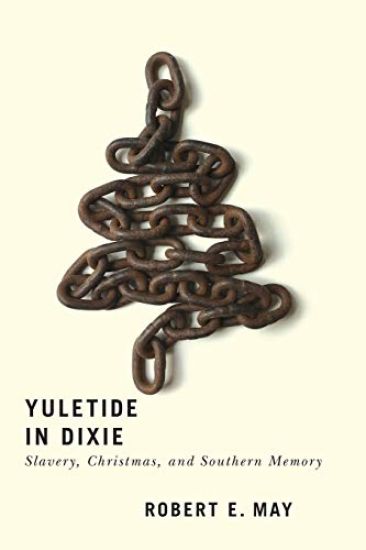
How did enslaved African Americans in the Old South really experience Christmas? Did Christmastime provide slaves with a lengthy and jubilant respite from labor and the whip, as is generally assumed, or is the story far more complex and troubling? In this provocative, revisionist, and sometimes chilling account, Robert E. May chides the conventional wisdom for simplifying black perspectives, uncritically accepting southern white literary tropes about the holiday, and overlooking evidence not only that countless southern whites passed Christmases fearful that their slaves would revolt but also that slavery's most punitive features persisted at holiday time.In Yuletide in Dixie, May uncovers a dark reality that not only alters our understanding of that history but also sheds new light on the breakdown of slavery in the Civil War and how false assumptions about slave Christmases afterward became harnessed to myths undergirding white supremacy in the United States. By exposing the underside of slave Christmases, May helps us better understand the problematic stereotypes of modern southern historical tourism and why disputes over Confederate memory retain such staying power today. A major reinterpretation of human bondage, Yuletide in Dixie challenges disturbing myths embedded deeply in our culture.