Reprint of the original, first published in 1872. The publishing house Anatiposi publishes historical books as reprints. Due to their age, these books may have missing pages or inferior quality. Our aim is to preserve these books and make them available to the public so that they do not get lost.
Reprint of the original, first published in 1872. The publishing house Anatiposi publishes historical books as reprints. Due to their age, these books may have missing pages or inferior quality. Our aim is to preserve these books and make them available to the public so that they do not get lost.
In March 1983 the Secretary of State for Welfare, Health and Cultural Affairs appointed the Steering Committee on Future Health Scenarios (STG). The task of the STG is to advise the Minister on the future of public health and health care in the long term in the Netherlands with a view to increasing the anticipatory capacity of government policy. Since 1983 the STG has set up a number of committees, including the Scenario Committee on AIDS, with a view to mapping out possible scenarios in their particular field of interest. The committees report in the form of scenario reports, which are of relevance not just to the national government but also to others involved in policy development and opinion formation in the field in question. What proportions will the HIV/AIDS epidemic assume and how many new HIV infections can be averted by HIV/AIDS prevention campaigns? How much care and support will people with HIV and AIDS need and what successes can be expected within the care sector? What will be the social consequences of AIDS and how can ostracism and the social isolation of people with HIV and AIDS be avoided? These and other related questions form the subject of this book, which examines the sociocultural and economic impact of AIDS in the Netherlands up to the year 2000. The book presents a study carried out by the Netherlands Institute of Mental Health (NcGv) and the National Institute of Public Health and Environmental Protection (RIVM), under the direction of the STG Scenario Committee on AIDS. The researchers look back at the epidemiological, sociocultural and economic impact of AIDS in the Netherlands during the first decade of the epidemic and, on the basis of this, use scenario analysis to project the impact of AIDS up to the year 2000. The future projections relate both to the impact of AIDS and the maximization of efforts to combat the disease. In addition to a scenario exploring the impact of AIDS if developments continue unchanged, alternative scenarios are also put forward. These focus on the impact of significant changes in such diverse fields as sexual behaviour, injecting drug use, the effectiveness and organization of HIV/AIDS prevention programmes, and the demand for delivery of care. The book concludes that the impact of AIDS will only become fully apparent in the second decade of the epidemic. The authors consider the implications of this conclusion for HIV/AIDS prevention programmes, research, care and the efforts to counter the socially undesirable impacts of AIDS.
This anthology of essays on E.M. Forster's major novels draws together approaches from many aspects of new critical theory. As well as essays on The Longest Journey, A Room With a View, Maurice, Howards End and A Passage to India, the volume includes a specially-commissioned essay on the recent spate of Forster films. The casebook establishes a new case for Forster as a figure of more than merely conventional interest with a central place in twentieth-century literature.
In Howards End , Forster remarks that the Imperialist 'hopes to inherit the earth' and with the strong temptation he has to acclaim it 'as a superyeoman, who carries his country's virtue overseas'. He then adds: 'But the Imperialist is not what he thinks or seems. He is a destroyer. He prepares the way for cosmopolitanism, and though his ambitions may be fulfilled the earth that he inherits will be grey'. This simple notion is masterly expressed in A Passage to India , which provides a rich diversity of historical contexts and implies political imperatives urging us to rethink the complex relationship between East and West not as simple confrontation but rather as deeply rooted in cultural differences far beyond the realm of imperialist sensibility. With the support of material by Forster published here for the first time, this volume explores the realm of Forster's politics and imperialism.
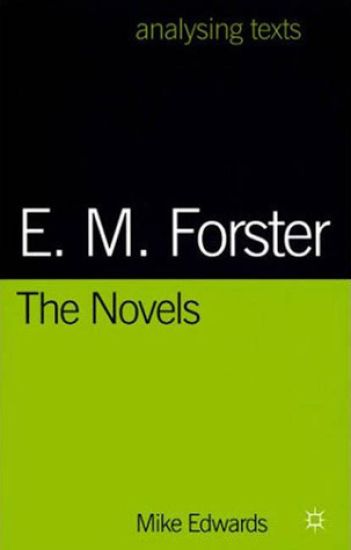
E. M. Forster's writings have enjoyed remarkable popularity since the early years of the twentieth century. Their strongly visual quality, vividly evoking the English landscape as well as the more exotic settings of Italy and India, has lent itself to adaptation in several highly successful films. Forster's masterpiece A Passage to India, has a powerful popular appeal and an assured place in the English literary heritage. This guide seeks to explore creatively the fascination of Forster's writing and to show how interesting ideas can emerge from close reading of extracts from the novels. The approach is open-minded. Readers are encouraged to think for themselves, enjoy evolving their own interpretations and have confidence in the judgements they arrive at. Detailed analysis brings out the delicate balance of the novels - the humour, irony and ambiguity underlying the urbane, readable surface, and their unique blending of realism, comedy and romance. The result is a deeper appreciation of the subtlety and range of Forster's ideas, the technical mastery of his work, and the unconventional cast of his mind.
E. M. Forster's writings have enjoyed remarkable popularity since the early years of the twentieth century. Their strongly visual quality, vividly evoking the English landscape as well as the more exotic settings of Italy and India, has lent itself to adaptation in several highly successful films. Forster's masterpiece A Passage to India, has a powerful popular appeal and an assured place in the English literary heritage. This guide seeks to explore creatively the fascination of Forster's writing and to show how interesting ideas can emerge from close reading of extracts from the novels. The approach is open-minded. Readers are encouraged to think for themselves, enjoy evolving their own interpretations and have confidence in the judgements they arrive at. Detailed analysis brings out the delicate balance of the novels - the humour, irony and ambiguity underlying the urbane, readable surface, and their unique blending of realism, comedy and romance. The result is a deeper appreciation of the subtlety and range of Forster's ideas, the technical mastery of his work, and the unconventional cast of his mind.
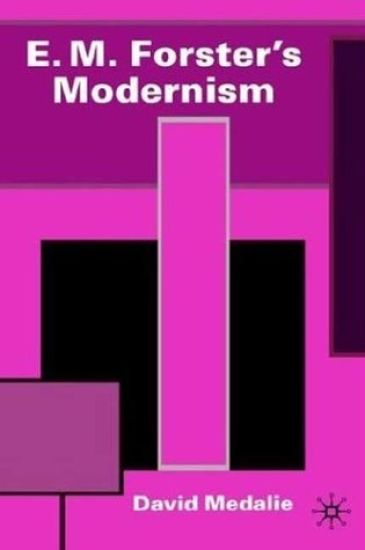
This volume is a comprehensive investigation into Forster's relationship to Modernism. It advances the argument that Forster's fiction embodies an important strand within modernism and in doing so makes the case for a new definition and interpretation of "modernism".
E.M.B.R.A.C.E. is a Motivational Non-Fiction Book, written for individuals so they can acknowledge that pain, downfalls, struggles, and mistakes are a part of life but with perseverance, self-will, and simply effort are acquired, Success will be conquered Empower, Motivate, Build, Respect, Assert, Communicate, and Execute all positive ambitions and endeavors all the days of your life
This set comprises 40 volumes covering 19th and 20th century European and American authors. These volumes will be available as a complete set, mini boxed sets (by theme) or as individual volumes. This second set compliments the first 68 volume set of Critical Heritage published by Routledge in October 1995.
E. M. Forster's most challenging work, A Passage to India has since 1924 provoked debate on topics from imperialism to modernism to ethnicity, sexuality and symbolism. This sourcebook introduces not only the novel but the key issues which surround it. This sourcebook offers: * a contextual and biographical overview, with a chronology of important dates * contemporary reviews * key extracts from Forster's relevant essays, books and articles * a summary of the work's critical history *substantial recent essays by important critics of the novel * a consideration of film and television adaptations * a guide to further reading. The most complete guide to Forster's novel available, this sourcebook will be essential reading for all students of A Passage to India.
E. M. Forster's most challenging work, A Passage to India has since 1924 provoked debate on topics from imperialism to modernism to ethnicity, sexuality and symbolism. This sourcebook introduces not only the novel but the key issues which surround it. This sourcebook offers: * a contextual and biographical overview, with a chronology of important dates * contemporary reviews * key extracts from Forster's relevant essays, books and articles * a summary of the work's critical history *substantial recent essays by important critics of the novel * a consideration of film and television adaptations * a guide to further reading. The most complete guide to Forster's novel available, this sourcebook will be essential reading for all students of A Passage to India.




![Annals of the Parish of Halton. Collected and Edited by E. M[ackreth].](/covers/9781241084547.jpg)