Kirjojen hintavertailu. Mukana 11 342 296 kirjaa ja 12 kauppaa.

Kirjahaku

Etsi kirjoja tekijän nimen, kirjan nimen tai ISBN:n perusteella.

1000 tulosta hakusanalla E. H. Seidler

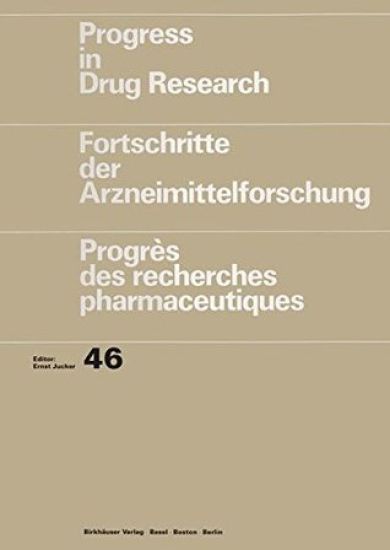
Progress in Drug Research/Fortschritte der Arzneimittelforschung/Progrès des recherches pharmaceutiques

Progress in Drug Research/Fortschritte der Arzneimittelforschung/Progrès des recherches pharmaceutiques

Norman K. Hollenberg; Steven W. Graves; Robert B. McCall; William T. Jackson; Jerome H. Fleisch; M. Margaglione; E. Grandone; F. P. Mancini; G. Di Minno; N. Seiler; A. Hardy; J. P. Moulinoux; James Claghorn; Michael D. Lesem; Eric J. Lien; Arima Das; Linda L. Lien

Springer Basel
2011
nidottu
Volume 46 of "Progress in Drug Research" contains seven reviews and the various indexes which facilitate its use and establish the connection with the previous volumes. The articles in this volume deal with endo- genous sodium pump inhibition, with neurotransmitters involved in the central regulation of the cardiovascular system, with leukotrienes and development of novel anti-inflammatory agents, with antithrombotic stra- tegies and drugs affecting the plasma fibrinogen levels, with natural ami- noglycosides and polyamines and their effects in the mammalian orga- nism, with the latest developments in antidepressant agents and with immunopharmacological and biochemical bases of Chinese herbal medi- cine. These reviews provide valuable information on several new deve- lopments in the complex domain of drug research. In the 37 years that PDR has existed, the Editor has enjoyed the valua- ble help and advice of many colleagues. Readers, the authors of the reviews and, last but not least, the reviewers have all contributed greatly to the success of this series of monographs. Although the comments received so far have generally been favorable, it is nevertheless necessary to analyze and to reassess the current position and the future direction of such publi- cations.
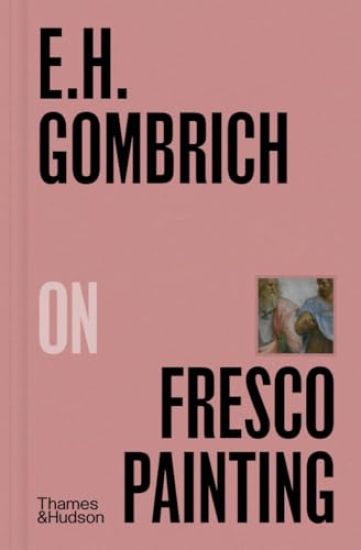
E.H.Gombrich on Fresco Painting

E.H.Gombrich on Fresco Painting

E. H. Gombrich

THAMES HUDSON LTD
2024
sidottu
‘Thames & Hudson’s new, affordable, covetable ‘Pocket Perspectives’: beautifully illustrated essays by canonical writers’ Financial Times An interpretation of the history of mural painting from ancient Egypt to the twentieth century by one of most eminent art historians of all time, who wielded huge influence over both his professional peers and a vast popular readership. Surprising, questioning, challenging, enriching: the Pocket Perspectives series celebrates writers and thinkers who have helped shape the conversation across the arts. Mixing classic and contemporary texts, reissues and abridgements, these are bite-sized, fully illustrated reads in an attractive, affordable and highly collectable package.
E. H. Carr and International Relations

E. H. Carr and International Relations

Charles Jones

Cambridge University Press
1998
sidottu
E. H. Carr is widely remembered as an influential theorist of international relations. The scourge of inter-war idealists, he became the best-known Briton in a generation of predominantly American political realists. But Carr's realism differed greatly from that of his contemporaries: a vigorous advocate of social and economic planning and friend of the Soviet Union, he stood closer to Lenin than to Morgenthau. In this book Charles Jones makes sense of Carr's distinctive form of realism by examining his rhetoric and the reciprocal relationship between theory and policy-making in his writings. Close attention is paid to the period from 1936, when Carr left the Foreign Office, through his subsequent career as a one-man foreign ministry at Aberystwyth, the Ministry of Information, and above all The Times, culminating in the final frustration of his schemes for continued British world power in 1947.
E. H. Carr and International Relations

E. H. Carr and International Relations

Charles Jones

Cambridge University Press
1998
pokkari
E. H. Carr is widely remembered as an influential theorist of international relations. The scourge of inter-war idealists, he became the best-known Briton in a generation of predominantly American political realists. But Carr’s realism differed greatly from that of his contemporaries: a vigorous advocate of social and economic planning and friend of the Soviet Union, he stood closer to Lenin than to Morgenthau. In this book Charles Jones makes sense of Carr’s distinctive form of realism by examining his rhetoric and the reciprocal relationship between theory and policy-making in his writings. Close attention is paid to the period from 1936, when Carr left the Foreign Office, through his subsequent career as a one-man foreign ministry at Aberystwyth, the Ministry of Information, and above all The Times, culminating in the final frustration of his schemes for continued British world power in 1947.
E. H. Carr: Imperialism, War and Lessons for Post-Colonial IR

E. H. Carr: Imperialism, War and Lessons for Post-Colonial IR

Haro L Karkour

Springer Nature Switzerland AG
2022
sidottu
This book highlights important parallels between Carr and three influential figures in the first wave of post-colonialism—DuBois, Césaire and Fanon—on the analysis of imperialism and the causes of war. Specifically, Carr’s analysis of imperialism and war parallels the first wave post-colonial thinkers in two respects. First, Carr’s work historically situates imperialism in the context of the social question in Western democracies. Second, Carr’s work provides an ideology critique to Enlightenment rationalism, which postulates that ‘reason could determine what [are] the universally valid moral laws’ and thus ‘by the voice of reason men could be persuaded both to save their own immoral souls and to move along the path of political enlightenment and progress’ (Carr 1984, 22 and 24). Carr’s ideology critique exposes the Enlightenment’s pretences of reason and universality as a deceptive plea that legitimates imperialism. These parallels, the book argues, reveal that Carr didnot only recognise global hierarchy, but also theorised the role of what Julian Go refers to as the ‘episteme of empire’—that is, ‘the meanings and modalities of seeing and knowing that … accompanied empire and made it possible in the first place’ (Go 2017, 19–20). Carr’s IR theory, in short, was much closer to post-colonial thinking than previously appreciated in the discipline.
E. H. Carr: Imperialism, War and Lessons for Post-Colonial IR

E. H. Carr: Imperialism, War and Lessons for Post-Colonial IR

Haro L Karkour

Springer Nature Switzerland AG
2023
nidottu
This book highlights important parallels between Carr and three influential figures in the first wave of post-colonialism—DuBois, Césaire and Fanon—on the analysis of imperialism and the causes of war. Specifically, Carr’s analysis of imperialism and war parallels the first wave post-colonial thinkers in two respects. First, Carr’s work historically situates imperialism in the context of the social question in Western democracies. Second, Carr’s work provides an ideology critique to Enlightenment rationalism, which postulates that ‘reason could determine what [are] the universally valid moral laws’ and thus ‘by the voice of reason men could be persuaded both to save their own immoral souls and to move along the path of political enlightenment and progress’ (Carr 1984, 22 and 24). Carr’s ideology critique exposes the Enlightenment’s pretences of reason and universality as a deceptive plea that legitimates imperialism. These parallels, the book argues, reveal that Carr didnot only recognise global hierarchy, but also theorised the role of what Julian Go refers to as the ‘episteme of empire’—that is, ‘the meanings and modalities of seeing and knowing that … accompanied empire and made it possible in the first place’ (Go 2017, 19–20). Carr’s IR theory, in short, was much closer to post-colonial thinking than previously appreciated in the discipline.
M e t a m o r p h I A

M e t a m o r p h I A

Alison Boyle

Lulu.com
2015
nidottu
Metamorphia is essentially a tale of fulfilment. It is set in an uncertain place, in an uncertain time, but has features that everyone can identify with. The main characters comprise a witch, a dragon, a duke and a small boy, all of whom share a commonality - they are seeking for something that they lack in their life. The witch hopes for love, the dragon contentment, the duke recognition and the small boy friendship. They do find that for which they are searching, but not from the source they had expected. For some of them, and other characters, they do not even know what it is they are searching for until they are finally presented with it. Add the ambiguities and indecision of officialdom to passion and everlasting hope and you have a complete story which tugs at the heart.
Study Guide to John E. H. Sherry, "the Laws of Innkeepers, Third Edition"
Here is the new, completely updated and expanded edition of the indispensable handbook used throughout the hospitality industry since The Laws of Innkeepers first appeared in 1972. Containing all the legal information essential to the successful operation of modern hotels, motels, inns, bed-and-breakfasts, clubs, restaurants, and resorts, the book has been extensively revised by John E. H. Sherry to accomodate the far-reaching changes that have occured since the publication of the revised edition in 1981. Sherry, a practicing lawyer and professor of hotel administration, carries over from the highly praised earlier editions detailed information on the rights and responsibilities of host and guest alike. He cites actual cases—ranging from the amusing and the bizarre to the tragic—as examples, and spells out in precise and readily understandable terms exactly what state and federal law says. Broadening the scope of the book to keep up with recent legal developments, the author includes many new case decisions and sumamries from various jurisdictions. Three chapters devoted to employment law, environmental law and land use, and catastrophic risk liability are among the highlights of the new material. These new sections present recent rulings and case law on such timely topics as age, disability, and AIDS discrimination, as well as sexual harassment; government regulation of toxic and hazardous substances and hotel and resort development; and acts of God and the Public Enemy and terrorism.