
Kirjahaku
Etsi kirjoja tekijän nimen, kirjan nimen tai ISBN:n perusteella.
1000 tulosta hakusanalla E. M. Snowden
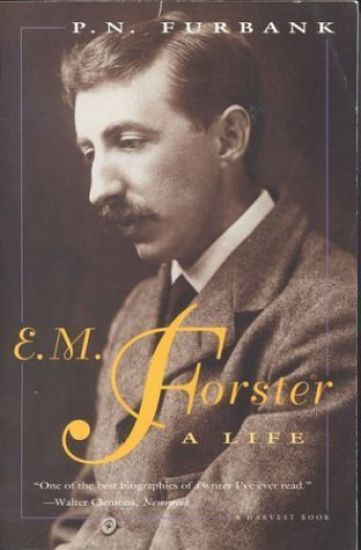
P. N. Furbank's 1978 two-volume portrait, combined here into one edition, is generally considered the definitive biography of novelist E. M. Forster. "One of the best biographies of a writer I've ever read."--Walter Clemons, Newsweek

E. M. Forster: Centenary Revaluations
Palgrave Macmillan
1982
sidottu

E. M. Forster
Palgrave Macmillan
1992
sidottu
This volume of interviews and recollections offers a kaleidoscopic view of E.M. Forster's character as observed and remembered by college associates, close friends, chance acquaintances and fellow writers. These forty-six pieces, some published here for the first time, variously reveal facets of his private and public personalities: Forster the subtle analyst of middle-class England, the spokesman for liberal causes and humane values, the Cambridge insider and the committed friend.
Forster's literary career is assessed in relation to works that mark its phases: his suburban novels, the Indian novel, the BBC talks, and first and last, his short fiction. This study traces evidences of his keen awareness of political and social undercurrents as discovered in the works: the importance of personal relations, culture as a precious heritage, and the creative artist as definer of cultural values and encourager of those who should preserve them.
Originally published in 1975, E. M. Forster: The Personal Voice draws on information about the life and works of E. M. Forster that came to light following his death in 1970. Exploring in particular the publication of Maurice in 1971, The Life to Come in 1972, and the Forster papers in King's College Library, Cambridge, this volume is an extensive study of E. M. Forster. It provides a comprehensive and detailed overview of Forster's work, his intellectual and literary background, his personality, and the reception of his work. E. M. Forster: The Personal Voice places Forster's works in their social and cultural context and provides an excellent insight into his development as a writer.
Originally published in 1975, E. M. Forster: The Personal Voice draws on information about the life and works of E. M. Forster that came to light following his death in 1970. Exploring in particular the publication of Maurice in 1971, The Life to Come in 1972, and the Forster papers in King's College Library, Cambridge, this volume is an extensive study of E. M. Forster. It provides a comprehensive and detailed overview of Forster's work, his intellectual and literary background, his personality, and the reception of his work. E. M. Forster: The Personal Voice places Forster's works in their social and cultural context and provides an excellent insight into his development as a writer.
Edward Morgan Forster died in 1970 at the age of 91, having achieved a world-wide reputation as an outstanding writer. Though best-known for his novels - Howard's End and A Passage to India are arguably the finest - he was also a brilliant critic and essayist and the author of some remarkable short stories.Forster was born into a mixed family background of bohemia and prim respectability. Indulged, cosseted, dressed up and shown off by his adored mother Lily, it was not surprising that he found public school life painfully harsh. Cambridge began the emancipation - intellectual, artistic, social, and sexual - which Forster's experiences abroad, his growing literary reputation, his deep friendships, and his love affairs were to extend.In his closing years Forster invited Furbank, a close friend, to write his biography. Based on the full range of private diaries, correspondence, and personal reminiscences, this book (first published in 1977) is the authorized and definitive 'life' of Forster. In the words of John Bayley, 'it is impossible to overpraise Furbank's style and sympathy as a biographer'; according to Noel Annan, 'he has done what Forster asked his biographer to do: he has told the truth'.
E. M. Forster 'A Passage to India': everything you need to catch up, study and prepare for 2025 assessments and 2026 exams
Nigel Messenger
Pearson Education Limited
1999
pokkari
York Notes Advanced offer a fresh and accessible approach to English Literature. This market-leading series has been completely updated to meet the needs of today's A-level and undergraduate students. Written by established literature experts, York Notes Advanced intorduce students to more sophisticated analysis, a range of critical perspectives and wider contexts.

E. M. Forster
Southern Illinois Univ Pr
1967
sidottu
Through attending to the nonhuman, E. M. Forster’s Material Humanism: Queer Matters places Forster’s fiction in conversation with contemporary debates concerned with the intersection of neomaterialism, environmental humanities, and queer ecology. The book revisits Forster’s liberal humanism from a materialist perspective by focusing on humans’ embodied activities in artificial and natural environments. By examining the everyday embodied experiences of characters, the book thus brings to the fore insignificant and sometimes overlooked aspects in Forster’s fiction. It also places importance on the texts’ treatment of queer intimacy as an embodied experience that can transcend sexual desire. The book acknowledges nonhuman agency as central to our understanding of queerness in Forster’s texts and studies the representation of formless matters such as dust as a way through which Forster’s ecological concerns arise by linking the fate of oppressed humans with oppressed nonhuman others.
Through attending to the nonhuman, E. M. Forster’s Material Humanism: Queer Matters places Forster’s fiction in conversation with contemporary debates concerned with the intersection of neomaterialism, environmental humanities, and queer ecology. The book revisits Forster’s liberal humanism from a materialist perspective by focusing on humans’ embodied activities in artificial and natural environments. By examining the everyday embodied experiences of characters, the book thus brings to the fore insignificant and sometimes overlooked aspects in Forster’s fiction. It also places importance on the texts’ treatment of queer intimacy as an embodied experience that can transcend sexual desire. The book acknowledges nonhuman agency as central to our understanding of queerness in Forster’s texts and studies the representation of formless matters such as dust as a way through which Forster’s ecological concerns arise by linking the fate of oppressed humans with oppressed nonhuman others.
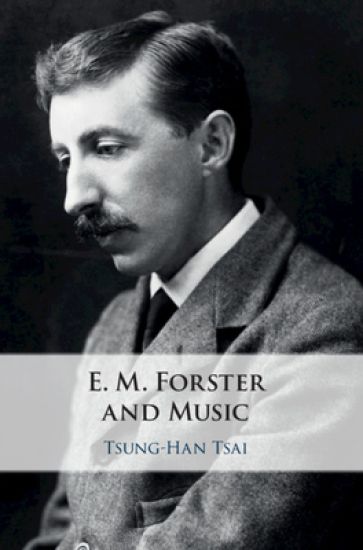
This book examines the political resonances of E. M. Forster's representations of music, offering readings of canonical and overlooked works. It reveals music's crucial role in his writing and draws attention to a previously unacknowledged eclecticism and complexity in Forster's ideological outlook. Examining unobtrusive musical allusions in a variety of Forster's writings, this book demonstrates how music provided Forster with a means of reflecting on race and epistemology, material culture and colonialism, literary heritage and national character, hero-worship and war, and gender and professionalism. It unveils how Forster's musical representations are mediated through a matrix of ideas and debates of his time, such as those about evolution, empire, Britain's relationship with the Continent, the rise of fascism, and the emergence of musicology as an academic discipline.
This title, first published in 1984, is a study of E. M. Forster as a liberal-humanist thinker and socio-literary critic. Advani discusses Forster’s ideas on man, society, politics, religion, art, aesthetics, fiction and literary criticism. The author examines why Forster was impelled from fiction towards socio-literary criticism and propaganda for art within the political and cultural context of post-Great War Britain. The book argues for Forster’s continuing importance as much more than a skilful novelist. It will be of interest to students of English cultural history, literary theory and criticism, and the work of E. M. Forster.
This title, first published in 1984, is a study of E. M. Forster as a liberal-humanist thinker and socio-literary critic. Advani discusses Forster’s ideas on man, society, politics, religion, art, aesthetics, fiction and literary criticism. The author examines why Forster was impelled from fiction towards socio-literary criticism and propaganda for art within the political and cultural context of post-Great War Britain. The book argues for Forster’s continuing importance as much more than a skilful novelist. It will be of interest to students of English cultural history, literary theory and criticism, and the work of E. M. Forster.


The Celestial Omnibus and Other Stories by E. M. Forster
E. M. Forster
Literary Licensing, LLC
2013
sidottu