
Kirjahaku
Etsi kirjoja tekijän nimen, kirjan nimen tai ISBN:n perusteella.
1000 tulosta hakusanalla E.E. Cummings
E.E. Cummings - American Writers 87 was first published in 1969. Minnesota Archive Editions uses digital technology to make long-unavailable books once again accessible, and are published unaltered from the original University of Minnesota Press editions.
E.E. Cummings to May Swenson
Library of America
2000
sidottu
"The editing is more than brilliant: It is nearly unimaginable how the Library of America team managed to do so much so well. . . . Every possible kind of poem is here in its best examples. No one has ever done a better anthology of modern American poetry, or even come close." -- Talk This second volume of the landmark two-volume Library of America anthology of twentieth-century poetry, organized chronologically by the poets' birthdates, takes the reader from E.E. Cummings (1894-1962) to May Swenson (1913-1989). In the wake of the modernist renaissance, American poets continued to experiment with new techniques and themes, while the impact of the Depression and World War II and the continuing political struggle of African Americans became part of the fabric of a literature in transition. New schools and definitions of poetry seemed often to divide the literary scene. This was the era of the Harlem Renaissance, the Objectivists, the Fugitives, the proletarian poets. It was also an era of vigorously individuated voices--knotty, defiant, sometimes eccentric. The range of tone and subject matter is immense: here are Melvin B. Tolson's swirlingly allusive Harlem portraits, Phyllis McGinley's elegant verse transcriptions of suburbia, May Swenson's playful meditations on the laws of physics. The diversity of formal approaches includes the extreme linguistic experiments of Eugene Jolas and Abraham Lincoln Gillespie, Rolfe Humphries's adaptation of traditional Welsh meter, the haiku of Richard Wright, the ballads of Helen Adam and Elder Olson, the epigrams of J.V. Cunningham. A selection of light verse is joined by lyrics from the era's greatest songwriters, including Robert Johnson, Woody Guthrie, and Ira Gershwin. Several important long poems are presented complete, including Hart Crane's The Bridge, Louis Zukofsky's Poem beginning "The" and Robert Penn Warren's Audubon: A Vision. Rounding out the volume are such infrequently anthologized figures as Vladimir Nabokov, James Agee, Tennessee Williams, and John Cage. LIBRARY OF AMERICA is an independent nonprofit cultural organization founded in 1979 to preserve our nation's literary heritage by publishing, and keeping permanently in print, America's best and most significant writing. The Library of America series includes more than 300 volumes to date, authoritative editions that average 1,000 pages in length, feature cloth covers, sewn bindings, and ribbon markers, and are printed on premium acid-free paper that will last for centuries.
AnOther E.E. Cummings
E. E. Cummings; Richard Kostelanetz
Liveright Publishing Corporation
2000
nidottu
As a poet, Cummings was a pioneer not only in linguistic and typographic inventions, but also in sound and concrete poetry. But his prose is no less experimental; he wrote memoirs, essays, and fiction that are constantly provocative and often radically experimental. To read the avant-garde Cummings is to read a writer who consistently broke with established norms, "never to rest and never to have: only to grow." To not read the avant-garde Cummings is to not read Cummings.




Like e.e. cummings, Desrosiers writes about love and death. There is such sadness in her poetry, but beauty in her memories. She is carrying on in this life without her mother, father, and many others she has lost, yet she reflects on her love for her husband and stays in the now. Reading Desrosiers' poetry is like reading small odes. We all are eavesdropping on words that are delicate and private such as: You can put your sorrows down now Mother / It is your daughter's turn to take / the concerns you carried for us. / I put your worries into this stone. / I carry it for you. Reading this book of poetry should be a pact we have with life. So beautifully written.--Gloria Mindock, editor of Červen Barva Press, author of Whiteness of Bone


A Study Guide for E.E. Cummings's "since Feeling is First"
Cengage Learning Gale
Gale, Study Guides
2017
pokkari

Puella Mea and the Collected Poetry of e.e. cummings - 1910-1926
E. E. Cummings
Ragged Hand
2022
nidottu

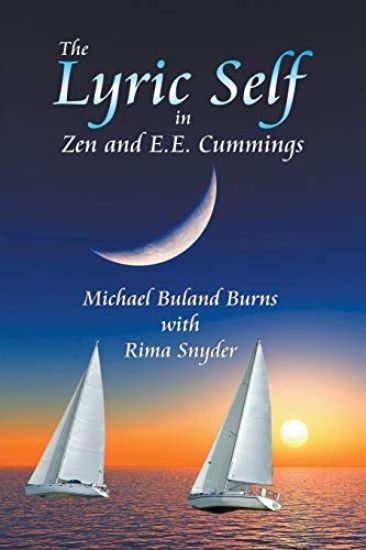
The Lyric Self in Zen and E.E. Cummings
Michael Burns; Rima Snyder
Strategic Book Publishing Rights Agency, LLC
2015
pokkari

The Man Who Heard the Song of Truth - Love as e.e. cummings' Concept of Reality
Nina Von Dahlern
VDM Verlag Dr. Mueller E.K.
2007
pokkari

Edward Estlin Cummings (1894-1962), a native of Cambridge, Massachusetts, and a Harvard University graduate, is best known for his rejection of traditional poetic forms. As e. e. cummings, he conducted radical experiments with spelling, syntax, and punctuation that inspired a revolution in twentieth-century literary expression and excited the admiration and affection of poetry lovers of all ages. With his 1923 debut, Tulips & Chimneys, the 25-year-old poet rattled the conservative literary scene, directing his avant-garde approach to the traditional subjects of love, life, time, and beauty. His playful treatment of punctuation and language adds enduring zest to such popular and oft-anthologized poems as ""All in green went my love riding,"" ""in Just-,"" ""Tumbling-hair,"" ""O sweet spontaneous,"" ""Buffalo Bill's,"" and ""the Cambridge ladies who live in furnished souls."" This edition presents complete and textually accurate editions of Cummings's work, in keeping with the original manuscripts and the poet's intentions.

This selection made by E.E. Cummings himself from eleven books of poems constitutes a comprehensive introduction to his work.