Kirjojen hintavertailu. Mukana 11 342 296 kirjaa ja 12 kauppaa.

Kirjahaku

Etsi kirjoja tekijän nimen, kirjan nimen tai ISBN:n perusteella.

1000 tulosta hakusanalla E.M. Forster; Martin Sherman

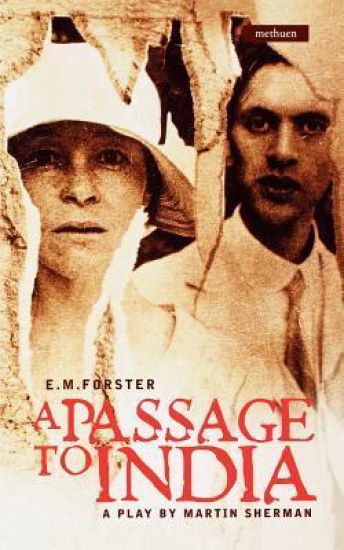
A Passage To India

A Passage To India

E.M. Forster; Martin Sherman

Methuen Drama
2002
nidottu
First major theatrical adaptation of EM Forster's classic novel for a contemporary audience Before deciding whether to marry Chandrapore's local magistrate, Adela Quested wants to discover the "real India" for herself. Newly arrived from England, she agrees to see the Marabar Caves with the charming Dr Aziz.Through this one harmless event Forster exposes the absurdity, hysteria and depth of cultural ignorance that existed in British India in the twenties. E.M. Forster's classic novel is here adapted in this highly theatrical, humorous and faithful version for the stage by the author of BENT, Martin Sherman.Published to tie in with a major new production of A PASSAGE TO INDIA produced by Shared Experience Theatre company.
E.M. Forster

E.M. Forster

Martin John Sayre

Cambridge University Press
1976
sidottu
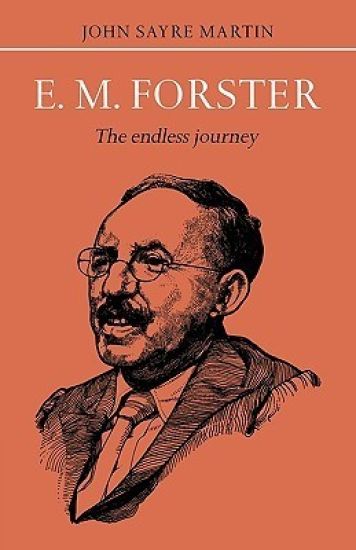
Since E. M. Forster's death in 1970, his novel Maurice and a volume of short stories have been published for the first time. When it was published in 1976, this book was one of the first full-length critical introductions to Forster's fiction to include these posthumous works. Despite the fact that most of Forster's work deals with life before the First World War, Professor Martin sees him as an essentially modern writer concerned with one of the most fundamental and persistent psychological problems of our time: the gulf between man's spiritual needs and the demands and pressures of society. Professor Martin comments closely on the text and attempts to assess the significance of the travel theme in Forster's writing and the impact of his homosexuality on the content of his fiction: he also highlights important affinities between Forster's work and that of other early twentieth-century writers, including Joyce and D. H. Lawrence.
E.M. Forster

E.M. Forster

Martin John Sayre

Cambridge University Press
1976
pokkari
Since E. M. Forster's death in 1970, his novel Maurice and a volume of short stories have been published for the first time. When it was published in 1976, this book was one of the first full-length critical introductions to Forster's fiction to include these posthumous works. Despite the fact that most of Forster's work deals with life before the First World War, Professor Martin sees him as an essentially modern writer concerned with one of the most fundamental and persistent psychological problems of our time: the gulf between man's spiritual needs and the demands and pressures of society. Professor Martin comments closely on the text and attempts to assess the significance of the travel theme in Forster's writing and the impact of his homosexuality on the content of his fiction: he also highlights important affinities between Forster's work and that of other early twentieth-century writers, including Joyce and D. H. Lawrence.
E.M. Forster

E.M. Forster

Red Globe Press
1995
nidottu
This anthology of essays on E.M. Forster's major novels draws together approaches from many aspects of new critical theory. As well as essays on The Longest Journey, A Room With a View, Maurice, Howards End and A Passage to India, the volume includes a specially-commissioned essay on the recent spate of Forster films. The casebook establishes a new case for Forster as a figure of more than merely conventional interest with a central place in twentieth-century literature.
E.M. Forster

E.M. Forster

Routledge
1997
sidottu
This set comprises 40 volumes covering 19th and 20th century European and American authors. These volumes will be available as a complete set, mini boxed sets (by theme) or as individual volumes. This second set compliments the first 68 volume set of Critical Heritage published by Routledge in October 1995.
E.M. Forster

E.M. Forster

Routledge
2013
nidottu
This set comprises 40 volumes covering 19th and 20th century European and American authors. These volumes will be available as a complete set, mini boxed sets (by theme) or as individual volumes. This second set compliments the first 68 volume set of Critical Heritage published by Routledge in October 1995.
E.M. Forster

E.M. Forster

Lionel Trilling

New Directions Publishing Corporation
1971
nidottu
“The modern novel in its most cogent and permanent form”––this has been the achievement of E. M. Forster; his masterpiece, A Passage to India, belongs with perhaps three or four other works in English at the pinnacle of literary craftsmanship in this century. Yet for many years Forster’s genius was virtually unrecognized in America. Not until 1943, when Lionel Trilling’s authoritative and discerning study was first published, did Forster find his way to a broad American audience. In this 1964 revision of the first paperbook edition, Mr. Trilling added a preface and brought the bibliography up to date. His book performs two services: it is a critical-biographical introduction to the master novelist and his works; it is in itself a primary document in the development of, contemporary American criticism. Here is criticism functioning at its best, deftly, surely, wittily, within a framework of the ideas which are basic to literary thought today.
E. M. Forster: A BBC Radio Collection

E. M. Forster: A BBC Radio Collection

E.M. Forster

BBC Worldwide Ltd
2019
cd
Dramatisations and readings of EM Forsterâ??s finest works, plus Stephen Wakelamâ??s radio play A Dose of Fame and the documentary feature Forster in India: Sex, Books and Empire One of the greatest English novelists of the 20th century, EM Forster was also an accomplished short story writer.
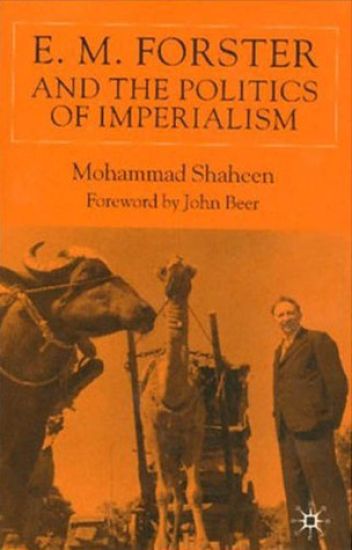
E.M. Forster and The Politics of Imperialism
In Howards End , Forster remarks that the Imperialist 'hopes to inherit the earth' and with the strong temptation he has to acclaim it 'as a superyeoman, who carries his country's virtue overseas'. He then adds: 'But the Imperialist is not what he thinks or seems. He is a destroyer. He prepares the way for cosmopolitanism, and though his ambitions may be fulfilled the earth that he inherits will be grey'. This simple notion is masterly expressed in A Passage to India , which provides a rich diversity of historical contexts and implies political imperatives urging us to rethink the complex relationship between East and West not as simple confrontation but rather as deeply rooted in cultural differences far beyond the realm of imperialist sensibility. With the support of material by Forster published here for the first time, this volume explores the realm of Forster's politics and imperialism.
E.M. Forster: The Novels

E.M. Forster: The Novels

Mike Edwards

Red Globe Press
2001
sidottu
E. M. Forster's writings have enjoyed remarkable popularity since the early years of the twentieth century. Their strongly visual quality, vividly evoking the English landscape as well as the more exotic settings of Italy and India, has lent itself to adaptation in several highly successful films. Forster's masterpiece A Passage to India, has a powerful popular appeal and an assured place in the English literary heritage. This guide seeks to explore creatively the fascination of Forster's writing and to show how interesting ideas can emerge from close reading of extracts from the novels. The approach is open-minded. Readers are encouraged to think for themselves, enjoy evolving their own interpretations and have confidence in the judgements they arrive at. Detailed analysis brings out the delicate balance of the novels - the humour, irony and ambiguity underlying the urbane, readable surface, and their unique blending of realism, comedy and romance. The result is a deeper appreciation of the subtlety and range of Forster's ideas, the technical mastery of his work, and the unconventional cast of his mind.
E.M. Forster: The Novels

E.M. Forster: The Novels

Mike Edwards

Red Globe Press
2001
nidottu
E. M. Forster's writings have enjoyed remarkable popularity since the early years of the twentieth century. Their strongly visual quality, vividly evoking the English landscape as well as the more exotic settings of Italy and India, has lent itself to adaptation in several highly successful films. Forster's masterpiece A Passage to India, has a powerful popular appeal and an assured place in the English literary heritage. This guide seeks to explore creatively the fascination of Forster's writing and to show how interesting ideas can emerge from close reading of extracts from the novels. The approach is open-minded. Readers are encouraged to think for themselves, enjoy evolving their own interpretations and have confidence in the judgements they arrive at. Detailed analysis brings out the delicate balance of the novels - the humour, irony and ambiguity underlying the urbane, readable surface, and their unique blending of realism, comedy and romance. The result is a deeper appreciation of the subtlety and range of Forster's ideas, the technical mastery of his work, and the unconventional cast of his mind.
E.M. Forster's Modernism

E.M. Forster's Modernism

David Medalie

Palgrave Macmillan
2002
sidottu
This volume is a comprehensive investigation into Forster's relationship to Modernism. It advances the argument that Forster's fiction embodies an important strand within modernism and in doing so makes the case for a new definition and interpretation of "modernism".
E.M. Forster's A Passage to India
E. M. Forster's most challenging work, A Passage to India has since 1924 provoked debate on topics from imperialism to modernism to ethnicity, sexuality and symbolism. This sourcebook introduces not only the novel but the key issues which surround it. This sourcebook offers: * a contextual and biographical overview, with a chronology of important dates * contemporary reviews * key extracts from Forster's relevant essays, books and articles * a summary of the work's critical history *substantial recent essays by important critics of the novel * a consideration of film and television adaptations * a guide to further reading. The most complete guide to Forster's novel available, this sourcebook will be essential reading for all students of A Passage to India.
E.M. Forster's A Passage to India
E. M. Forster's most challenging work, A Passage to India has since 1924 provoked debate on topics from imperialism to modernism to ethnicity, sexuality and symbolism. This sourcebook introduces not only the novel but the key issues which surround it. This sourcebook offers: * a contextual and biographical overview, with a chronology of important dates * contemporary reviews * key extracts from Forster's relevant essays, books and articles * a summary of the work's critical history *substantial recent essays by important critics of the novel * a consideration of film and television adaptations * a guide to further reading. The most complete guide to Forster's novel available, this sourcebook will be essential reading for all students of A Passage to India.
E.M. Forster's Modernism

E.M. Forster's Modernism

David Medalie

Palgrave Macmillan
2002
nidottu
This volume is a comprehensive investigation into Forster's relationship to Modernism. It advances the argument that Forster's fiction embodies an important strand within modernism and in doing so makes the case for a new definition and interpretation of "modernism".
E.M. Forster - A Passage to India

E.M. Forster - A Passage to India

Betty Jay

Palgrave Macmillan
1998
nidottu
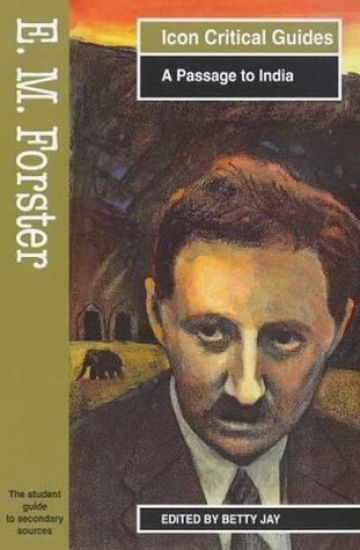
A Passage to India (1924), the last of E. M. Forster's novels to be published in his lifetime, became an immediate bestseller and also met with critical acclaim for its moral and political commentary on the crossings between individuals and cultures in the India of the British Empire. Forster's record of the terrible consequences of failed connection, of the unexpected upheavals that unsettle the calm of middle-class life, and of the challenges to the ideological foundations of Empire draw their strength from the novel's blend of intense realism and complex narrative technique. In this Readers' Guide, Betty Jay considers the establishment of Forster's reputation and the various attempts of critics to decipher the complex codes that are a feature of his novel. Successive chapters focus on debates around Forster's liberal-humanism, with essays from F. R. Leavis, Lionel Trilling and Malcolm Bradbury; on the indeterminacy and ambiguity of the text, with extracts from essays by Gillian Beer, Robert Barratt, Wendy Moffat and Jo-Ann Hoeppner Moran; and on the sexual politics of Forster's work, with writings from Elaine Showalter, Frances L. Restuccia and Eve Dawkins Poll. The Guide concludes with essays from Jeffrey Meyers and Jenny Sharpe, who read A Passage to India in terms of its engagement with British imperialism.