Kirjojen hintavertailu. Mukana 11 244 527 kirjaa ja 12 kauppaa.

Kirjahaku

Etsi kirjoja tekijän nimen, kirjan nimen tai ISBN:n perusteella.

1000 tulosta hakusanalla Edgar John 1872- Bullard

Bennett and Allied Families; Addenda to Bullard and Allied Families, by Edgar J. Bullard.
This work has been selected by scholars as being culturally important and is part of the knowledge base of civilization as we know it.This work is in the public domain in the United States of America, and possibly other nations. Within the United States, you may freely copy and distribute this work, as no entity (individual or corporate) has a copyright on the body of the work.Scholars believe, and we concur, that this work is important enough to be preserved, reproduced, and made generally available to the public. To ensure a quality reading experience, this work has been proofread and republished using a format that seamlessly blends the original graphical elements with text in an easy-to-read typeface.We appreciate your support of the preservation process, and thank you for being an important part of keeping this knowledge alive and relevant.
Bullard and Allied Families: the American Ancestors of George Newton Bullard and Mary Elizabeth Bullard / by Edgar J. Bullard.
This comprehensive guide to the Bullard family in America covers twelve generations of ancestors of George Newton Bullard and Mary Elizabeth Bullard. With detailed genealogy and fascinating historical context, Bullard and Allied Families is a must-read for anyone interested in tracing their family history or understanding more about the early settlers of America.This work has been selected by scholars as being culturally important, and is part of the knowledge base of civilization as we know it.This work is in the "public domain in the United States of America, and possibly other nations. Within the United States, you may freely copy and distribute this work, as no entity (individual or corporate) has a copyright on the body of the work.Scholars believe, and we concur, that this work is important enough to be preserved, reproduced, and made generally available to the public. We appreciate your support of the preservation process, and thank you for being an important part of keeping this knowledge alive and relevant.
Understanding John Edgar Wideman

Understanding John Edgar Wideman

D. Quentin Miller

University of South Carolina Press
2018
sidottu
Among the many gifted African American authors who emerged in the 1970s and 80s, John Edgar Wideman is one of the most challenging and innovative. His analytical mind can turn almost any topic into an intellectual adventure, whether it is playground basketball, the blues, the prison experience, father-son relationships, or the stories he lived or heard growing up in the impoverished section of Pittsburgh known as Homewood. In Understanding John Edgar Wideman, D. Quentin Miller offers a comprehensive overview of Wideman’s writings, which range from the critically acclaimed books of the Homewood Trilogy to lesser known writings such as the early novels A Glance Away and The Lynchers. Notably Miller includes the first scholarly analysis of Writing to Save a Life, Wideman’s recently published meditation on the military trial and execution of the father of civil rights martyr Emmett Till.In his fiction, nonfiction, and works that artfully combine both forms, Wideman has employed a multilayered and often difficult writing style in order to explore a wide range of topics. Miller tackles such topics as African American folk history, the intersection of personal and public history, the confluence of oral and written traditions, and the quest for meaning in nihilistic urban settings where black families struggle against crime, poverty, and despair. Miller also shows how Wideman’s singular personal history is interwoven into his writings. His impressive accomplishments, including an Ivy League education and numerous literary honors, have come alongside family tragedies. By the time his sixth novel was published, both his brother and son were serving life sentences for murder, a source of anguish that he wrestled with in Brothers and Keepers and Fatheralong.Wideman writes with such authority on so many subjects that readers frequently have no idea what to expect with a new publication. Understanding John Edgar Wideman is thus a necessary guide to a prolific, varied, and essential oeuvre.
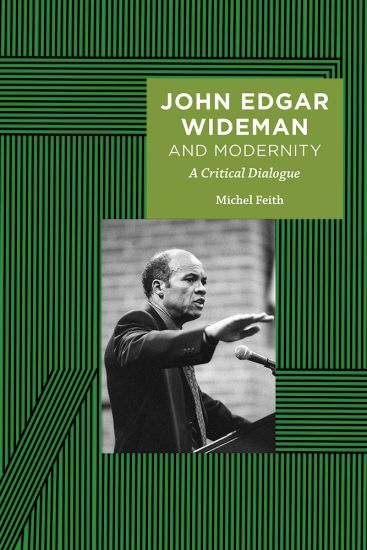
John Edgar Wideman and Modernity

John Edgar Wideman and Modernity

Michel Feith

University of Tennessee Press
2019
sidottu
The career of writer John Edgar Wideman has been the sort of success story on which America prides itself. Coming from an inner-city African American neighborhood, he studied at the Universities of Pennsylvania and Oxford; published his first novel at age twenty-six; won two PEN/Faulkner Awards, as well as a MacArthur “genius grant”; and has held several top teaching posts. But profound tragedy has also marked his life: both his brother and son received life sentences for murder, and a nephew was killed at home after a bar fight. His life thus illustrates how the strictures of “race” temper American notions of freedom and opportunity.Wideman’s engagement with race and identity has been nuanced and complex, taking the form of what Michel Feith sees as a critical dialogue with modernity–a moment in history which gave birth not only to the Enlightenment but also to American slavery and the conundrum of “race.” Feith argues that the key work in the Wideman oeuvre is The Cattle Killing (1996), his only “historical novel,” whose threads include the 1793 yellow fever epidemic in Philadelphia, the 1856–57 Cattle Killing prophecy, which wreaked havoc among the Xhosa tribe of South Africa, and the contemporary situation of black ghettos in the United States. Unfolding within the early days of the American Republic, the novel offers a window through which all of Wideman’s works and their central concerns—ghettoization, imprisonment, familial relationships, emancipation, and the diasporic sense of history—can be understood.With clarity and theoretical sophistication, Feith offers provocative new readings of Wideman’s texts, from the “Homewood” books based on his youth in Pittsburgh to his haunting memoir Brothers and Keepers. In the “postmodern” era, Feith suggests, critics of modernity are not in short supply, but few have the depth, rigor, and thoughtfulness of John Edgar Wideman.
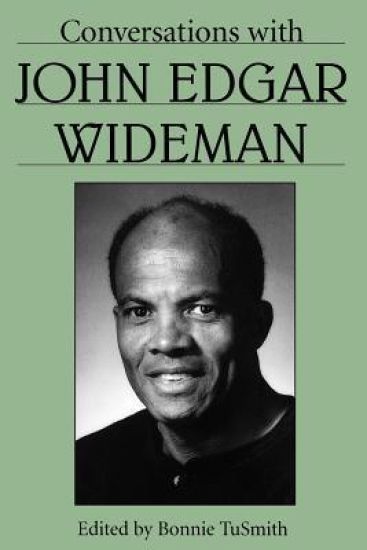
Conversations with John Edgar Wideman

Conversations with John Edgar Wideman

University Press of Mississippi
2013
nidottu
Orally or on the page, John Edgar Wideman never seems to stray far from firsthand experience. ""Writing for me is a way of opening up,"" he states in one of the interviews in this collection, ""a way of sharing, a way of making sense of the world, and writing's very appeal is that it gives me a kind of hands-on way of coping with the very difficult business of living a life.""Wideman shares the joy and pain of his life experience. The easy laughter accompanying many of these interviews shows that conversations with him can be intense and fun.This book spans thirty-five years. Wideman discusses a wide variety of topics--from postmodernism to genocide, from fatherhood to women's basketball. One of the pleasures of encountering these conversations is the glimpse they give into the workshop of the writer's mind. He is shown in the interviews to be very open about his artistic aims, techniques, and sources, whether talking about his Aunt May's storytelling or about African spirituality.The earliest piece collected here is an interview-based profile, ""The Astonishing John Wideman."" It appeared in Look magazine in 1963 and featured him as a ghetto-raised basketball star who had turned Rhodes scholar. Wideman's fulfillment of his early promise is now an established fact: He is an award-winning novelist, a university professor, a social and cultural critic, a political activist, and a MacArthur ""Genius"" Fellow. To date, he is the author of thirteen critically acclaimed books, including The Homewood Trilogy, Brothers and Keepers, Philadelphia Fire, Fever, Fatheralong, and The Cattle Killing.
Critical Essays on John Edgar Wideman

Critical Essays on John Edgar Wideman

University of Tennessee Press
2006
sidottu
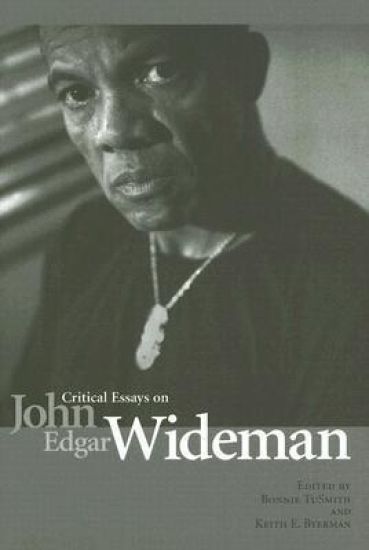
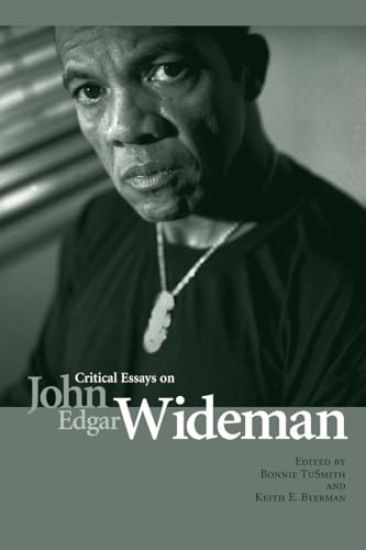
John Edgar Wideman is one of the most prominent African American writers today. He is the first author to have been awarded the PEN/Faulkner Award for Fiction twice-once in 1984 for Sent for You Yesterday and again in 1990 for Philadelphia Fire. His memoir, Fatheralong, was a finalist for the National Book Award. Yet, despite all of Wideman's accolades and renown, there are only three full-length studies on his work to date. TuSmith's and Byerman's Critical Essays on John Edgar Wideman takes a bold step in expanding Wideman scholarship. This volume is an indispensable study of Wideman's oeuvre, covering the full range of his career by addressing the key features of his fiction and nonfiction from 1967 to the present. The essays in this book reflect the most advanced thinking on Wideman's prolific, extraordinary art. The collection features at least one article on each major work and includes the voices of both well-established and emerging scholars. Though their critical perspectives are diverse, the contributors place Wideman squarely at the center of contemporary African American literature as an exemplar of postmodern approaches to literary art. Several position Wideman within the context of his predecessors-Wright, Baldwin, Ellison-and within a larger cultural context of music and collective history. The essays examine Wideman's complex style and his blending of African and Western cosmologies and aesthetics, the use of personal narrative, and his imaginative revisioning of forgotten historical events. These insightful analyses cover virtually every stage of Wideman's career and every genre in which he has written. A detailed bibliography of Wideman's work is also included. Informed yet accessible, this collection will be a rich source of information and intellectual stimulus for teachers, students, and scholars in American and African American literature, as well as general readers interested in Wideman's multilayered and challenging texts. Bonnie TuSmith is the author or editor of several books, including Conversations with John Edgar Wideman. Past president of MELUS, the Society for the Study of Multi-Ethnic Literatures of the United States, she is an associate professor of English at Northeastern University. Keith E. Byerman serves on the editorial board of African American Review and is president of the John Edgar Wideman Society. He is the author of several books, including The Short Fiction of John Edgar Wideman. He is a professor of English at Indiana State University.
Critical Essays on John Edgar Wideman

Critical Essays on John Edgar Wideman

University of Tennessee Press
2019
nidottu
John Edgar Wideman is one of the most prominent African American writers today. He is the first author to have been awarded the PEN/Faulkner Award for Fiction twice-once in 1984 for Sent for You Yesterday and again in 1990 for Philadelphia Fire. His memoir, Fatheralong, was a finalist for the National Book Award. Yet, despite all of Wideman's accolades and renown, there are only three full-length studies on his work to date. TuSmith's and Byerman's Critical Essays on John Edgar Wideman takes a bold step in expanding Wideman scholarship. This volume is an indispensable study of Wideman's oeuvre, covering the full range of his career by addressing the key features of his fiction and nonfiction from 1967 to the present.The essays in this book reflect the most advanced thinking on Wideman's prolific, extraordinary art. The collection features at least one article on each major work and includes the voices of both well-established and emerging scholars. Though their critical perspectives are diverse, the contributors place Wideman squarely at the center of contemporary African American literature as an exemplar of postmodern approaches to literary art. Several position Wideman within the context of his predecessors-Wright, Baldwin, Ellison-and within a larger cultural context of music and collective history. The essays examine Wideman's complex style and his blending of African and Western cosmologies and aesthetics, the use of personal narrative, and his imaginative revisioning of forgotten historical events. These insightful analyses cover virtually every stage of Wideman's career and every genre in which he has written. A detailed bibliography of Wideman's work is also included.Informed yet accessible, this collection will be a rich source of information and intellectual stimulus for teachers, students, and scholars in American and African American literature, as well as general readers interested in Wideman's multilayered and challenging texts.
The Life and Work of John Edgar Wideman

The Life and Work of John Edgar Wideman

Keith E. Byerman

Praeger Publishers Inc
2013
sidottu
Challenging. Successful. Controversial. All terms used to accurately describe African American novelist and autobiographer John Edgar Wideman. This book examines his life and work—and the connections between them.The Life and Work of John Edgar Wideman is ideal for readers who might not be familiar with Wideman's work or those who may have been intimidated by descriptions of his writings. Through its coverage of Wideman's life from several generations back to the present and explanations of how Wideman makes use of life experiences, this book breaks down barriers for new readers and enables them to better relate and connect to his writing. Author Keith E. Byerman discusses Wideman's book-length works of fiction and nonfiction, as well as some of his shorter, journalistic pieces. The book emphasizes how Wideman integrates family and personal experience into what is typically labeled postmodern writing, and explains how he has evolved as a public intellectual who supplies shrewd commentary on subjects such as the prison system, terrorism, and the role of sports in American society.