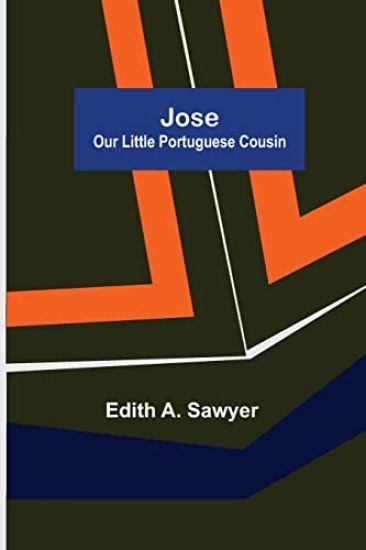
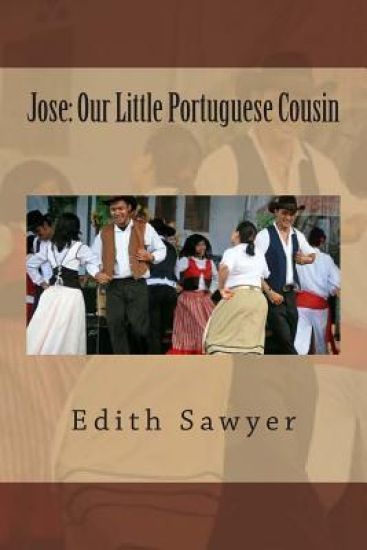
Jose: Our Little Portuguese Cousin, a classic since it was first published. Has been considered important throughout the human history, and so that this work is never forgotten we have made efforts in its preservation by republishing this book in a modern format for present and future generations. This whole book has been reformatted, retyped and designed. These books are not made of scanned copies and hence the text is clear and readable.
One of the important historic events of the present century is the revolution which took place in Portugal on the third day of October, 1910, when King Manuel II lost his throne. The king and his mother were exiled and fled from Lisbon, the capital city, to England. A republic was proclaimed throughout Portugal, and a new, progressive government was adopted on December 1st, 1910. Portugal is often described as "a garden by the side of the sea." Its strength as a country lies in its agriculture, especially in its vineyards, which are the chief source of wealth. Education in Portugal has generally been at a low ebb. At the time of the revolution less than one-fifth of the Portuguese people could read and write. Plans for the new government vi] include the opening of many primary schools and the development of a system of higher education. The Portuguese are an earnest people, enthusiastic yet serious-minded. Even the children play soberly. Whether rich or poor, Portuguese children are taught to respect age as well as to honor their parents. Throughout the country even a small boy takes off his cap and makes a bow when he meets an older person. Little girls also are taught gentleness of manner. The home life is simple and happy.
The remarkable true story of a young girl named Edith and the French village of Moissac that helped her and many other children during the Holocaust. The town's mayor and citizens concealed the presence of hundreds of Jewish children who lived in a safe house, risking their own safety by hiding the children from the Nazis in plain site, saving them from being captured and detained and most certainly saving their lives.
Title: Dr. and Mrs. Gold. An episode in the life of a cause. A novel.]Publisher: British Library, Historical Print EditionsThe British Library is the national library of the United Kingdom. It is one of the world's largest research libraries holding over 150 million items in all known languages and formats: books, journals, newspapers, sound recordings, patents, maps, stamps, prints and much more. Its collections include around 14 million books, along with substantial additional collections of manuscripts and historical items dating back as far as 300 BC.The GENERAL HISTORICAL collection includes books from the British Library digitised by Microsoft. This varied collection includes material that gives readers a 19th century view of the world. Topics include health, education, economics, agriculture, environment, technology, culture, politics, labour and industry, mining, penal policy, and social order. ++++The below data was compiled from various identification fields in the bibliographic record of this title. This data is provided as an additional tool in helping to insure edition identification: ++++ British Library Barnett, Edith A.; 1891. 287 p.; 8 . 012632.h.51.
An internationally recognized psychotherapist who was an early practitioner of hypnotherapy, shares four fascinating cases including an amazing story of a young soldier who was in the Battle of the Bulge - an experience so traumatic that he had completely blocked most of it from his mind. Dying of cancer, he urgently wanted to remember everything that he had blocked from his memory before he died. Through hypnosis he reveals a story of death, misery and sheer terror.
Language typology identifies similarities and differences among languages of the world. This textbook provides an introduction to the subject which assumes minimal prior knowledge of linguistics. It offers the broadest coverage of any introductory book, including sections on historical change, language acquisition, and language processing. Students will become familiar with the subject by working through numerous examples of crosslinguistic generalizations and diversity in syntax, morphology, and phonology, as well as vocabulary, writing systems, and signed languages. Chapter outlines and summaries, key words, a glossary, and copious literature references help the reader understand and internalize what they have read, while activities at the end of each chapter reinforce key points.
Language typology identifies similarities and differences among languages of the world. This textbook provides an introduction to the subject which assumes minimal prior knowledge of linguistics. It offers the broadest coverage of any introductory book, including sections on historical change, language acquisition, and language processing. Students will become familiar with the subject by working through numerous examples of crosslinguistic generalizations and diversity in syntax, morphology, and phonology, as well as vocabulary, writing systems, and signed languages. Chapter outlines and summaries, key words, a glossary, and copious literature references help the reader understand and internalize what they have read, while activities at the end of each chapter reinforce key points.






![Dr. and Mrs. Gold. an Episode in the Life of a Cause. [A Novel.]](/covers/9781241382292.jpg)