Kirjojen hintavertailu. Mukana 11 244 527 kirjaa ja 12 kauppaa.

Kirjahaku

Etsi kirjoja tekijän nimen, kirjan nimen tai ISBN:n perusteella.

1000 tulosta hakusanalla Edith Julia (EDT) Morley

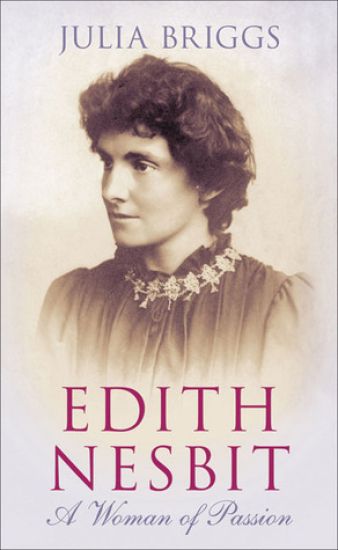
Edith Nesbit

Edith Nesbit

Julia Briggs

The History Press Ltd
2007
nidottu
Edith Nesbit is one of the greatest children's writers of the century. Her readers loved to think of her as a reassuringly aunt-like figure. This biography reveals her as a demanding and adventurous woman who broke all society's rules in her search for love. It also explores the relationship between her life and her fiction.
Transformations of the Welfare State

Transformations of the Welfare State

Herbert Obinger; Peter Starke; Julia Moser; Claudia Bogedan; Edith Gindulis; Stephan Leibfried

Oxford University Press
2010
sidottu
Transformations of the Welfare State gives a new twist to the longstanding debate on the impact of economic globalization on the welfare state. The authors focus on several small, advanced OECD economies in order to assess whether (and how) the welfare state will be able to compete under conditions of an increasingly integrated world economy. Small states can be seen as an 'early warning system' for general trends, because of their dependence on world markets and vulnerability to competitive pressures. The book's theoretical part innovatively integrates the literature on the political economy of small states with more recent research on the impact of globalization on social policy to generate a set of ideal-typical policy scenarios. In the main body of the book, the authors systematically test these scenarios against the experience of four countries: Austria, Denmark, New Zealand, and Switzerland. The comparative, in-depth analysis of reform trajectories since the 1970s in four key policy areas -- pensions, labour market policy, health care, and family policy -- provides, according to the authors, substantial evidence of a new convergence in welfare state patterns. They go on to argue that this amounts to a fundamental transformation of the welfare state from the old Keynesian welfare state positioned 'against the market' to a new set of supply-side policies 'with' and 'for' the market. Yet one of the big lessons to be learned from this timely study is that the transformation does not match the doomsday scenario predicted by neo-classical economists in the 1990s. There is no evidence of a 'race to the bottom' of social expenditure and standards of social protection, nor of a convergence towards a 'liberal' social policy model. Looking to the possible future of the welfare state in an era newly marked by profound uncertainty, the authors sound an optimistic note for states of any size.
Edith och Julian

Edith och Julian

Naoise Dolan

Wahlström Widstrand
2020
sidottu
Irländska Ava är några och tjugo. Hon bor för närvarande i Hongkong, där hon delar en kackerlacksinvaderad Airbnb-lägenhet med några jämnåriga och undervisar barn i engelska som andraspråk. Ibland träffar hon Julian, som har ett stressigt och uppslukande jobb inom bankvärlden. Det händer att han föreslår att hon ska sova över i gästrummet i hans bekväma, men anonymt inredda lägenhet. När de äter tillsammans är det alltid Julian som betalar. Dessutom lånar han gärna ut sina kreditkort till Ava. Men när hon frågar om han älskar henne, svarar han bara: ”Jag gillar dig mycket”. När Julian lämnar Hongkong för arbete lär Ava istället känna juristen Edith. Snart blir Edith något Ava ser fram emot.Edith och Julian är en både mångbottnad och fascinerande roman om kärlek, klass, sex och relationer, samtidigt som den behandlar frågor om språk och nationell tillhörighet.
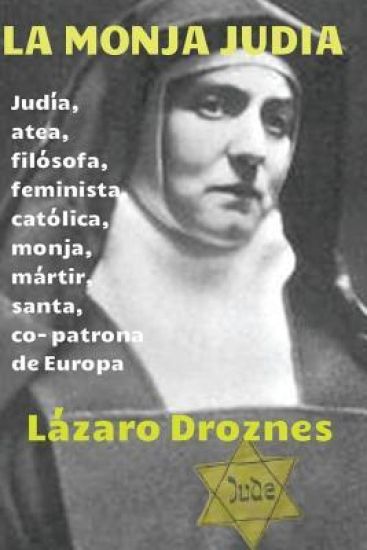
La monja judia: Edith Stein: judia, atea, filosofa, feminista, catolica, monja, martir, santa y co- patrona de Europa
Ficci n dram tica que presenta a Edith Stein en su tremenda trayectoria de vida que resume las caracter sticas esenciales de la m xima tragedia del Siglo XX: el nazismo. Edith Stein es una fil sofa alemana jud a que se convirti al catolicismo, luego en monja carmelita, fue enviada a Auschwitz en represalia por las protestas del clero holand s por el tratamiento de los jud os, asesinada, canonizada por la Iglesia Cat lica y finalmente declarada Santa y co-patrona de Europa. Un ex- compa ero de la Universidad, convertido en Coronel de la SS, se presenta en Auschwitz para convencer a Edith Stein de colaborar en la elaboraci n doctrinaria de una nueva religi n que sea funcional al r gimen nazi. Esta ficci n presenta el desarrollo del conflicto entre dos visiones del mundo que son absolutamente irreconciliables.
Edith Wharton's Writings from the Great War

Edith Wharton's Writings from the Great War

Julie Olin-Ammentorp

University Press of Florida
2026
pokkari
An examination of Edith Wharton's works from World War I, reclaiming Wharton as a "Great War" writer Edith Wharton resided in France during World War I, visiting combat zones and hospitals and working tirelessly with refugee and children’s relief organizations. In magazines and newspapers such as the New York Times, Saturday Evening Post, and Scribner’s, she wrote prodigiously about the war—dispatches, feature articles, and poems. During this time she also completed a number of short stories, two books (Summer and The Marne), and the essays that were collected in French Ways and Their Meaning. The war remained a topic for her after its conclusion, most notably in her 1923 novel, A Son at the Front. Yet none of this work has received the critical attention it deserves. Julie Olin-Ammentorp, through her detailed examination of a wide range of texts, including archival sources and materials long out of print, reclaims Wharton’s war writings and places her in the company of other "Great War" writers. Olin-Ammentorp integrates all of Wharton’s war-time literary genres, discusses common themes, and examines issues such as Wharton’s exclusion from the canon of Great War writers; the effect of the war on her choice of subject, style, and tone; her shifting perspective on the war itself, as it dragged on far longer than anyone anticipated; her sense of personal, social, and literary destabilization during the war; and her increased sense of the role of history during and after the war. Olin-Ammentorp quotes many evocative passages from Wharton’s wartime correspondence—most notably to Henry James, who avidly read Wharton’s letters as if they were dispatches from the front. Particularly new is the inclusion of Wharton’s poetry composed during the war years, most of which has remained unpublished until now. In addition, Olin-Ammentorp’s examination of A Son at the Front is more detailed, comprehensive, and complex than any study to date. She concludes with a reflection on Wharton’s last depiction of the war years in her memoir, A Backward Glance. In addition to providing a thorough analysis of Wharton’s war writings, the book includes two appendixes of her out-of-print and scattered writings, available for the first time in over 85 years. The first contains the war poetry; the second includes a sampling of Wharton’s war-related nonfiction prose, including newspaper reportage, magazine articles, an obituary for her young friend Ronald Simmons who died in the war, and a speech she gave to American servicemen.
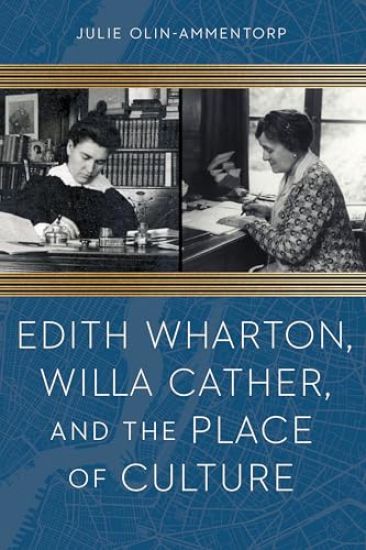
Edith Wharton, Willa Cather, and the Place of Culture

Edith Wharton, Willa Cather, and the Place of Culture

Julie Olin-Ammentorp

University of Nebraska Press
2019
sidottu
Edith Wharton and Willa Cather wrote many of the most enduring American novels from the first half of the twentieth century, including Wharton’s The House of Mirth, Ethan Frome, and The Age of Innocence, and Cather’s O Pioneers!, My Ántonia, and Death Comes for the Archbishop. Yet despite their perennial popularity and their status as major American novelists, Wharton (1862–1937) and Cather (1873–1947) have rarely been studied together. Indeed, Wharton is seen as “our literary aristocrat,” an author who chronicles the lives of the East Coast, Europe-bound elite, while Cather is considered a prairie populist who describes the lives of rugged Western pioneers. But these depictions neglect the striking and important ways the works of these two authors intersect. The first comparative study of Wharton and Cather in more than thirty years, this book reveals Wharton’s and Cather’s parallel experiences of dislocation, their relationship to each other as writers, and the profound similarities in their theories of fiction. Julie Olin-Ammentorp explores the importance of literary and geographic place in their lives and works, including the role of New York City, the American West, France, and travel. In doing so she reveals the two authors’ shared concern about the culture of place and the place of culture in the United States.
Edith Wharton, Willa Cather, and the Place of Culture

Edith Wharton, Willa Cather, and the Place of Culture

Julie Olin-Ammentorp

University of Nebraska Press
2025
pokkari
Edith Wharton and Willa Cather wrote many of the most enduring American novels from the first half of the twentieth century, including Wharton’s The House of Mirth, Ethan Frome, and The Age of Innocence, and Cather’s O Pioneers!, My Ántonia, and Death Comes for the Archbishop. Yet despite their perennial popularity and their status as major American novelists, Wharton (1862–1937) and Cather (1873–1947) have rarely been studied together. Indeed, Wharton is seen as “our literary aristocrat,” an author who chronicles the lives of the East Coast, Europe-bound elite, while Cather is considered a prairie populist who describes the lives of rugged Western pioneers. But these depictions neglect the striking and important ways the works of these two authors intersect. The first comparative study of Wharton and Cather in more than thirty years, this book reveals Wharton’s and Cather’s parallel experiences of dislocation, their relationship to each other as writers, and the profound similarities in their theories of fiction. Julie Olin-Ammentorp explores the importance of literary and geographic place in their lives and works, including the role of New York City, the American West, France, and travel. In doing so she reveals the two authors’ shared concern about the culture of place and the place of culture in the United States.
Edith

Edith

Andrea Friederici Ross

Southern Illinois University Press
2020
sidottu
Chicago’s quirky patron saint. This thrilling story of a daughter of America’s foremost industrialist, John D. Rockefeller, is complete with sex, money, mental illness, and opera divas—and a woman who strove for the independence to make her own choices. Rejecting the limited gender role carved out for her by her father and society, Edith Rockefeller McCormick forged her own path, despite pushback from her family and ultimate financial ruin.Young Edith and her siblings had access to the best educators in the world, but the girls were not taught how to handle the family money; that responsibility was reserved for their younger brother. A parsimonious upbringing did little to prepare Edith for life after marriage to Harold McCormick, son of the Reaper King Cyrus McCormick. The rich young couple spent lavishly. They purchased treasures like the jewels of Catherine the Great, entertained in grand style in a Chicago mansion, and contributed to the city’s cultural uplift, founding the Chicago Grand Opera. They supported free health care for the poor, founding and supporting the John R. McCormick Memorial Institute for Infectious Diseases. Later, Edith donated land for what would become Brookfield Zoo.Though she lived a seemingly enviable life, Edith’s disposition was ill-suited for the mores of the time. Societal and personal issues—not least of which were the deaths of two of her five children—caused Edith to experience phobias and panic attacks. Dissatisfied with rest cures, she ignored her father’s expectations, moved her family to Zurich, and embarked on a journey of education and self-examination. Edith pursued analysis with then-unknown Carl Jung. Her generosity of spirit led Edith to become Jung’s leading patron. She also supported up-and-coming musicians, artists, and writers, including James Joyce as he wrote Ulysses.While Edith became a Jungian analyst, her husband, Harold, pursued an affair with an opera star. After returning to Chicago and divorcing Harold, Edith continued to deplete her fortune. She hoped to create something of lasting value, such as a utopian community and affordable homes for the middle class. Edith’s goals caused further difficulties in her relationship with her father and are why he and her brother cut her off from the family funds even after the 1929 stock market crash ruined her. Edith’s death from breast cancer three years later was mourned by thousands of Chicagoans.Respectful and truthful, Andrea Friederici Ross presents the full arc of this amazing woman’s life and expertly helps readers understand Edith’s generosity, intelligence, and fierce determination to change the world.
Edith

Edith

Andrea Friederici Ross

Southern Illinois University Press
2021
nidottu
Chicago’s quirky patron saint.This thrilling story of a daughter of America’s foremost industrialist, John D. Rockefeller, is complete with sex, money, mental illness, and opera divas—and a woman who strove for the independence to make her own choices. Rejecting the limited gender role carved out for her by her father and society, Edith Rockefeller McCormick forged her own path, despite pushback from her family and ultimate financial ruin.Young Edith and her siblings had access to the best educators in the world, but the girls were not taught how to handle the family money; that responsibility was reserved for their younger brother. A parsimonious upbringing did little to prepare Edith for life after marriage to Harold McCormick, son of the Reaper King Cyrus McCormick. The rich young couple spent lavishly. They purchased treasures like the jewels of Catherine the Great, entertained in grand style in a Chicago mansion, and contributed to the city’s cultural uplift, founding the Chicago Grand Opera. They supported free health care for the poor, founding and supporting the John R. McCormick Memorial Institute for Infectious Diseases. Later, Edith donated land for what would become Brookfield Zoo.Though she lived a seemingly enviable life, Edith’s disposition was ill-suited for the mores of the time. Societal and personal issues—not least of which were the deaths of two of her five children—caused Edith to experience phobias and panic attacks. Dissatisfied with rest cures, she ignored her father’s expectations, moved her family to Zurich, and embarked on a journey of education and self-examination. Edith pursued analysis with then-unknown Carl Jung. Her generosity of spirit led Edith to become Jung’s leading patron. She also supported up-and-coming musicians, artists, and writers, including James Joyce as he wrote Ulysses.While Edith became a Jungian analyst, her husband, Harold, pursued an affair with an opera star. After returning to Chicago and divorcing Harold, Edith continued to deplete her fortune. She hoped to create something of lasting value, such as a utopian community and affordable homes for the middle class. Edith’s goals caused further difficulties in her relationship with her father and are why he and her brother cut her off from the family funds even after the 1929 stock market crash ruined her. Edith’s death from breast cancer three years later was mourned by thousands of Chicagoans.Respectful and truthful, Andrea Friederici Ross presents the full arc of this amazing woman’s life and expertly helps readers understand Edith’s generosity, intelligence, and fierce determination to change the world.