
Kirjahaku
Etsi kirjoja tekijän nimen, kirjan nimen tai ISBN:n perusteella.
1000 tulosta hakusanalla Edouard Bailby

Acte Pour La Licence. Droit Civil. Du Mariage. Code de Procédure Civile. Des Règlements de Juge
Charles-Edouard Bailly
Hachette Livre - BNF
2018
pokkari
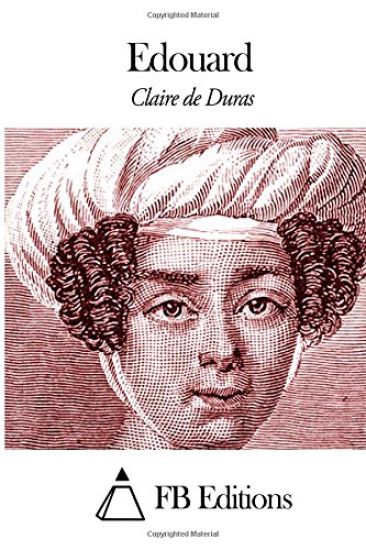
"Edouard" par Claire de Duras. Claire de Duras tait une crivaine fran aise (1777-1828).

douard est r cit d'un amour impossible entre un roturier et une aristocrate que seule la mort pourra r unir, et qui est surtout une tude cisel e de la passion. douard est g n ralement reconnu comme une attaque contre les pr jug s de classe, de m me qu'Ourika l'avait t contre ceux de race.
Édouard
Independently Published
2018
nidottu


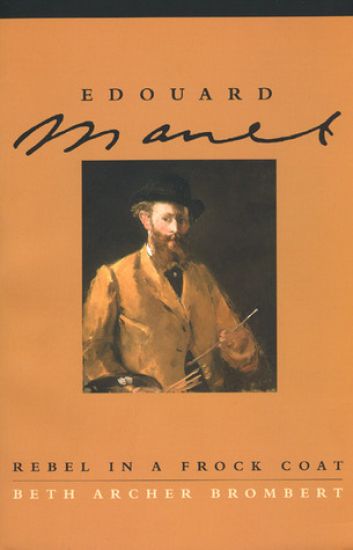
"Manet comes alive in Brombert's] pages. . . . At times her biography reads like a substantial and detailed 19th-century novel. . . . Brombert's Edouard Manet gives us not only a portrait of a complex artist but, in its authority and its range, a portrait of an age as well."-James R. Mellow, New York Times Book Review "One of the pleasures of reading her is to follow the way she weaves life, art and history into a smooth tapestry. The art emerges from the life, and in the broadest possible context: in terms of its creator's life and concerns and in terns of its historical and cultural setting."-Eric Gibson, The Washington Times Books "Richly detailed and informative . . . this biography] exposes the character of an artist who maintained a sharply defined duality between his public and private personas."-Edward J. Sozanski, Philadelphia Inquirer "Brombert's reading of important canvasses . . . shine, as do her accounts of the changing social and political environment in which Manet worked. . . . Well researched, complexly conceived, and clearly written."-Kirkus Reviews "Brilliant . . . this book] grants us a far deeper understanding of why Manet's] paintings outraged so many of his peers, and why these same masterpieces resonate so richly in our psyches a century later."-Booklist, starred review

Previously announced Edouard Baldus (1813–1889) was the most important French architectural photographer of the mid-19th century. This book offers an in-depth exploration of one of his most intriguing projects—a remarkable series of views of the Château de La Faloise, in which his subject was not primarily the country house but the owner and his family at leisure on its grounds. James A. Ganz locates the photographs at a key moment in Baldus’s career and during one of the most eventful decades in the history of French photography, showing that they stand at a crossroad between the English “conversation piece” and the birth of Impressionist portraiture in the early paintings of Monet and Bazille.Distributed for the Sterling and Francine Clark Art Institute, Williamstown, Massachusetts

Describes the development and extension of fundamental idea of Edouard Lucas, a French mathematician and mathematical recreationist, that is still used today in the verification of the largest primes.
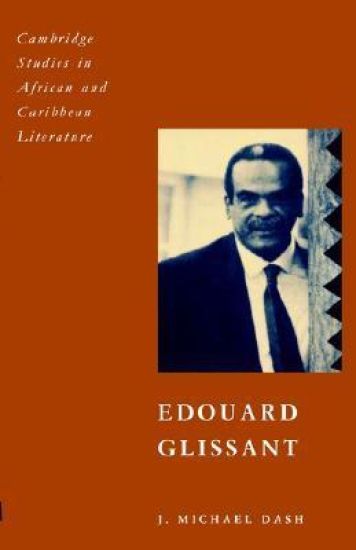
Edouard Glissant is an accomplished and influential novelist and poet, and has recently emerged as a major theorist in Caribbean studies and post-colonial literature. In this first full-length study of Glissant’s creative and theoretical work J. Michael Dash examines his poems, novels, plays and essays in the context of modern French literary movements and the post-negritude Caribbean situation, providing both a useful introduction to, and a challenging assessment of, Glissant’s work to date. Dash shows how Glissant has focused in an unprecedented way on the Caribbean in terms of the diverse and hybrid culture that has been created in the region, and how his ideas on a cross-cultural politics are the shaping force in the francophone Caribbean ‘Creolite’ movement.

Edouard Glissant is an accomplished and influential novelist and poet, and has recently emerged as a major theorist in Caribbean studies and post-colonial literature. In this first full-length study of Glissant’s creative and theoretical work J. Michael Dash examines his poems, novels, plays and essays in the context of modern French literary movements and the post-negritude Caribbean situation, providing both a useful introduction to, and a challenging assessment of, Glissant’s work to date. Dash shows how Glissant has focused in an unprecedented way on the Caribbean in terms of the diverse and hybrid culture that has been created in the region, and how his ideas on a cross-cultural politics are the shaping force in the francophone Caribbean ‘Creolite’ movement.

EDOUARD MANET BOXED NOTECARDS
POMEGRANATE EUROPE STATIONERY
cd
Edouard Glissant and Postcolonial Theory
University of Virginia Press
1999
sidottu
A Presentation of Glissant's theoretical writings on the colonial experience in the Caribbean, and an analysis of his powerful yet subtle novels in the context of postcolonial studies. This juxtaposition highlights Glissant's contribution to this theoretical endeavour.

Edouard Glissant and Postcolonial Theory
University of Virginia Press
1999
nidottu
Edouard Glissant has written extensively in French about the colonial experience in the Caribbean. Since he is known primarily as a novelist and poet, his theoretical essays have so far remained largely unread by the English-language theorists in this field. This book situates Glissant within ongoing debates in postcolonial theory, making illuminating connections between his work and that of Frantz Fanon, Gayatri Spivak, Homi Bhabha, and Henry Louis Gates Jr.Focusing on language and subjectivity, Edouard Glissant and Postcolonial Theory moves between an analysis of Glissant's theoretical work and detailed readings of his novels to elucidate a network of related issues. Celia Britton addresses the major themes central to his writing-the reappropriation of history, standard and vernacular language, hybridity, subalternity, the problematizing of identity, and the colonial construction of the Other-and asks provocative questions relating to each. How does the colonized subject relate to a language initially imposed by the colonizer but subsequently, to some extent, subverted and reappropriated? How does this strategic use of language come to function as a crucial mode of cultural resistance? What role can fictional representation play in this process?This book represents the first presentation of Glissant's incisive theoretical work and analysis of his immensely powerful and subtle novels in the context of postcolonial studies. By juxtaposing them, Britton illuminates the significant contribution Glissant has made to this theoretical endeavor.

The complete poems of the two-time finalist for the Nobel Prize in Literature, available in English for the first time This volume collects and translates-most for the first time-the nine volumes of poetry published by Édouard Glissant, a poet, novelist, and critic increasingly recognized as one of the great writers of the twentieth century. The poems bring to life what Glissant calls “an archipelago-like reality,” partaking of the exchanges between Europe and its former colonies, between humans and their geographies, between the poet and the natural world. Reciting and re-creating histories of the African diaspora, Columbus’s “discovery” of the New World, the slave trade, and the West Indies, Glissant underscores the role of poetic language in changing both past and present irrevocably. As translator Jeff Humphries writes in his introduction, Glissant’s poetry embraces the aesthetic creed of the French symbolists MallarmÉ and Rimbaud (“The poet must make himself into a seer”) and aims at nothing less than a hallucinatory experience of imagination in which the differences among poem, reader, and subject dissolve into one immediate present.Born in Martinique in 1928, influenced by the controversial Martinican poet/politician AimÉ CÉsaire, and educated at the Sorbonne in Paris, Édouard Glissant has emerged as one of the most influential postcolonial theorists, novelists, playwrights, and poets not only in the Caribbean but also in contemporary French letters. He has twice been a finalist for the Nobel Prize in Literature as well as the recipient of both the Prix Renaudot and the Prix Charles Veillon in France. His works include Poetics of Relation, Caribbean Discourse, Faulkner Mississippi, and the novel The Ripening. He currently serves as Distinguished Professor of French at City University of New York, Graduate Center.
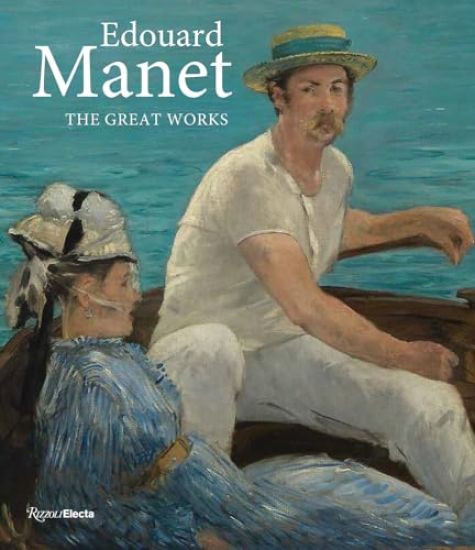
With over 100 seminal paintings, this book celebrates the artist who bridged the transition from Realism to Impressionism and is seen as giving rise to Modernism. Combining painterly technique with strikingly modern images of contemporary life, much of Manet s work documented daily life in Paris, depicting scenes ranging from the recently built boulevards with their sidewalk cafes, industrial marvels such as the railways, and pleasure grounds ranging from newly landscaped parks to horse racing. He also painted provocative scenes of the demimonde in popular bars and cabarets. Included here are popular and iconic works such as Le Dejeuner sur l herbe, with its shocking juxtaposition of a nude woman amid fully dressed men, and Olympia, Manet s modern reworking of Titian s Venus of Urbino that Parisian society initially rejected as scandalous. Little has been published on Manet recently, so this comprehensive survey is long overdue. His bold style, muscular brushwork, frank subject matter, and compositions that pushed boundaries and confronted societal norms continue to influence and inspire today s young artists.

This collection of decorative scrapbook papers features twenty floral Art Deco designs by Edouard Benedictus (1878-1930) from his book Variations Quatre Vingt Six Motifs D coratifs En Vingt Planches (1928). Edouard was a French painter, inventor composer, scientist book binder and textile designer. How to use the scrapbook papers: The one-sided designs are ideal for scrapbook projects, collage, framing, decoupage, greeting cards, mixed media and junk journals. The pages within this book can be removed by using a box cutter or scissors.