This work has been selected by scholars as being culturally important and is part of the knowledge base of civilization as we know it.This work is in the public domain in the United States of America, and possibly other nations. Within the United States, you may freely copy and distribute this work, as no entity (individual or corporate) has a copyright on the body of the work.Scholars believe, and we concur, that this work is important enough to be preserved, reproduced, and made generally available to the public. To ensure a quality reading experience, this work has been proofread and republished using a format that seamlessly blends the original graphical elements with text in an easy-to-read typeface.We appreciate your support of the preservation process, and thank you for being an important part of keeping this knowledge alive and relevant.
""A Summary of Christian Doctrine"" by Edward Wilhelm August Koehler is a comprehensive guide to the fundamental teachings of the Bible. The book presents a clear and concise summary of the key doctrines of the Christian faith, including the nature of God, the Trinity, creation, sin, salvation, and the end times. Written in a popular style, the book is accessible to readers of all levels of biblical knowledge, from beginners to advanced students. The author draws on his extensive experience as a pastor and theologian to provide a practical and insightful guide to the central teachings of Christianity. This book is an essential resource for anyone seeking to deepen their understanding of the Christian faith and its teachings.This scarce antiquarian book is a facsimile reprint of the old original and may contain some imperfections such as library marks and notations. Because we believe this work is culturally important, we have made it available as part of our commitment for protecting, preserving, and promoting the world's literature in affordable, high quality, modern editions, that are true to their original work.
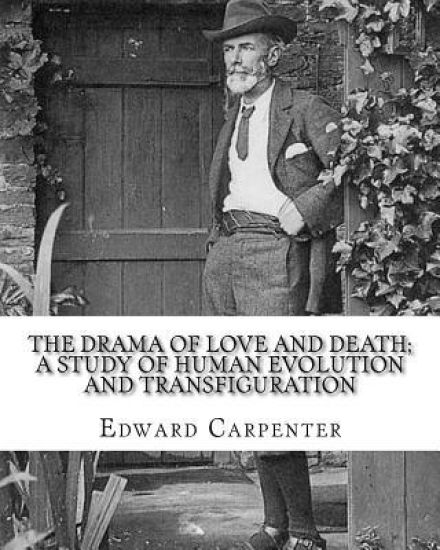
Edward Carpenter (29 August 1844 - 28 June 1929) was an English socialist poet, philosopher, anthologist, and early activist for rights for homosexuals. A poet and writer, he was a close friend of Rabindranath Tagore, and a friend of Walt Whitman. He corresponded with many famous figures such as Annie Besant, Isadora Duncan, Havelock Ellis, Roger Fry, Mahatma Gandhi, Keir Hardie, J. K. Kinney, Jack London, George Merrill, E. D. Morel, William Morris, Edward R. Pease, John Ruskin, and Olive Schreiner. As a philosopher he was particularly known for his publication of Civilisation, Its Cause and Cure in which he proposes that civilisation is a form of disease that human societies pass through. An early advocate of sexual freedoms, he had an influence on both D. H. Lawrence and Sri Aurobindo, and inspired E. M. Forster's novel Maurice. Early life: Born in Hove in Sussex, Carpenter was educated at nearby Brighton College where his father was a governor. His brothers Charles, George and Alfred also went to school there. When he was ten, he displayed a flair for the piano. His academic ability appeared relatively late in his youth, but was sufficient to earn him a place at Trinity Hall, Cambridge. Whilst there he began to explore his feelings for men. One of the most notable examples of this is his close friendship with Edward Anthony Beck (later Master of Trinity Hall), which, according to Carpenter, had "a touch of romance". Beck eventually ended their friendship, causing Carpenter great emotional heartache. Carpenter graduated as 10th Wrangler in 1868.After university he joined the Church of England as a curate, "as a convention rather than out of deep Conviction". In 1871 he was invited to become tutor to the royal princes George Frederick (late King George V) and his elder brother, Prince Albert Victor, Duke of Clarence, but declined the position. The job instead went to his lifelong friend and fellow Cambridge student John Neale Dalton.Carpenter continued to visit Dalton while he was tutor, and was presented with photographs of themselves by the princes. In the following years he experienced an increasing sense of dissatisfaction with his life in the church and university, and became weary of what he saw as the hypocrisy of Victorian society. He found great solace in reading poetry, later remarking that his discovery of the work of Walt Whitman caused "a profound change" in him. (My Days and Dreams p. 64).....................
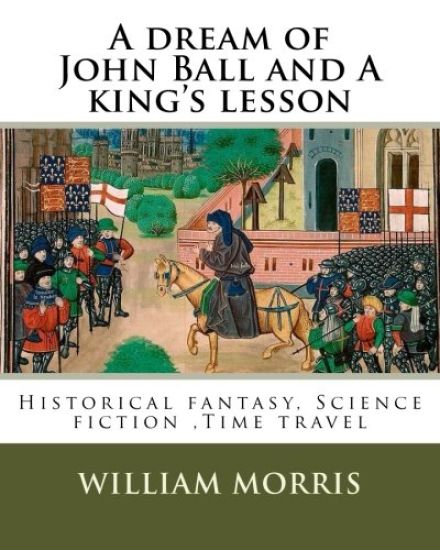
A Dream of John Ball (1888) is a novel by English author William Morris about the Great Revolt of 1381, conventionally, but incorrectly, called "the Peasants' Revolt", since few of the participants were actual peasants. It features the rebel priest John Ball, who was accused of being a Lollard. He is famed for his question "When Adam delved and Eve span, who was then the gentleman?" Depiction of the Middle Ages: Morris draws on Froissart for information on the fourteenth century, but has a different attitude towards the revolting peasants from the chronicler who, Sir Walter Scott once remarked, had "marvelous little sympathy" for the "villain churls." 2] Morris was also aware of interpretations of the Peasants' Revolt as representing a socialist tradition. In 1884 he had written an article in which he stated that "we need make no mistake about the cause for which Wat Tyler and his worthier associate John Ball fell; they were fighting against the fleecing then in fashion, viz.; serfdom or villeinage, which was already beginning to wane before the advance of the industrial gilds." 3] The novel describes a dream and time travel encounter between the medieval and modern worlds, thus contrasting the ethics of medieval and contemporary culture. A time-traveller tells Ball of the decline of feudalism and the rise of the Industrial Revolution. Ball realizes that in the nineteenth century his hopes for an egalitarian society have yet to be fulfilled. A parallel can be drawn with the novel's close contemporary-A Connecticut Yankee in King Arthur's Court (1889) by Mark Twain. Unlike Twain's novel, which depicted early-Medieval England as a violent and chaotic Dark Age, Morris depicts the Middle Ages in a positive light, seeing it as a golden, if brief, period when peasants were prosperous and happy and guilds protected workers from exploitation. This positive portrayal of the Medieval period is a recurring theme in Morris' literary and artistic oeuvre, from the largely pastoral and craftsman based economies of the prose romances, to his similar dream vision of Britain's utopian future, News from Nowhere (1889)............. William Morris (24 March 1834 - 3 October 1896) was an English textile designer, poet, novelist, translator, and socialist activist. Associated with the British Arts and Crafts Movement, he was a major contributor to the revival of traditional British textile arts and methods of production. His literary contributions helped to establish the modern fantasy genre, while he played a significant role in propagating the early socialist movement in Britain........ Sir Edward Coley Burne-Jones, 1st Baronet ARA (28 August 1833 - 17 June 1898) was a British artist and designer closely associated with the later phase of the Pre-Raphaelite movement, who worked closely with William Morris on a wide range of decorative arts as a founding partner in Morris, Marshall, Faulkner & Co...............
The 18th century was a wealth of knowledge, exploration and rapidly growing technology and expanding record-keeping made possible by advances in the printing press. In its determination to preserve the century of revolution, Gale initiated a revolution of its own: digitization of epic proportions to preserve these invaluable works in the largest archive of its kind. Now for the first time these high-quality digital copies of original 18th century manuscripts are available in print, making them highly accessible to libraries, undergraduate students, and independent scholars.Delve into what it was like to live during the eighteenth century by reading the first-hand accounts of everyday people, including city dwellers and farmers, businessmen and bankers, artisans and merchants, artists and their patrons, politicians and their constituents. Original texts make the American, French, and Industrial revolutions vividly contemporary.++++The below data was compiled from various identification fields in the bibliographic record of this title. This data is provided as an additional tool in helping to insure edition identification: ++++British LibraryT180382With a half-title.Salisbury: printed for, and sold by E. Easton; sold also by R. Horsfield, London, 1772. 2],110p.; 4
It is August, 1929. Fresh and rested from his case in The Daed lus Conspiracy in July, which took him to the Daed lus Grove in Northern California to foil an assassination attempt, Cyrus Skeen hires a new secretary, the promisingly capable Clara Reyes. Soon after that, he is approached by a man, Bruce Willowman, who wishes him to try to find the murderer of his younger brother, Beauregard, in San Francisco five years before. It seems that the man was murdered by a nun, a member of the Sisters of the Apostolic Faith, who drove a small crucifix through one of his eyes. The man appeared to have been drunk and had been booted from a high-class brothel close to the Apostolic Faith convent, and then attacked the nun. The nun subsequently disappeared from the convent. The police know her name and have her fingerprints, but cannot find her. The murder is now five years old, and the murderess, if found, would not be protected by a statute of limitations. The victim's brother received a note from a person who claimed to have witnessed the attack on the nun, and that now she had seen the murderess near the convent days before. When Skeen reads the note which contains the murderess's name, he is shocked to learn that it is someone he and his wife, Dilys, know very well. He does not let on to Bruce Willowman that he knows the alleged murderess. He takes on the case and begins to uncover some curious and perilous secrets kept by the convent.