

Kirjahaku
Etsi kirjoja tekijän nimen, kirjan nimen tai ISBN:n perusteella.
1000 tulosta hakusanalla Edward B Webster


The Unresolved National Question in South Africa
Webster Edward; John Mawbey; Cronin Jeremy; Alex Mohubetswane Mashilo Mohubetswane Mashilo; Robert van Niekerk van Niekerk; Luli Callinicos Callinicos; B G Brown; M P Giyose; H. J. Peterson; C A Thomas; A R Zinn; Zondi Siphamandla; T Dunbar Moodie; Motala Enver; Vally Salim; Gerhard Maré; Mangcu Xolela; Hassim Shireen; Erwin Alec; Sian Byrne; Nicole Ulrich; Walt Lucien; Legassick Martin; Glaser Daryl
Wits University Press
2017
nidottu
The re-emergence of debates on the decolonisation of knowledge has revived interest in the National Question, which began over a century ago and remains unresolved. Tensions that were suppressed and hidden in the past are now being openly debated. Despite this, the goal of one united nation living prosperously under a constitutional democracy remains elusive. This volume examines the way in which various strands of left thought have addressed the National Question, especially during the apartheid years, and goes on to discuss its relevance for South Africa today and in the future. Contributors have defined the question as they believe appropriate, which has resulted in a rich tapestry of interweaving perceptions about the unresolved National Question. The volume is structured in two parts. The first examines four foundational traditions – Marxism-Leninism (the Colonialism of a Special Type thesis); the Congress tradition; the Trotskyist tradition; and Africanism. The second part explores the various shifts in the debate from the 1960s onwards, and includes chapters on Afrikaner nationalism, ethnic issues, Black Consciousness, feminism, workerism and constitutionalism. By revisiting these debates, the volume will become a catalyst for an enriched debate on our identity and our future.







Handbook Of The Panjab, Western Rajputana, Kashmir, And Upper Sindh (1883)
Edward B. Eastwick
KESSINGER PUBLISHING, LLC
2008
nidottu
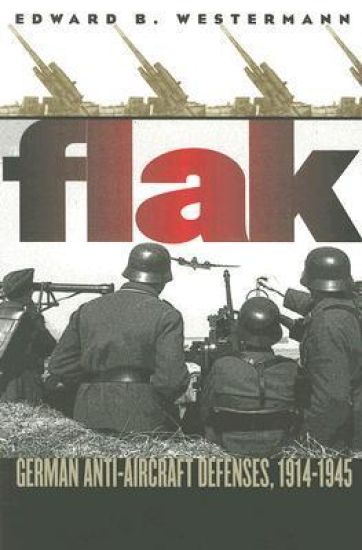
Air raid sirens wail, searchlight beams flash across the sky, and the night is aflame with tracer fire and aerial explosions, as Allied bombers and German anti-aircraft units duel in the thundering darkness. Such "cinematic" scenes, played out with increasing frequency as World War II ground to a close, were more than mere stock material for movie melodramas. As Edward Westermann reveals, they point to a key but largely unappreciated aspect of the German war effort that has yet to get its full due.Long the neglected stepchild in studies of World War II air campaigns, German flak or anti-aircraft units have been frequently dismissed by American, British, and German historians (and by veterans of the European air war) as ineffective weapons that wasted valuable material and personnel resources desperately needed elsewhere by the Third Reich. Westermann emphatically disagrees with that view and makes a convincing case for the significant contributions made by the entire range of German anti-aircraft defenses.During the Allied air campaigns against the Third Reich, well over a million tons of bombs were dropped upon the German homeland, killing nearly 300,000 civilians, wounding another 780,000, and destroying more than 3,500,000 industrial and residential structures. Not surprisingly, that aerial Armageddon has inspired countless studies of both the victorious Allied bombing offensive and the ultimately doomed Luftwaffe defense of its own skies. By contrast, flak units have virtually been ignored, despite the fact that they employed more than a million men and women, were responsible for more than half of all Allied aircraft losses, forced Allied bombers to fly far above high-accuracy altitudes, and thus allowed Germany to hold out far longer than it might have otherwise.Westermann's definitive study sheds new light on every facet of the development and organization of this vital defense arm, including its artillery, radar, searchlight, barrage balloon, decoy sites, and command components. Highlighting the convergence of technology, strategy, doctrine, politics, and economics, Flak also provides revealing insights into German strategic thought, Hitler's obsession with micromanaging the war, and the lives of the members of the flak units themselves, including the large number of women, factory workers, and even POWs who participated.
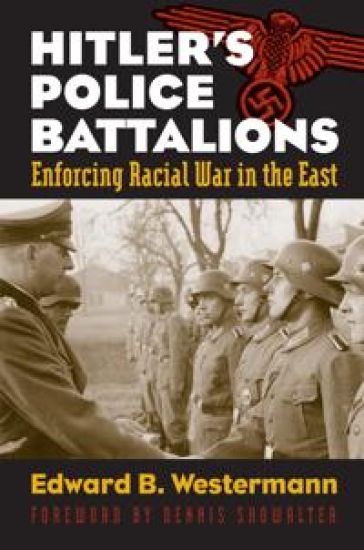
When the German Wehrmacht swarmed across Eastern Europe, an elite corps followed close at its heels. Along with the SS and Gestapo, the Ordnungspolizei, or Uniformed Police, played a central role in Nazi genocide that until now has been generally neglected by historians of the war. Beginning with the invasion of Poland, the Uniformed Police were charged with following the army to curb resistance, pacify the countryside, patrol Jewish ghettos, and generally maintain order in the conquered territories. Edward Westermann examines how this force emerged as a primary instrument of annihilation, responsible for the murder of hundreds of thousands of the Third Reich’s political and racial enemies. In Hitler’s Police Battalions he reveals how the institutional mindset of these “ordinary policemen” allowed them to commit atrocities without a second thought. Westermann reveals initiatives pursued before the war by Heinrich Himmler and Kurt Daluege to create a culture within the existing police forces that fostered anti-Semitism and anti-Communism as institutional norms. Challenging prevailing interpretations of German culture, he draws on extensive archival research—including the testimony of former policemen—to illuminate this transformation. Purged of dissidents, indoctrinated to idolize Hitler, and trained in military combat, these police battalions repeatedly conducted actions against Jews, Slavs, gypsies, asocials, and other groups on their own initiative, even when they had the choice not to. In addition to documenting these atrocities, Westermann examines cooperation between the Ordnungspolizei and the SS and Gestapo, and the close relationship between police and Wehrmacht in the conduct of the anti-partisan campaign. Throughout, Westermann stresses the importance of ideological indoctrination within specific groups. It was the organizational culture of the Uniformed Police, he maintains, and not German culture in general that led these men to commit genocide. Hitler’s Police Battalions provides the most complete and comprehensive study to date of this neglected branch of Himmler’s SS and Police empire and adds a new dimension to our understanding of the Holocaust and the war on the Eastern front.

Hitler's Ostkrieg and the Indian Wars
Edward B. Westermann
University of Oklahoma Press
2016
sidottu
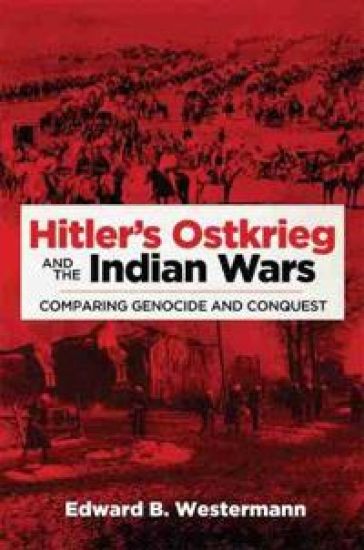
As he prepared to wage his war of annihilation on the Eastern Front, Adolf Hitler repeatedly drew parallels between the Nazi quest for Lebensraum, or living space, in Eastern Europe and the United States's westward expansion under the banner of Manifest Destiny. The peoples of Eastern Europe were, he said, his ""redskins,"" and for his colonial fantasy of a ""German East"" he claimed a historical precedent in the United States's displacement and killing of the native population. Edward B. Westermann examines the validity, and value, of this claim in Hitler's Ostkrieg and the Indian Wars. The book takes an empirical approach that highlights areas of similarity and continuity, but also explores key distinctions and differences between these two national projects. The westward march of American empire and the Nazi conquest of the East offer clear parallels, not least that both cases fused a sense of national purpose with racial stereotypes that aided in the exclusion, expropriation, and killing of peoples. Westermann evaluates the philosophies of Manifest Destiny and Lebensraum that justified both conquests, the national and administrative policies that framed Nazi and U.S. governmental involvement in these efforts, the military strategies that supported each nation's political goals, and the role of massacre and atrocity in both processes. Important differences emerge: a goal of annihilation versus one of assimilation and acculturation; a planned military campaign versus a confused strategy of pacification and punishment; large-scale atrocity as routine versus massacre as exception. Comparative history at its best, Westermann's assessment of these two national projects provides crucial insights into not only their rhetoric and pronouncements but also the application of policy and ideology ""on the ground."" His sophisticated and nuanced revelations of the similarities and dissimilarities between these two cases will inform further study of genocide, as well as our understanding of the Nazi conquest of the East and the American conquest of the West.
Hitler's Ostkrieg and the Indian Wars
Edward B. Westermann
University of Oklahoma Press
2019
nidottu
As he prepared to wage his war of annihilation on the Eastern Front, Adolf Hitler repeatedly drew parallels between the Nazi quest for Lebensraum, or living space, in Eastern Europe and the United States's westward expansion under the banner of Manifest Destiny. The peoples of Eastern Europe were, he said, his ""redskins,"" and for his colonial fantasy of a ""German East"" he claimed a historical precedent in the United States's displacement and killing of the native population. Edward B. Westermann examines the validity, and value, of this claim in Hitler's Ostkrieg and the Indian Wars. The book takes an empirical approach that highlights areas of similarity and continuity, but also explores key distinctions and differences between these two national projects. The westward march of American empire and the Nazi conquest of the East offer clear parallels, not least that both cases fused a sense of national purpose with racial stereotypes that aided in the exclusion, expropriation, and killing of peoples. Westermann evaluates the philosophies of Manifest Destiny and Lebensraum that justified both conquests, the national and administrative policies that framed Nazi and U.S. governmental involvement in these efforts, the military strategies that supported each nation's political goals, and the role of massacre and atrocity in both processes. Important differences emerge: a goal of annihilation versus one of assimilation and acculturation; a planned military campaign versus a confused strategy of pacification and punishment; large-scale atrocity as routine versus massacre as exception. Comparative history at its best, Westermann's assessment of these two national projects provides crucial insights into not only their rhetoric and pronouncements but also the application of policy and ideology ""on the ground."" His sophisticated and nuanced revelations of the similarities and dissimilarities between these two cases will inform further study of genocide, as well as our understanding of the Nazi conquest of the East and the American conquest of the West.

In Drunk on Genocide, Edward B. Westermann reveals how, over the course of the Third Reich, scenes involving alcohol consumption and revelry among the SS and police became a routine part of rituals of humiliation in the camps, ghettos, and killing fields of Eastern Europe. Westermann draws on a vast range of newly unearthed material to explore how alcohol consumption served as a literal and metaphorical lubricant for mass murder. It facilitated "performative masculinity," expressly linked to physical or sexual violence. Such inebriated exhibitions extended from meetings of top Nazi officials to the rank and file, celebrating at the grave sites of their victims. Westermann argues that, contrary to the common misconception of the SS and police as stone-cold killers, they were, in fact, intoxicated with the act of murder itself. Drunk on Genocide highlights the intersections of masculinity, drinking ritual, sexual violence, and mass murder to expose the role of alcohol and celebratory ritual in the Nazi genocide of European Jews. Its surprising and disturbing findings offer a new perspective on the mindset, motivation, and mentality of killers as they prepared for, and participated in, mass extermination. Published in Association with the US Holocaust Memorial Museum.

In Drunk on Genocide, Edward B. Westermann reveals how, over the course of the Third Reich, scenes involving alcohol consumption and revelry among the SS and police became a routine part of rituals of humiliation in the camps, ghettos, and killing fields of Eastern Europe. Westermann draws on a vast range of newly unearthed material to explore how alcohol consumption served as a literal and metaphorical lubricant for mass murder. It facilitated "performative masculinity," expressly linked to physical or sexual violence. Such inebriated exhibitions extended from meetings of top Nazi officials to the rank and file, celebrating at the grave sites of their victims. Westermann argues that, contrary to the common misconception of the SS and police as stone-cold killers, they were, in fact, intoxicated with the act of murder itself. Drunk on Genocide highlights the intersections of masculinity, drinking ritual, sexual violence, and mass murder to expose the role of alcohol and celebratory ritual in the Nazi genocide of European Jews. Its surprising and disturbing findings offer a new perspective on the mindset, motivation, and mentality of killers as they prepared for, and participated in, mass extermination. Published in Association with the US Holocaust Memorial Museum.

Expeditionary Police Advising and Militarization
Donald Stoker; Edward B. Westermann
Helion Company
2018
sidottu
This original edited volume draws upon the latest work of a global cast of scholars and practitioners in several fields to examine the history, evolution and lessons of previous expeditionary police advising missions. Since the end of the Cold War, there has been an explosion of efforts to build modern police forces in other lands via dispatching police advisory missions. There is much to be learned from these recent efforts, but there are equally valuable lessons to be gathered by examining the breadth of a practice that, surprisingly to most, dates to the end of the 19th century.

The increased focus on counterinsurgency warfare and US nation building efforts after the attacks of 11 September 2001 reignited interest in military advising within military and other government organizations, private think tanks, and defense related contractors. Most studies on the subject, based on the chronological scope and numerical preponderance of ground advising missions, has quite naturally focused on these past efforts. Less attention has been given to air or naval advisory missions. This work seeks in part to help redress this current imbalance by examining a number of historical case studies dealing with air advisory efforts. By examining a number of historical case studies, this volume analyzes the challenges and opportunities inherent in aerial advisory efforts and offers insights into the methods by which such missions succeed or fail. Air advisory missions date almost to the first days of powered flight. Air advisory efforts have a number of unique elements based on the fundamental role of advanced technology and the extensive resource requirements associated with aviation operations. For example, air advisory efforts are profoundly influenced by the types of aircraft involved and the types of mission flown. Likewise, the issues of maintenance support and the infrastructure needed for these missions plays a key role in determining capabilities available to the host nation. In the case of infrastructure, airfields, fuelling depots, maintenance and repair facilities, and radar and communications equipment offer a few of the most obvious requirements to support flight operations. The early history of advisory efforts reveal issues that remain relevant today, including questions related to the nature of aerial technology to be shared, the type of training to be provided, and the potential economic benefits that might accrue to the donor nation as a result of the sale of aviation technology to the host country. In many respects, air advisory efforts raise a number of profound strategic questions for the donor nation. Among others, these questions relate to the type of technology to be shared, the nature of training to be given, the role of foreign advisors in operations, the issue of infrastructure development and auxiliary training programs, the preparation of foreign advisors for their duties, and perhaps most significantly the development of the type of capabilities required to address the host nation’s security environment. Via a series of historical case studies, this volume explores these questions and others.

The Economic Significance of Tree Size in Western Sierra Lumbering; B549
M. R. (Marsden Robert) 1892- Brundage; Myron E. (Myron Edward) 189 Krueger; Duncan B. 1890 Dunning
Hassell Street Press
2021
nidottu
This work has been selected by scholars as being culturally important and is part of the knowledge base of civilization as we know it.This work is in the public domain in the United States of America, and possibly other nations. Within the United States, you may freely copy and distribute this work, as no entity (individual or corporate) has a copyright on the body of the work.Scholars believe, and we concur, that this work is important enough to be preserved, reproduced, and made generally available to the public. To ensure a quality reading experience, this work has been proofread and republished using a format that seamlessly blends the original graphical elements with text in an easy-to-read typeface.We appreciate your support of the preservation process, and thank you for being an important part of keeping this knowledge alive and relevant.

A Holistic Approach To Autism: The Enlightenment Handbook For Western Families
B.V. Edwards
Lulu.com
2012
sidottu
A Holistic Approach To Autism: The Enlightenment Handbook For Western Families