This volume combines both the broader and narrower aspects of school-related law to provide increased understanding of the legal realities and responsibilities of American teachers and administrators. The book depicts the flow of authority in American polity, from the national level in the Constitution's grant of power in the Tenth Amendment to the local level in the development of policy by local school boards. Selected statutes and cases provide a framework of national rulings on educational matters, but the emphasis is on the role of the state as the critical force in decision making for schools. This book is pragmatic, rather than theoretical, and is aimed at the practitioner. Citations provide ready reference for dealing with daily problems that may have legal ramifications.
School teachers and administrators may be the largest single group of rule enforcers in American society. Operating under legislative statutes, court cases, board policies, program regulations, and so on, there appears to be no end to that part of their professional tasks that calls for them to be on-the-spot enforcers in an adult to child relationship. Using constitutionality of operations within a school as its central focal point, the book takes both the broader and the narrower aspects of the law and combines them to provide an extended understanding of the realities in which professionals must perform as employees in elementary and secondary schools.Organized into twelve broad topic areas, the handbook covers all key aspects of the law as it applies from administering personnel to religion in the schools. Appropriate court cases are cited throughout. This professional guide will be useful for teachers with an interest in school law, for graduate students preparing for a career in school administration, and for administrators in need of a precise, but succinct treatment of the law and schools.
A stirring tale of a rural south Midlands community during the late 1960's, with romance playing a major part in the lives of those involved. This story forms the first part of a trilogy
Far from being the province of magic, witchcraft, and sorcery, indigenous understanding of contagious disease in Africa and elsewhere in the developing world very often parallels western concepts of germ theory, according to the author. Labeling this 'indigenous contagion theory (ICT),' Green synthesizes the voluminous ethnographic work on tropical diseases and remedies_as well as 20 years of his own studies and interventions on sexually transmitted diseases, AIDS, and traditional healers in southern Africa_to demonstrate how indigenous peoples generally conceive of contagious diseases as having naturalistic causes. His groundbreaking work suggests how western medical practitioners can incorporate ICT to better help native peoples control contagious diseases.
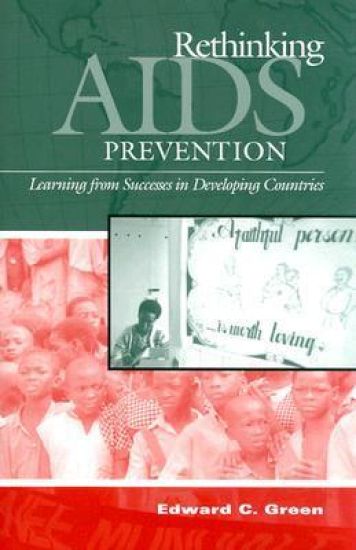
This is not another book about how AIDS is out of control in Africa and Third World nations, or one complaining about the inadequacy of secured funds to fight the pandemic. The author looks objectively at countries that have succeeded in reducing HIV infection rates...along with a worrisome flip side to the progress. The largely medical solutions funded by major donors have had little impact in Africa, the continent hardest hit by AIDS. Instead, relatively simple, low-cost behavioral change programs—stressing increased monogamy and delayed sexual activity for young people—have made the greatest headway in fighting or preventing the disease's spread. Ugandans pioneered these simple, sustainable interventions and achieved significant results. As National Review journalist Rod Dreher put it, Rather than pay for clinics, gadgets and medical procedures—especially in the important earlier years of its response to the epidemic—Uganda mobilized human resources. In a New York Times interview, Green cited evidence that partner reduction, promoted as mutual faithfulness, is the single most effective way of reducing the spread of AIDS.That deceptively simple solution is not merely about medical advances or condom use. It is about the ABC model: Abstain, Be faithful, and use Condoms if A and B are impossible. Yet deeply rooted Western biases have obstructed the effectiveness of AIDS prevention. Many Western scientists have attacked the ABC approach as impossible and moralistic. Some Western activists and HIV carriers have been outraged, thinking the approach passes moral judgment on their behaviors. But there is also a troubling suspicion among a growing number of scientists who support the ABC model that certain opponents may simply be AIDS profiteers, more interested in protecting their incomes than battling the disease. This book is a bellwether in the escalating controversy, offering persuasive evidence in support of the ABC approach and exposing the fallacies and motivations of its opponents.
This book emphasizes the factors in the spread and control of AIDS that have received less attention in the literature. It suggests that a collaborative action program involving traditional healers is necessary if we wish to impact the spread of AIDS and other STDs in Africa.
This book emphasizes the factors in the spread and control of AIDS that have received less attention in the literature. It suggests that a collaborative action program involving traditional healers is necessary if we wish to impact the spread of AIDS and other STDs in Africa.
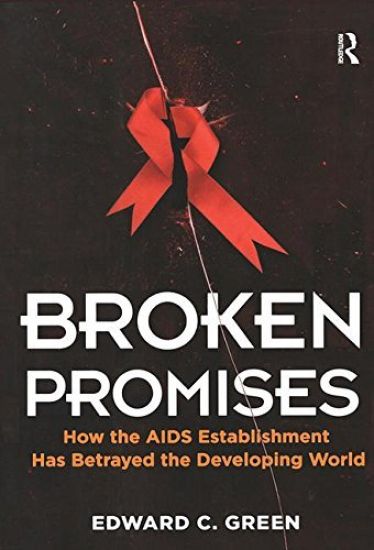
Ideological blinders have led to millions of preventable AIDS deaths in Africa. Dr. Edward C. Green, former director of the Harvard AIDS Prevention Project, describes how Western AIDSexperts stubbornly pursued ineffective remedies and sabotaged the most successful AIDS prevention program on that ravaged continent. Drawing on 30 years of conducting research in Africa, Southeast Asia, and other parts of the world in international health, Green offers a set of evidence-based and experience-rich solutions to the AIDS crisis. He calls for new emphasis on promoting sexual fidelity, the only strategy shown by research to work. Controversial but important findings for health researchers, international development specialists, and policy makers.
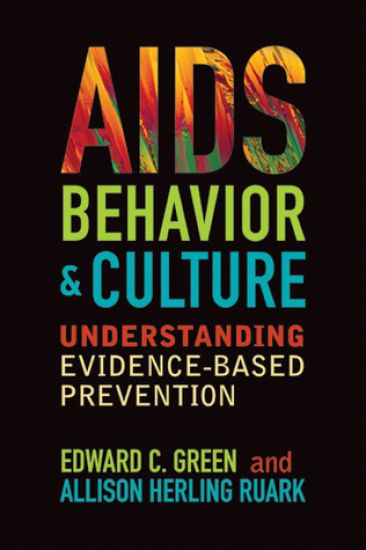
AIDS, Behavior, and Culture presents a bold challenge to the prevailing wisdom of “the global AIDS industry” and offers an alternative framework for understanding what works in HIV prevention. Arguing for a behavior-based approach, Green and Ruark make the case that the most effective programs are those that encourage fundamental behavioral changes such as abstinence, delay of sex, faithfulness, and cessation of injection drug use. Successful programs are locally based, low cost, low tech, innovative, and built on existing cultural structures. In contrast, they argue that anthropologists and public health practitioners focus on counseling, testing, condoms, and treatment, and impose their Western values, culture, and political ideologies in an attempt to “liberate” non-Western people from sexual repression and homophobia. This provocative book is essential reading for anyone working in HIV/AIDS prevention, and a stimulating introduction to the key controversies and approaches in global health and medical anthropology for students and general readers.
AIDS, Behavior, and Culture presents a bold challenge to the prevailing wisdom of “the global AIDS industry” and offers an alternative framework for understanding what works in HIV prevention. Arguing for a behavior-based approach, Green and Ruark make the case that the most effective programs are those that encourage fundamental behavioral changes such as abstinence, delay of sex, faithfulness, and cessation of injection drug use. Successful programs are locally based, low cost, low tech, innovative, and built on existing cultural structures. In contrast, they argue that anthropologists and public health practitioners focus on counseling, testing, condoms, and treatment, and impose their Western values, culture, and political ideologies in an attempt to “liberate” non-Western people from sexual repression and homophobia. This provocative book is essential reading for anyone working in HIV/AIDS prevention, and a stimulating introduction to the key controversies and approaches in global health and medical anthropology for students and general readers.
Ideological blinders have led to millions of preventable AIDS deaths in Africa. Dr. Edward C. Green, former director of the Harvard AIDS Prevention Project, describes how Western AIDS “experts” stubbornly pursued ineffective remedies and sabotaged the most successful AIDS prevention program on that ravaged continent. Drawing on 30 years of conducting research in Africa, Southeast Asia, and other parts of the world in international health, Green offers a set of evidence-based and experience-rich solutions to the AIDS crisis. He calls for new emphasis on promoting sexual fidelity, the only strategy shown by research to work. Controversial but important findings for health researchers, international development specialists, and policy makers.
On the Fringe is a deeply-moving memoir, a reflective and soul-baring account of the author's extraordinary journey as a professional who helped people from dying of AIDS, cholera, and other diseases across the globe. As an anthropologist, Green worked on every inhabited continent, giving the reader an on-the-ground look at how we aid developing nations. Chapters take readers to one exotic locale after another, describing gypsies in Montenegro, sex workers in Tanzania, disease researchers in Bangladesh, spirit mediums in Africa, and Samaritans in Palestine.Though highly successful throughout his career, Green was plagued since childhood with insecurity, rebellion, and at times frightening depressions. Coming from a highly-privileged background-his father was an Assistant Secretary of State-his inner demons began, at an early age, to tell him he was no damned good, a fraud, and a failure. Anyone who has ever fallen victim to "the imposter syndrome" will relate to the author's lifelong struggle to overcome feelings of anxiety and incompetence and embrace his achievements.
This work, "The Pretended Discovery of a Roman Bath at Bath," delves into a historical controversy surrounding the purported rediscovery of a Roman bath in Bath. Attributed to Emanuel Green, the text critiques a publication by Charles Edward Davis entitled 'The Bathes of Bathe's Ayde in the Reign of Charles II'. Green's remarks offer insights into the architectural and historical context of Bath, England, inviting readers to consider the varying interpretations and debates that shaped the understanding of its Roman past in the 19th century. This volume offers valuable perspectives on historical interpretation, architectural claims, and the academic disputes of its time, making it a compelling read for those interested in the history of Bath, Roman archaeology, and architectural history. This work has been selected by scholars as being culturally important, and is part of the knowledge base of civilization as we know it. This work was reproduced from the original artifact, and remains as true to the original work as possible. Therefore, you will see the original copyright references, library stamps (as most of these works have been housed in our most important libraries around the world), and other notations in the work. This work is in the public domain in the United States of America, and possibly other nations. Within the United States, you may freely copy and distribute this work, as no entity (individual or corporate) has a copyright on the body of the work. As a reproduction of a historical artifact, this work may contain missing or blurred pages, poor pictures, errant marks, etc. Scholars believe, and we concur, that this work is important enough to be preserved, reproduced, and made generally available to the public. We appreciate your support of the preservation process, and thank you for being an important part of keeping this knowledge alive and relevant.
This work, "The Pretended Discovery of a Roman Bath at Bath," delves into a historical controversy surrounding the purported rediscovery of a Roman bath in Bath. Attributed to Emanuel Green, the text critiques a publication by Charles Edward Davis entitled 'The Bathes of Bathe's Ayde in the Reign of Charles II'. Green's remarks offer insights into the architectural and historical context of Bath, England, inviting readers to consider the varying interpretations and debates that shaped the understanding of its Roman past in the 19th century. This volume offers valuable perspectives on historical interpretation, architectural claims, and the academic disputes of its time, making it a compelling read for those interested in the history of Bath, Roman archaeology, and architectural history. This work has been selected by scholars as being culturally important, and is part of the knowledge base of civilization as we know it. This work was reproduced from the original artifact, and remains as true to the original work as possible. Therefore, you will see the original copyright references, library stamps (as most of these works have been housed in our most important libraries around the world), and other notations in the work. This work is in the public domain in the United States of America, and possibly other nations. Within the United States, you may freely copy and distribute this work, as no entity (individual or corporate) has a copyright on the body of the work. As a reproduction of a historical artifact, this work may contain missing or blurred pages, poor pictures, errant marks, etc. Scholars believe, and we concur, that this work is important enough to be preserved, reproduced, and made generally available to the public. We appreciate your support of the preservation process, and thank you for being an important part of keeping this knowledge alive and relevant.
A thought-provoking investigation of an urgent issue facing American communities today, Edward C. Lorenz's book examines the intersection of corporate irresponsibility and civic engagement. At the heart of this case study is a group of firms responsible for seven of the most contaminated Superfund sites in the United States, the largest food contamination accident in U.S. history, stunning stock and financial manipulations, and a massive shift of jobs off shore. In the face of these egregious environmental, employee, and investor abuses, several communities impacted by these firms organized to confront and combat failures in corporate and bureaucratic leadership, winning notable victories over major financiers, lobbyists, and indifferent or ineffective government agencies. A critical analysis of public and private leadership, business and economic ethics, and civic life, this book concludes with a stirring blueprint for other communities facing similarly overwhelming opposition.










![The Pretended Discovery of a Roman Bath at Bath [By E. Green?] With Remarks On a Recent Publication [By C.E. Davis] Entitled 'the Bathes of Bathe's Ay](/covers/9781023982511.jpg)
![The Pretended Discovery of a Roman Bath at Bath [By E. Green?] With Remarks On a Recent Publication [By C.E. Davis] Entitled 'the Bathes of Bathe's Ay](/covers/9781023986724.jpg)