Kirjahaku
Etsi kirjoja tekijän nimen, kirjan nimen tai ISBN:n perusteella.
1000 tulosta hakusanalla Edward Frenkel
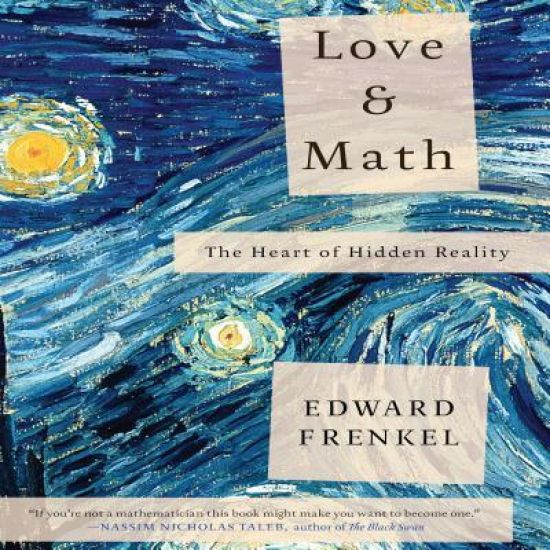
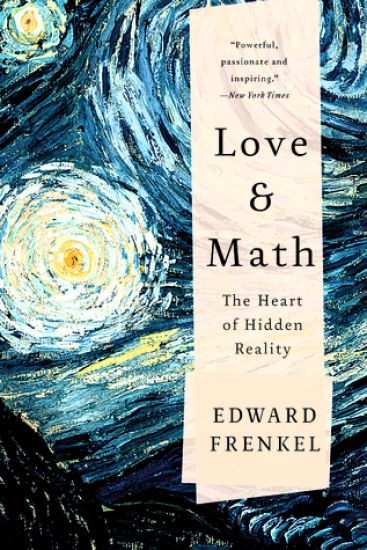
A New York Times Science BestsellerWhat if you had to take an art class in which you were only taught how to paint a fence? What if you were never shown the paintings of van Gogh and Picasso, weren't even told they existed? Alas, this is how math is taught, and so for most of us it becomes the intellectual equivalent of watching paint dry.In Love and Math , renowned mathematician Edward Frenkel reveals a side of math we've never seen, suffused with all the beauty and elegance of a work of art. In this heartfelt and passionate book, Frenkel shows that mathematics, far from occupying a specialist niche, goes to the heart of all matter, uniting us across cultures, time, and space. Love and Math tells two intertwined stories: of the wonders of mathematics and of one young man's journey learning and living it. Having braved a discriminatory educational system to become one of the twenty-first century's leading mathematicians, Frenkel now works on one of the biggest ideas to come out of math in the last 50 years: the Langlands Program. Considered by many to be a Grand Unified Theory of mathematics, the Langlands Program enables researchers to translate findings from one field to another so that they can solve problems, such as Fermat's last theorem, that had seemed intractable before.At its core, Love and Math is a story about accessing a new way of thinking, which can enrich our lives and empower us to better understand the world and our place in it. It is an invitation to discover the magic hidden universe of mathematics.
The Langlands Program was conceived initially as a bridge between Number Theory and Automorphic Representations, and has now expanded into such areas as Geometry and Quantum Field Theory, tying together seemingly unrelated disciplines into a web of tantalizing conjectures. A new chapter to this grand project is provided in this book. It develops the geometric Langlands Correspondence for Loop Groups, a new approach, from a unique perspective offered by affine Kac-Moody algebras. The theory offers fresh insights into the world of Langlands dualities, with many applications to Representation Theory of Infinite-dimensional Algebras, and Quantum Field Theory. This accessible text builds the theory from scratch, with all necessary concepts defined and the essential results proved along the way. Based on courses taught at Berkeley, the book provides many open problems which could form the basis for future research, and is accessible to advanced undergraduate students and beginning graduate students.
Representation Theory and Complex Analysis
Michael Cowling; Edward Frenkel; Masaki Kashiwara; Alain Valette; David A. Vogan; Nolan R. Wallach
Springer-Verlag Berlin and Heidelberg GmbH Co. K
2008
nidottu
Six leading experts lecture on a wide spectrum of recent results on the subject of the title, providing both a solid reference and deep insights on current research activity. Michael Cowling presents a survey of various interactions between representation theory and harmonic analysis on semisimple groups and symmetric spaces. Alain Valette recalls the concept of amenability and shows how it is used in the proof of rigidity results for lattices of semisimple Lie groups. Edward Frenkel describes the geometric Langlands correspondence for complex algebraic curves, concentrating on the ramified case where a finite number of regular singular points is allowed. Masaki Kashiwara studies the relationship between the representation theory of real semisimple Lie groups and the geometry of the flag manifolds associated with the corresponding complex algebraic groups. David Vogan deals with the problem of getting unitary representations out of those arising from complex analysis, such as minimal globalizations realized on Dolbeault cohomology with compact support. Nolan Wallach illustrates how representation theory is related to quantum computing, focusing on the study of qubit entanglement.
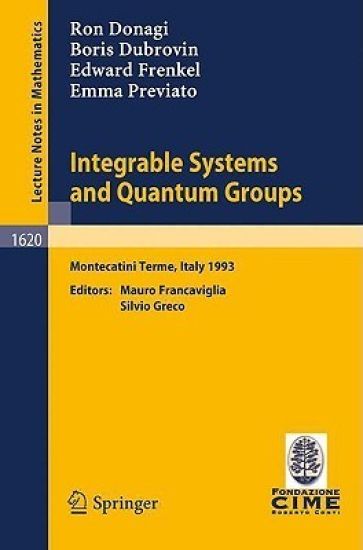
Integrable Systems and Quantum Groups
Ron Donagi; Boris Dubrovin; Edward Frenkel; Emma Previato
Springer-Verlag Berlin and Heidelberg GmbH Co. K
1995
nidottu
The aim of this CIME Session was to review the state of the art in the recent development of the theory of integrable systems and their relations with quantum groups. The purpose was to gather geometers and mathematical physicists to allow a broader and more complete view of these attractive and rapidly developing fields. The papers contained in this volume have at the same time the character of survey articles and of research papers, since they contain both a survey of current problems and a number of original contributions to the subject.
What if you had to take an art class in which you were only taught how to paint a fence? What if you were never shown the paintings of van Gogh and Picasso, weren't even told they existed? Alas, this is how math is taught, and so for most of us it becomes the intellectual equivalent of watching paint dry. In Love and Math, renowned mathematician Edward Frenkel reveals a side of math we've never seen, suffused with all the beauty and elegance of a work of art. In this heartfelt and passionate book, Frenkel shows that mathematics, far from occupying a specialist niche, goes to the heart of all matter, uniting us across cultures, time, and space. Love and Math tells two intertwined stories: of the wonders of mathematics and of one young man's journey learning and living it. Having braved a discriminatory educational system to become one of the twenty-first century's leading mathematicians, Frenkel now works on one of the biggest ideas to come out of math in the last 50 years: the Langlands Program. Considered by many to be a Grand Unified Theory of mathematics, the Langlands Program enables researchers to translate findings from one field to another so that they can solve problems, such as Fermat's last theorem, that had seemed intractable before. At its core, Love and Math is a story about accessing a new way of thinking, which can enrich our lives and empower us to better understand the world and our place in it. It is an invitation to discover the magic hidden universe of mathematics.
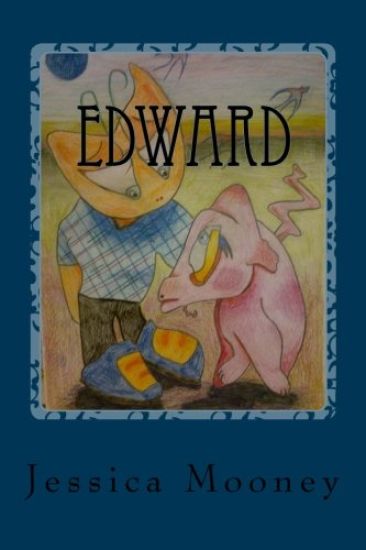
For Edward T. Scupper, life has been one long, lonely road. Born in the mid-eighteen-hundreds, for reasons unknown, he stops aging at eighteen. At first, it's exciting to live through the various decades while others succumb to time, but after a number of years, he finds that immortality is boring.Science proves to be the answer, or so he thinks. Edward-Ed-journeys from one city to another in the US in order to find an answer to his predicament. He doesn't wish for death. He only wishes to have a normal lifespan, like everyone else. After numerous searches, he winds up in Portland, Oregon, where he meets Doctor Farhan, a molecular biologist and geneticist who is working on using gene therapy to improve or cure various ailments, including blindness in his daughter, Diana.Ed tells Farhan of his desire to achieve mortality. Farhan promises to help him in return for the scientific knowledge, and a bargain of sorts is achieved. Initially, Ed and Diana don't get along. However, over time, they find themselves drawn to each other, as each of them seeks a cure for their problem, and only Doctor Farhan can provide it.Before long, though, the young couple finds themselves under attack, Doctor Farhan is killed, and the two teens are pursued by hitmen sent by Fester Norton, an elderly tycoon who wants what Ed has got-the secret of immortality-and will stop at nothing to get it
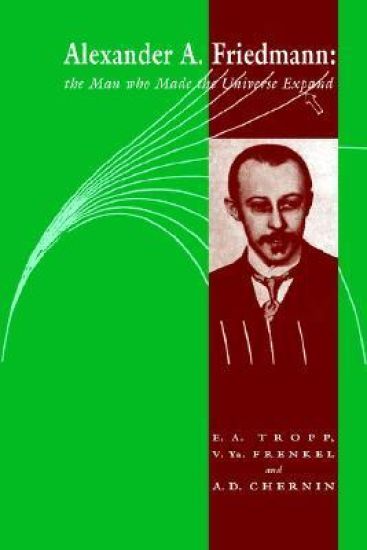
Alexander A Friedmann
Eduard A. Tropp; Viktor Ya. Frenkel; Artur D. Chernin
Cambridge University Press
2006
pokkari
Our universe can be described mathematically by a simple model developed in 1922 at Petrograd (St Petersburg) by Alexander Friedmann (1888–1925), who predicted that the whole universe would expand and evolve with time before there was any observational evidence. He was an outstanding Soviet physicist, and this vivid 1993 biography is set in a wide historical background. The book is a window on the school and university years, military service, teaching and research during a seminal period of Soviet history. The authors include unique archival material, such as Friedmann's letters from the Front, as well as contemporary records and reminiscences of colleagues. There is a detailed treatment of his work in Theoretical Cosmology (1922–1924), set in the context of the organization of Soviet science at the time.
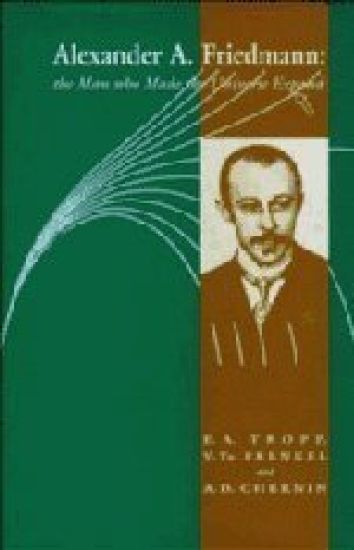
Alexander A Friedmann
Eduard A. Tropp; Viktor Ya. Frenkel; Artur D. Chernin
Cambridge University Press
1993
sidottu
Our universe can be described mathematically by a simple model developed in 1922 at Petrograd (St Petersburg) by Alexander Friedmann (1888–1925), who predicted that the whole universe would expand and evolve with time before there was any observational evidence. He was an outstanding Soviet physicist, and this vivid biography is set in a wide historical background. The book is a window on the school and university years, military service, teaching and research during a seminal period of Soviet history. The authors include unique archival material, such as Friedmann’s letters from the Front, as well as contemporary records and reminiscences of colleagues. There is a detailed treatment of his work in Theoretical Cosmology (1922–1924), set in the context of the organization of Soviet science at the time.
Leo B. Mittelman, Petitioner, V. United States. U.S. Supreme Court Transcript of Record with Supporting Pleadings
Osmond K Fraenkel; Archibald Cox; Edward M Garlock
Gale Ecco, U.S. Supreme Court Records
2011
pokkari
Frankel, E: Darlehen Und Die Irregulare Hinterlegung (1899)
Eduard Frankel
KESSINGER PUBLISHING, LLC
2010
nidottu
Eduard Fraenkel was one of the most influential classicists of the twentieth century. His Plautine Elements in Plautus (originally published in German in 1922) revolutionized the study of Roman comedy. It is still essential reading for students and scholars of Plautus. This translation makes it accessible to an English-speaking readership for the first time. All Latin and Greek is translated, thus making the work available to a wider audience consisting of all those interested in Roman drama. The book includes a translation of the Addenda to the Italian translation published in 1960. The English translation is prefaced by an essay which gives an introduction to developments in Plautine scholarship since 1960.
Book 2 of NEPHILIM CODE series. Recommended that you read Book 1 (Nova) first.Nephilim once ruled this world and they are going to do so again. It's only a matter of time. The Rogues had better get on board or get out of the way. Being Nephilim is my birthright but it was taken from me. Stripped of my abilities and disowned I have to face life in the human world. Then I meet the Rogues and things start looking up. I've found, not one, but both of the Nephilim Ibira Corp wants. Now, all I need to do is get them to trust me.Getting their trust is a double-edged sword and there's more going on than I first realised. Discoveries and changes are just the beginning.My name is Edward Huber.And I've got a choice to make.
This is a story about Edward the Blue Engine. As an older engine, he could be noisy and rather slow. The big engines called him names, but Edward soon had the chance to prove there was more to him than 'Old Iron'
A story of a fledgling mage, as he learns his trade and practices his craft.