
Kirjahaku
Etsi kirjoja tekijän nimen, kirjan nimen tai ISBN:n perusteella.
1000 tulosta hakusanalla Edward G. Ward

The Rational Method In Reading
Edward G. Ward; William Felter; Mary A. Ward
Kessinger Pub
2007
pokkari


Leadership Basics for Librarians and Information Professionals
Edward G. Evans; Patricia Layzell Ward
Scarecrow Press
2007
nidottu
With the start of the 21st Century, information services around the world are facing a host of challenges and changes unique to this era of exponential technological growth. However, this change is further compounded by the high turnover rate in senior positions. Focusing on leadership, this text—ideal for young, emerging managers and supervisors—guides future leaders in making the appropriate choices and decisions in response to and in anticipation of the competition. Authors G. Edward Evans and Patricia Layzell Ward's vast professional experience in a variety of roles and organizations all over the world serves as a strong basis for the advice presented. Leadership Basics for Librarians and Information Professionals includes data from surveys and interviews of leaders in archives, libraries, and other information services arenas, as well as current literature on leadership from both general management and information services fields. All together this book is a solid starting point for young librarians and information professionals seeking to get ahead of the competition, as well as a helpful reminder for seasoned leaders needing a bit of inspiration.
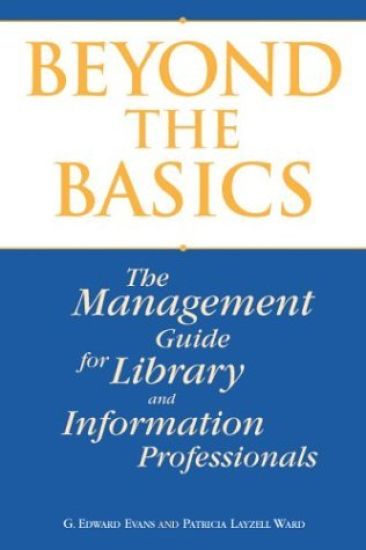
Both organizational patterns and management strategies have changed significantly in recent years, yet little in the library administration literature takes up new trends and strategies. Social, economic, political, and - especially - technological influences on the ways that libraries are staffed, organized, and financed are in flux. Effective Library Management is both a practical hands-on guide and an exceptionally well-researched examination of today's results-oriented library management strategies. Evans and Layzell Ward, two of today's most respected library management experts, look at how external forces as diverse as globalization, OCLC's recent marketing decisions, mergers of specialist software houses, new document delivery services, and the growth of electronic archives and virtual libraries affect libraries and how library managers can respond. The ways that all of this change influences communications and work patterns between library colleagues, long-and short-term planning, and organizational models are examined from various angles. New developments are considered both in the collaboration among and the competition between the public and private information delivery services. Other hot-topics treated include making career plans in an age of discontinuity, motivating staff in difficult economic times, and performing effective needs-analyses. An extensive list of additional reading and password-protected access to the book's own continually updated Web site is also included.

Management Basics for Information Professionals
G.Edward Evans; Patricia Lyzell Ward
Neal-Schuman Publishers Inc
2007
nidottu
Completely revised and expanded to reflect the rapidly changing sphere of information services, this comprehensive introduction to the management of libraries builds the basic skills good library managers must exercise. The authors offer an authoritative approach on the fundamental concepts of management while recognizing the diverse needs of different operating environments. This edition features two new chapters - Managing Diversity and Career Development - and is kept up to current by material housed on the Web. Drawing from examples of successful leadership techniques from a variety of services - archives, information brokers, libraries, records managements and more, this book demonstrates the most effective ways to plan, delegate, make decisions, communicate, and lead a team. Equal emphasis is placed on personal, fiscal, and technological issues, as well as a look at what the future may hold for incoming managers. A practical, up-to-date introduction to library management, here is a text that will appeal to LIS educators, new and experienced libraries in management positions, students, and anyone wishing to acquire a sound knowledge of both the theory and practice of management within the changing information workforce.

Music Education for High Schools
Arthur Edward Ward; Edwin J. Stringham; Frederic G. Melcher
Literary Licensing, LLC
2012
nidottu

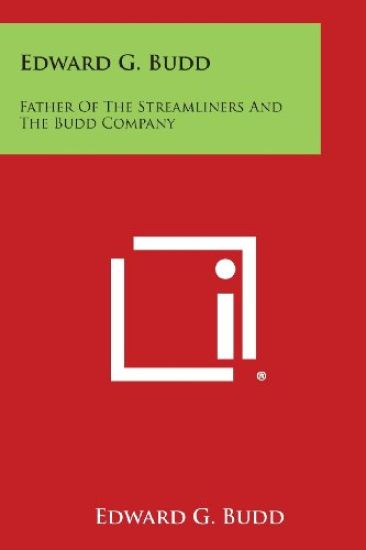
Edward G. Budd: Father of the Streamliners and the Budd Company
Edward G. Budd
Literary Licensing, LLC
2013
nidottu

Edward G Budd Mfg Co V. C R Wilson Body Co U.S. Supreme Court Transcript of Record with Supporting Pleadings
Melville Church; William J Belknap
Gale, U.S. Supreme Court Records
2011
pokkari
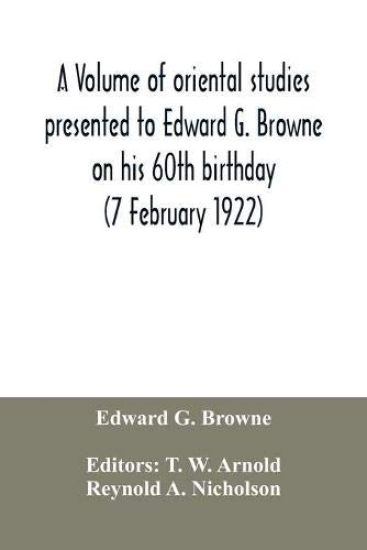
A volume of oriental studies presented to Edward G. Browne on his 60th birthday (7 February 1922)
Edward G Browne
Alpha Edition
2020
pokkari
This book has been considered by academicians and scholars of great significance and value to literature. This forms a part of the knowledge base for future generations. So that the book is never forgotten we have represented this book in a print format as the same form as it was originally first published. Hence any marks or annotations seen are left intentionally to preserve its true nature.
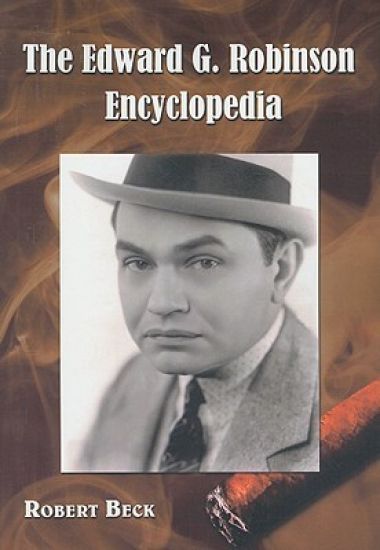
Edward G. Robinson, a 1930s cinema icon, had an acting career that spanned more than 60 years. After a brush with silent films, he rose to true celebrity status in sound feature films and went on to take part in radio and television performances, then back to Broadway and on the road in live theatre. This work documents Robinson's every known public performance or appearance, listing co-workers, source material, background and critical commentary. The entries include feature films, documentaries, short subjects, cartoons, television and radio productions, live theatre presentations, narrations, pageants, and recordings. Also included are entries relating to his life and career, ranging from his wives to his art collection.
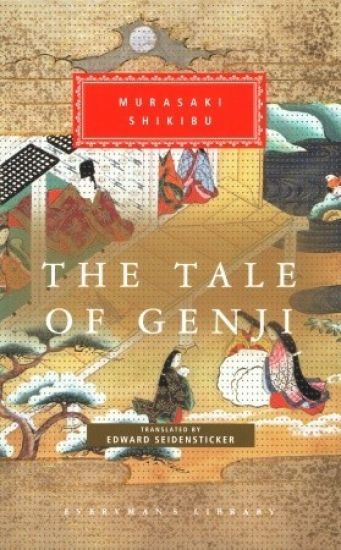
The Tale of Genji: Introduction by Edward G. Seidensticker
Murasaki Shikibu
Everyman's Library
1993
sidottu
In the early eleventh century Murasaki Shikibu, a lady in the Heian court of Japan, wrote what many consider to be the world's first novel, more than three centuries before Chaucer. The Heian era (794--1185) is recognized as one of the very greatest periods in Japanese literature, and The Tale of Genji is not only the unquestioned prose masterpiece of that period but also the most lively and absorbing account we have of the intricate, exquisite, highly ordered court culture that made such a masterpiece possible. Genji is the favorite son of the emperor but also a man of dangerously passionate impulses. In his highly refined world, where every dalliance is an act of political consequence, his shifting alliances and secret love affairs create great turmoil and very nearly destroy him. Edward Seidensticker's translation of Lady Murasaki's splendid romance has been honored throughout the English-speaking world for its fluency, scholarly depth, and deep literary tact and sensitivity.

Legends of Hollywood: The Life and Legacy of Edward G. Robinson
Charles River
Createspace Independent Publishing Platform
2014
nidottu
*Includes pictures *Includes a bibliography for further reading "I know I'm not much on face value, but when it comes to stage value, I'll deliver for you." - Edward G. Robinson For most enthusiasts of film history, Edward G. Robinson's name is virtually synonymous with the Depression-era gangster films of the 1930s. After all, Robinson starred in Little Caesar (1931), which was one of the first major gangster films and is perhaps the most representative example of the genre. Little Caesar remains his most iconic gangster role, but he acted in several other notable gangster films over the course of the decade, including The Little Giant (1933) and A Slight Case of Murder (1938). Even during the 1940s, after the gangster genre had ceded much of its standing to the postwar film noir genre, Robinson retained his ties to gangster films, memorably playing gangster Johnny Rocco in Key Largo (1948). With his short, round physique and irascible screen persona, Robinson became a kind of cinematic brother to James Cagney, and the two remain the most famous of the Hollywood gangster stars. As much as Robinson's fame remains attached to the rise of the gangster films of the 1930s, it also is important to recognize that he was successful in progressing into the postwar noir films-a genre that bears important similarities with the gangster genre but reworks it in significant ways. Indeed, Robinson starred in what may have been the most famous gangster picture - he played a memorable role in Double Indemnity (1944), which may well be the most famous noir movie ever made. Edward established his status as a worthy noir actor by starring in a duo of underrated Fritz Lang films-The Woman in the Window (1944) and Scarlet Street (1945)-as well as the Orson Welles movie The Stranger (1946). As his memorable noir performances demonstrate, Edward G. Robinson was more than just a famous gangster villain. He represents someone who was able to successfully navigate the changes in Hollywood cinema from the 1930s through the following decade. Interestingly, even as Robinson became a star on the screen, events off screen also made him abdicate his lofty standing. A first-generation immigrant who moved to the United States from Romania while still a child, Robinson's rise in the entertainment industry-first on stage and then in Hollywood-embodied the Horatio Alger myth of a self-made man. Lacking the conventional attractiveness that characterized most male actors (particularly leading men), it was through his sheer skill and virtuosity that Robinson was able to fashion a successful career. However, if Robinson benefited early in his career from the opportunities presented by Hollywood, it was also at the hands of the industry that his career was compromised during the early 1950s through the efforts of the House Un-American Activities Committee (HUAC). Although he was not a member of the Hollywood Ten, Robinson was a suspected Communist, and his name was tarnished within the acting community and in the eyes of the American public. He would continue to act through the end of his life, but his days as a major figure in Hollywood were brought to an abrupt end. Legends of Hollywood: The Life and Legacy of Edward G. Robinson analyzes Robinson's career in the 1930s and 1940s, as well as his real life roles as Hollywood star and victim.. Along with pictures and a bibliography, you will learn about Edward G. Robinson like never before, in no time at all.
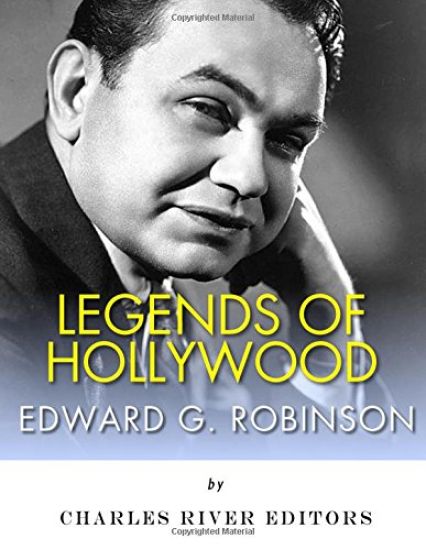
Legends of Hollywood: The Life and Legacy of Edward G. Robinson
Charles River
Createspace Independent Publishing Platform
2018
nidottu