Writing in 1927, Julien Benda described France as being afflicted by the twin scourges of narrow, class-based politics and rabid nationalism. He nevertheless identified Marcel Proust (who had died in 1922) as a writer who had refused to embrace the ideological narrowness of his age. Edward J. Hughes seeks to assess how Proust and his novel A la recherche du temps perdu might be understood in relation to issues of class and nation. A la recherche was produced in momentous times. As an extended textual construction, first conceived of in 1908 and the last tranche of which appeared posthumously almost two decades later, it was assembled against a backdrop of major historical events: pre-war tensions in the wake of the Dreyfus Affair and the Separation of Church and State (issues on which Proust had campaigned publicly); the First World War and the atmosphere of narrow nationalism and Germanophobia which the conflict generated; and the continuing polarization in class politics in the years after the First World War. These all find echoes in A la recherche and Hughes establishes how the exposure given to questions of class and nation needs to be understood historically. He demonstrates that the frequently entrenched positions of Proust's contemporaries at times square with the language and images of social conservativism to be found in A la recherche. Yet alongside that, Hughes unearths evidence that points to Proust as a free-floating, often playful, iconoclast and radical commentator who, as Theodor Adorno observed, resisted bourgeois compartmentalization.
For those who have discovered his books, in particular The Meaning and End of Religion, published in 1963 but overshadowed by the furore surrounding Honest to God, which appeared in the same year, Wilfred Cantwell Smith is one of the most important and attractive figures on the contemporary theological scene. Challenging assumptions about the nature of religion, and concerned always with the nature of authentic faith in the modern world, he has helped those who have read him to look on both Christianity and Islam, the two main areas of his study, with new eyes, and helped to deepen personal faith by showing what it is. Yet his name is still largely unknown, and his thinking has not made the impact it should have done. Part of the reason for this is the inaccessibility of his work. Much of it has only been published in specialist journals, or in books with limited circulations, by American university presses. Yet the issues with which he deals are vital for a world with many religions and multi-cultural societies, and his analyses and proposals are always refreshingly positive and constructive. Here Dr Hughes gives the first systematic account of the main themes in Dr Cantwell Smith's thought: the nature of faith and how it differs from belief, the nature of truth in theology, how adherents of different religions can understand one another and the possibilities for a world theology. The book ends with suggestions about the changes which are needed in attitudes and institutions if truth is to be served better in thought and life than is currently the case. With a Preface by John Hick.
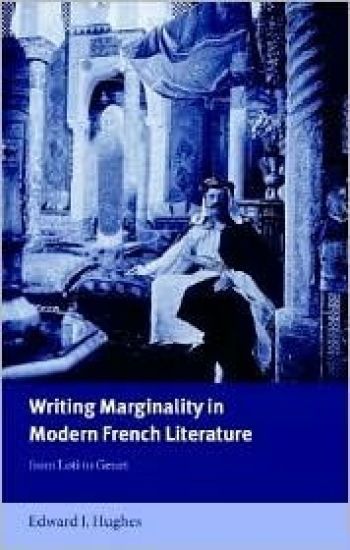
Writing Marginality in Modern French Literature, first published in 2001, explores how cultural centres require the peripheral, the outlawed and the deviant in order to define and bolster themselves. It analyses the hierarchies of cultural value which inform the work of six modern French writers: the exoticist Pierre Loti; Paul Gauguin, whose Noa Noa enacts European fantasies about Polynesia; Proust, who analyses such exemplary figures of exclusion and inclusion as the homosexual and the xenophobe; Montherlant, who claims to subvert colonialist values in La Rose de sable; Camus, who pleads an alienating detachment from the cultures of both metropolitan France and Algeria; and Jean Genet. Crucially Genet, who was typecast as France's moral pariah, in charting Palestinian statelessness in his last work, Un Captif amoureux (1986), reflects ethically on the dispossession of the Other and the violence inherent in the West's marginalization of cultural difference.
Proust's work may sometimes offer a picture of intellectual confidence. But not enough had previously been said about the crisis of hypersensitivity in many of Proust's characters. This 1983 book attempted to fill that gap, and as such should interest all students of Proust. In A la recherche, Proust deliberates on the separation between the troubled artist and the simple, sometimes primitive sensibility of others. It is a separation that many critics have viewed as inevitable. In this book, however, Dr Hughes shows that Proust is constantly exploring the divide, and finally succeeds in harmonising simplicity and complexity - in the unlikely form of music. In this way, several areas of Proust's novel are brought into prominence that would usually have been ignored - for example, his nostalgic depictions of animal life. This book provides a synthesis of these and related experiences: as such it offers a reappraisal of Proust's view of human awareness.
Writing Marginality in Modern French Literature, first published in 2001, explores how cultural centres require the peripheral, the outlawed and the deviant in order to define and bolster themselves. It analyses the hierarchies of cultural value which inform the work of six modern French writers: the exoticist Pierre Loti; Paul Gauguin, whose Noa Noa enacts European fantasies about Polynesia; Proust, who analyses such exemplary figures of exclusion and inclusion as the homosexual and the xenophobe; Montherlant, who claims to subvert colonialist values in La Rose de sable; Camus, who pleads an alienating detachment from the cultures of both metropolitan France and Algeria; and Jean Genet. Crucially Genet, who was typecast as France's moral pariah, in charting Palestinian statelessness in his last work, Un Captif amoureux (1986), reflects ethically on the dispossession of the Other and the violence inherent in the West's marginalization of cultural difference.
Shortlisted for the 2022 R. Gapper book prize The formulation ‘egalitarian strangeness’ is a direct borrowing from Courts voyages au pays du peuple [Short Voyages to the Land of the People] (1990), a collection of essays by the contemporary French thinker Jacques Rancière. Perhaps best known for his theory of radical equality as set out in Le Maître ignorant [The Ignorant Schoolmaster] (1987), Rancière reflects on ways in which a hierarchical social order based on inequality can come to be unsettled. In the democracy of literature, for example, he argues that words and sentences serve to capture any life and to make it available to any reader. The present book explores embedded forms of social and cultural ‘apportionment’ in a range of modern and contemporary French texts (including prose fiction, socially engaged commentary, and autobiography), while also identifying scenes of class disturbance and egalitarian encounter. Part One considers the ‘refrain of class’ audible in works by Claude Simon, Charles Péguy, Marie Ndiaye, Thierry Beinstingel, and Gabriel Gauny and examines how these authors’ practices of language connect with that refrain. In Part Two, Hughes analyses forms of domination and dressage with reference to Simone Weil’s mid-1930s factory journal, Paul Nizan’s novel of class alienation Antoine Bloyé from the same decade, and Pierre Michon’s Vies minuscules [Small Lives] (1984) with its focus on obscure rural lives. The reflection on how these narratives draw into contiguity antagonistic identities is extended in Part Three, where individual chapters on Proust and the contemporary authors François Bon and Didier Eribon demonstrate ways in which enduring forms of cultural distribution are both consolidated and contested.
Shortlisted for the 2022 R. Gapper book prize The formulation ‘egalitarian strangeness’ is a direct borrowing from Courts voyages au pays du peuple [Short Voyages to the Land of the People] (1990), a collection of essays by the contemporary French thinker Jacques Rancière. Perhaps best known for his theory of radical equality as set out in Le Maître ignorant [The Ignorant Schoolmaster] (1987), Rancière reflects on ways in which a hierarchical social order based on inequality can come to be unsettled. In the democracy of literature, for example, he argues that words and sentences serve to capture any life and to make it available to any reader. The present book explores embedded forms of social and cultural ‘apportionment’ in a range of modern and contemporary French texts (including prose fiction, socially engaged commentary, and autobiography), while also identifying scenes of class disturbance and egalitarian encounter. Part One considers the ‘refrain of class’ audible in works by Claude Simon, Charles Péguy, Marie Ndiaye, Thierry Beinstingel, and Gabriel Gauny and examines how these authors’ practices of language connect with that refrain. In Part Two, Hughes analyses forms of domination and dressage with reference to Simone Weil’s mid-1930s factory journal, Paul Nizan’s novel of class alienation Antoine Bloyé from the same decade, and Pierre Michon’s Vies minuscules [Small Lives] (1984) with its focus on obscure rural lives. The reflection on how these narratives draw into contiguity antagonistic identities is extended in Part Three, where individual chapters on Proust and the contemporary authors François Bon and Didier Eribon demonstrate ways in which enduring forms of cultural distribution are both consolidated and contested.
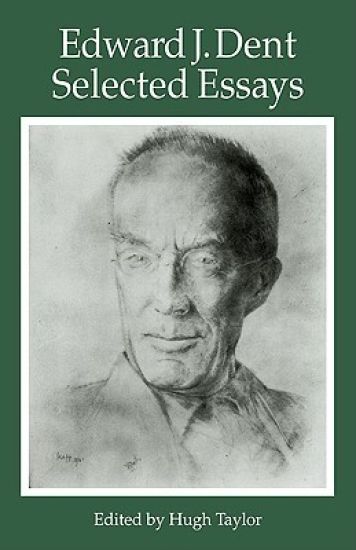
During his long career, Edward Dent wrote on a variety of musical subjects, ranging from substantial articles in the most learned journals to less weighty pieces in Radio Times. This volume aims to reflect that variety. Some of the articles are now of primarily historical interest, others offer insights of a fundamental kind; all are informed by Dent's witty and distinctive prose style. In editing this collection, Hugh Taylor has drawn on writings from 1903 to 1951 and included two pieces originally written in Italian and published here in English for the first time. As well as providing footnotes, which amplify certain of Dent's statements and draw attention to subsequent research, Mr Taylor has listed sources for Dent's many textual references and quotations. Brought together in this way Dent's learned but always readable criticism will appeal to the reader with a general interest in music as well as to the music student and specialist.
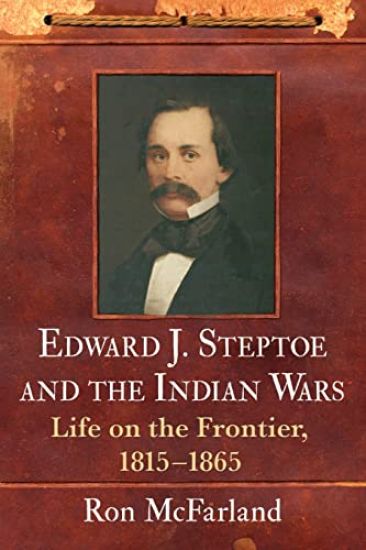
Lieutenant Colonel Edward J. Steptoe's escape from encirclement by 1,000 Northern Plateau Indians in 1858 is a familiar story from the Indian Wars. Yet the details of the Battle of Pine Creek (or Tohotonimme) and its aftermath remain subjects of debate. Outnumbered six to one, Steptoe's 164 troops slipped away in the night. Newspapers called it a "disaster." A few weeks later, Colonel George Wright avenged the defeat and Steptoe, who had suffered a stroke months before the battle, lived his final years in relative obscurity in his native Virginia as the Civil War erupted. This definitive biography of Steptoe chronicles the career of a field officer who served nearly four years in the Second Seminole War, won commendation for gallantry during the Mexican War, performed admirably (though controversially) in the Utah Territory, undertook construction of forts at Walla Walla in the newly defined Washington Territory and engaged with various tribes throughout his deployments. His personal letters reveal a thoughtful, sensitive commander who came to question his choice of career even before his final battle.
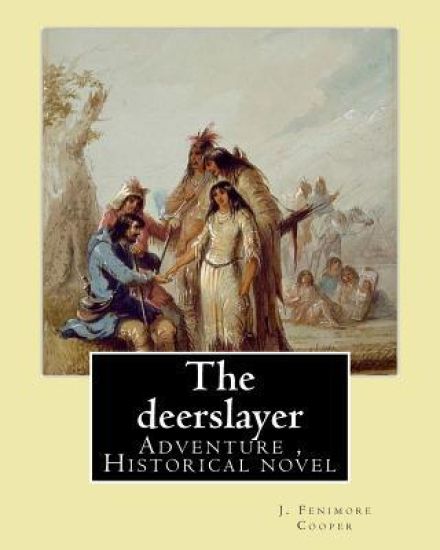
The Deerslayer, or The First Warpath (1841) was the last of James Fenimore Cooper's Leatherstocking Tales to be written. Its 1740-1745 time period makes it the first installment chronologically and in the lifetime of the hero of the Leatherstocking tales, Natty Bumppo. The novel's setting on Otsego Lake in central, upstate New York, is the same as that of The Pioneers, the first of the Leatherstocking Tales to be published (1823). The Deerslayer is considered to be the prequel to the rest of the series. Fenimore Cooper begins his work by relating the astonishing advance of civilization in New York State, which is the setting of four of his five Leatherstocking Tales. Plot: This novel introduces Natty Bumppo as "Deerslayer" a young frontiersman in early 18th-century New York, who objects to the practice of taking scalps, on grounds that every living thing should follow "the gifts" of its nature, which would keep European Americans from taking scalps. Two characters who actually seek to take scalps are Deerslayer's foil Henry March (alias "Hurry Harry") and the former pirate 'Floating Tom' Hutter, to whom Deerslayer is introduced en route to a rendezvous with the latter's lifelong friend Chingachgook (initially apparent in The Last of the Mohicans). Shortly before the rendezvous, Hutter's residence is besieged by the indigenous Hurons, and Hutter and March sneak into the camp of the besiegers to kill and scalp as many as they can; but are captured in the act, and later ransomed by Bumppo, Chingachgook, and Hutter's daughters Judith and Hetty. Bumppo and Chingachgook thereafter plan to rescue Chingachgook's kidnapped betrothed Wah-ta-Wah (alias 'Hist') from the Hurons; but, in rescuing her, Bumppo is captured. In his absence, the Hurons invade Hutter's home, and Hutter is scalped alive. On his deathbed, he confesses that Judith and Hetty were not his daughters by birth, and Judith determines to discover her natural father's identity; but her search reveals only that her late mother had been of aristocratic descent, and had married 'Floating Tom' after the collapse of an illicit affair. Later, Judith attempts and fails to rescue Deerslayer; and they are all saved at last when March returns with English reinforcements, who massacre the Hurons and mortally wound Hetty. After Hetty's death, Judith proposes marriage to Deerslayer, but is refused, and is last described as the paramour of a soldier. Fifteen years later, Bumppo and Chingachgook return to the site, to find Hutter's house in ruins.... James Fenimore Cooper (September 15, 1789 - September 15, 1851) was a prolific and popular American writer of the early 19th century. His historical romances of frontier and Indian life in the early American days created a unique form of American literature. He lived most of his life in Cooperstown, New York, which was founded by his father William on property that he owned. Cooper was a lifelong member of the Episcopal Church and, in his later years, contributed generously to it.He attended Yale University for three years, where he was a member of the Linonian Society, but was expelled for misbehavior. Before embarking on his career as a writer, he served in the U.S. Navy as a Midshipman, which greatly influenced many of his novels ands other writings. The novel that launched his career was The Spy, a tale about counterespionage set during the Revolutionary War and published in 1821. He also wrote numerous sea stories, and his best-known works are five historical novels of the frontier period known as the Leatherstocking Tales. Among naval historians, Cooper's works on the early U.S. Navy have been well received, but they were sometimes criticized by his contemporaries. Among his most famous works is the Romantic novel The Last of the Mohicans, often regarded as his masterpiece.... Edward J. Wheeler (Wheeler, Edward J., approximately 1848-1933)
From "The Last Dream of Bwona Khubla" From steaming lowlands down by the equator, where monstrous orchids blow, where beetles big as mice sit on the tent-ropes, and fireflies glide about by night like little moving stars, the travelers went three days through forests of cactus till they came to the open plains where the oryx are.When Bwona Khubla had gone there three years ago, what with malaria with which he was shaking all over, and what with disgust at finding the water-hole dry, he had decided to die there, and in that part of the world such decisions are always fatal. In any case he was overdue to die, but hitherto his amazing resolution, and that terrible strength of character that so astounded his porters, had kept him alive and moved his safari on.There is not doubt that he was a fearful man. . . .*This peculiar collection is a very real treat: we envy you the reading of it. Among the treasures in this volume are "The Last Dream of Bwona Khubla," "How the Office of Postman Fell Vacant in Offord-Under-the-Wold," "The Prayer of Boob Aheera," "East and West," "A Pretty Quarrel," "How the Gods Avenged Meoul Ki Ning," "The Gift of the Gods," "The Sack of Emeralds," "The Old Brown Coat," "An Archive of the Older Mysteries," and "A City of Wonder," and a section he called Beyond the Fields We Know, which included "Publisher's Note," "Idle Days on the Yann," "A Shop in Go-By Street," and "The Avenger of Perd ndaris."
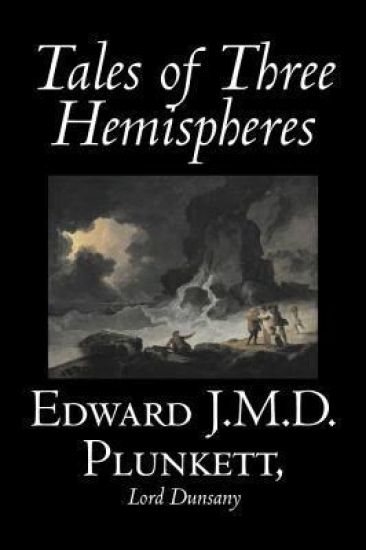
There be islands in the Central Sea, whose waters are bounded by no shore and where no ships come -- this is the faith of their people. In the mists before the Beginning, Fate and Chance cast lots to decide whose the Game should be; and he that won strode through the mists to MANA-YOOD-SUSHAI and said: "Now make gods for Me, for I have won the cast and the Game is to be Mine." Who it was that won the cast, and whether it was Fate or whether Chance that went through the mists before the Beginning to MANA-YOOD-SUSHAI -- none knoweth.More than eighty books of Lord Dunsany's work were published and his oeuvre includes many hundreds of published short stories, as well as successful plays, novels and essays.
Included in this 1908 compilation are a number of Dunsany's classic tales, incuding "The Sword of Welleran," "The Fall of Babbulkund," "The Kith of the Elf Folk," "The Highwayman," "In the Twilight," "The Ghosts," "The Whirlpool," "The Hurricane," "The Fortress Unvanquishable, Save for Sacnoth," "The Lord of Cities," "The Doom of La Traviata," and "On the Dry Land."
Included in this volume: "A Tale of London" "Thirteen at Table" "The City on Mallington Moor" "Why the Milkman Shudders When He Perceives the Dawn" (also published in a chapbook) "The Bad Old Woman in Black" "The Bird of the Difficult Eye" "The Long Porter's Tale" "The Loot of Loma" "The Secret of the Sea" "How Ali Came to the Black Country" "The Bureau d'Echange de Maux" "A Story of Land and Sea" "A Tale of the Equator" "A Narrow Escape" "The Watch-Tower" "How Plash-Goo Came to the Land of None's Desire" "The Three Sailors' Gambit" "The Exiles' Club" "The Three Infernal Jokes"
There be islands in the Central Sea, whose waters are bounded by no shore and where no ships come -- this is the faith of their people. In the mists before the Beginning, Fate and Chance cast lots to decide whose the Game should be; and he that won strode through the mists to MANA-YOOD-SUSHAI and said: "Now make gods for Me, for I have won the cast and the Game is to be Mine." Who it was that won the cast and whether it was Fate or whether Chance that went through the mists before the Beginning to MANA-YOOD-SUSHAI -- none knoweth.More than eighty books of Lord Dunsany's work were published and his oeuvre includes many hundreds of published short stories, as well as successful plays, novels and essays.
I was chief of the Air Force's project for investigating UFO reports -- Project Blue Book.It is well known that ever since the first flying saucer was reported in June 1947 the Air Force has officially said that there is no proof that such a thing as an interplanetary spaceship exists. But what is not well known is that this conclusion is far from being unanimous among the military and their scientific advisers because of the one word, proof; so the UFO investigations continue.What constitutes proof? Does a UFO have to land at the River Entrance to the Pentagon, near the Joint Chiefs of Staff offices? Or is it proof when a ground radar station detects a UFO, sends a jet to intercept it, the jet pilot sees it, and locks on with his radar, only to have the UFO streak away at a phenomenal speed? Is it proof when a jet pilot fires at a UFO and sticks to his story even under the threat of court-martial? Does this constitute proof? I'll give you the facts -- all of the facts. And you can decide for yourself. -- Edward J. Ruppelt